

Executive Overview
For travelers navigating the intricate landscape of Japanese hot spring culture—commonly known as onsen—there has long been an accepted, unwritten law of compromise. Traditionally, enthusiasts searching for an exceptional bathing experience are forced to weigh three competing variables: a convenient geographical location, breathtaking scenic vistas, and a peaceful, uncrowded atmosphere. Under conventional circumstances, securing two of these attributes invariably means sacrificing the third.
An establishment boasting both a prime location and panoramic views will almost certainly be overrun with tourists and locals alike, turning a meditative soak into a crowded communal pool. Conversely, achieving absolute tranquility paired with stunning natural scenery usually demands a grueling trek deep into the rural countryside, far off the beaten path. If a bathhouse is situated centrally within a major metropolitan hub yet remains comfortably uncrowded, it is typically because the ambiance is industrial, uninspired, or devoid of traditional charm.
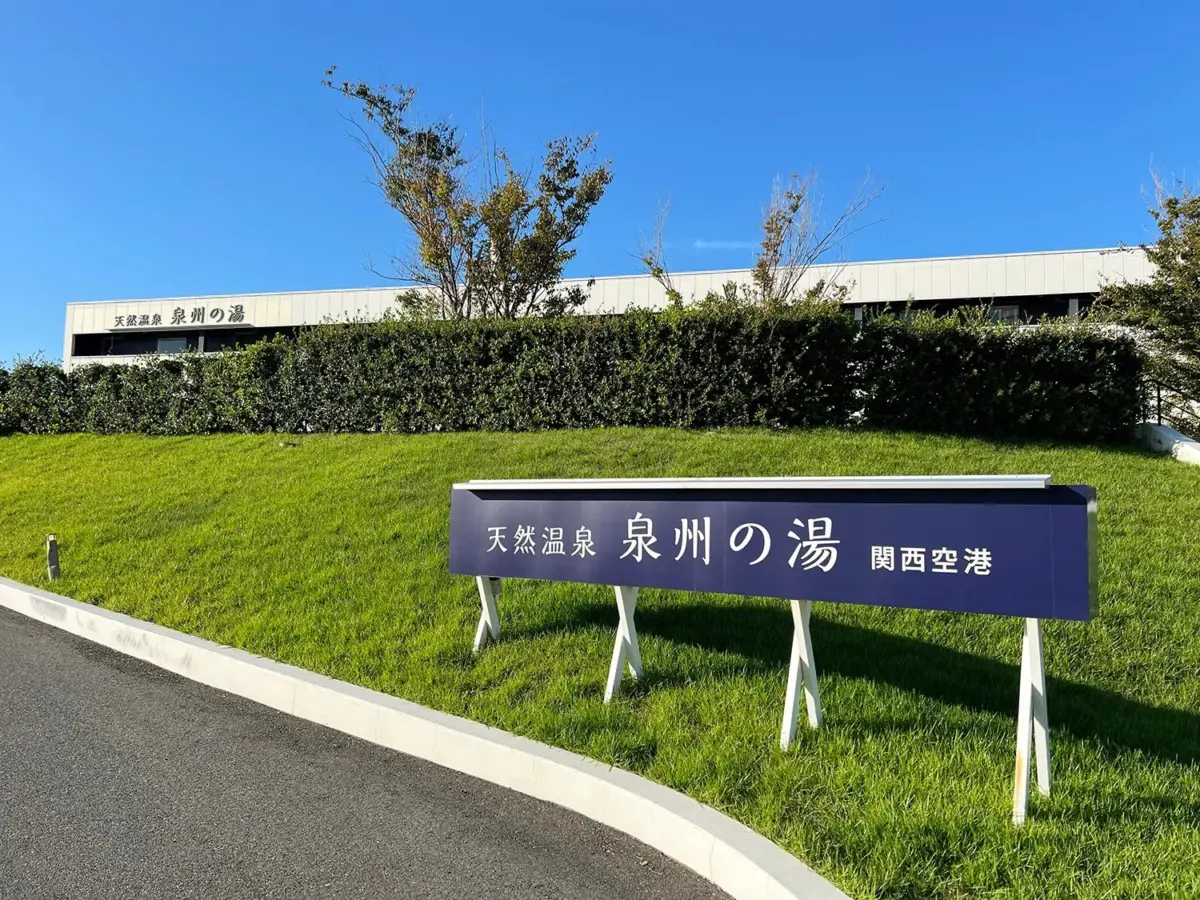
However, a recent discovery by travel journalists at SoraNews24 has shattered this long-standing paradigm. Senshu no Yu (泉州の湯), a natural hot spring facility nestled in the southern reaches of Osaka Prefecture, has emerged as a rare statistical anomaly in the Japanese leisure industry. Located mere minutes from Kansai International Airport (KIX)—central Japan’s premier international aviation gateway—this hidden gem offers an intoxicating combination of high-end amenities, expansive open-air ocean views, minimal crowd density, and an exceptionally budget-friendly price point.

Despite its proximity to one of the busiest transit nodes in the country, Senshu no Yu remains remarkably overlooked by the millions of passengers who traverse the nearby Sky Gate Bridge R each year. This investigative feature explores the mechanics of Senshu no Yu’s paradoxical appeal, analyzing its logistical accessibility, architectural layout, pricing strategy, and the geographic quirks that have inadvertently shielded it from mass-market overtourism.
Detailed Chronology: A Traveler’s Journey to Senshu no Yu
To truly understand how Senshu no Yu operates within the rhythm of international travel, one must retrace the physical journey from the tarmac of Kansai International Airport to the steamy, mineral-rich waters of the bathhouse.
Step 1: Crossing the Sky Gate Bridge R
Kansai International Airport is an engineering marvel built entirely on an artificial island in Osaka Bay. Upon clearing customs and retrieving luggage, travelers must leave the island to reach the Japanese mainland. The primary artery for this transit is the Sky Gate Bridge R, a double-decked truss bridge carrying both vehicular highway traffic and rail lines.

As soon as visitors cross this threshold and touch down on the mainland of Osaka Prefecture, they enter Rinku Town—a modern commercial district designed to service the airport. Situated immediately within this zone is Senshu no Yu, positioning itself as the absolute closest natural hot spring to an international aviation hub of this scale in Japan.
Step 2: The Transit Connection
For rail passengers, the commute is exceptionally streamlined. Senshu no Yu is located approximately a ten-minute walk from Rinku Town Station, which is serviced by both the Nankai Airport Line and the JR Kansai Airport Line.
Because Rinku Town Station is only a six-minute train ride from Kansai International Airport itself, the total transit time from terminal doors to the bathhouse lobby is under twenty minutes. This hyper-convenience makes Senshu no Yu uniquely positioned for two distinct types of travelers:

- The Arriving Passenger: Those who have endured a grueling ten-to-fifteen-hour long-haul flight and wish to immediately wash away the grime of air travel, stretch stiff joints, and adjust to the Japanese time zone before heading into the city.
- The Departing Passenger: Travelers wrapping up a Japanese vacation who want to squeeze in one final, deeply relaxing onsen experience before heading to the airport for a late-night or early-morning flight.
Step 3: Arrival and Atmosphere
Upon entering the building from the ground-floor entrance and ascending to the second-floor lobby, visitors are immediately greeted by an unexpected atmosphere: tranquility.
Despite its strategic location near a major international airport and a bustling commercial outlet mall, the interior of Senshu no Yu is serene, impeccably maintained, and free of the chaotic congestion that plagues comparable urban wellness centers. The facility successfully avoids the "run-down" aesthetic that frequently affects older bathhouses, offering modern comforts while preserving the meditative atmosphere essential to the onsen ritual.
Supporting Context & Metrics: Architecture, Amenities, and Economics
Senshu no Yu defies expectations not only through its location, but through its comprehensive suite of amenities and surprisingly accessible pricing structure.

Architectural Layout and Panoramic Views
The architectural crowning achievement of Senshu no Yu is its visual connection to Osaka Bay. Both the glass-enclosed indoor bathhouses and the sprawling rotenburo (open-air baths) feature expansive, unobstructed lines of sight looking out across the water.
During the daytime, bathers can watch cargo ships navigate the bay against a backdrop of distant mountains. In the evening, the location transforms into a prime vantage point for viewing the sunset over the horizon, merging the industrial modernity of the airport’s skyline with the timeless serenity of coastal waters.
Interior Amenities and Relaxation Spaces
Beyond the bathing areas, Senshu no Yu functions as a full-service wellness and relaxation complex. The facility features:

- Tatami-Floored Relaxation Lounges: Traditional Japanese quiet zones outfitted with woven rush-mat flooring where guests can recline post-bath.
- Manga Libraries: Extensive shelves stocked with popular manga series, inviting visitors to lounge indefinitely.
- Café and Dining Facilities: A dedicated restaurant and casual café area offering a menu of comforting Japanese dishes, all oriented to provide diners with sweeping waterfront views while they eat.
Pricing Structure and Value
Given its status as a premier scenic-view hot spring, first-time visitors often anticipate a steep admission fee. However, Senshu no Yu maintains an aggressively populist pricing model:
| Day Type | Adult Admission Fee (Yen) | Approximate USD Equivalent |
|---|---|---|
| Weekdays | 900 JPY | ~$5.65 USD |
| Weekends & Holidays | 1,000 JPY | ~$6.30 USD |
Note: Rental fees for visitors traveling light are nominal; hand towels can be rented for 100 JPY (~$0.65 USD), and full-size bath towels are available for 200 JPY (~$1.25 USD).
National Recognition
The quality of Senshu no Yu’s environment has not gone completely unnoticed by domestic experts. The facility was officially recognized and selected among the country’s top 30 scenic-view hot springs by the users of Nifty, one of Japan’s most prominent and influential internet portals and lifestyle review platforms.

Official Statements and Industry Analysis: Unraveling the "Catch"
With so many advantages—convenience, beauty, cleanliness, extensive amenities, and a sub-$7 admission fee—investigative journalists and travel analysts are naturally compelled to ask a fundamental question: What is the catch? Why isn’t this place perpetually packed to capacity?
Industry experts point to a psychological and geographical phenomenon tied to how international and domestic tourists perceive the Kansai region.
The "Osaka City" Bias
When international travelers think of Osaka, their minds instantly conjure images of the neon-drenched Dotonbori canal district, the historic grandeur of Osaka Castle, or the bustling culinary streets of Shinsekai. Osaka City proper ranks as Japan’s third-largest municipality by population and serves as the undisputed cultural and commercial epicenter of Western Japan.

Senshu no Yu, however, is located in the city of Izumisano, situated firmly on the southern outskirts of Osaka Prefecture. While legally and administratively part of the greater Osaka region, Izumisano is geographically removed from the urban core.
The Transit Isolation Effect
An analysis of the regional geography reveals why the bathhouse remains an under-the-radar destination:
- Distance to Downtown: Central Osaka (such as Namba or Umeda stations) is roughly a one-hour train ride to the northeast of Senshu no Yu.
- The Transit Void: Once travelers cross the Sky Gate Bridge R onto the mainland, the immediate surrounding area is largely industrial, commercial, and transit-oriented, offering very few traditional sightseeing attractions in the non-airport directions.
Consequently, the vast majority of tourists landing at Kansai International Airport immediately board express trains heading north directly into central Osaka or Kyoto. They zoom past the Rinku Town neighborhood at high speeds, completely unaware that a world-class natural hot spring sits less than a mile from the tracks.

Future Outlook: How Long Can the Secret Last?
While Senshu no Yu currently enjoys a "hidden in plain sight" status that allows visitors to soak in peace without elbowing for space in the tub, the winds of change are blowing across Japan’s tourism sector.
As international tourism to Japan reaches historic, record-shattering highs, urban congestion in primary hubs like Kyoto, Tokyo, and central Osaka has forced travelers to seek alternative experiences in surrounding prefectures. Furthermore, the presence of a commercial hotel situated directly adjacent to Senshu no Yu means that savvy business travelers and overnight flight-connectors are increasingly discovering the property.
For now, Senshu no Yu remains one of Japan’s ultimate travel hacks: a rare destination where a tourist does not have to compromise between location, scenery, and tranquility. However, as word spreads across global travel forums and digital media, the window to experience this airport-adjacent oasis without tourist crowds is rapidly narrowing.

Travelers planning an itinerary through Kansai International Airport would do well to factor in an extra two hours on their arrival or departure schedule—because stepping off a transoceanic flight and directly into a scenic, mineral-rich hot spring for less than ten dollars is an experience that cannot remain a secret forever.






Belum ada komentar. Jadilah yang pertama berkomentar!