

Executive Overview
Every November, the Japanese capital undergoes a vibrant cultural transformation as shrines and temples across Tokyo host Tori no Ichi (Fairs of the Rooster). Rooted in centuries-old traditions dating back to the Edo period (1603–1868), these lively autumn festivals serve as a focal point for merchants, business leaders, and citizens seeking divine intercession for business prosperity, financial security, and protection from misfortune.
For the 2026 calendar year, the Tori no Ichi fairs are scheduled across two distinct phases—November 7 and November 19—following the traditional Tori no Hi (Days of the Rooster) dictated by the ancient lunisolar calendar. Because the lunar cycle dictates only two rooster days this year, the 2026 fairs will comprise an Ichi no Tori (First Fair) and a Ni no Tori (Second Fair), omitting a third market (San no Tori).

This comprehensive report examines the historical evolution, operational parameters, and localized celebrations of Tokyo’s "Three Major Tori no Ichi Festivals of Eastern Japan":
- Otori Shrine and Chokokuji Temple in Asakusa
- Hanazono Shrine in Shinjuku
- Okunitama Shrine in Fuchu
Additionally, this guide provides cultural insights into acquiring the festival’s iconic symbol of wealth: the kumade (decorative lucky rake).

Detailed Chronology and Schedule for 2026
The timing of Tori no Ichi shifts annually, tethered to the 12-day cyclical recurrence of the Day of the Rooster in November. In 2026, the festival timeline is compressed into a two-tier schedule, demanding careful planning for both domestic participants and international visitors.

2026 Festival Calendar at a Glance
| Location | Event Phase | Dates | Operating Hours |
|---|---|---|---|
| Asakusa (Otori Shrine & Chokokuji Temple) | Ichi no Tori Ni no Tori |
November 7 November 19 |
0:00 – 24:00 (Continuous) |
| Shinjuku (Hanazono Shrine) | Ichi no Tori (Eve + Main) Ni no Tori (Eve + Main) |
Nov 6 – 7 Nov 18 – 19 |
Eve: approx. 15:00 – 24:00 Main: approx. 12:00 – 24:00 |
| Fuchu (Okunitama Shrine) | Ichi no Tori Ni no Tori |
November 7 November 19 |
Check official shrine portal for Kumade Market hours |
Unlike standard daytime festivals, the operational framework of Tori no Ichi varies dramatically by venue. While Asakusa’s shrines maintain a continuous 24-hour cycle on festival days, Shinjuku’s Hanazono Shrine employs a split-schedule format featuring evening Eve Festivals (Zen’yasai) designed to accommodate the capital’s corporate workforce.

Supporting Context & Cultural Metrics: The Anatomy of Kumade
To fully appreciate the gravity of Tori no Ichi, one must examine its economic and symbolic centerpiece: the kumade.

Evolution from Agriculture to Commerce
Originating in the agricultural markets of the mid-Edo period, the kumade began as a utilitarian wooden tool utilized by farmers for gathering fallen leaves, harvested crops, and farming supplies. Over generations, local vendors at Otori shrines reimagined the rake as a metaphor for gathering wealth. The linguistic pun—using a rake to "scoop up" money and fortune—transformed a humble farming implement into an elaborate talisman.

Craftsmanship and Symbolism
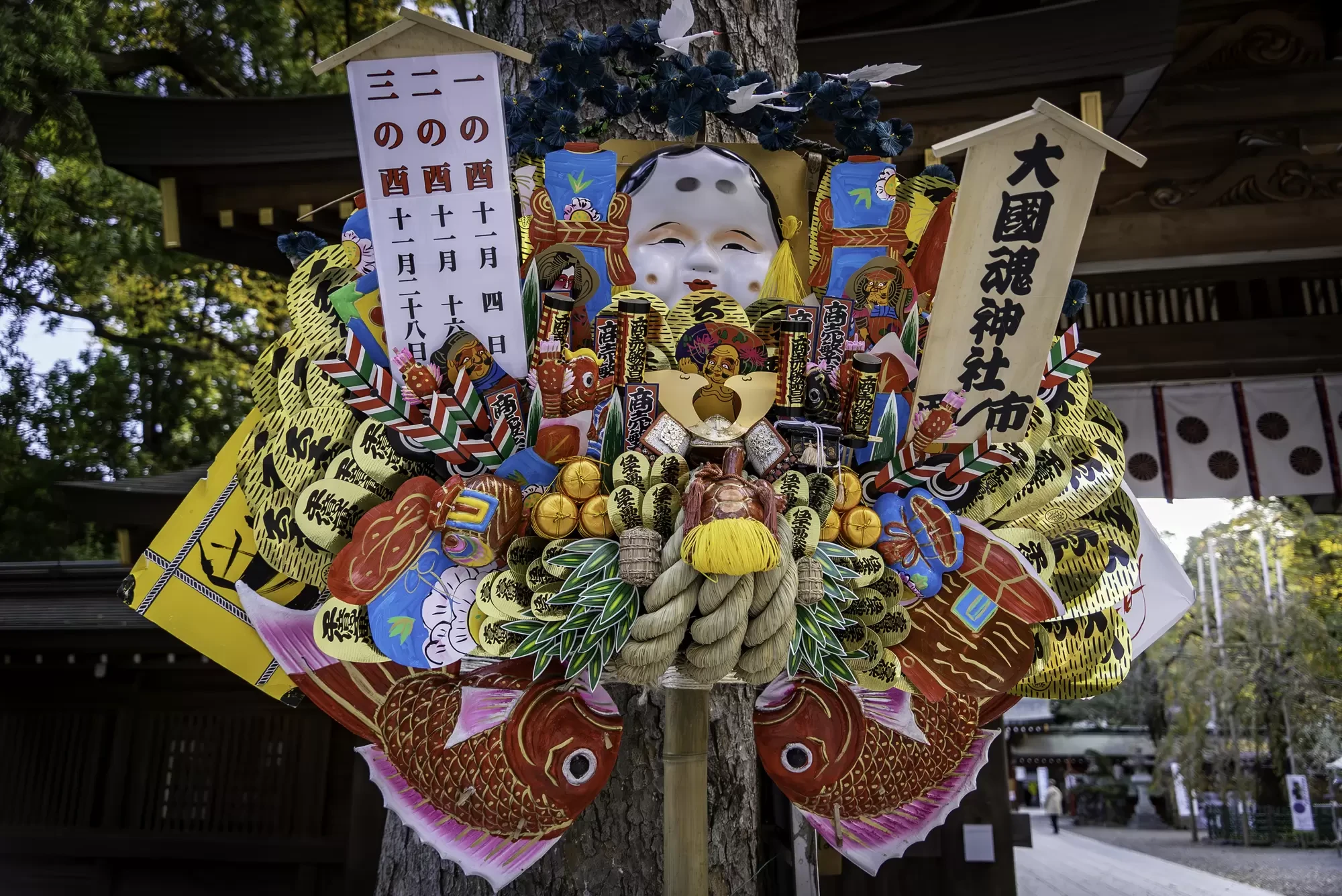
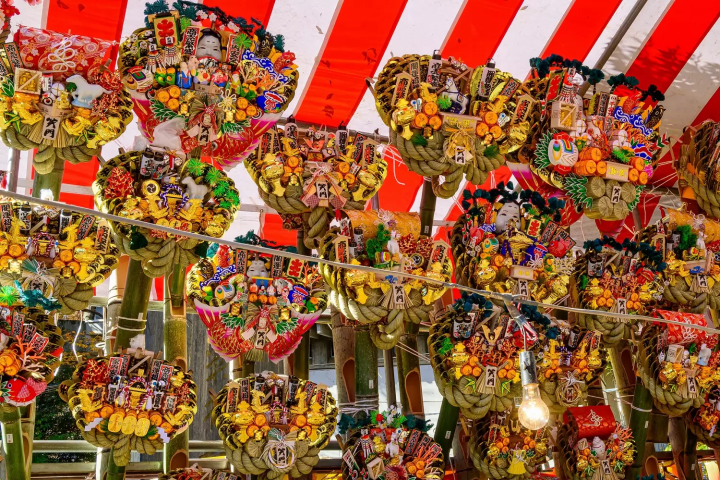
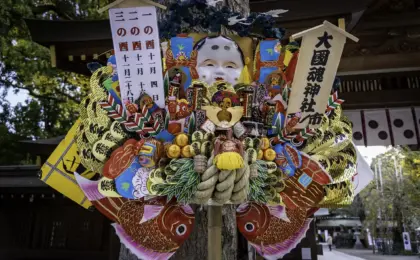
Modern kumade range from palm-sized pocket charms to towering architectural structures costing hundreds of thousands of yen. These talismans are densely layered with auspicious iconography:

- Maneki-Neko: The beckoning cat, symbolizing the attraction of paying customers.
- The Seven Gods of Good Fortune (Shichifukujin): Deities representing longevity, wealth, and general well-being.
- Koban Gold Coins and Bales of Rice: Direct representations of monetary wealth and agricultural abundance.
- Otafuku Masks: Smiling female faces symbolizing mirth and universal harmony.
[Utilized as Farming Tool] (Edo Period)
       ↓
[Marketplace Display for Harvest Goods]
       ↓
[Metaphorical Rake for "Scooping" Wealth]
       ↓
[Modern Decorated Kumade with Maneki-Neko & Gold Coins]
The Tejime Ritual
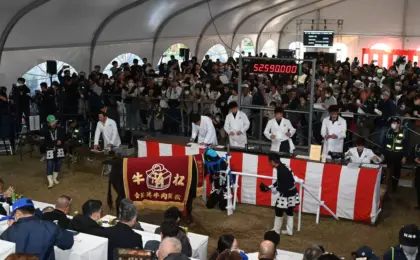
Purchasing a kumade is rarely a silent, transactional affair. Upon agreeing to a price, the vendor and buyer engage in tejime—a synchronized, rhythmic hand-clapping ceremony accompanied by roaring chants. This public performance seals the contract, cleanses the transaction of negative energy, and invokes collective blessings for the buyer’s enterprise.
Official Venues: The Three Major Fairs
1. Asakusa: Otori Shrine and Chokokuji Temple
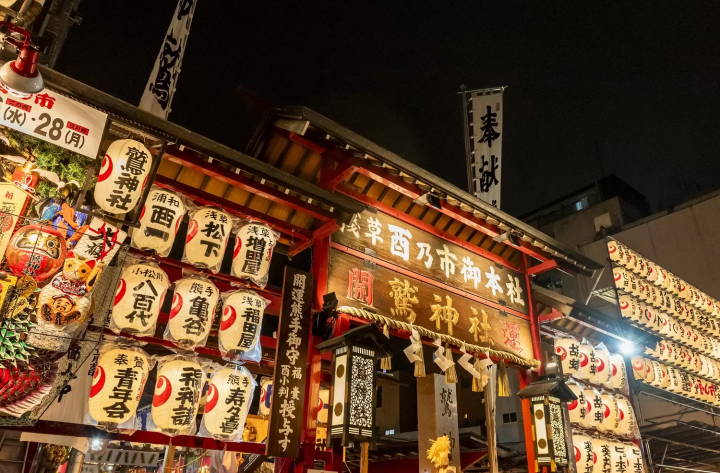
Situated in Tokyo’s historic shitamachi (downtown) district, the dual-venue celebration at Otori Shrine and Chokokuji Temple represents the spiritual epicentre of Tori no Ichi. Operating continuously for 24 hours on both November 7 and November 19, 2026, this location offers an unfiltered glimpse into Edo-period festival culture.

- Atmosphere: Hundreds of glowing stalls illuminate the temple and shrine courtyards, crowded with merchants, neighborhood associations, and curious spectators. The air rings with vendor calls, festival music, and the sharp snaps of tejime hand-claps.
- Access Infrastructure: Located approximately a 9-minute walk from Iriya Station (Tokyo Metro Hibiya Line), a 10-minute walk from Minowa Station (Tokyo Metro Hibiya Line), or an 11-minute walk from Asakusa Station (Tsukuba Express). Note: Travelers should ensure they navigate to the Tsukuba Express Asakusa station, which is physically detached from the Ginza and Toei Asakusa lines.
2. Shinjuku: Hanazono Shrine
Positioned directly within the commercial and entertainment core of Shinjuku, Hanazono Shrine hosts the Dai-Tori-Matsuri (Grand Rooster Festival). This venue provides a striking juxtaposition: ancient Shinto rituals performed against a backdrop of neon skyscrapers and urban nightlife.

- Atmosphere: The integration of Eve Festivals (Zen’yasai) on November 6 and November 18 allows office workers and evening diners to participate without waiting for the main weekend or weekday peak. Rows of red lanterns cast a warm glow over stalls hawking specialized foods and elaborate kumade.
- Access Infrastructure: Exceptionally accessible, situated directly adjacent to Exit E2 of Shinjuku-sanchome Station (Tokyo Metro Marunouchi, Fukutoshin, and Toei Shinjuku lines), or a 7-minute walk from the East Exit of JR Shinjuku Station.
3. Fuchu: Okunitama Shrine
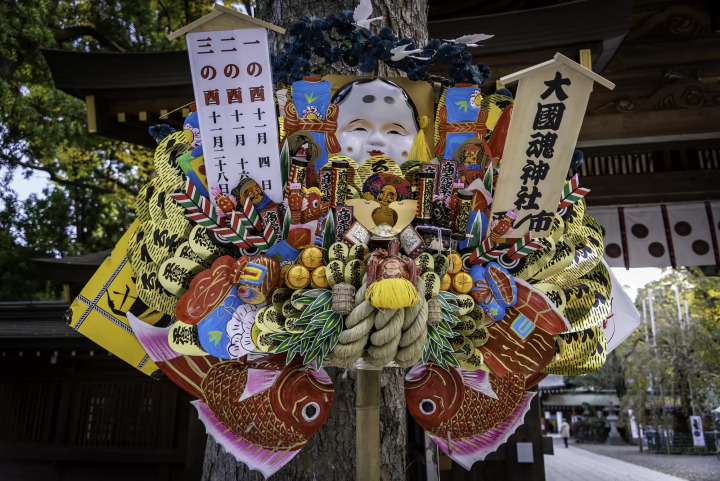
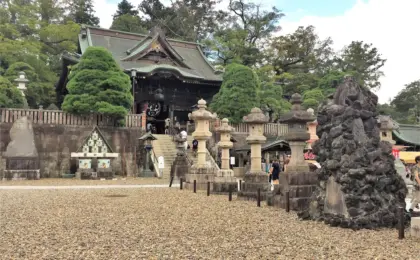
For visitors seeking a quieter, more historically grounded atmosphere outside central Tokyo, Okunitama Shrine in western Tokyo offers a profound cultural excursion. Founded in 111 AD, the shrine houses an independent Otori Shrine within its sacred grove.

- Atmosphere: Moving away from the high-density urban crush of Shinjuku and Asakusa, Fuchu’s festival emphasizes traditional shrine customs, featuring both stalls and official Shinpu Kumade (sacred talisman rakes) issued directly by the shrine priesthood.
- Access Infrastructure: A convenient 5-minute walk from either Fuchu Station (Keio Line) or Fuchu-Hommachi Station (JR Nambu and Musashino lines). Trains from Shinjuku’s Keio Line terminal reach Fuchu in approximately 25 to 30 minutes.
Future Outlook & Visitor Advisory
As Tokyo continues to modernize at a rapid pace, traditional events like Tori no Ichi provide an indispensable anchor to the past. They remain vital economic and social touchstones for small business owners, corporate leaders, and citizens navigating an uncertain global economy.
Strategic Recommendations for Attendees
- Embrace Scaled Progression: First-time buyers of kumade are traditionally advised to purchase a modest, small-scale rake and incrementally upgrade to larger models in subsequent years, symbolizing compounding business growth. However, buyers should select sizes appropriate to their actual display space and budget.
- Understand the Haggling Tradition: While traditional price negotiation (kakeai)—where the buyer haggles for a lower price and leaves the difference as a tip (goshugi)—is celebrated by veteran vendors, it is entirely optional. First-time visitors should feel comfortable paying marked list prices.
- Respect Display Protocol: At home or in commercial storefronts, kumade should be mounted high on a clean, bright wall—ideally facing the entrance or oriented toward the auspicious direction—to catch and retain incoming wealth. Carrying the rake home requires holding it high to maintain upward momentum in personal fortune.
- Mind Crowd Management: Given the immense popularity of the 24-hour Asakusa and Shinjuku events, peak evening hours generate severe pedestrian congestion. Utilizing public transit and arriving during off-peak morning hours is strongly advised for visitors traveling with family or bulky luggage.




Belum ada komentar. Jadilah yang pertama berkomentar!