

Executive Overview
For over a decade and a half, League of Legends has reigned as an undisputed titan of the multiplayer online battle arena (MOBA) genre, shaping global esports and cementing Riot Games as an industry colossus. However, the exact blueprint of how this digital empire came to be has long remained shrouded in corporate lore and early-development mythology. Recently, thanks to a collaborative deep-dive between prominent League of Legends content creator Necrit and Riot Games’ Paul “Pabro” Bellezza, the gaming community has been granted an unprecedented look into the company’s primordial past.
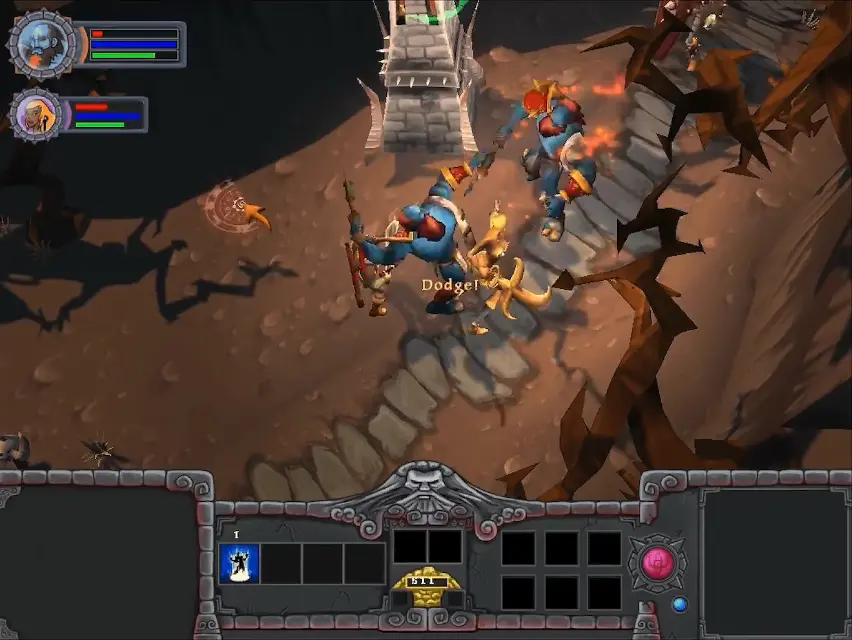
The centerpiece of this revelation is Onslaught: War of the Immortals—the original working title and conceptual foundation for what would eventually evolve into League of Legends. Pitched to investors in an era when early-2000s nu-metal and hyper-edgy aesthetic choices dominated pop culture, Onslaught bears almost no resemblance to the modern, polished tactical landscape of Summoner’s Rift. Featuring a cartoony cityscape split between warring factions, customizable player-summoned immortals, and bizarrely reimagined versions of iconic champions (including a bearded Sion and a mysteriously renamed Singed), the pitch materials offer a fascinating time capsule. This investigative feature explores the mechanics, lore, narrative, and historical significance of Riot’s long-lost genesis, examining how a wildly different vision eventually morphed into one of the most successful video games in history.
Detailed Chronology: From Concept to Corporate Pivot
To understand Onslaught: War of the Immortals, one must trace the timeline of Riot Games’ foundation back to the mid-2000s. Inspired heavily by Defense of the Ancients (DotA), the seminal Warcraft III custom map, founders Brandon Beck and Marc Merrill envisioned a standalone commercial product that could capture the emergent tactical depth of the custom map scene while establishing a sustainable business model.
Before settling on the clean, fantasy-meets-steampunk aesthetic of Valoran and Summoner’s Rift, the early team experimented with a vastly different conceptual framework.
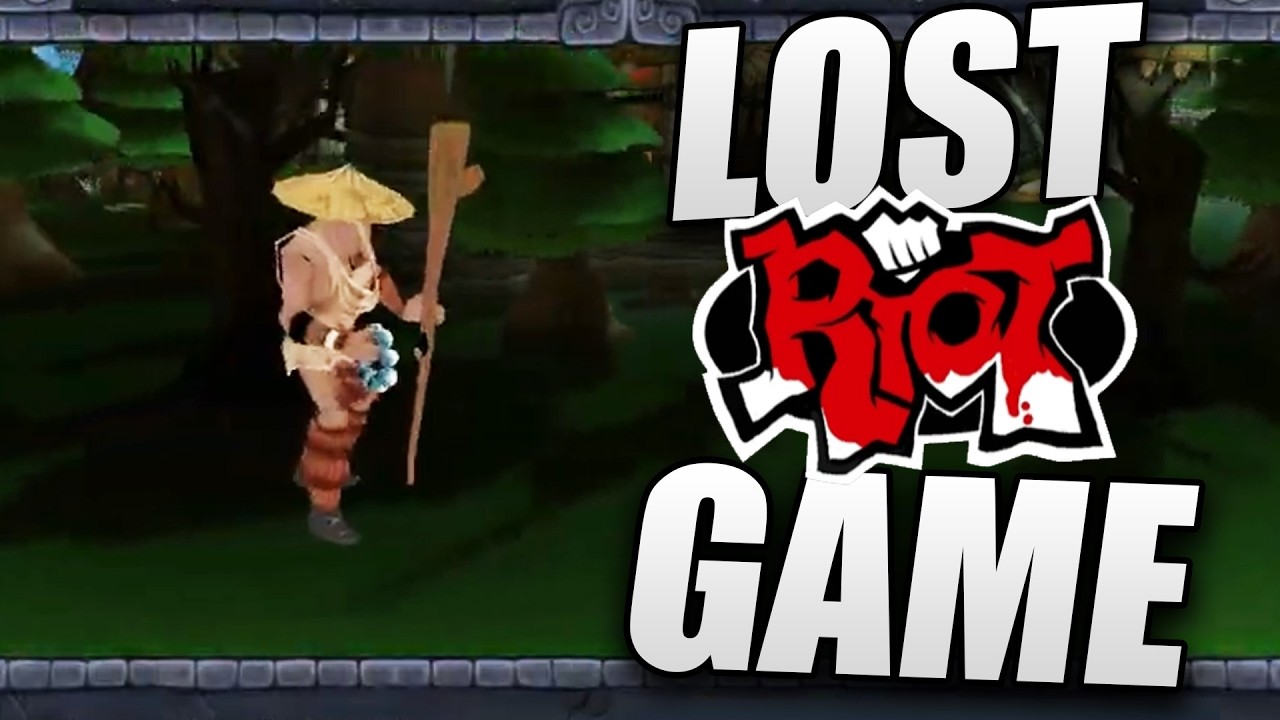
- The Investor Pitch Era: The newly uncovered archival materials—comprising vintage video footage, early design documents, comprehensive lore breakdowns, and raw screenshots—originate from a pitch deck designed to secure early funding. The overall presentation reflects the stylistic sensibilities of the mid-to-late 2000s, complete with an aggressively stylized, blood-drenched Riot Games logo that sets a stark, gritty tone.
- The Creative Pivot: As development progressed, the team realized that the rigid faction-locked mechanics and dense, cartoony urban sprawl of Onslaught were limiting tactical flexibility. The vision gradually shifted away from a persistent faction war inside a cityscape toward the more modular, highly competitive, and lore-agnostic battle arena framework that defined League of Legends upon its late-2009 release.
- The Re-Emergence (2026): For years, isolated leaks and veteran developer recollections hinted at these early prototypes, but concrete media remained behind closed doors. The recent reveal orchestrated by Necrit and Pabro marks the first time the public has been given a comprehensive look at the pitch assets, shedding light on mechanics and character designs that were thought to be lost forever.
Supporting Context & Metrics: Decoding the Onslaught Design Paradigm
A meticulous examination of the Onslaught design documents reveals a game mechanics engine that was radically divergent from standard MOBA conventions. While modern League of Legends focuses on 5v5 map control, objective management, and champion synergy on a neutral forest-and-river map, Onslaught leaned heavily into asymmetrical faction warfare and strategic customization.
1. The Battlefield Architecture
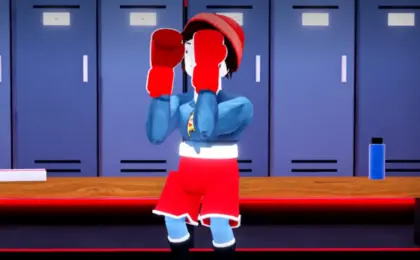
Instead of the open lanes of Summoner’s Rift, Onslaught took place within a stylized, cartoonish urban environment. The map was sharply divided between two opposing ideological realms: Order and Chaos. This structural dichotomy was not merely aesthetic; it dictated fundamental gameplay loops, character availability, and win conditions.
2. Faction Allegiance and Hero Exclusivity
One of the most striking revelations from the pitch documents is that players were required to declare a permanent or semi-permanent allegiance to either Order or Chaos upon entering the game. Furthermore, certain high-tier heroes were strictly exclusive to one realm. This design philosophy shares more DNA with traditional MMORPG faction systems (such as World of Warcraft’s Alliance versus Horde divide) than with contemporary competitive MOBAs, where all characters are universally accessible to both teams.
3. The Immortals System
True to its subtitle, War of the Immortals, the core gameplay loop revolved around customizable, god-like entities. Players could cultivate and temporarily summon these massive immortals onto the battlefield during climactic teamfights. This mechanic functioned as an ultimate strategic trump card, effectively serving as an early prototype for hyper-scaling mechanics, global map pressures, and ultimate abilities rolled into one.
4. The Champions That Were (and Weren’t)
While many foundational champions made their earliest conceptual debuts in this pitch, their visual identities and mechanical kits were vastly different:
- Lee Sin (Originally Xizun): Described in early notes as being "built like a brick wall on roids," the original blind monk possessed a passive and baseline kit that emphasized brutal brawling durability rather than fluid martial arts mobility.
- Annie: Familiar yet entirely out of place, Annie was present with her signature flaming teddy bear minion, though her character model sported distinct proportions tailored to the game’s cartoony art direction.
- Sion: Perhaps the most jarring visual departure, the undead juggernaut of modern lore originally sported a prominent beard, subverting his later identity as a mindless, decaying undead war machine.
- Singed: Remarkably, Singed stands as the sole exception to the rule of radical redesign. He remained largely recognizable, though internal documents referred to him by the moniker "Zij"—a curious naming quirk that has baffled historians and fans alike.
Narrative and Lore: Edgy Origins of a Digital Empire
Beyond mechanical differences, the narrative universe of Onslaught offers a fascinating glimpse into the screenwriting sensibilities of indie developers working in the shadow of early-internet fantasy tropes.
The lore framed Order and Chaos as ancient, cosmic forces locked in an uneasy, neutral stalemate. This delicate balance was shattered by the birth of what pitch writers bluntly termed "an antichrist of sorts." This catastrophic birth ripped a massive fissure in the fabric of reality, unleashing an unstoppable tide of chaos that threatened to consume all of existence.
This hyper-dramatic, unapologetically edgy narrative framework stands in sharp contrast to the sprawling, multi-media fictional universe that Riot Games maintains today through Arcane, cinematic universes, and extensive short stories. Yet, it captures the raw, unrefined ambition of a startup studio throwing every ambitious fantasy trope at the wall to see what would stick.
Official Statements & Industry Impact
The surfacing of Onslaught: War of the Immortals has generated intense discussions across the gaming industry, bridging the gap between nostalgic players and modern developers.
In the feature video breaking down the archival assets, Paul "Pabro" Bellezza provided crucial context regarding why Riot Games ultimately abandoned the Onslaught direction. According to Bellezza, the early team was constantly iterating on what made competitive play engaging. While the customizable immortals and faction-locked cityscapes sounded grand on paper, they introduced massive balancing hurdles and diluted the pure, skill-based competitive integrity that the developers ultimately sought to prioritize.
Industry analysts have noted that the unearthing of Onslaught serves as a masterclass in game development evolution. It underscores the vital importance of pivot points in software engineering—demonstrating how a studio can take a high-concept, overly complex prototype and distill its best mechanical DNA into a streamlined, globally dominant product.
Future Outlook
As the gaming community continues to comb through the pixels, design documents, and lore scraps of Onslaught: War of the Immortals, the conversation inevitably turns toward how Riot Games might honor its lost history.
While League of Legends has periodically embraced its own past through nostalgic game modes, retro skins, and the recent success of experimental legacy events, the inclusion of Onslaught elements into modern iterations remains an enticing prospect. Could we ever see a limited-time game mode set in the cartoony urban sprawl of the Order and Chaos cityscapes? Will a future anniversary event pay homage to bearded Sion or the mysterious "Zij"?
Only time will tell. However, one thing is certain: by dragging Onslaught out of the corporate vault, Riot Games and content creators like Necrit have provided a priceless gift to gaming historians. It stands as a humbling reminder that even the biggest gaming empires in the world start with a gritty pitch deck, an overly edgy storyline, and a dream of building something unforgettable.


Belum ada komentar. Jadilah yang pertama berkomentar!