

Executive Overview
The legendary development history of FromSoftware’s Dark Souls franchise is characterized by brilliant successes born from chaotic production cycles. From the missing archstone in Demon’s Souls to the notoriously rushed back half of the original Dark Souls—specifically the infamous Lost Izalith—fans have long romanticized the content left on the cutting room floor. However, no entry in the acclaimed studio’s catalog suffered quite as turbulent a journey as Dark Souls II.
Released in 2014, the game was developed under immense pressure while series mastermind Hidetaka Miyazaki focused heavily on the PlayStation 4 exclusive Bloodborne. Compounded by a mid-development director change, sweeping narrative rewrites, a divisive overhaul of the game’s combat mechanics and hit-detection systems, and a notorious pre-release graphical downgrade, Dark Souls II has always been viewed as the black sheep of the modern trilogy. Yet, despite its polarizing reception, its underlying game files continue to yield staggering secrets a decade after launch.
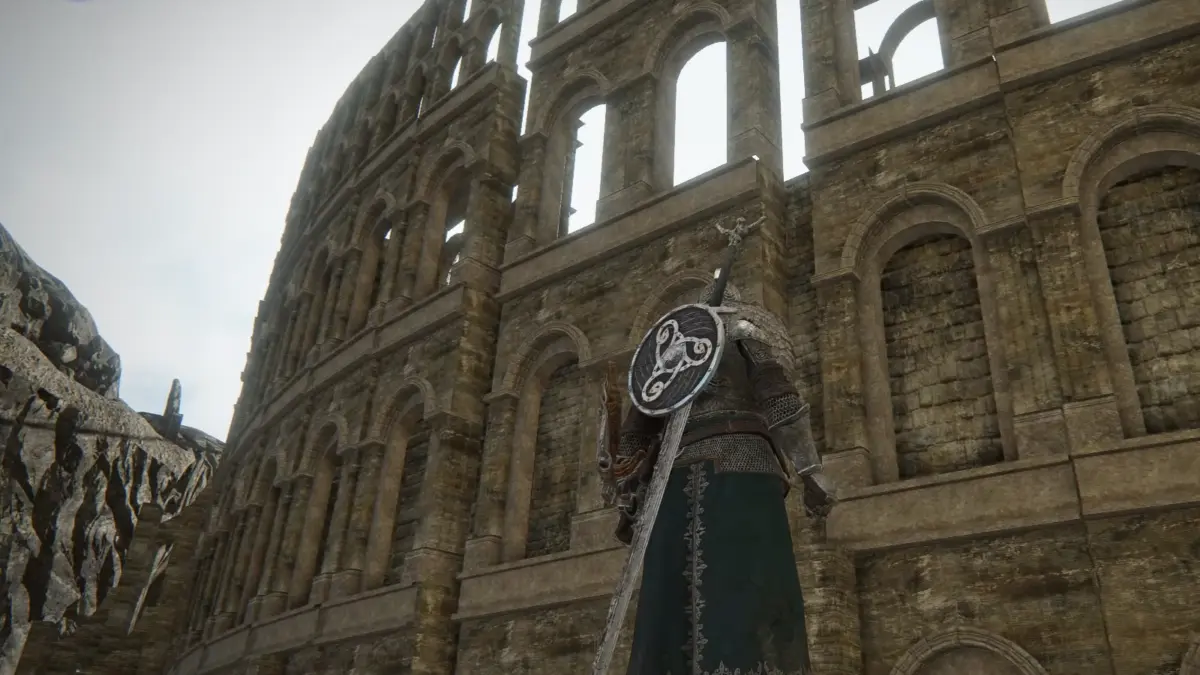
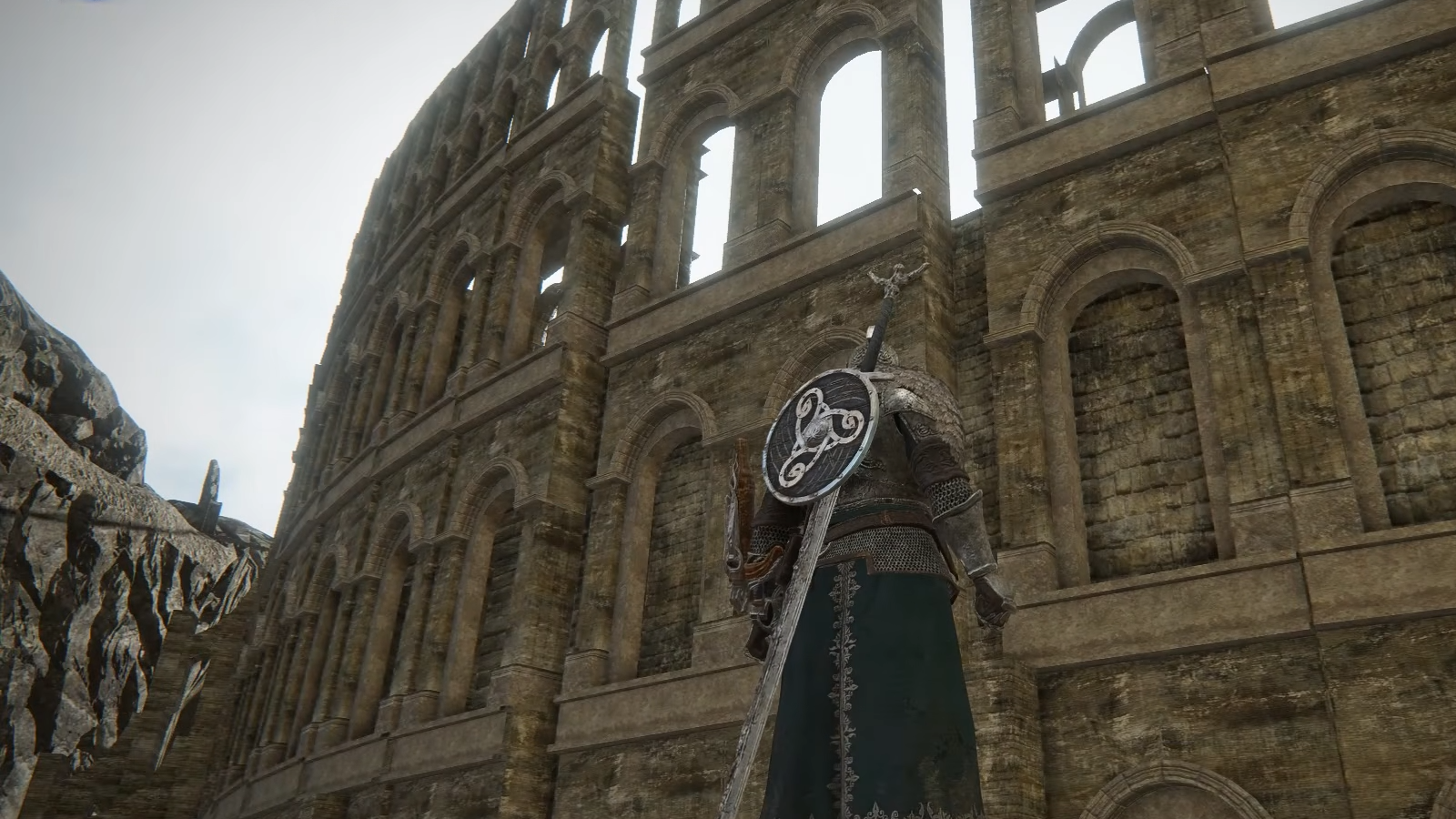
In the latest revelation shaking the Soulsborne modding and datamining community, a prominent researcher named Doneda has unearthed what is arguably FromSoftware’s most ambitious unused map: a gigantic, towering coliseum complex. Captured in stunning detail—featuring players looking up at sweeping, cyclopean masonry that dwarfs typical series architecture—this discovery offers a bittersweet glimpse into a sprawling, alternate vision of Drangleic that never made it to the finish line. This report explores the significance of the find, the turbulent context of Dark Souls II’s development, the implications of ongoing datamining discoveries, and what this means for the preservation of video game history.
Detailed Chronology: The Evolution and Erasure of Drangleic’s Secret Giants
To understand the weight of Doneda’s recent discovery, one must trace the timeline of Dark Souls II’s troubled production, which began shortly after the completion of the original game and its Artorias of the Abyss downloadable content.
The Pre-Release Vision (2012–2013)
When Dark Souls II was first unveiled at the 2012 Spike Video Game Awards, it captured the imagination of the global gaming community. The early promotional material promised a darker, more atmospheric experience highlighted by dynamic lighting systems, torch-dependent exploration, and a sprawling, interconnected world design reminiscent of Lordran. Trailers showcased vast outdoor vistas and grand architectural set-pieces that suggested an unprecedented scale for the studio.
Behind closed doors, however, the project was faltering. The original directorial vision proved unsustainable under the technical constraints of aging seventh-generation consoles (the PlayStation 3 and Xbox 360). As development fell behind schedule, FromSoftware intervened by bringing in Yui Tanimura to co-direct alongside Tomohiro Shibuya, effectively forcing a hard reset on large portions of the game’s design, enemy placement, and world layout.
The Great Downgrade and Re-Architecture (2013–2014)
To salvage the project and ensure it could run stably on target hardware, the development team was forced to scale back several core features. Most notably, the dynamic lighting engine—which required players to actively manage torches in pitch-black dungeons—was largely stripped out, leading to flatly lit environments that drew heavy criticism upon release in March 2014.
Simultaneously, entire zones were truncated, stitched together, or entirely discarded. The newly discovered coliseum map appears to belong to this early, hyper-ambitious phase of development. Judging by its immense verticality and towering stone walls, the zone was likely conceptualized before the technical limitations of the PS3 and Xbox 360 forced the team to adopt a more modular, level-based hub-and-spoke design (exemplified by Majula’s branching pathways).
The Datamining Renaissance (2020s)
Years after release, the game’s internal files have become a playground for dedicated archival researchers. Modder and dataminer Doneda has emerged as a leading authority on Dark Souls II’s discarded geometry. Prior to uncovering the coliseum, Doneda made waves by restoring and adapting massive swaths of cut content. Notably, they ported an entire Dark Souls II DLC zone—Eleum Loyce—into a playable, custom format, while also unearthing an enormous, labyrinthine early version of The Gutter, proving that the original design documents for Drangleic featured scale far beyond what players eventually experienced.
Supporting Context & Metrics: Unused Assets and Historical Precedents
To contextualize the scale of this discovery, it is helpful to examine the broader landscape of cut content across FromSoftware’s pre-Sekiro catalog, as well as the technical hurdles overcome by modern archival mods.
Comparative Cut Content in the Souls Series
| Game | Notable Cut Content / Missing Feature | Primary Cause |
|---|---|---|
| Demon’s Souls | The 6th Archstone (Northern Limit / Giant Realm) | Rushed production schedule; Sony intervention |
| Dark Souls | Lost Izalith, incomplete back half | Time constraints and budget depletion |
| Dark Souls II | Dynamic lighting system, vast early zones (Coliseum, early Gutter) | Engine overhaul, hardware limitations, director shift |
| Dark Souls 3 | Advanced Time-of-Day weather/world state system | Late-stage narrative and engine revisions |
Technical Analysis of the Coliseum Map
The newly showcased coliseum map stands out not merely for its aesthetic grandeur, but for its sheer spatial dimensions. In standard Dark Souls II design, areas are deliberately bounded to manage memory constraints and render distances. The coliseum, however, utilizes massive, sweeping vertical geometry that suggests it was designed as a multi-tiered battleground—potentially intended for major boss encounters, large-scale faction wars, or a central narrative crucible that was abandoned when the plot underwent its late-stage rewrite.
Furthermore, the integration of these assets into modern environments (such as experimental mods and preservation tools) demonstrates that the geometry remains surprisingly robust. While textures and collision boxes are frequently incomplete or placeholder, the architectural skeleton reveals an artistically complete vision that was cut late in the production pipeline, rather than during early conceptualization.
Official Statements & Industry Perspectives
FromSoftware has historically maintained a strict policy of silence regarding cut content, preferring to let finished works speak for themselves. Developers rarely comment on internal development hurdles, viewing them as standard iterations in a creative industry. However, post-mortem interviews from studio leads over the years have shed light on the immense stress placed upon development teams during the height of the studio’s multi-project output in the early 2010s.
In past interviews discussing the development of Dark Souls II, Hidetaka Miyazaki noted the challenges of handing over the directorial reins while managing the simultaneous creation of Bloodborne. While Miyazaki did not direct Dark Souls II, the creative gravitational pull of his absence left the team grappling with how to evolve the formula without his direct oversight.
Industry analysts and veteran game preservationists have repeatedly praised the work of dataminers like Doneda. Without official art books or comprehensive design leaks detailing every iteration of Drangleic, community-driven restoration projects serve as a vital digital archaeology wing, preserving the sweat and ambition of developers whose work was hidden away to meet corporate deadlines.
Future Outlook: The Ongoing Quest for Video Game Archaeology
As gaming shifts increasingly toward digital-only distributions and live-service models, the physical and digital artifacts of traditional game development risk being lost forever. Yet, communities surrounding titles like Dark Souls II ensure that the history of these digital worlds continues to be written long after the developers have moved on.
What Lies Ahead for Dark Souls II Preservation?
- Advanced Map Reconstructions: As modding tools become more sophisticated, projects aiming to render cut zones fully playable (similar to Doneda’s work with Eleum Loyce and early sewer maps) will likely grow more ambitious.
- Collaborative Archival Databases: Dataminers are increasingly pooling their findings into open-source repositories, mapping out file directories to trace the exact chronological order in which assets were created and discarded.
- The Shadow of Future Releases: With FromSoftware currently expanding its footprint following the colossal success of Elden Ring and its Shadow of the Erdtree expansion, historical retrospectives on older titles remind players of the rocky foundations upon which modern masterworks were built.
Ultimately, looking up at the towering, silent walls of the cut Dark Souls II coliseum evokes a potent mix of melancholy and awe. It serves as a permanent reminder that every video game we play is merely the survivor of a thousand different versions that perished along the way—and thanks to modern dataminers, those ghosts are finally being brought back into the light.





Belum ada komentar. Jadilah yang pertama berkomentar!