

Executive Overview
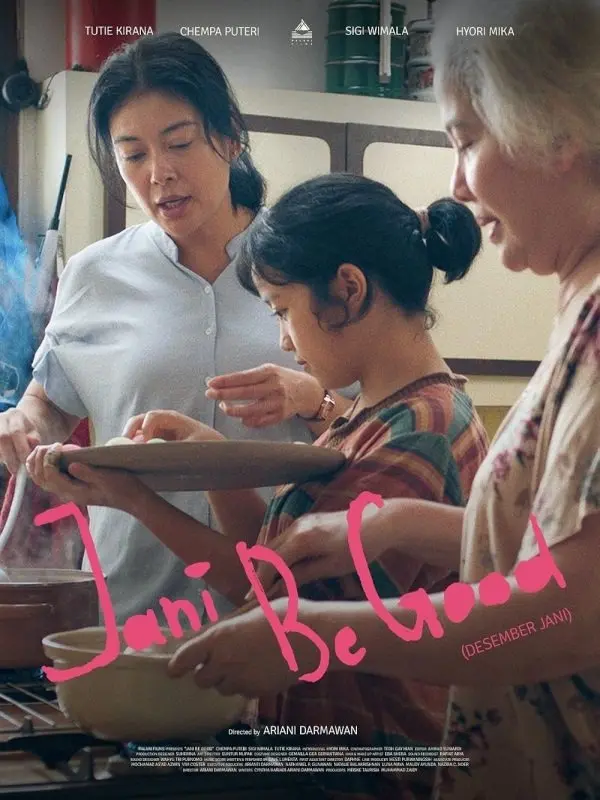
The 2026 international film circuit has been notable for its diverse geographic representation, yet few entries have captured the quiet, agonizing intricacies of domestic life quite like Jani Be Good. Marking the feature-length narrative directorial debut of acclaimed Indonesian filmmaker Ariani Darmawan, the film steps decisively away from the high-octane actioners and supernatural horror vehicles that have historically dominated international perceptions of contemporary Indonesian cinema. Co-written by Darmawan and Cyntha Hariadi, Jani Be Good presents a deeply human, restrained, and profoundly resonant exploration of motherhood, sisterly friction, and the volatile nature of words spoken in the heat of passion.
Set against the festive backdrop of an impending Christmas that feels more stressful than celebratory, the narrative anchors itself within a single, tense household. Here, three generations of women—grandmother Oma (Tutie Kirana), mother Winnie (Sigi Wimala), and the titular teenager Jani (Chempa Puteri)—grapple not only with changing family dynamics and the impending sale of their family home, but also with the seismic aftershocks of a domestic argument that forces a volatile family member to pack her bags and leave.
Clocking in at a tightly controlled runtime of just over one hour and forty minutes, the film achieves remarkable emotional resonance without relying on melodramatic tropes or explosive emotional blowouts. Instead, Darmawan trusts her audience to read between the lines, delivering a mature exploration of familial love, regret, and the realization that sometimes distance is required for bonds to truly heal. Anchored by a stellar trio of central performances from Puteri, Wimala, and Kirana, Jani Be Good has emerged as a critical darling on the festival circuit—most notably bowing at the Tokyo International Film Festival—and signals the arrival of a major new voice in Southeast Asian art-house cinema.
Detailed Chronology and Narrative Breakdown
To fully understand the emotional landscape of Jani Be Good, one must examine the pacing and escalation of events that dictate the rhythm of Darmawan’s script. The film’s narrative architecture is deliberately intimate, prioritizing psychological realism over structural pyrotechnics.
Act I: The Pressure Cooker of Domesticity
The film opens by establishing an atmosphere of quiet claustrophobia. The household is already under immense financial and emotional strain: the family home is up for sale, forcing the occupants to confront the impending dissolution of their shared physical history. Amidst this backdrop of logistical uncertainty, the holiday season approaches. Christmas, typically a time of familial unification, serves here as an ironic counterpoint to the simmering tensions inside the walls of the house.
Oma, the matriarch, is occupied with her own pragmatic, somewhat morbid preparations for the inevitable, quietly saving up for her own funeral to spare her daughters the burden. Meanwhile, Winnie, navigating the complex frustrations of single-or-strained motherhood, is stretched to her absolute limit. Enter Jani, a sensitive teenager whose primary escape lies in the methodical, logical world of robotics, yet who remains entirely unequipped to process the complex emotional subtext swirling around her.
Act II: The Catalyst and the Fallout
The narrative crux of Jani Be Good occurs early, triggered by a seemingly minor domestic dispute that violently spirals out of control. An argument breaks out between Winnie and her older daughter, Julia. In a moment of pure psychological exhaustion and blinding anger, Winnie utters the universally dreaded parental ultimatum: "If you don’t like living here, then leave."
For most parents, such a statement is an empty emotional release valve—a volatile phrase meant for shock value rather than literal execution. However, Julia takes the declaration at face value. Needing absolute space from her mother, she packs her belongings and departs.
This single departure shatters the fragile equilibrium of the household:
- Winnie’s Regret: Stricken with profound remorse, Winnie enters a state of emotional paralysis, desperate for a digital olive branch, a text message, or any sign of acknowledgment from her estranged daughter.
- Jani’s Misunderstanding: Too young and emotionally literal-minded to parse the nuances of parental hyperbole, Jani internalizes the event with stark clarity. She witnessed her mother tell her sister to leave, and Julia complied. The cause-and-effect relationship forms a chasm in Jani’s understanding of safety and home.
- Oma’s Generational Fear: The grandmother watches the fallout with quiet terror. Haunted by memories of her deceased husband and past family fractures, Oma is driven by a fierce urgency to ensure that Julia’s departure does not become a permanent, unhealable scar—a repeat of historical divides that could leave the family permanently fractured after she passes on.
Act III: The Quiet Resolution
Rather than offering a Hollywood-style reconciliation marked by tearful embraces at an airport or a euphoric return to the status quo, Darmawan opts for a far more truthful trajectory. The final third of the film explores the painful, necessary work of processing regret.
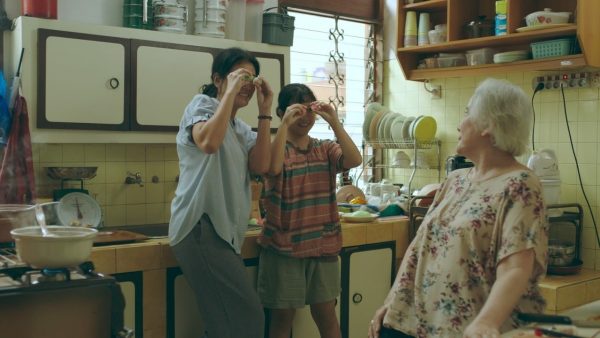
The characters come to understand that unconditional love does not mean the absence of conflict. Through subtle character beats rather than grand emotional monologues, the women realize that harsh words do not automatically negate deep affection. The film concludes on a note of mature acceptance: the recognition that wherever a mother is, there remains an enduring, if complicated, home for her children, even if distance is temporarily required to find peace.
Supporting Context & Metrics
Breaking the Mold of Contemporary Indonesian Cinema
To contextualize the achievement of Jani Be Good, one must look at the broader landscape of the Indonesian film industry. In recent years, international markets have predominantly associated Indonesian cinema with two primary genres: relentless, high-octane action thrillers (such as Gareth Evans’ The Raid series or Timo Tjahjanto’s blood-soaked epics) and terrifying, atmospherically dense horror titles that have captured global box office attention.
While these genre milestones have successfully put Southeast Asian filmmaking on the map, they have occasionally cast a shadow over more intimate, domestic art-house storytelling. Jani Be Good acts as a brilliant, deliberate counter-programming pivot. By focusing entirely on the microscopic details of familial communication, generational trauma, and feminine psychology, Darmawan proves that Indonesian cinema possesses a rich, versatile spectrum capable of executing quiet character studies with international appeal.
Production and Technical Metrics
- Jani Be Good
- Release Year: 2026
- Director: Ariani Darmawan
- Writers: Ariani Darmawan and Cyntha Hariadi
- Runtime: Approximately 100 minutes (1 hour and 40 minutes)
- Primary Venue: Premiered to critical acclaim at the Tokyo International Film Festival
- Cinematography Style: Bright yet restrained, utilizing naturalistic lighting to avoid melodramatic chiaroscuro, thereby grounding the emotional drama in an authentic, lived-in reality.
Cast Performances and Character Analysis
The success of Jani Be Good hinges almost entirely on its three central actresses, each representing a distinct phase of womanhood and processing emotional trauma through vastly different lenses.
Chempa Puteri as Jani
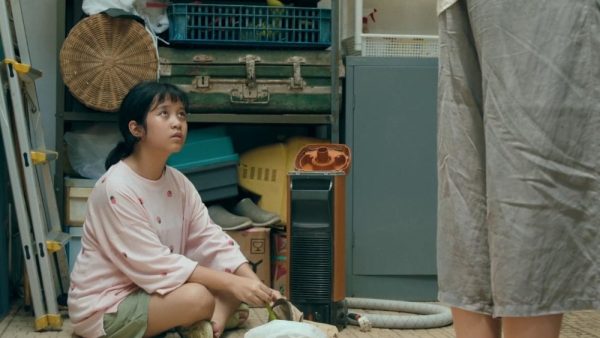
As the titular teenager, Chempa Puteri delivers a performance of acute sensitivity. Jani’s fascination with robotics provides a fascinating metaphor: she is someone who naturally seeks logic, cause-and-effect, and predictable mechanical outcomes in a world governed by messy, irrational human emotions. Puteri captures the precise vulnerability of youth—the inability to comprehend that adults frequently weaponize language without intending literal outcomes. Her wide-eyed observation of her mother’s regret and her sister’s absence anchors the film’s youthful perspective.
Sigi Wimala as Winnie
Sigi Wimala offers what is arguably the emotional anchor of the film. Winnie is far from a caricature of a "bad mother"; instead, she is portrayed as a deeply human, fractured individual buckling under the weight of financial stress, household downsizing, and single parenthood. Wimala’s portrayal of remorse is masterclass-level acting. She eschews grand, theatrical weeping in favor of micro-expressions—the lingering stare at a smartphone screen, the quiet sigh while folding laundry, and the exhausting effort required to wake up every day and keep providing for the remaining members of her family.
Tutie Kirana as Oma
Veterans of cinema often elevate a project simply by their presence, and Tutie Kirana is no exception. Playing the grandmother Oma, Kirana imbues the film with historical weight and generational wisdom. Oma’s subplot involving her savings for her own funeral is handled with a stark, matter-of-fact dignity that prevents it from feeling morbid. Kirana portrays a woman racing against time, desperate to cement a legacy of unity so that her descendants do not spend their lives divided after she is gone.
Future Outlook
The critical reception of Jani Be Good at the Tokyo International Film Festival marks a significant milestone not only for Ariani Darmawan, but for the trajectory of independent Indonesian cinema on the global stage. As film commissioners, festival programmers, and international distributors increasingly search for authentic, culturally grounded narratives that eschew genre clichés in favor of universal human truths, Jani Be Good stands out as a prime blueprint.
For Darmawan, this feature-length debut establishes her as a visionary filmmaker with a distinct voice, exceptional control over pacing, and a profound empathy for her characters. Moving forward, the industry will undoubtedly keep a watchful eye on her future projects. Whether she continues to explore the delicate architecture of family dynamics or branches out into other facets of social realism, Darmawan has proven that small-scale, deeply personal stories can pack an immense, lingering cinematic punch. Jani Be Good is not merely a successful first feature; it is a timeless reminder that cinema’s greatest power lies in its ability to make us recognize our own domestic flaws, our deepest regrets, and our capacity for unconditional forgiveness on the silver screen.







Belum ada komentar. Jadilah yang pertama berkomentar!