

Executive Overview
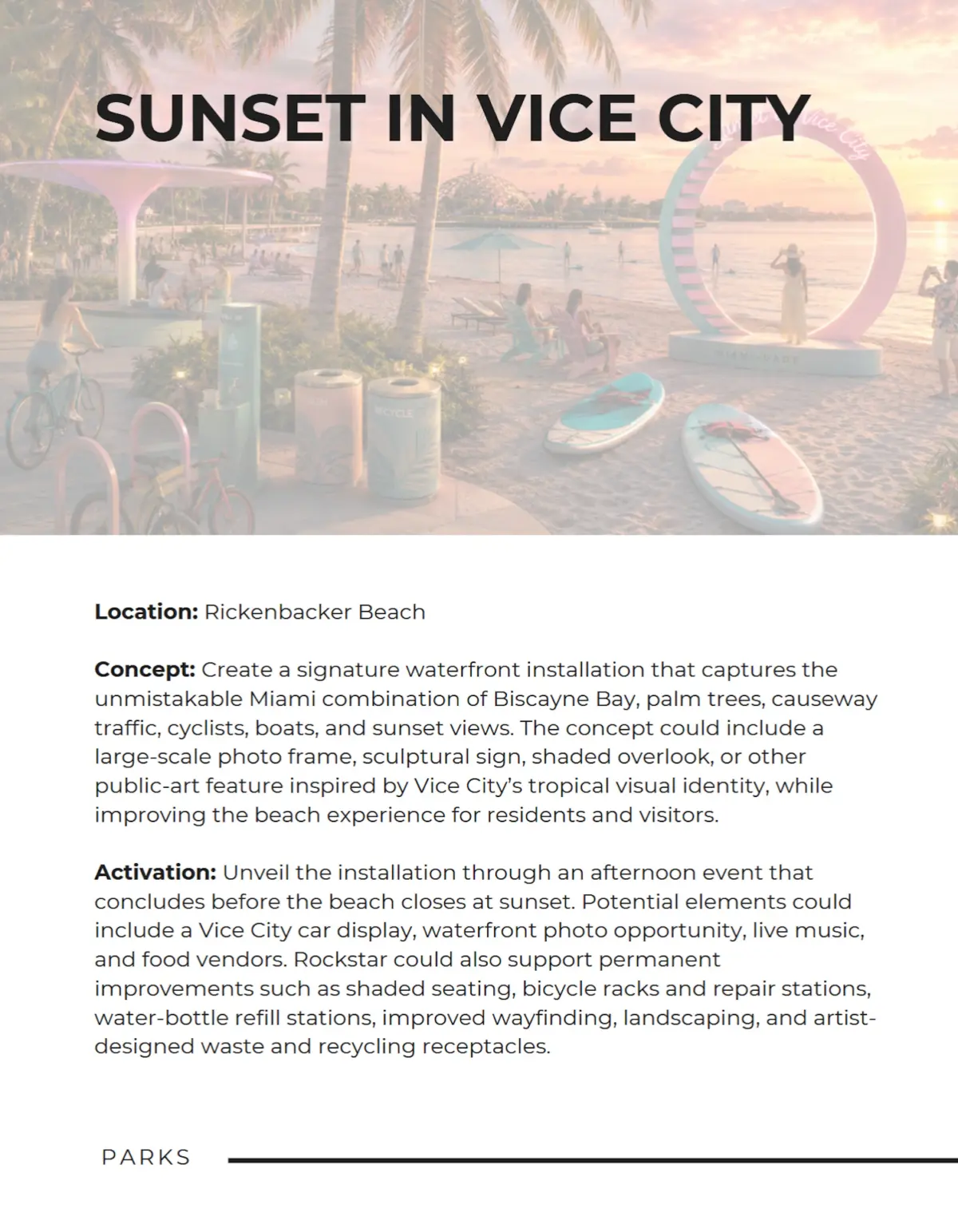
As the video game industry prepares for what is widely projected to be the largest entertainment launch in human history, an unexpected geopolitical and cultural collision is unfolding in South Florida. Miami-Dade County officials and representatives from Rockstar Games have engaged in preliminary discussions regarding a potential high-profile marketing collaboration to leverage local landmarks and facilities for the upcoming release of Grand Theft Auto VI.
For local administrators, the proposal represents an unprecedented economic windfall. Proponents argue that aligning the county with the eagerly anticipated sequel could generate substantial revenue, attract global tourism, and market Miami-Dade’s vibrant culture to a massive, highly engaged international audience. However, the initiative has triggered immediate, fierce pushback from law enforcement leadership. The Miami-Dade Sheriff’s Office and key county commissioners have condemned the concept, arguing that the Grand Theft Auto franchise stands in direct opposition to the safety, dignity, and civic values that public servants work tirelessly to maintain.
This friction underscores a broader cultural question: Where is the line between celebrating a region’s global pop-culture footprint and endorsing the glorification of fictional crime? As negotiations hang in the balance, the intersection of municipal governance and multi-billion-dollar corporate marketing has thrust Miami-Dade into the center of a worldwide media storm.
Detailed Chronology: From Pitch Deck to Public Outrage
The story of this unlikely bureaucratic tango began taking shape quietly in the mid-summer months of 2025, though the seeds were sown years prior when Rockstar Games confirmed that its next title would return to the iconic, sun-drenched sprawl of Vice City—the virtual analogue to Miami.
June 29, 2025: The Pitch Deck Submitted
According to recent investigative reports by regional outlets The Miamian and the Miami Herald, the administrative machinery of Miami-Dade County drafted and submitted a formal pitch deck to Rockstar Games on June 29. The document outlined various ways the county could integrate its real-world infrastructure and municipal assets into the global promotional campaign for Grand Theft Auto VI.
Following the submission, representatives from Miami-Dade County administration held direct conversations with Rockstar personnel. Carlos Suarez, a spokesperson for Miami-Dade Mayor Daniella Levine Cava, confirmed that discussions took place to explore potential promotional alignments tied to the game’s launch window.
The Administrative Stance
County officials rushed to clarify that no legally binding contracts, formal agreements, or final approvals had been established. Mayor Levine Cava’s office emphasized that any promotional partnership would ultimately be required to traverse the standard, rigorous municipal review and approval processes.
In statements to the press, Suarez defended the exploratory talks by highlighting the undeniable economic reality:
"Given Miami-Dade’s clear influence on the game, we think there could be a unique opportunity to generate revenue for the County while showcasing Miami-Dade to a massive audience."
Proponents within the county government envisioned a mutually beneficial arrangement where Rockstar Games might help fund permanent upgrades to local infrastructure, sponsor community-focused events, and drive tourism by officially linking the real-world metropolis to its digital counterpart.

July–August 2025: The Backlash Erupts
As details of the pitch deck leaked into the public sphere, the tone of the conversation shifted dramatically from fiscal optimism to moral and professional outrage.
The primary catalyst for resistance came from the highest levels of local law enforcement. Newly empowered and deeply protective of the department’s public image, Miami-Dade Sheriff Rosie Cordero-Stutz voiced uncompromising opposition to any partnership with the gaming titan. Her public denunciation opened the floodgates for a broader political debate, drawing swift support from county commissioners who felt the administration’s pitch crossed a dangerous ethical line.
Supporting Context & Metrics: The Cultural and Economic Gravity of Vice City
To understand why Miami-Dade County would risk controversy by pursuing a corporate partnership with a video game publisher, one must examine the staggering cultural footprint of the Grand Theft Auto franchise, as well as the deep, symbiotic relationship between the real city of Miami and its fictional twin, Vice City.
The Real Miami vs. Vice City
For decades, the Grand Theft Auto series has drawn heavily from real-world American geography, transforming New York into Liberty City, Los Angeles into Los Santos, and San Francisco into San Fierro. However, the original 2002 release of Grand Theft Auto: Vice City forged an unbreakable bond between Rockstar’s neon-drenched, synth-pop-heavy sandbox and the real city of Miami.
In Grand Theft Auto VI, Rockstar is returning to a modernized, hyper-detailed rendition of Vice City set within the fictional jurisdiction of "Vice-Dale County"—a clear mirror of Miami-Dade County. The virtual world captures the architectural styling, coastal geography, nightlife culture, and distinct socio-economic contrasts of South Florida. To millions of global gamers, Miami is Vice City. County leaders saw this cultural ubiquity not as a liability, but as a once-in-a-generation marketing asset.
The Financial Scale of Grand Theft Auto VI
The economic incentive for Miami-Dade is rooted in the unprecedented financial scale of the Grand Theft Auto IP.
- The Precedent: Its predecessor, Grand Theft Auto V, released in 2013, stands as one of the most profitable entertainment products of all time, generating over $8 billion in revenue and selling more-than 200 million copies worldwide.
- The Hype Cycle: The initial trailer for Grand Theft Auto VI, released by Rockstar Games in late 2023, shattered YouTube viewership records within hours, accumulating hundreds of millions of views and dominating global news cycles for weeks.
- Global Exposure: A partnership with Rockstar would place Miami-Dade branding, physical installations, or promotional tie-ins in front of an audience numbering in the hundreds of millions, predominantly spanning key demographic groups prized by the tourism industry—young adults and digital natives.
Official Statements: A House Divided
The debate over the proposed collaboration has exposed a sharp philosophical divide within Miami-Dade’s leadership, pitting economic development strategists against public safety officials who view the partnership as a betrayal of their daily mission.
Law Enforcement Condemns the Proposal
Sheriff Rosie Cordero-Stutz delivered the most stinging rebuke of the initiative, emphasizing the stark contrast between the duties of her officers and the gameplay mechanics that define the Grand Theft Auto series. In an interview with the Miami Herald, Cordero-Stutz stated:
"Grand Theft Auto is a videogame franchise built around criminal activity. Its fictional world includes murder, robbery, drug trafficking, carjacking, violence against law enforcement, and other conduct that the men and women of the Miami-Dade Sheriff’s Office work every single day to prevent."
The Sheriff’s perspective resonates deeply with rank-and-file law enforcement personnel who risk their lives on the streets of Miami-Dade daily. For an agency tasked with curbing violent crime, drug cartels, and vehicular manslaughter, endorsing a product that gamifies those exact offenses—often featuring direct violence against virtual police officers—was framed as an untenable contradiction.

Political Skepticism Mounts
Elected officials quickly rallied behind the law enforcement perspective. Miami-Dade Commissioner Juan Carlos Bermudez emerged as a vocal opponent of the marketing pitch, arguing that the county should focus on projecting an image of progress and safety rather than leaning into criminal tropes.
"We should be promoting the Miami-Dade we have worked so hard to build, not a fictional version of our community defined by crime and violence," Bermudez remarked during local briefings.
The political calculus for these commissioners is clear: aligning with a notoriously edgy, adult-oriented video game franchise carries significant reputational risks among suburban voters, older demographics, and conservative stakeholders who view media violence as a contributing factor to real-world delinquency.
Future Outlook: Where Do Miami-Dade and Rockstar Go From Here?
As the dust settles on the initial document leak, the future of any potential collaboration between Miami-Dade County and Rockstar Games remains uncertain, hanging in a delicate balance between municipal pragmatism and institutional ethics.
The Feasibility of Compromise
Can a middle ground be found? Industry analysts suggest that while a direct, unedited endorsement of Grand Theft Auto VI‘s criminal underworld is politically impossible for Miami-Dade leadership, subtle, indirect collaborations are not entirely off the table.
Historically, massive media franchises often engage cities through sanitized, family-friendly peripheral events—such as tourism boards launching joint marketing campaigns celebrating South Florida’s real-world music, art, and beaches around the time of a major pop-culture release, without directly mentioning the game’s violent narrative themes. However, given the hardline stance taken by Sheriff Cordero-Stutz and Commissioners like Bermudez, any official association with the Grand Theft Auto brand name now carries toxic political fallout for local executives.
A Maturing Medium vs. Institutional Memory
This controversy also highlights a generational shift in how video games are perceived. Twenty-five years ago, the release of Grand Theft Auto III sparked intense moral panics, congressional hearings, and relentless crusades by legal activists like Jack Thompson against publisher Take-Two Interactive.
Today, video games are the undisputed heavyweight champion of the global entertainment industry, dwarfing the box office returns of Hollywood blockbusters. Millions of citizens—including a substantial percentage of current law enforcement officers, municipal workers, and politicians—grew up playing games like Grand Theft Auto. The shock value that once defined the franchise has largely been replaced by mainstream normalization.
Yet, when real-world institutions are asked to formally partner with a virtual playground of anarchy, the abstract appreciation for gaming culture inevitably collides with the gritty realities of municipal governance. Whether Miami-Dade County quietly drops the initiative or attempts to quietly pivot toward a more palatable cultural exchange, the friction between virtual Vice City and real-world Miami-Dade serves as a fascinating case study in the growing pains of modern digital pop culture.






Belum ada komentar. Jadilah yang pertama berkomentar!