

Executive Overview
As the contemporary art world wrestles with the relentless march of generative artificial intelligence, hyper-realistic three-dimensional computer graphics, and the algorithmic homogenization of visual culture, a counter-movement is quietly taking root. Artists are looking backward to move forward—not out of nostalgia, but out of a critical imperative to reclaim the physical, the flawed, and the tactile.
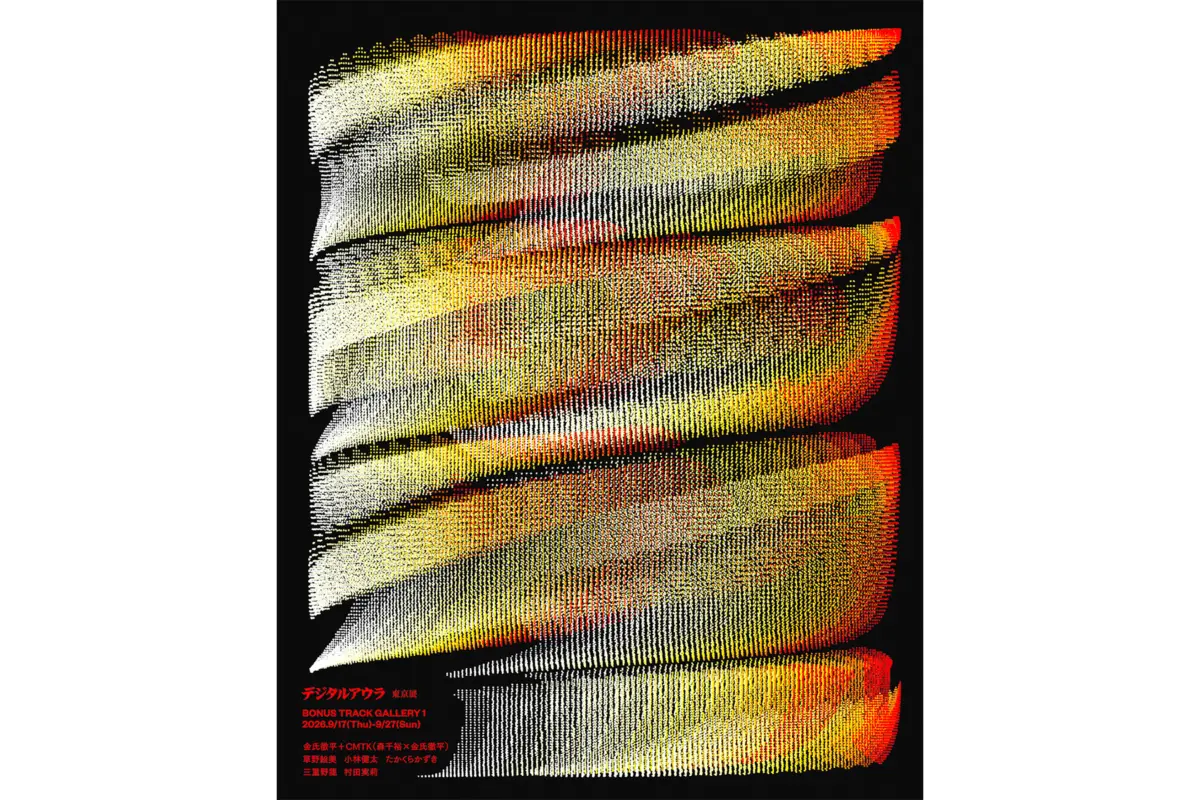
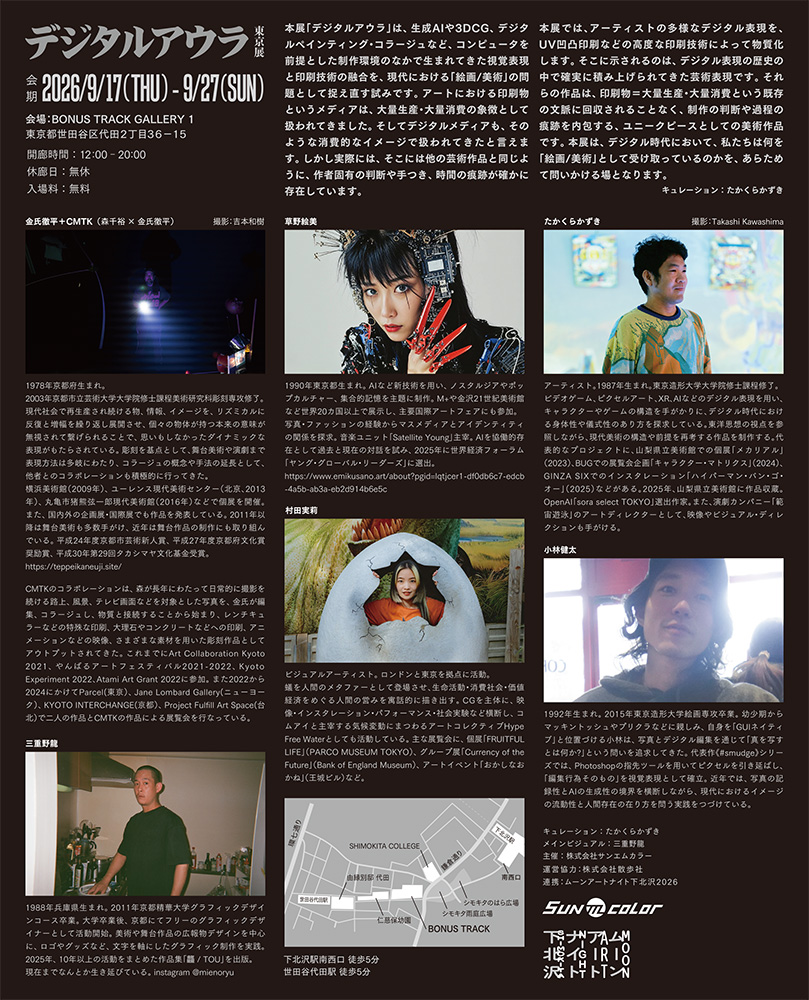
Enter Digital Aura: Tokyo Exhibition, a landmark multi-disciplinary contemporary art showcase opening its doors on September 17, 2026, at BONUS TRACK GALLERY 1 in the vibrant, culturally dynamic neighborhood of Shimokitazawa, Tokyo. Running for a tightly curated two-week window through September 30, 2026, the exhibition features an eclectic roster of boundary-pushing creators, including prominent visual artists Takaharu Kazato and Sae Kusano, alongside a constellation of cutting-edge sound designers, multi-media performers, and technological theorists.
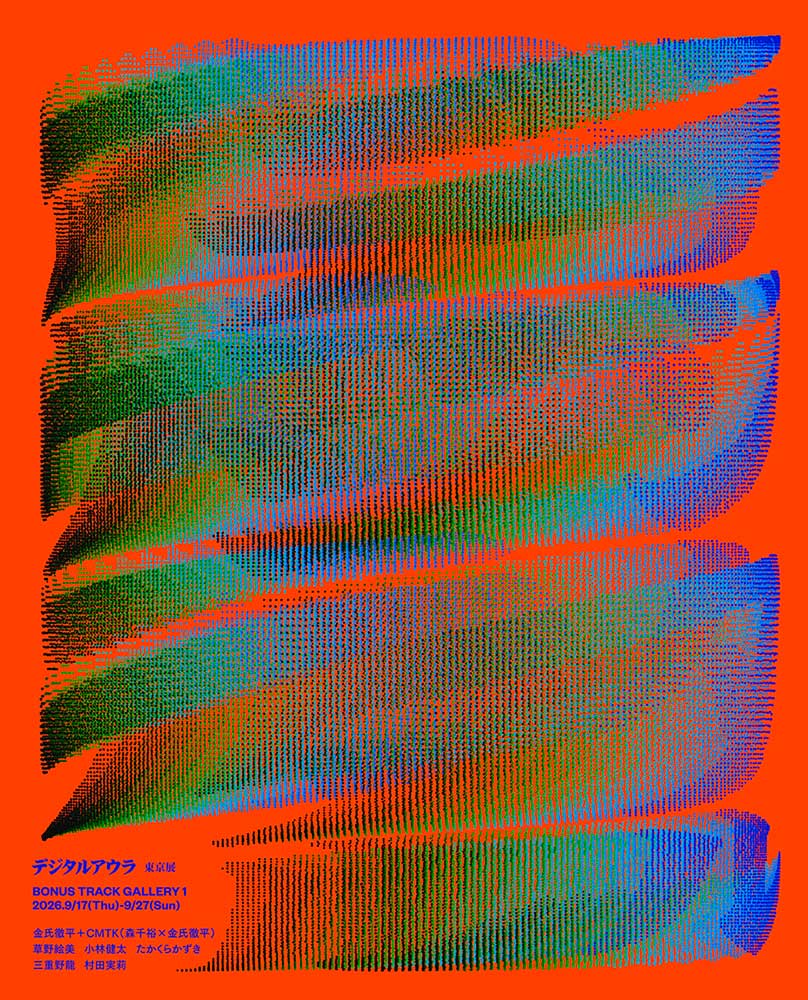
Rather than treating digital media as a frictionless vehicle for absolute perfection, the artists featured in Digital Aura intentionally expose the seams of their production. They deploy UV-reactive inks, analog-digital hybrid printing, and deliberately degraded rendering pipelines to interrogate the psychological weight of our contemporary digital ecosystem. The exhibition positions itself not merely as a showcase of digital artifacts, but as an investigative site for how physical space, sensory friction, and human presence can re-enter a digital medium that has long prioritized sterile, hyper-connected efficiency.
This comprehensive report explores the conceptual foundations of the Digital Aura exhibition, breaks down the participating artists and their methodologies, outlines the unique spatial and temporal programming—including a special live performance series—and evaluates the broader implications of this aesthetic turn for the future of digital art in Tokyo and beyond.
Conceptual Framework: The Fall and Rise of the "Aura" in Digital Culture
To understand the urgency of the Digital Aura exhibition, one must first confront Walter Benjamin’s seminal 1935 essay, The Work of Art in the Age of Mechanical Reproduction. Benjamin famously argued that the "aura" of a work of art—its unique existence in a specific time and place, carrying with it the history, ritual, and physical authenticity of its creation—shrivels away in the age of mass production and mechanical duplication.
In the twenty-first century, digital replication has taken Benjamin’s critique to an apocalyptic extreme. High-resolution scans, instantaneous global distribution, vector graphics, and generative AI models have rendered the digital image infinitely malleable, infinitely reproducible, and utterly weightless. A digital file exists everywhere and nowhere simultaneously; it has no grain, no decay, no physical substrate, and consequently, no aura.
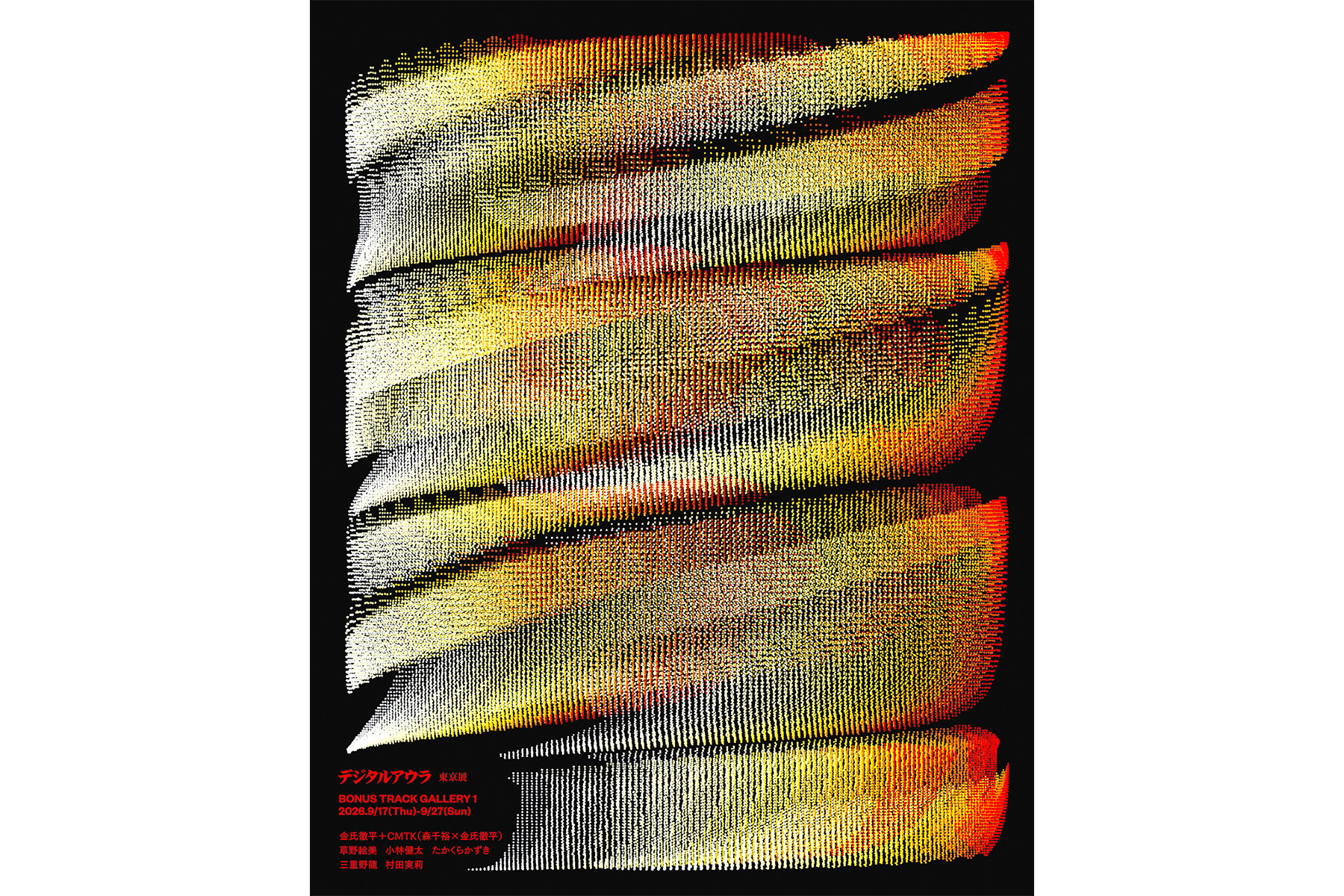
Digital Aura directly challenges this condition. The exhibition’s curatorial premise posits that the digital medium has matured past its techno-utopian adolescence. Creators are no longer satisfied with the pristine, flat perfection of the glowing screen. Instead, they are asking: Can a digital construct possess an aura? Can pixel-based art carry the physical scars of human labor?
By forcing digital files to pass through physical bottlenecks—such as printing them onto textured archival papers using UV-reactive pigments, projecting them through distorted optical lenses, or accompanying them with spatialized, room-shaking sound design—the artists in this exhibition perform an act of digital alchemy. They re-infuse the virtual with the visceral. The resulting works are neither purely digital nor strictly analog; they exist in a liminal space where the cold precision of code collides with the messy, unpredictable reality of material deterioration.
Featured Artists and Methodologies
The exhibition brings together a diverse cohort of creators whose practices span computer graphics, physical computing, textile design, electronic music, and conceptual installation. At the forefront of this lineup are Takaharu Kazato and Sae Kusano, two artists whose works interrogate the frictions between virtual identity and physical embodiment.
Takaharu Kazato: The Architecture of Decay
Takaharu Kazato’s contributions to Digital Aura focus on the structural degradation of digital data. Utilizing customized rendering algorithms that deliberately introduce software errors, compression artifacts, and digital "rot," Kazato produces visual works that look like archaeological finds from a digital future that never happened.
In his signature series for the exhibition, Kazato prints heavily glitched 3D models onto specialized, light-sensitive textiles using UV-reactive printing techniques. When viewed under normal gallery lighting, the works appear as abstract, fractured color fields. However, under cyclical pulses of ultraviolet light, hidden layers of data, submerged textures, and haunting human silhouettes emerge from the shadows.
This methodology serves as a direct critique of the "cloud" architecture that underpins modern life—an infrastructure that promises eternal preservation while actively erasing the physical traces of its own maintenance. Kazato’s work forces viewers to confront the physical toll of digital consumption: the rare earth minerals, the overheating server farms, and the discarded hardware that pile up in the global South so that users in Tokyo can swipe through social media feeds in milliseconds.
Sae Kusano: Weaving the Virtual into the Real
Sae Kusano approaches the digital-analog divide through the lens of textile and material culture. Known for her multidisciplinary practice that bridges traditional Japanese craft techniques with cutting-edge digital fabrication, Kusano’s work in Digital Aura explores how virtual garments and digital avatars can be translated back into physical, wearable forms.
For the Shimokitazawa exhibition, Kusano presents a series of hybrid textile sculptures created in collaboration with electronic musicians and sound artists. These pieces are constructed using custom-weaved fabrics embedded with conductive threads that react to electromagnetic fields in the gallery space. As visitors move closer to the sculptures, the fabrics subtly shift in texture and appearance, responding to the ambient digital signals emitted by smartphones and wireless devices in the room.
Kusano’s work questions the boundary between our physical bodies and our digital avatars. In an era where millions of people spend hours daily curating digital identities within virtual worlds and social media platforms, Kusano asks what happens to the physical body left behind. Her wearable sculptures act as armor for the digital age—garments that acknowledge our increasing digitization while asserting the undeniable reality of our physical, tactile existence.
Supporting Context & Metrics: The Cultural Ecosystem of Shimokitazawa
The choice of venue—BONUS TRACK GALLERY 1 in Shimokitazawa—is far from accidental. Shimokitazawa has long functioned as Tokyo’s counter-cultural crucible, a labyrinth of narrow alleys, independent vintage clothing shops, indie record stores, and pocket-sized galleries that fiercely resist the corporate homogenization sweeping districts like Shibuya and Shinjuku.
The redevelopment of the Odakyu Line railway tracks into the "Bonus Track" commercial and community complex has created a new kind of public square: one that bridges the gap between hyper-gentrification and grassroots creative independence. Hosting Digital Aura in this specific ecosystem provides a vital contextual layer. Just as Shimokitazawa’s independent shops survive by offering curated, tactile alternatives to fast fashion and mass-market retail, Digital Aura offers a tactile, handcrafted alternative to mass-produced digital imagery.
Statistical Overview of the Exhibition
- Event Digital Aura Tokyo Exhibition (デジタルアラウ 東京展)
- Dates: September 17, 2026 (Thursday) – September 30, 2026 (Wednesday)
- Venue: BONUS TRACK GALLERY 1 (Setagaya, Tokyo)
- Core Artists: Takaharu Kazato, Sae Kusano, and invited collaborative sound designers/media theorists.
- Primary Media: UV-reactive prints, hybrid textile sculptures, generative 3D graphics, spatial audio installations, and analog-digital mixed media.
- Special Event: Live performance night on September 19, 2026.
Official Performance Chronology: The Live Experience
Beyond the static gallery installations, Digital Aura expands into temporal performance art through a carefully curated live event on September 19, 2026, held on-site at the neighboring creative incubator B&B bookstore and gallery space.
This evening of live audio-visual performance pushes the exhibition’s themes into real-time execution, pairing cutting-edge electronic musicians with visual artists for two distinct, immersive sessions.
Performance Schedule — Saturday, September 19, 2026
Part 1 (19:00 – 20:10)
- Focus: Ambient textures, structural glitch art, and deep-listening spatial audio.
- Collaborators:
- CMTK (Visual artist / sound designer)
- Keiichiro Shibuya (Electronic music composer and multimedia artist)
- Guest appearances by experimental percussionists and modular synthesizer practitioners.
- Description: Part 1 explores the fragile intersection between acoustic instruments and real-time algorithmic manipulation. Shibuya’s haunting piano compositions will be processed live through CMTK’s custom visual synthesis software, translating musical notes into fractured, shifting architectural projections across the gallery walls.
Part 2 (20:20 – 21:30)
- Focus: High-energy digital performance, hyper-pop aesthetics, and rhythmic data overload.
- Collaborators:
- Sae Kusano (Visual/textile performance artist)
- Kyohei Ozaki (Media theorist and live coder)
- Asuka Kawazoe (Sound designer and producer)
- Description: Part 2 shifts the register from contemplative ambient to kinetic, hyper-accelerated club culture. Kusano will debut a live-wearable performance piece where models interact with responsive projection mapping, while Ozaki and Kawazoe deploy live coding algorithms to construct and dismantle sonic landscapes in real-time. This session addresses the sensory overload of contemporary digital life, transforming exhaustion into a shared, ecstatic communal ritual.
Future Outlook: Where Digital Art Goes From Here
As the doors to Digital Aura open on September 17, 2026, the exhibition arrives at a critical juncture for contemporary art. The initial wave of techno-fetishism—where anything generated by an algorithm or rendered in 3D was automatically heralded as avant-garde—has crested and broken. Audiences and critics alike are suffering from digital fatigue.
Digital Aura points the way toward a more mature, critically engaged digital art practice. By refusing to treat the digital as an immaterial paradise and instead forcing code to grapple with physical reality, gravity, decay, and human touch, the artists involved are laying the groundwork for a new aesthetic movement.
In the years following this exhibition, we can expect to see an increasing convergence between digital media studies and material science. Artists will no longer ask how to make digital art look more real; they will ask how digital art can make us feel more present.
For visitors walking through the narrow, nostalgic alleys of Shimokitazawa this September, stepping into BONUS TRACK GALLERY 1 will not merely be an encounter with new artwork—it will be an invitation to touch the digital pixel, to feel its weight, and to witness the resurrection of its long-lost aura.







Belum ada komentar. Jadilah yang pertama berkomentar!