

Executive Overview
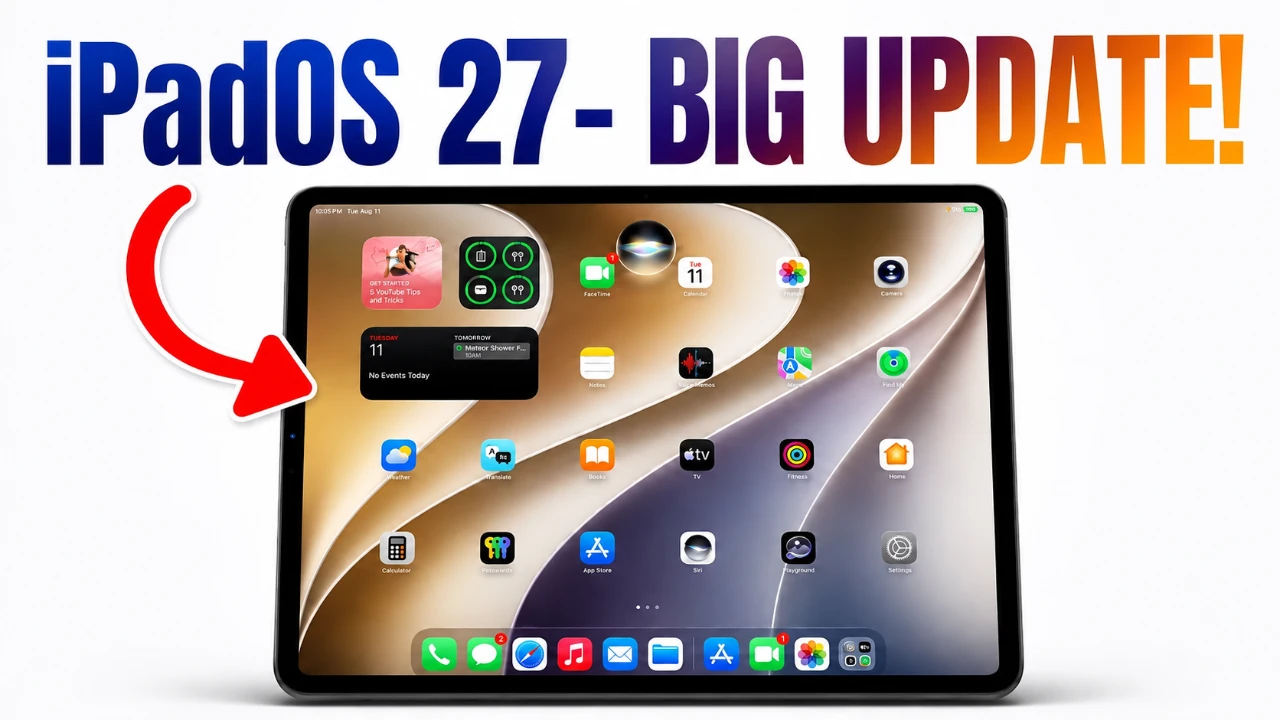
Apple’s software ecosystem is once again standing at a momentous crossroads. With the official announcement and impending rollout of iPadOS 27, Cupertino is signaling a profound evolution in how tablet computing operates. Far more than a routine annual iteration, iPadOS 27 represents a structural reimagining of the iPad experience, targeting the delicate balance between the intuitive simplicity of mobile touch interfaces and the raw, unyielding power required by modern creative and enterprise workflows.
Scheduled to launch globally between early and mid-September 2026, iPadOS 27 introduces a comprehensive suite of advanced functionalities. At its core, the update leans heavily into deep artificial intelligence (AI) integration, overhauled interface personalization, sophisticated multitasking environments, and next-generation productivity suites. Whether utilized as a lightweight digital notepad by a student, a canvas for a professional digital illustrator, or a primary mobile workstation for a traveling executive, iPadOS 27 aims to dissolve the historical boundaries that have traditionally separated tablets from traditional laptops.
This comprehensive report explores the multifaceted dimensions of iPadOS 27, analyzing its release timeline, device compatibility matrices, UI refinements, AI-driven capabilities, professional-grade media tools, and overarching implications for the future of personal computing.
Detailed Chronology and Roadmap to Release
The software development lifecycle for iPadOS 27 follows Apple’s rigorously maintained annual release cadence, designed to coincide with the rollout of new flagship hardware and fresh iterations of iOS, macOS, watchOS, and tvOS.
From Developer Previews to Public Launch
The journey of iPadOS 27 began earlier in the year at Apple’s Worldwide Developers Conference (WWDC), where the initial developer beta was made available to registered software architects and engineers. This phase allowed third-party developers to stress-test their applications against new system APIs, multi-window architectures, and on-device machine learning models.
By mid-summer, Apple transitioned the software into its public beta testing phase, welcoming millions of enthusiast users to stress-test the operating system across varied real-world scenarios. Feedback gathered during this period allowed Apple’s engineering teams to squash critical bugs, optimize battery drain profiles, and refine frame-rate consistency across both ProMotion and standard-refresh displays.
The culmination of this rigorous testing protocol arrives in early to mid-September 2026, when the stable, consumer-ready build of iPadOS 27 begins pushing out via Over-The-Air (OTA) updates to compatible iPad units worldwide.
Device Compatibility and Hardware Longevity
One of the hallmarks of Apple’s silicon transition and long-term software support strategy is the expansive compatibility list for iPadOS 27. Eschewing the strategy of aggressively deprecating older hardware, Apple has engineered iPadOS 27 to support a broad spectrum of current and legacy iPad models.
- iPad Pro Lineup: Full support spans all iterations featuring Apple Silicon (M-series processors), ensuring that advanced AI capabilities and heavy multitasking features operate with zero hardware friction.
- iPad Air & iPad mini: Mid-tier and compact models receive substantial performance optimizations, breathing new life into older generation units by streamlining background processes and optimizing memory management.
- Standard iPad Models: Entry-level educational and consumer tablets remain heavily supported, guaranteeing that students and casual users retain access to modern security updates, accessibility features, and refined user interfaces.
Even on older supported hardware, Apple’s meticulous performance tuning ensures noticeable improvements in interface fluidity, thermal management, and responsiveness, proving that software longevity remains a core pillar of the iPad value proposition.
Enhanced User Interface and Modern Customization
Apple has long championed design consistency, but with iPadOS 27, the company is placing unprecedented emphasis on user agency. The operating system introduces a redesigned user interface framework that fuses modern aesthetics with deeper personalization controls.
Reimagining the Visual Workspace
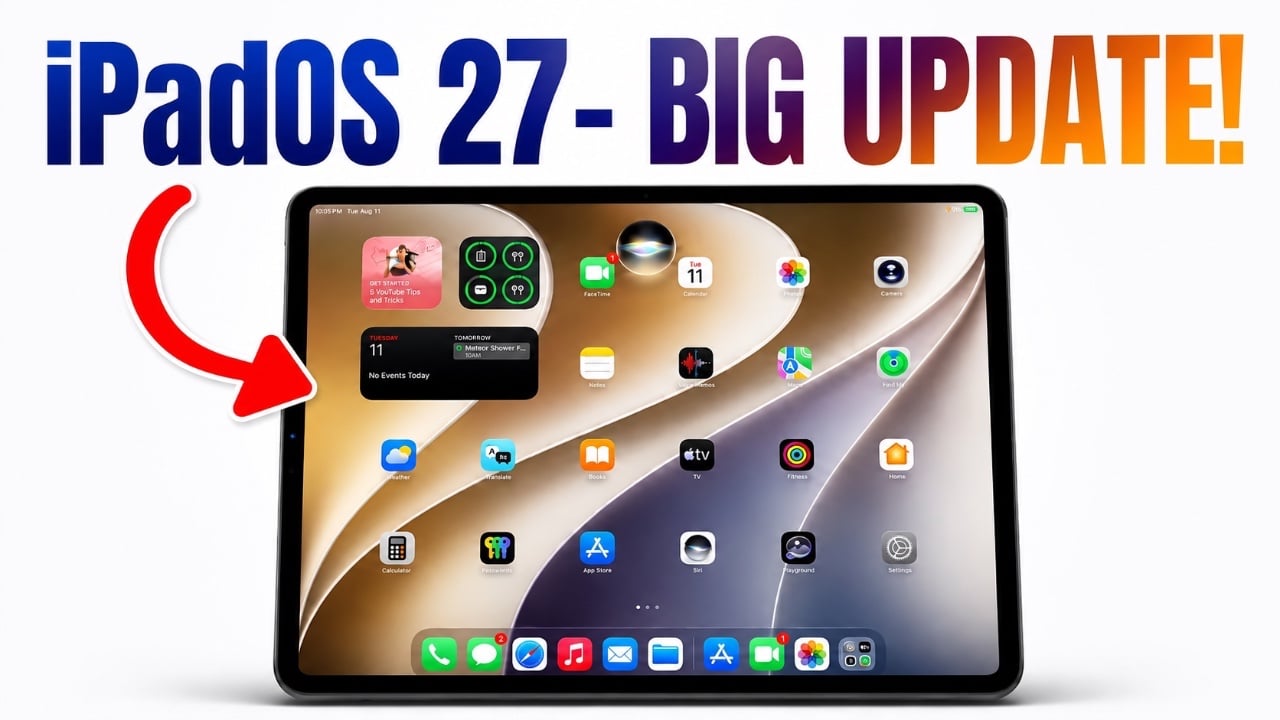
The desktop and application launcher environment of iPadOS has been re-architected to offer granular customization. Users are no longer restricted to rigid grid systems; instead, they can arrange widgets, application icons, and dynamic shortcuts to reflect their personal aesthetic or workflow priorities.
Key user-interface highlights include:
- Dynamic Grid Layouts: Streamlined widget alignment that adapts fluidly to both landscape and portrait orientations, ensuring that workspace organization remains uncompromised when transitioning from a Magic Keyboard to handheld tablet use.
- Contextual Tinting and Theming: Enhanced control over system-wide accent colors, dark mode transitions, and icon styling, allowing professionals to minimize visual clutter and tailor their visual environment to high-focus working conditions.
- Interactive Widgets 2.0: Widgets are no longer mere informational windows; they now feature deeper interactivity, allowing users to execute complex commands—such as checking off task lists, toggling smart home devices, or playing audio streams—directly from the home screen without launching host applications.
Smarter Siri and Advanced AI Integration
Artificial intelligence is no longer a peripheral novelty within the Apple ecosystem; it is rapidly becoming the connective tissue of the operating system. In iPadOS 27, Siri receives its most comprehensive, fundamental overhaul to date, transforming the digital assistant from a reactive query responder into a proactive, contextual powerhouse.
Contextual Awareness and On-Device Intelligence
Powered by advanced on-device large language models (LLMs) and secure cloud-based processing hybrids, the new Siri understands the semantic context of what is happening on your screen at any given moment.
- Cross-App Data Retrieval: Users can now issue complex, multi-layered commands, such as: "Find that PDF invoice that Sarah sent me via email last Tuesday, extract the total amount, and add it as a line item in my expense tracker spreadsheet." Siri seamlessly bridges disparate applications to execute the request natively.
- Personal Context Understanding: Siri leverages localized data indexing to recall details mentioned across messages, emails, calendar invites, and notes, acting as a true digital chief of staff.
- Conversational Flow and Natural Turn-Taking: The assistant now supports natural interruptions, self-corrections, and fluid conversational back-and-forth, eliminating the robotic rigidity of past iterations.
Photos App: Professional-Grade Editing Tools
The native Photos application in iPadOS 27 bridges the gap between consumer simplicity and professional image manipulation. Leveraging the raw compute power of Apple Silicon’s Neural Engine, the app introduces advanced, AI-driven editing suites that democratize high-end photo retouching.
Next-Generation Retouching and Asset Management
- Generative Object Removal and Manipulation: Users can effortlessly erase unwanted background elements from complex compositions with automated background inpainting that matches lighting, shadows, and textures with astonishing accuracy.
- Semantic Masking and Adjustments: The AI automatically categorizes distinct elements within an image—such as skies, skin tones, water, foliage, and architectural lines—allowing photographers to apply localized adjustments with a single tap or Apple Pencil stroke.
- Intelligent Curation and Search: Searching for specific visual concepts (e.g., "golden hour photos shot in portrait mode near water" or "receipts from last month" ) is now instantaneous, thanks to multimodal on-device machine-learning models that understand image content without relying solely on manual metadata tagging.
Productivity, Multitasking, and Workflow Enhancements
For years, critics and power users have debated whether the iPad could truly replace a traditional laptop. iPadOS 27 addresses this ongoing debate head-on by introducing profound structural updates to multitasking and file management.
Closing the Gap with Traditional Computing
- Advanced Window Management: Expanding upon previous windowing frameworks, iPadOS 27 introduces a more fluid, overlapping window paradigm that feels strikingly natural when paired with a trackpad and mouse. Users can freely resize, snap, and layer application windows, mimicking desktop-class window management while retaining touch-first optimization.
- Enhanced External Display Support: Extended monitor workflows have been heavily optimized, offering native ultrawide resolution support, independent scaling controls, and zero-latency cursor movement when connecting the iPad to professional studio displays or desktop monitors.
- File System and Background Processing: The Files app receives crucial performance patches, ensuring rapid directory indexing, seamless integration with network-attached storage (NAS) drives, and the ability for third-party applications to run heavier background rendering and data-syncing tasks without getting prematurely terminated by the operating system.
System-Refinements and Cohesive Experience
Underpinning the headline features of iPadOS 27 is an obsessive commitment to low-level optimization and system stability. Apple’s software engineering teams have audited every corner of the operating system to address long-standing user grievances regarding micro-stutters, animation latency, and thermal throttling.
- Fluid Motion Architecture: Frame-rate stability has been prioritized across all animations, resulting in buttery-smooth transitions when invoking Mission Control, switching between Stage Manager spaces, or scrubbing through high-resolution video timelines.
- Battery Efficiency Protocols: Intelligent power-scaling algorithms analyze user habits to dynamically throttle background resource allocation, extending battery life during intensive multi-hour creative sessions.
- Accessibility and Inclusion: New features, including advanced eye-tracking navigation, voice control shortcuts, and adaptive text-rendering engines, ensure that iPadOS 27 remains accessible to users with diverse physical and cognitive needs.
Future Outlook: Elevating the Tablet to New Heights
As we look toward the remainder of the decade, iPadOS 27 marks a definitive maturation point for Apple’s tablet strategy. By refusing to compromise between mobile agility and desktop utility, Apple has carved out a unique, dominant category for the iPad.
The convergence of on-device artificial intelligence, professional-grade media utilities, and frictionless multitasking ensures that the iPad is no longer viewed merely as an auxiliary consumption device. Instead, iPadOS 27 firmly establishes the iPad as a primary, future-proof computing instrument capable of sustaining the most demanding professional workflows.
As developers continue to harness the new APIs introduced in this release, the ecosystem surrounding iPadOS 27 will undoubtedly expand, unlocking innovative use cases in education, enterprise software, creative arts, and scientific visualization. For current iPad owners and prospective buyers alike, iPadOS 27 is not just an update—it is a complete reinvention of what a mobile computer can accomplish.







Belum ada komentar. Jadilah yang pertama berkomentar!