

Executive Overview
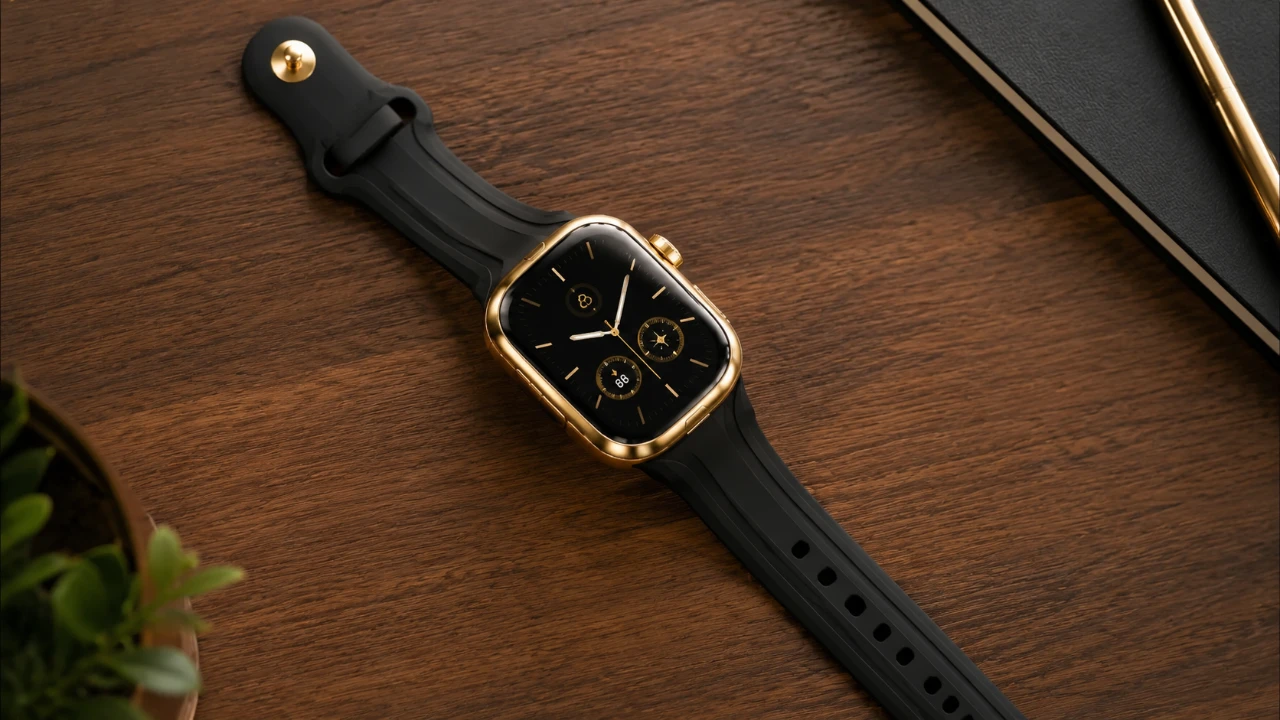
As the wearable technology market continues to mature, consumer expectations have shifted away from radical annual transformations toward deep, meaningful refinements. The upcoming Apple Watch Series 12 perfectly encapsulates this industry-wide pivot. Recent leaks and supply chain intelligence indicate that rather than introducing a completely overhauled aesthetic or a paradigm-shifting form factor, Apple has focused its engineering efforts on core internal architecture, display brilliance, and contextual software intelligence via watchOS 27.
At first glance, prospective upgraders might note the familiar exterior dimensions—retaining the 42mm (1.77-inch) and 46mm (1.96-inch) footprints established in previous generations. However, a closer look beneath the surface reveals a surprisingly targeted strategy. Propelled by the all-new S12 silicon and sophisticated display advancements, the Series 12 is engineered to optimize day-to-day usability, power efficiency, and seamless ecosystem synergy.
For current owners of older Apple Watch models—such as the Series 8 or Series 9—the Series 12 presents a compelling value proposition. While it preserves the standard 24-hour battery profile familiar to long-time users, the compounding upgrades in processing speed, tracking precision, and visual clarity suggest a device built for refined everyday efficiency rather than headline-grabbing gimmicks. This report provides an exhaustive breakdown of the architectural shifts, software integrations, and market implications surrounding Apple’s latest flagship wearable.
Detailed Chronology
Understanding the trajectory of the Apple Watch Series 12 requires examining the historical cadence of Apple’s product development cycle, component sourcing timelines, and the phased rollout of watchOS 27.
The R&D and Prototyping Phase
The developmental timeline for the Series 12 began shortly after the commercialization of the Series 10 and Series 11 architectures. Apple’s internal hardware teams targeted three specific bottlenecks: thermal dissipation under sustained loads, peak outdoor display luminance, and energy leakage within the CPU blocks. By early prototyping phases, engineers decided against a structural chassis redesign, choosing instead to maximize internal volume for advanced display drivers and the high-efficiency S12 System-in-Package (SiP).
Supply Chain Whispers and Leak Genesis
By mid-summer, component manufacturers in the Greater China supply chain began leaking details regarding tooling specifications for glass panels matching the 42mm and 46mm dimensions. Reports from regulatory filings and tech analysts indicated that Apple was finalizing mass production runs for the S12 processor. Unlike previous cycles where form-factor changes dominated early rumors, the chatter surrounding the Series 12 consistently highlighted invisible upgrades—primarily focusing on silicon efficiency and microscopic panel enhancements designed to improve off-angle viewing without sacrificing battery life.
Software Alignment with watchOS 27
Concurrently, the software development division locked down the feature set for watchOS 27. Designed to run natively alongside the hardware enhancements of the Series 12, the new operating system underwent extensive developer beta testing to ensure tight integration with the updated sensor pipelines and processing capabilities of the S12 chip. The synchronization of hardware rollouts and software platforms ensures that out-of-the-box performance remains uncompromised on launch day.
Supporting Context & Metrics
To fully appreciate the scope of the Apple Watch Series 12, one must analyze the raw metrics, component specs, and historical context of Apple’s wearable evolution.
Display Architecture and Visual Metrics
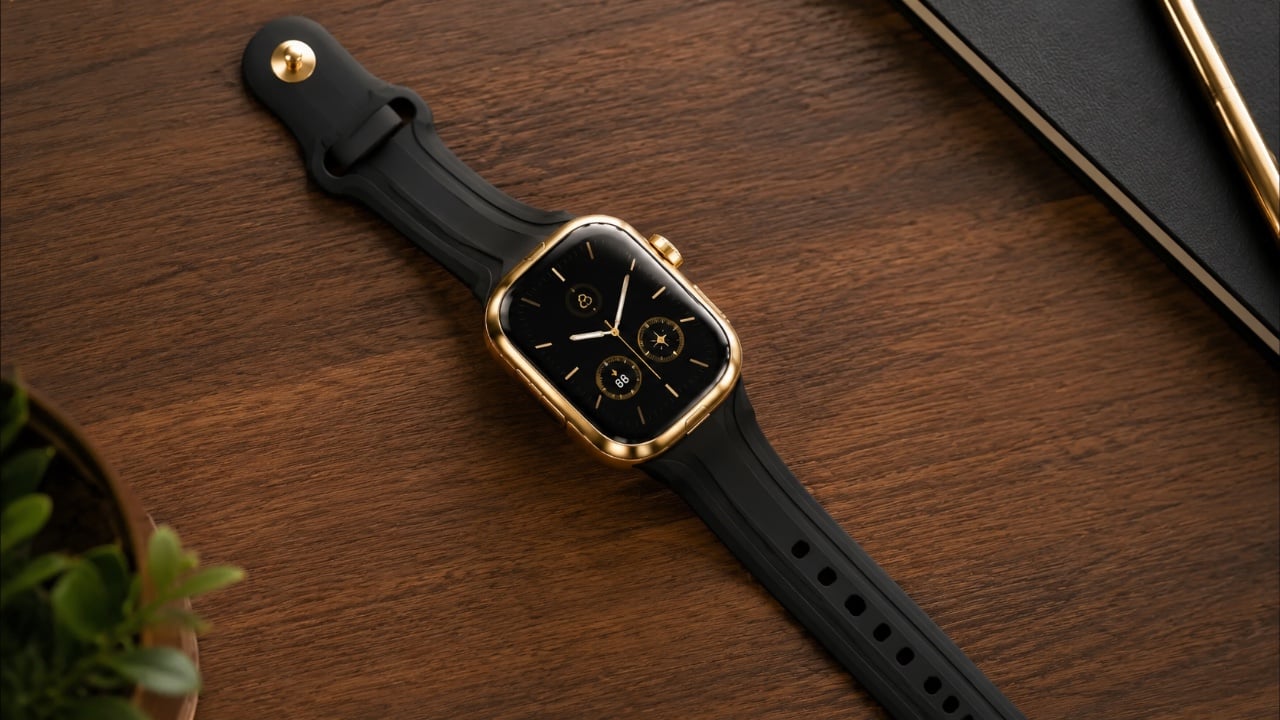
Maintaining the established 1.77-inch (for the 42mm variant) and 1.96-inch (for the 46mm variant) screen real estate might initially suggest stagnation, but display technology has advanced significantly.
- Panel Efficiency: The Series 12 incorporates next-generation OLED optimization layers that reduce power consumption during ambient-mode operations.
- Luminance and Legibility: Peak outdoor brightness levels have been recalibrated, ensuring that high-glare environments—such as direct midday sunlight—no longer obscure critical fitness metrics or incoming notifications.
- Off-Angle Viewing: Improvements in polarizing filters deliver truer blacks and enhanced color reproduction, even when viewed from sharp, glancing angles during physical activity.
Silicon Performance: The S12 Chipset
At the heart of the wearable is the new S12 custom silicon architecture. Built on a refined node process, the chip prioritizes two core metrics: instructions per watt and thermal throttling mitigation.
- Processing Headroom: App launch times are noticeably snappier, and complex background tasks—such as offline map rendering and real-time workout computations—execute without stuttering.
- Energy Management: Despite driving a brighter, more responsive display and handling heavier background processing tasks, the S12 chip successfully maintains the baseline 24-hour battery life benchmark set by its predecessor, effectively trading silicon efficiency for feature execution rather than raw longevity gains.
Health and Fitness Precision
Apple has deliberately chosen to refine existing sensor suites rather than introduce unverified, first-generation biometric hardware.
- Algorithmic Refinement: The optical heart rate sensor, electrical heart sensor (ECG), and blood oxygen monitoring algorithms have been tuned for higher signal-to-noise ratios.
- Tracking Fidelity: Whether monitoring steady-state cardio, high-intensity interval training (HIIT), or sleep stages, the Series 12 offers superior data consistency, reducing dropouts and anomalous readings caused by movement artifacting.
Official Statements and Industry Perspective
While Apple traditionally maintains strict confidentiality regarding unannounced hardware, industry analysts, supply chain auditors, and keynote pre-briefings offer clear insights into the corporate strategy guiding the Series 12.
Market analysts note that the wearable market has reached a point of functional maturity. Consumers are less enticed by experimental chassis designs and increasingly demand reliability, ecosystem cohesion, and long-term software support. Industry consensus suggests that by stabilizing the physical footprint of the watch, Apple allows third-party accessory manufacturers—ranging from luxury strap designers to case makers—to maintain continuous product lines without facing obsolescence pressures.
Furthermore, internal briefings leaked via developer networks highlight Apple’s primary design philosophy for the generation: "Frictionless Utility." The goal of the Series 12 is to minimize the cognitive load required to interact with a wrist-worn computer. By leveraging watchOS 27 to surface contextually relevant information precisely when the user raises their wrist, the hardware and software act as a unified, invisible assistant rather than a demanding electronic gadget.
Future Outlook: The Ecosystem and Upgrader Calculus
As the launch window approaches, current Apple Watch owners must weigh the strategic benefits of moving to the Series 12.
Who Should Upgrade?
- Legacy Device Owners: Users clinging to Series 4, 5, or Series 6 devices will experience a generational leap in performance, display real estate, speed, and overall health-tracking sophistication.
- Fitness Enthusiasts Seeking Precision: Those who rely heavily on hyper-accurate workout metrics, faster GPS lock-on times, and seamless third-party fitness app integration will benefit substantially from the S12 chip’s expanded headroom.
Who Might Wait?
- Series 10 or 11 Owners: Individuals currently utilizing the immediate past two generations will find fewer compelling reasons to upgrade, given that the physical design remains consistent and overall battery endurance remains pegged at the 24-hour mark.
The Broader Horizon
Looking ahead, the Apple Watch Series 12 serves as a bridge to future wearable paradigms. By perfecting power management, display efficiency, and contextual machine learning on the wrist, Apple is laying the groundwork for more ambitious ambient computing initiatives down the line. For now, the Series 12 stands as a testament to the power of iterative design—proving that sometimes, the most impactful technological evolution is the one that simply works better, faster, and more reliably than ever before.








Belum ada komentar. Jadilah yang pertama berkomentar!