

Executive Overview
For travelers seeking an authentic immersion into Japanese history, rugged coastal geography, and world-class culinary traditions, the prefecture of Kochi—historical Tosa—remains one of Honshu’s most compelling yet remarkably under-trafficked southern neighbors. Long separated from the urban sprawl of the Kansai region by the formidable physical barrier of the Shikoku Mountain range, Kochi has traditionally demanded either expensive, multi-leg railway transits or complicated logistics to access.
![[2026 Latest] Direct flight from Osaka to Kochi! OCAT departure: Seared bonito and a tour of stunning scenery](https://resources.matcha-jp.com/resize/720x2000/2026/08/21-269381.webp)
However, the direct, zero-transfer express bus service operating between the Osaka City Air Terminal (OCAT) in Namba and Kochi Station has completely redefined this route. Jointly managed by West Japan JR Bus and JR Shikoku Bus, this vital transit corridor offers a seamless, highly economical bridge between modern metropolitan Osaka and the storied homeland of visionary revolutionary Ryoma Sakamoto.
![[2026 Latest] Direct flight from Osaka to Kochi! OCAT departure: Seared bonito and a tour of stunning scenery](https://place.matcha-jp.com/resize/720x2000/2024/11/19-19-26-08-1309755a09144a5c2978bce7345ec8fe229.webp)
This comprehensive report outlines a meticulously designed 1-night, 2-day itinerary that maximizes traveler efficiency, balances historical exploration with natural immersion, and leverages transit cost-savings to indulge in Kochi’s legendary gastronomic treasures, including straw-seared katsuo no tataki (bonito) and crisp local Tosa sake.
![[2026 Latest] Direct flight from Osaka to Kochi! OCAT departure: Seared bonito and a tour of stunning scenery](https://resources.matcha-jp.com/resize/200x2000/2025/05/28-234756.webp)
Supporting Context & Metrics: Cost, Comfort, and Comparative Transit Analysis
Before embarking on any cross-regional itinerary, evaluating the economic and temporal dynamics of transportation is paramount. The direct express bus connecting OCAT and Kochi Station provides a distinct value proposition for budget-conscious explorers who refuse to compromise on comfort.
![[2026 Latest] Direct flight from Osaka to Kochi! OCAT departure: Seared bonito and a tour of stunning scenery](https://resources.matcha-jp.com/resize/720x2000/2026/04/27-263269.webp)
Transit Mode Comparison: Osaka to Kochi
| Means of Transportation | Estimated Time Required | One-Way Fare (Estimate) | Key Logistics & Advantages |
|---|---|---|---|
| Express Bus (OCAT – Kochi Station, Direct) | Approximately 5 to 5.5 hours | ¥5,600 – ¥6,900 | Zero transfers; direct highway connection; equipped with onboard restroom, free Wi-Fi, and power/USB ports. |
| Train (Osaka – Okayama Transfer – Kochi) | Approximately 3.5 hours | ¥11,000 – ¥12,800 (Regular Season) | Faster overall travel time, but requires a mandatory platform transfer at Okayama Station and incurs nearly double the financial cost. |
While the express bus requires an additional 90 to 120 minutes of travel time compared to high-speed rail networks, its economic efficiency is undeniable. The one-way fare sits at roughly half—and in some seasonal windows, nearly a third—of the cost of standard train tickets. Crucially, the absence of transfers eliminates the anxiety of hauling heavy luggage across crowded platforms.
![[2026 Latest] Direct flight from Osaka to Kochi! OCAT departure: Seared bonito and a tour of stunning scenery](https://resources.matcha-jp.com/resize/720x2000/2026/08/21-269374.webp)
Furthermore, modern long-distance highway coaches deployed on the Osaka-Kochi route are engineered for sustained comfort. Standard amenities include:
![[2026 Latest] Direct flight from Osaka to Kochi! OCAT departure: Seared bonito and a tour of stunning scenery](https://place.matcha-jp.com/resize/720x2000/2026/08/21-11-28-05-30475387de9545de39fc5fa867aac2bf51c4.webp)
- Onboard Restrooms: Eliminating the stress of unexpected traffic delays or long stretches between highway service areas.
- Connectivity: Complimentary onboard Wi-Fi paired with dedicated charging infrastructure (USB Type-A ports or standard electrical outlets) at individual seats, allowing passengers to work, read, or plan their itineraries en route. (Note: Vehicle specifications may vary; passengers are advised that secondary or substitute buses occasionally lack specific amenity configurations).
- Scenic Transition: The journey itself serves as a visual prologue, carrying passengers out of the urban grid of Osaka, across the Seto Inland Sea via the Honshu-Shikoku bridges, and deep into the dramatic, verdant valleys of the Shikoku Mountains before descending into the Tosa basin.
Detailed Chronology: A 1-Night, 2-Day Tosa Itinerary
Day 1: Arrival in Tosa, Samurai History, and the Culinary Theater of Hirome Market
Morning: Departure from OCAT and the Trans-Mountain Ascent
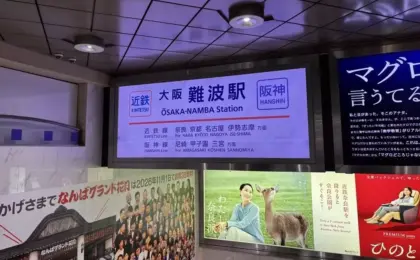
- 08:05 AM – Departure from OCAT Bus Terminal (Osaka): Centrally located and directly connected to JR Namba Station, OCAT allows for a frictionless departure even for travelers encumbered by multi-day luggage.
- 01:16 PM – Arrival at Kochi Station: Following a comfortable 5-hour and 10-minute journey complete with scheduled comfort breaks along the highway, the bus pulls directly into Kochi Station, serving as the immediate gateway to the city.
Afternoon: Walking Tour of Kochi’s Feudal Roots
- 01:30 PM – 01:55 PM (On Foot): Exiting Kochi Station, travelers embark on a leisurely 2-kilometer walk toward Kochi Castle. The urban layout features wide, flat pedestrian pathways, inviting visitors to acclimate to the relaxed pace of provincial Shikoku.
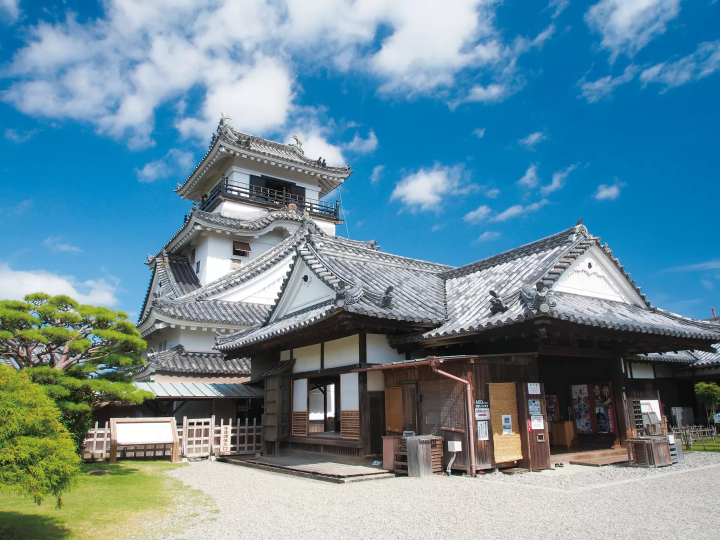
- 02:00 PM – 04:00 PM (Kochi Castle / Tosa-Hanshi): Kochi Castle stands as a rare architectural marvel in contemporary Japan. Unlike the vast majority of historical fortifications—which were rebuilt in concrete following World War II—Kochi Castle retains its original tenshu (keep) and Honmaru (inner citadel) structures dating back to the early Edo period (constructed under Yamauchi Kazutoyo).
- Operational Hours: 9:00 AM to 5:00 PM (Last entry at 4:30 PM).
- Admission: ¥850 for adults (Free for high school students and younger).
- Estimated Duration: 2 hours.
Late Afternoon: The Covered Arcades and Harimaya Bridge
- 04:15 PM – 04:30 PM (On Foot): A brief 1-kilometer, 15-minute walk leads from the castle gates toward the iconic Harimaya Bridge. Navigating through the Obi-ya-cho shopping arcade ensures complete weather protection via its expansive roof canopy while offering early glimpses of local merchants, traditional confectioners, and neighborhood life.
Evening: The Sensory Feast of Hirome Market
- 04:40 PM Onward (Hirome Market & Dinner): Located a short 10-minute walk from Harimaya Bridge, Hirome Market (Hirome Ichiba) is a legendary culinary institution. Defying the conventions of a traditional sit-down restaurant, Hirome Market operates as an expansive, indoor bazaar comprising dozens of independent food stalls, izakayas, and fishmongers surrounding a communal seating area.
Here, businessmen, travelers, and multi-generational local families sit shoulder-to-shoulder, fostering an electric, egalitarian atmosphere that epitomizes regional hospitality.
![[2026 Latest] Direct flight from Osaka to Kochi! OCAT departure: Seared bonito and a tour of stunning scenery](https://resources.matcha-jp.com/resize/720x2000/2026/08/21-269379.webp)
+-------------------------------------------------------------------------+
|                       HIROME MARKET HIGHLIGHTS                          |
+-------------------------------------------------------------------------+
|  [1] Katsuo no Tataki (Straw-Seared Bonito)                             |
|      - Seared over roaring straw flames to lock in juices.              |
|      - Served either "Shio" (coarse salt) or classic Ponzu.             |
|                                                                         |
|  [2] Tosa Local Sake Pairings                                           |
|      - Renowned dry, crisp profiles (e.g., Suigei, Tosa Botan).         |
|      - Engineered specifically to cut through rich fish oils.           |
+-------------------------------------------------------------------------+- Culinary Focus — Straw-Seared Bonito (Katsuo no Tataki): No trip to Kochi is complete without consuming bonito prepared via the traditional warayaki method. Chefs ignite bundled bundles of dried straw, engulfing the thick fillets of fresh bonito in intense, high-temperature flames for mere seconds. This flash-sear crisps the outer skin and infuses a distinct, smoky aroma while leaving the interior completely raw, cool, and tender. Purists recommend shio-tataki—seasoned purely with coarse sea salt, raw garlic slices, and fresh wasabi—to fully appreciate the rich, umami-dense profile of the fish.
- Culinary Focus — Tosa Sake: Kochi’s brewing culture is defined by tanrei-karakuchi (light, dry, and crisp) profiles. Brands such as Suigei, Tosa Botan, and Tosatsuru are fermented using soft subterranean waters and robust local rice strains, functioning not merely as beverages, but as active flavor enhancers that cleanse the palate between bites of rich seafood.
Day 2: Botanical Wonders, Feudal Reverence, and Coastal Panoramas
Morning: Mount Godai and Horticultural Masterpieces
- 09:00 AM – Departure via the MY Yu Bus: To streamline urban transit on the second day, travelers can purchase the specialized MY Yu Bus Katsurahama Ticket at the Kochi Station Bus Information Center. This pass grants unlimited or discounted access to key tourism corridors.
- 09:27 AM – Arrival at Kochi Prefectural Makino Botanical Garden: Named in honor of Dr. Tomitaro Makino, the founding father of Japanese botanical taxonomy, this world-class research facility spans the undulating slopes of Mount Godai. The institution showcases over 3,000 species of native and exotic plants arranged across meticulously landscaped outdoor gardens and cutting-edge greenhouse architecture.
- Operational Hours: 9:00 AM to 5:00 PM (Last entry at 4:30 PM).
- Admission: ¥850 for adults (Free for high school students and younger).
Mid-Day: Spiritual Continuity at Chikurinji Temple
- 11:00 AM – 11:11 AM (On Foot via Pilgrimage Trail): Rather than taking a vehicle, visitors can utilize the historic footpath connecting the Makino Botanical Garden directly to Chikurinji Temple (Temple No. 31 on the sacred Shikoku 88-Temple Pilgrimage). This short, 11-minute woodland walk bridges secular botanical science and centuries of Buddhist monastic heritage.
- Temple Grounds & Treasure Hall: Open 8:00 AM – 5:00 PM.
- Combined Admission: ¥800 for adults, ¥400 for junior high students and younger.
- Estimated Combined Stay (Botanical Garden + Chikurinji): 2.5 hours.
Afternoon: Tracing the Steps of Ryoma Sakamoto at Katsurahama
- 11:54 AM – Boarding the MY Yu Bus: Departing from the Chikurinji-mae stop, travelers board the sightseeing bus heading south toward the Pacific coastline.
- 12:14 PM – Arrival at the Sakamoto Ryoma Memorial Museum: Situated on a dramatic bluff overlooking the pounding waves of the Pacific Ocean, this museum chronicles the turbulent final years of the Tokugawa shogunate and the instrumental role played by Ryoma Sakamoto in orchestrating the Meiji Restoration. Original letters, historical artifacts, and immersive exhibits bring the samurai-turned-visionary to life against the very seascape that inspired his global ambitions.
- 01:30 PM – Exploration of Katsurahama Park & Lunch at Sea Terrace: Following a stroll down to the legendary crescent-shaped beach of Katsurahama—guarded by the towering bronze statue of Ryoma gazing out toward North America—visitors can retreat to the newly developed Sea Terrace commercial hub within the park.
- Gastronomic Highlights: High-end culinary outlets serve gourmet rice bowls and steaks crafted from rare, domestically raised Tosa Wagyu, alongside savory gyoza dumplings stuffed with prized Shimanto pork. For lighter fare, local Tosa Hachikin chicken burgers and thick-cut omelet sandwiches provide immediate satisfaction.
- Sweet Conclusion: The afternoon concludes with regional desserts, including traditional roasted green tea sweets and specialized regional ice cream enjoyed beneath bright red-and-white seaside parasols.
Late Afternoon: Return Transit and Departure Logistics
- 03:30 PM – Local Bus Transit: Boarding the local Katsurahama Line bus from the coast, travelers arrive back at the Kochi Station Bus Terminal by 04:13 PM, leaving a brief window for final souvenir acquisitions (dried bonito flakes, artisanal sake bottles, and local sweets).
Official Statements & Return Transit Options
Travelers utilizing the express bus corridor back to Osaka are afforded two primary operational schedules, accommodating both rapid same-day returns and extended weekend excursions:
![[2026 Latest] Direct flight from Osaka to Kochi! OCAT departure: Seared bonito and a tour of stunning scenery](https://resources.matcha-jp.com/resize/720x2000/2026/08/21-269376.webp)
+-------------------------------------------------------------------------+
|                       RETURN TRANSIT ARCHITECTURE                       |
+-------------------------------------------------------------------------+
|  OPTION A: Daytime Express Bus (Same-Day Return)                        |
|  - Departure: Kochi Station at 5:10 PM                                  |
|  - Arrival:   OCAT (JR Namba) at 10:23 PM                               |
|  - Purpose:   Standard itinerary completion allowing evening arrival    |
|               back in central Osaka.                                    |
|                                                                         |
|  OPTION B: Overnight Express Bus (Extended Leisure)                     |
|  - Departure: Kochi Station at 10:30 PM                                 |
|  - Arrival:   OCAT (JR Namba) at 5:50 AM (Next Morning)                 |
|  - Purpose:   Maximizes daytime hours in Kochi, allowing for a leisurely|
|               final evening dinner in the Obi-ya-machi district.        |
+-------------------------------------------------------------------------+
Future Outlook
As regional tourism infrastructure across western Japan continues to modernize post-pandemic, corridors linking major metropolitan hubs like Osaka with secondary cultural strongholds such as Kochi are experiencing renewed strategic investment. The direct express bus route operated by West Japan JR Bus and JR Shikoku Bus represents a sustainable, highly resilient model of long-distance transit. By offering predictable pricing independent of volatile railway dynamic-pricing models, this service ensures that the historical treasures, natural wonders, and legendary culinary arts of Tosa remain accessible to travelers of all economic backgrounds.
![[2026 Latest] Direct flight from Osaka to Kochi! OCAT departure: Seared bonito and a tour of stunning scenery](https://resources.matcha-jp.com/resize/720x2000/2026/08/21-269378.webp)
Future developments are expected to focus on enhanced multi-language digital reservation platforms and integrated transit passes that combine highway coach tickets with regional municipal bus networks like the MY Yu Bus, further streamlining the cross-border journey from the Kansai urban core to the untamed shores of Shikoku.



Belum ada komentar. Jadilah yang pertama berkomentar!