For international travelers and domestic explorers alike, the temptation to treat Gifu Prefecture’s historic city of Takayama as a simple day-trip destination is a frequent misstep. While Takayama’s preserved merchant quarters, morning markets, and world-renowned Hida beef draw thousands of daily visitors, limiting an itinerary to just a daytime excursion robs a traveler of the region’s deeper, unhurried rhythms.
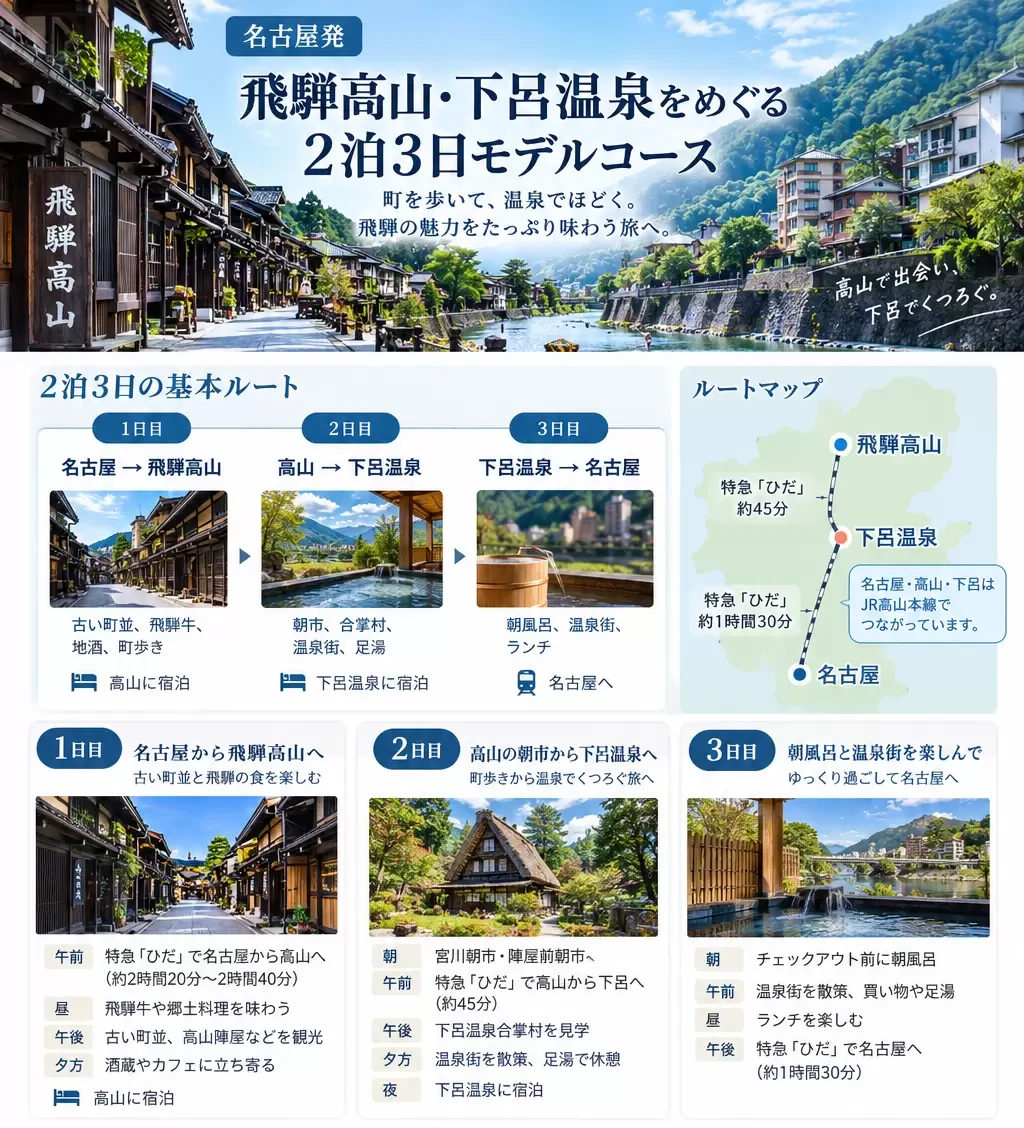
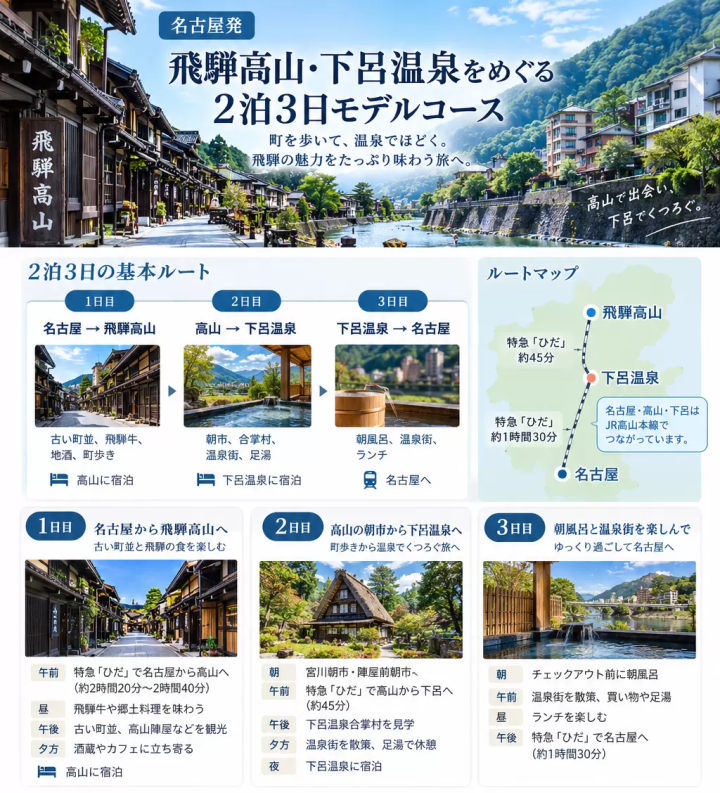
This comprehensive, authoritative travel guide outlines a masterfully paced 2-night, 3-day rail itinerary running seamlessly from Nagoya to Takayama and onward to Gero Onsen—one of Japan’s historic "Three Great Hot Springs." By utilizing the JR Takayama Limited Express "Hida" line, travelers can complete a fluid, loop-free journey that eliminates backtracking, reduces heavy luggage transport logistics, and balances vibrant cultural exploration with restorative hot spring relaxation.
Designed for travelers seeking both active discovery and restorative downtime, this route pairs the historical charm of Takayama’s Sanmachi district with the timeless serenity of Gero’s alkaline waters, all while maximizing the value of regional transit passes such as the JR Central Hida Area Free Pass.
Detailed Chronology: A 3-Day Master Itinerary
Day 1: Urban Transition to Edo-Era Splendor (Nagoya to Takayama)
The journey commences at Nagoya Station, a major transportation hub easily accessible from Chubu Centrair International Airport via the high-speed Meitetsu μ-SKY train (approximately a 28-minute transit time to Meitetsu Nagoya Station).
Boarding the JR Takayama Limited Express "Hida," passengers are treated to a scenic, uninterrupted transition. Over the course of approximately two and a half hours, the dense urban landscape of Nagoya gradually dissolves into rolling mountain ranges, rugged gorges, and rushing river valleys.
Afternoon: Culinary Heritage and the Sanmachi Historic District
Arriving in Takayama around noon primes the traveler for an immediate immersion in the region’s culinary arts. The primary gastronomic imperative is Hida beef, a nationally celebrated black-haired wagyu recognized for its exquisite marbling and melt-in-the-mouth texture. Beyond traditional sit-down yakiniku and steak establishments, the historic streets feature numerous walk-up vendors offering bite-sized Hida beef sushi served on crispy rice crackers or skewered delicacies.
Savvy travelers should also explore foundational local staples, including:
Hoba Miso: A savory mixture of miso, leeks, and mushrooms grilled over an magnolia leaf on a ceramic brazier.
Local Pickles (Zukemono): Naturally fermented mountain vegetables reflecting preservation techniques perfected over centuries.
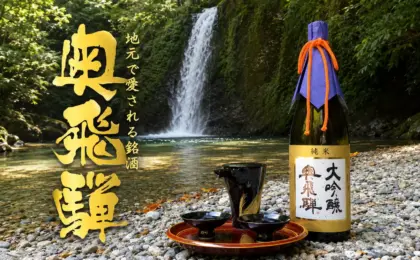
Regional Junmai Sake: Brewed using crystal-clear mountain meltwater and locally grown rice in cedar-cask facilities marked by traditional sugidama (cedar balls) hanging over entryways.
Post-lunch exploration naturally flows into the Sanmachi district, where dark-wood merchant houses, latticed windows, and overhanging eaves remain virtually unchanged since the Edo period (1603–1867). Key cultural landmarks—such as the Takayama Jinya (the only remaining Edo-period provincial government office in Japan) and the picturesque Nakabashi Bridge spanning the Miyagawa River—sit within a comfortable, pedestrian-friendly radius.
As evening descends and day-trippers depart for Nagoya, the historic core quiets down, offering overnight guests an atmospheric glimpse into historical Japan free from daytime crowds.
Day 2: Morning Markets and Hot Spring Immersion (Takayama to Gero Onsen)
[Takayama Station]
       │
       │ (JR Takayama Limited Express "Hida" — under 1 hour)
       ▼
[Gero Station] ──► Luggage Drop ──► Gero-Onsen Gassho Village ──► Footbaths & Onsen Ryokan Stay
Morning: The Miyagawa Morning Market
Waking up early on Day 2 grants access to Takayama’s celebrated morning markets (Asaichi). The Miyagawa Morning Market, running parallel to the river, offers a direct window into local agrarian life. Operated largely by regional farmers and artisans, stalls overflow with seasonal fruits, mountain vegetables, artisanal miso, and handmade crafts. Strolling along the riverbank while sampling warm local sweets provides an intimate cultural connection impossible to replicate on a rigid bus tour.
Afternoon: Relocated Architecture at Gero-Onsen Gassho-mura
Following hotel check-out, travelers reboard the JR Takayama Limited Express "Hida" for a swift, sub-hour journey south to Gero Station. Upon arrival, depositing luggage at the chosen hot spring inn (ryokan) allows for unburdened afternoon exploration.
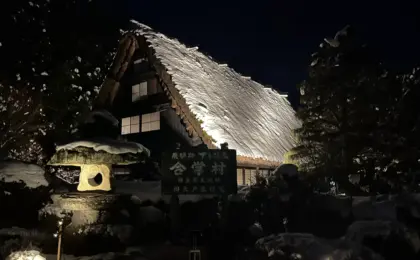
The primary afternoon anchor is Gero-Onsen Gassho Village (Gero-Onsen Gassho-mura). This open-air architectural preservation park features ten authentic, steep thatched-roof farmhouses (gassho-zukuri) relocated from heavy snowfall regions such as Shirakawa-go.
Cultural Highlights: Visitors can inspect the multi-story interiors of structures like the former Oto Family Residence, designated an Important Tangible Folk Cultural Property.
Interactive Workshops: The village offers hands-on cultural workshops, including Japanese paper (washi) painting, ceramic crafting, and pottery painting.
Evening: The Atmosphere of Gero Onsen
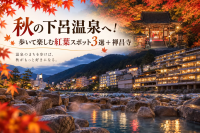
Returning to the central hot spring town, visitors encounter an energetic resort destination built along the banks of the Hida River. Gero Onsen is historically celebrated as one of Japan’s Three Great Hot Springs (Nihon Meisen), sharing historical prestige with Arima Onsen (Hyogo) and Kusatsu Onsen (Gunma).
Because the town is heavily pedestrianized and dotted with free public footbaths (ashi-yu), visitors can effortlessly drift between souvenir shops, cafes, and open-air bathing spots before returning to their ryokan for a traditional multi-course kaiseki dinner featuring local river fish, seasonal wild vegetables, and succulent Hida beef.
Day 3: The Art of Slow Travel (Gero Onsen to Nagoya)
[Gero Onsen Ryokan] ──► Morning Bath (*Asa-buro*) ──► Gero Gero Spring Museum / Riverside Cafes ──► Gero Station ──► [Nagoya Station]
The final day of the itinerary rejects hurried sightseeing in favor of the Japanese hot spring philosophy of muda no jikan—the deliberate enjoyment of unstructured time.
Morning Bath (Asa-buro): The morning begins with a pre-breakfast dip in the alkaline mineral waters, offering a starkly different sensory experience from evening bathing as sunlight illuminates the surrounding mountain ranges.
Mid-Day Stroll & Museums: Following check-out, travelers can revisit favorite boutique shops, sample hot-spring-steamed puddings, or visit the Gero Gero Spring Museum, which examines the geological and cultural mechanics of thermal springs through an engaging, scientific lens.
Return Transit: After a leisurely riverside lunch, travelers board the JR Limited Express "Hida" at Gero Station for a seamless 1h 30m direct return to Nagoya, completing the loop without the fatigue of backtracking.
Supporting Context & Metrics: Navigating by Rail
The logistical elegance of this 2-night, 3-day loop hinges entirely upon the linear connectivity provided by the JR Takayama main rail corridor.
Leg
Route
Approximate Transit Time
Primary Mode
Leg 1
Nagoya ➔ Takayama
~2 hours, 30 minutes
JR Limited Express "Hida" (Direct)
Leg 2
Takayama ➔ Gero Onsen
~45 to 50 minutes
JR Limited Express "Hida" (Direct)
Leg 3
Gero Onsen ➔ Nagoya
~1 hour, 30 minutes
JR Limited Express "Hida" (Direct)
Financial Optimization: The Hida Area Free Pass
To maximize economic efficiency and travel flexibility, planners should evaluate the JR Central Hida Area Free Pass.
Inclusions: Covers round-trip rail transit from the Nagoya metropolitan zone into the Hida region, alongside unlimited travel on participating JR local and limited express non-reserved seating between Hida-Kaneyama and Hida-Furukawa.
Validity Period: Strictly valid for 3 consecutive calendar days.
Pricing & Availability: As of August 2026, standard departures originating within Nagoya city are priced at 12,370 yen, with optional bus and meal voucher integrations available. Note: Pass usage is restricted during major national holiday periods, including Golden Week, Obon, and the New Year holidays. Travelers must verify current tariff structures and calendar blackouts on the official JR Central website prior to ticket acquisition.
Official Statements & Regional Insights
Tourism boards across Gifu Prefecture emphasize that the complementary contrast between Takayama and Gero is what makes the 2-night, 3-day format uniquely compelling.
"Takayama represents an active, outward-looking engagement with history—where visitors walk through living museum towns, engage with artisans, and sample rich regional gastronomy. Gero Onsen, by contrast, is an inward journey of recovery and sensory slowing down. By joining these two distinct tourism pillars via a single railway corridor, visitors experience the full spectrum of Hida culture without logistical fatigue."
— Regional Tourism Development Guidelines, Gifu Prefecture
Local hot spring masters in Gero further note the chemical uniqueness of the town’s thermal resources:
"Gero’s springs are classified as simple alkaline thermal waters with a high pH level. Often referred to locally as ‘bijin-no-yu’ (waters of beauty), the gentle nature of the water strips away cellular fatigue and leaves the skin exceptionally smooth. Experiencing this water both at night under the stars and in the crisp morning air is essential to understanding why travelers have sought out Gero for centuries."
— Gero Onsen Ryokan Association Commentary
Future Outlook: Sustainable Slow Travel in Chubu
As global tourism paradigms shift away from rushed, checklist-style itineraries toward sustainable, regional slow travel, routes like the Nagoya–Takayama–Gero loop are experiencing a surge in international prominence.
By prioritizing railway transit over carbon-heavy private vehicle rentals or long-distance tour buses, visitors not only minimize their environmental impact but also engage more authentically with the landscapes they traverse. Future infrastructure updates by JR Central continue to prioritize passenger comfort on the "Hida" line, cementing Chubu’s reputation as one of Japan’s most accessible yet deeply traditional hinterlands.
For travelers mapping out their next Japanese adventure, the formula is clear: do not merely visit Takayama and depart. Grant yourself the gift of an extended horizon, step onto the platform at Gero Onsen, and discover the profound harmony of history, gastronomy, and healing waters.







Belum ada komentar. Jadilah yang pertama berkomentar!