

Executive Overview
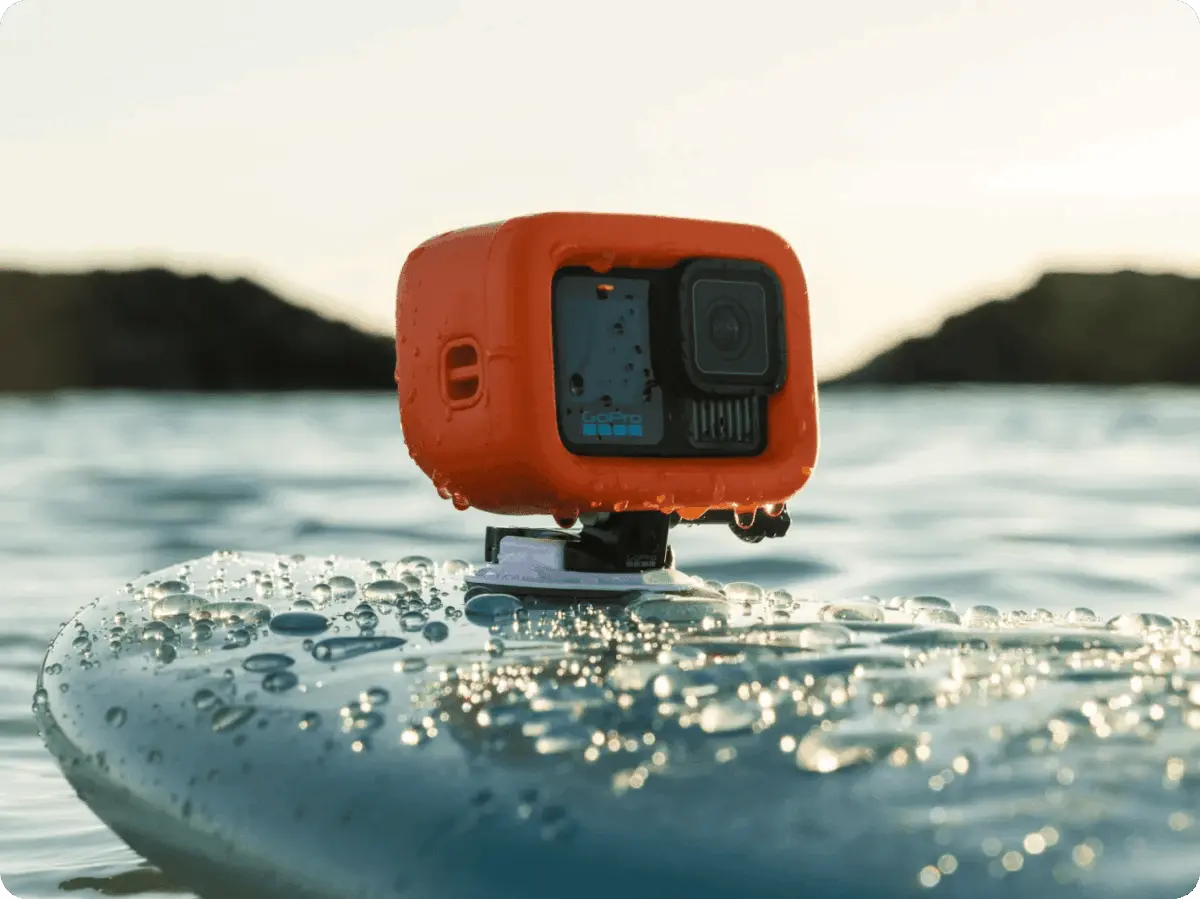
After years of declining revenues, mounting debt, and desperate measures to stave off insolvency, action camera pioneer GoPro is finally charting a new course. In a deal announced Tuesday morning, the company has entered into a definitive agreement to merge with Starman Optical, Inc. in a transaction valued at approximately $285 million.
The agreement offers a lifeline to a brand that defined the modern action-sports era but struggled to survive the changing tides of consumer electronics. Under the terms of the merger, Starman Optical will pay GoPro shareholders $1.14 per share in cash, while leaving existing shareholders with roughly a 10% stake in the newly combined entity. Crucially, the acquisition will wipe away GoPro’s suffocating $92 million in outstanding debt. The deal is slated to close by the end of the year, pending standard regulatory approvals and closing conditions.
This high-stakes corporate marriage arrives on the heels of major strategic shifts for GoPro, which recently signaled its intent to pivot from purely consumer-facing action cameras into the lucrative, high-stakes defense technology and AI infrastructure sectors. Adding a layer of Hollywood-meets-Silicon-East intrigue, prominent YouTuber Markiplier revealed just days prior to the announcement that he had quietly amassed an 8.5% stake in GoPro, making him the company’s largest individual shareholder.
While the financial rescue keeps GoPro alive and shields it from bankruptcy, the union with Starman Optical—an entity with a relatively brief and opaque operating history—raises as many questions as it answers. As the dust settles on a turbulent decade for the once-revered hardware icon, the tech world is left watching whether a marriage between an action camera maker and a domestic photonics startup can successfully pivot toward national security, onshored manufacturing, and advanced artificial intelligence hardware.
Detailed Chronology: The Rise, Fall, and Rescue of GoPro
The Glory Days and the 2014 IPO
GoPro’s journey is a quintessential Silicon Valley tale of meteoric rise followed by the harsh realities of hardware maturation. Founded by Nick Woodman in 2002 out of a desire to capture surf photos, the company exploded into cultural ubiquity with its wrist-mounted, rugged high-definition cameras. By the time GoPro went public with an initial public offering (IPO) in June 2014—priced at $24 per share—the company was selling millions of units annually. It was the undisputed king of the action-sports market, adored by extreme athletes, vloggers, and weekend warriors alike.
The Hardware Wilderness and Strategic Missteps
However, maintaining hyper-growth proved difficult. In the decade following its IPO, GoPro attempted to diversify its product portfolio to combat slowing camera replacement cycles. Venturing into consumer drones (with the ill-fated Karma drone) and 360-degree cameras, the company burned through capital without capturing significant market share in those nascent categories.
Quality control issues, software bugs, and intense competition from low-cost Chinese rivals like DJI and Insta360 severely squeezed GoPro’s margins. Forced to recalibrate, the company abandoned its drone ambitions and narrowed its focus back to high-performance action cameras tailored for professional creators, athletes, and prosumers. Yet, even as its cameras retained a reputation for excellence, the business model required repeated rounds of painful workforce reductions and restructuring to stay afloat.
The Brink of Insolvency and the Summer 2026 Crisis
By mid-2026, the financial runway had effectively run out. In June, GoPro issued a stark "going concern" warning to its shareholders, explicitly stating that without an influx of immediate capital, the company faced a genuine risk of going out of business.
The situation grew so desperate that in July, founder and CEO Nick Woodman stepped in personally, pumping $20 million of his own money into the business in an attempt to keep the lights on and buy time for a strategic buyer to emerge. Behind closed doors, leadership began exploring radical transformations, including a pivot away from pure consumer electronics toward defense technology and advanced imaging infrastructure.
The Starman Merger and Markiplier’s Stake
The endgame materialized this week. On Tuesday morning, the $285 million merger agreement with Starman Optical was officially made public. Simultaneously, financial disclosures revealed that YouTube megastar Markiplier had acquired an 8.5% stake in the company, positioning him as GoPro’s largest shareholder just as the buyout was finalized.
Supporting Context & Metrics: Inside the Numbers
To understand the mechanics of the GoPro-Starman merger, one must examine the valuation, the liabilities, and the strange corporate anatomy of the acquiring party.
- Acquisition Valuation: $285 million total transaction value.
- Shareholder Payout: $1.14 per share in cash, plus an approximate 10% equity stake in the newly combined enterprise.
- Debt Elimination: The deal wipes away GoPro’s crippling $92 million in outstanding debt.
- Historical Context: A stark decline from GoPro’s 2014 IPO valuation, where shares debuted at $24.
- The Acquiring Entity: Starman Optical, incorporated in Delaware on August 31, is part of Starman Holdings. Starman Holdings also oversees consumer tech and lifestyle brands including Incase, Incipio, and Griffin.
- The Manufacturing Arm: Starman New Photonics, established around 2025, is currently constructing a dedicated manufacturing facility in New Jersey, backed by state economic development awards.
| Metric / Event | Detail / Value |
|---|---|
| IPO Year | 2014 ($24 per share) |
| Acquisition Price | $285 million total |
| Cash per Share | $1.14 |
| Retained Equity | ~10% for existing shareholders |
| Debt Cleared | $92 million |
| Key Shareholder | Markiplier (8.5% stake) |
Official Statements and Corporate Vision
The leadership teams from both GoPro and Starman Holdings framed the merger not merely as a corporate bail-out, but as a strategic alignment designed to capture the booming market for domestic defense technology, advanced photonics, and AI infrastructure.
Charles Tebele, CEO of Starman Holdings, emphasized the geopolitical and economic necessity of bringing optical manufacturing back to American soil:
"Advanced optics and imaging are essential to AI, national security, and the broader economy, yet much of the critical hardware supporting these technologies continues to be manufactured overseas," Tebele said in a statement. "The combination of GoPro’s world-class optical expertise and intellectual property with Starman’s advanced transceiver capabilities and U.S. manufacturing platform creates a unique opportunity. Together, we intend to bring production of these critical components back to the United States."
Nick Woodman, founder and CEO of GoPro, echoed these sentiments, expressing optimism about the brand’s survival and its evolution into a diversified imaging powerhouse:
"We expect this merger to enable GoPro to grow across consumer, commercial and defense markets as a leading American imaging and optical solutions company, addressing important areas of national security related to cameras, optics and AI infrastructure. We’re excited to combine with the Starman team to capitalize on this opportunity and play an important role in America’s future," Woodman stated.
According to joint press releases, the newly combined company intends to "fully support" its existing consumer hardware ecosystem while simultaneously investing in a broader, diversified product roadmap that leverages GoPro’s robust intellectual property portfolio.
Future Outlook: Challenges and Opportunities Ahead
While the merger agreement provides immediate financial relief, the road ahead is fraught with uncertainty. Questions remain regarding how seamlessly an action camera brand can transition into a defense tech supplier, and whether Starman Optical—a company with a limited operating history—possesses the execution capabilities to manage such a complex pivot.
1. The Defense and AI Pivot
The defense tech sector has seen an influx of venture capital and public interest, driven by geopolitical tensions and the rapid demand for edge-computing hardware, drone payloads, and AI-driven surveillance. GoPro’s ruggedized imaging technology, wide-angle lens expertise, and compact form factors theoretically lend themselves well to defense applications. However, transitioning from selling consumer sports cameras to fulfilling military procurement contracts requires rigorous certifications, supply chain security, and specialized engineering that GoPro has not historically prioritized.
2. Onshoring and U.S. Manufacturing
A central pillar of the Starman pitch is domestic manufacturing, anchored by Starman New Photonics’ New Jersey facility. Bringing high-end optical and transceiver production back to the U.S. aligns with broader federal initiatives to secure supply chains against geopolitical shocks. However, doing so while maintaining competitive pricing margins will test the operational discipline of both companies.
3. The Fate of the Consumer Brand
For millions of loyalists, the primary concern is whether GoPro will abandon the action sports community that built its empire. Both companies have insisted that GoPro will continue to "fully support" its existing consumer product lineup. Yet, as corporate priorities shift toward commercial, industrial, and defense markets, consumer electronics enthusiasts will be watching closely to see if future iterations of the Hero camera receive the R&D funding necessary to stay ahead of fierce competitors like DJI.
Ultimately, the GoPro-Starman merger represents a desperate and fascinating gambit. By shedding $92 million in debt, securing fresh capital, and aligning with a domestic manufacturing platform, GoPro has avoided the graveyard of defunct tech brands. Whether it can successfully reinvent itself as an essential pillar of American defense technology and optical innovation remains the ultimate test.







Belum ada komentar. Jadilah yang pertama berkomentar!