

Executive Overview
The video game industry has always been a breeding ground for imitation, where runaway successes inevitably birth a flurry of fast-followers. For every era-defining title like Super Mario Bros. or Stardew Valley, a legion of copycats—such as The Great Giana Sisters or Fields of Mistria—emerges to capitalize on proven formulas. However, the modern digital storefront has evolved past traditional clones into something far more idiosyncratic.
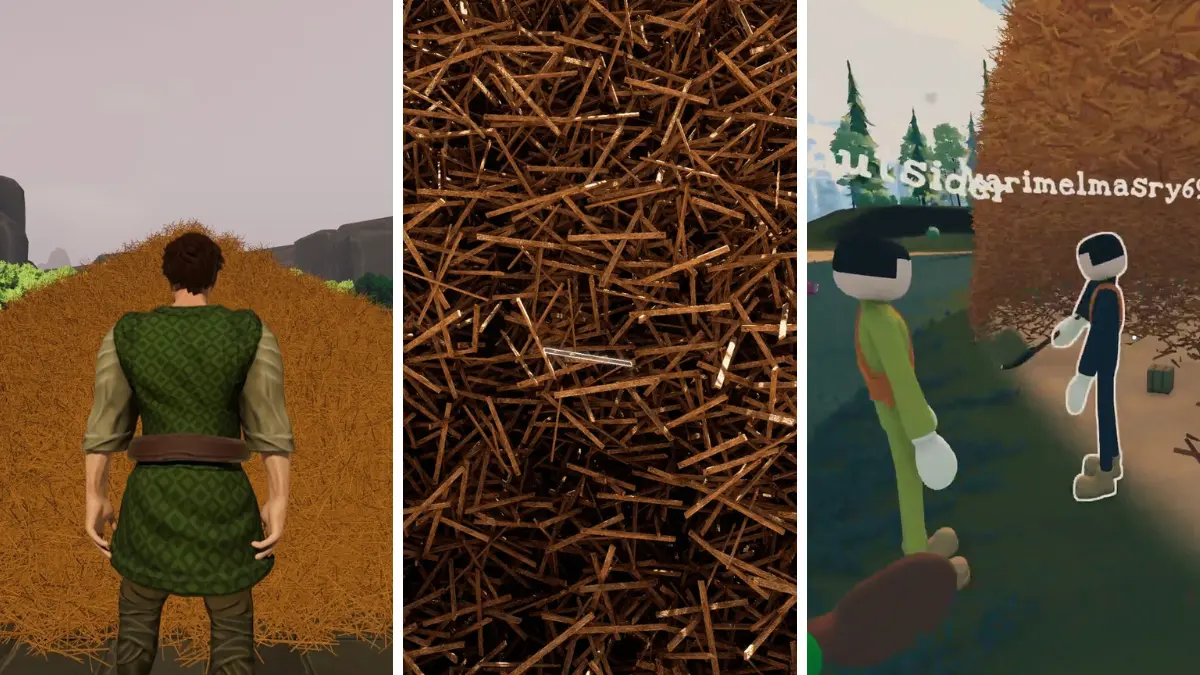
Enter the "slopification" of Steam, a phenomenon defined by micro-niche, hyper-repetitive conceptual titles engineered to exploit viral social media trends and casual curiosity. The latest and most surreal manifestation of this trend is the sudden, inexplicable explosion of "needle in a haystack" games.
What began as a tongue-in-cheek joke on platforms like X (formerly Twitter) quickly metastasized into a legitimate micro-genre. Within weeks, developers scrambled to flood Steam with redundant iterations: Needle In A Haystack Simulator, A Needle In A Haystack – A Time For Goats, A Needle In A Haystack: Sorting Game, Story of The Needle In a Haystack, and numerous others.
While some creators approach the phenomenon with self-aware humor, the influx highlights a growing vulnerability in digital distribution ecosystems. When an indie developer’s bizarre concept goes viral, the algorithmic churn industry watches closely—transforming harmless internet jokes into calculated cash grabs overnight. This report examines the chronology of the haystack craze, analyzes shifting player behavior toward mundane labor sims, and reviews the broader context of Steam’s weekly revenue metrics, featuring breakout hits like Wardogs and Trails in the Sky 2nd Chapter.
Detailed Chronology: From Viral Spark to Storefront Flood
To understand how searching for imaginary sewing implements became a dominant indie talking point, one must trace the timeline of this digital anomaly.
The movement traces its roots to independent developers leaning into extreme, absurdly mundane incremental gameplay loops. Games centered on meaningless, repetitive labor—such as sorting thousands of domestic items onto shelves or clicking on static JPEGs—have established a dedicated, ironic, yet lucrative market on PC.
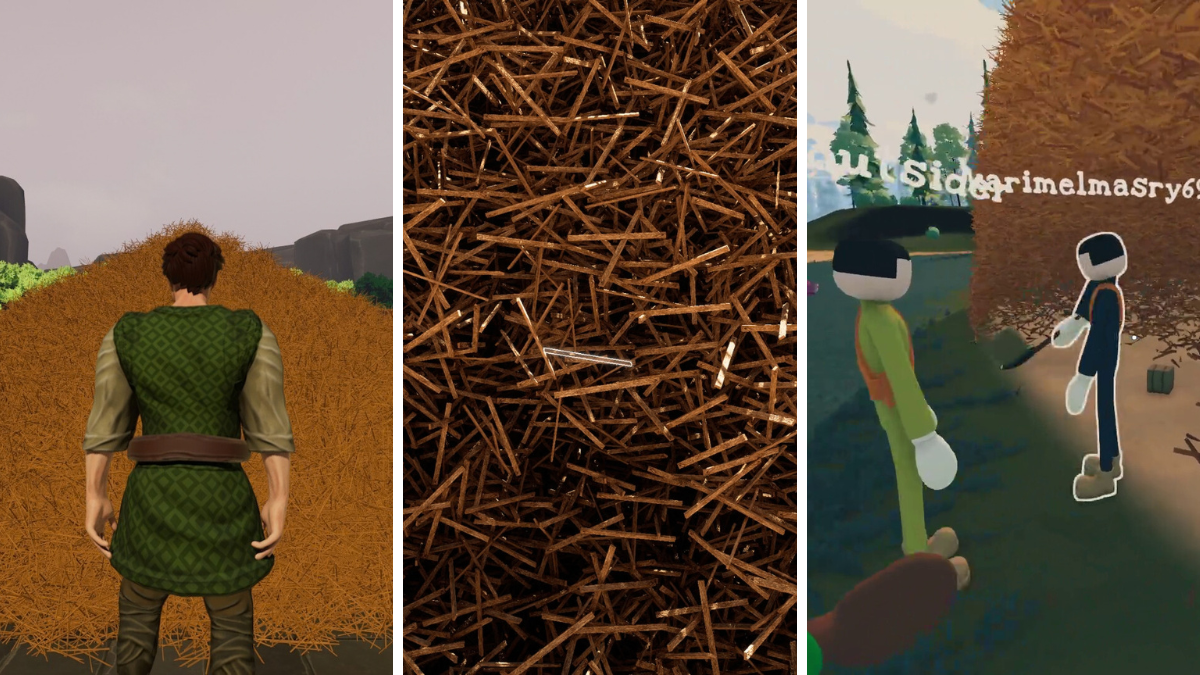
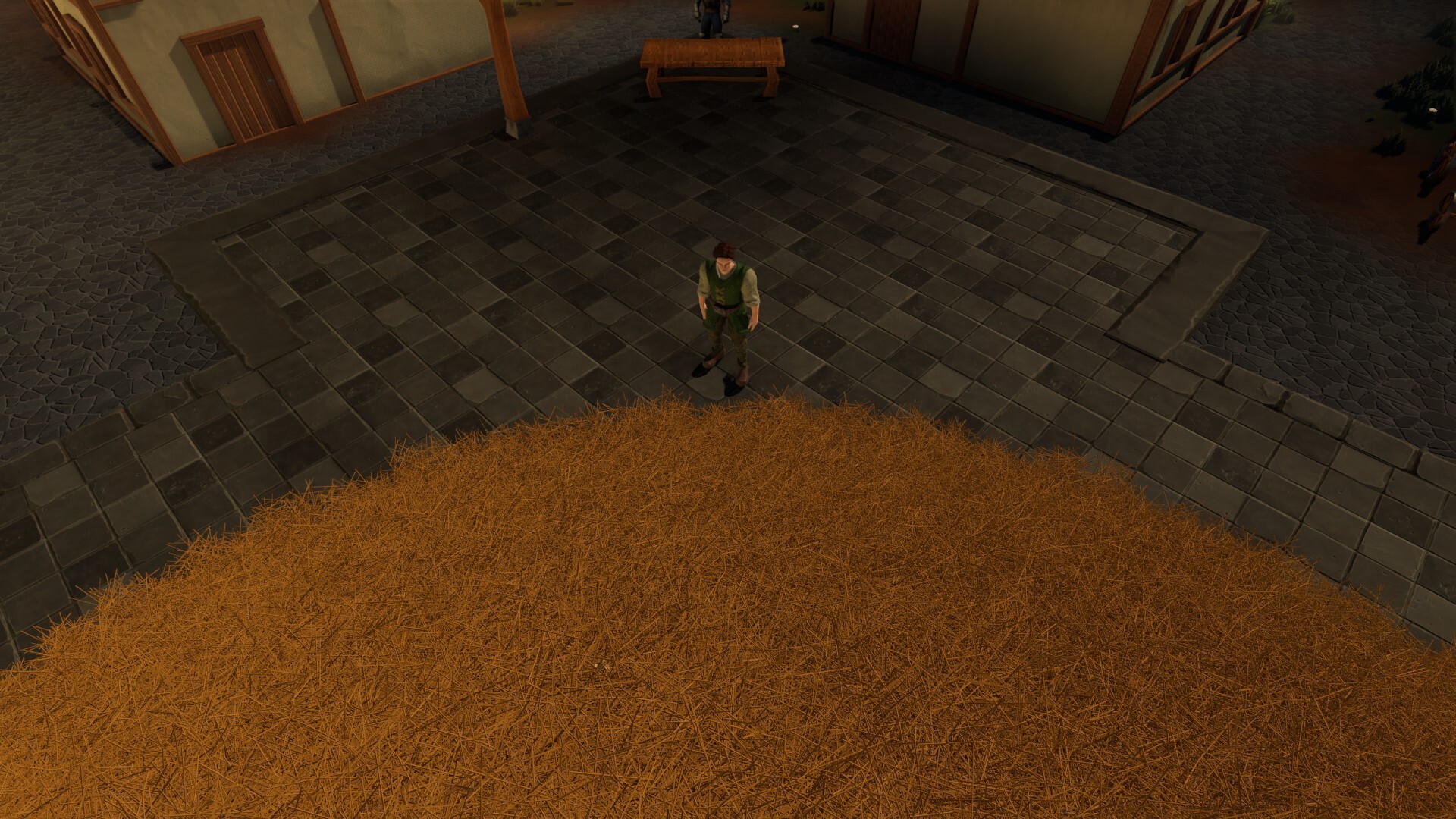
The catalyst for the haystack craze arrived when early promotional materials and playtests for Needle In A Haystack Simulator, slated for release by Studio Bitdot in Q4 2026, began circulating online. Despite its inherently tedious premise, a playtest held in August attracted an astonishing 23,000 concurrent and participating players. The game cleverly hybridizes sorting mechanics with incremental progression: players manually sift through mountainous piles of hay to locate a single needle, simultaneously unearthing random items that can be sold for profit to fund automated, more efficient hay-sifting technology.
Predictably, success breeds imitation. Capitalizing on the sudden public appetite, rival studios rushed products to market to beat Studio Bitdot to the punch:
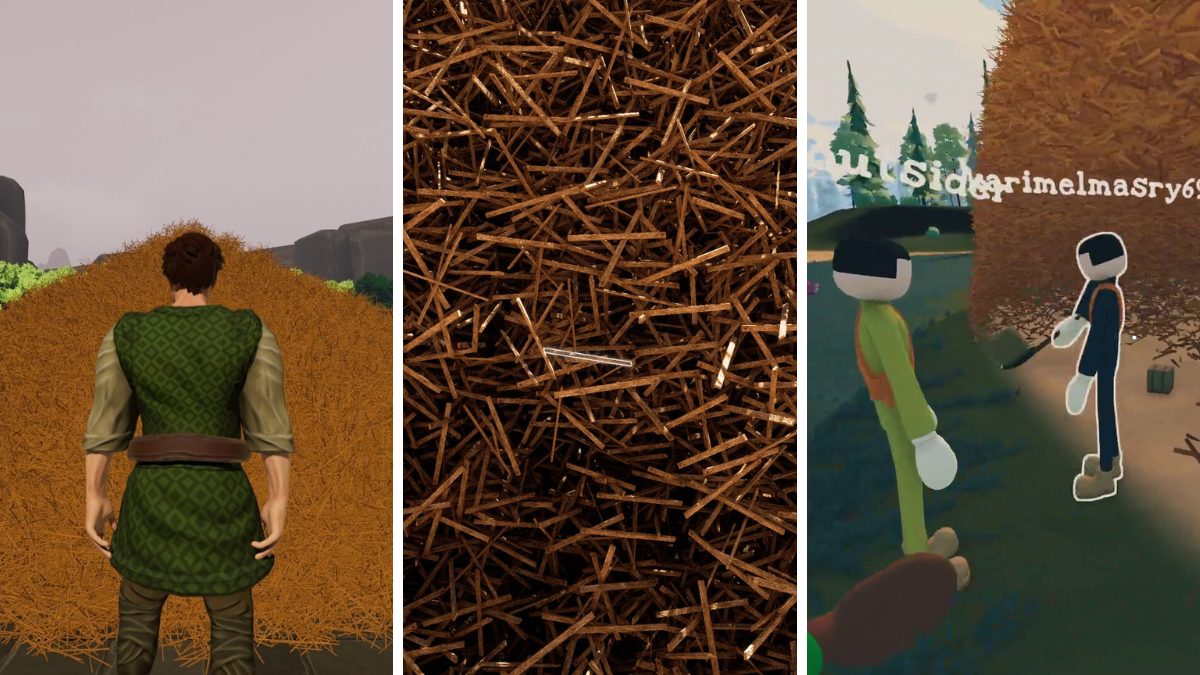
- September 19: Red Key Games released Needle In A Haystack – A Time For Goats. According to the developer, the game shifted roughly 1,000 copies by September 26. In an unusual move to differentiate its title from the oncoming wave of agricultural copycats, the studio pushed a bizarre, free first-person shooter endgame expansion in late September. The update triggered immediate backlash from early adopters, with Steam user djcassar writing, "Dude, what are you thinking?? It is a completely different play style to what people are buying the game to experience. Get rid of it!"
- September 25: Another rushed competitor materialized under the bluntly transparent title A Needle In A Haystack: Sorting Game. Reviews on Steam swiftly categorized it as a substandard piece of software, validating fears regarding low-effort shovelware.
- September 30: Needle In A Haystack rolled out its official launch following a demo period that reportedly drew over 20,000 participants.
- November 28: Story of The Needle In a Haystack is scheduled to make its debut, featuring a live demo currently available to the public.
Supporting Context & Metrics: The Economics of Irony
The haystack craze is not an isolated incident; rather, it is part of a broader evolution in Steam’s economy. Over the past few years, meme-driven and ultra-minimalist games have proven that viral marketing can routinely override traditional production values. Projects like A Game About Digging A Hole and Banana—a game where users rhythmically click on a static image of a fruit with zero secondary mechanics—demonstrated that millions of players are willing to engage with ironic digital artifacts. Banana famously peaked at over 31,000 concurrent players.
Notable "Haystack" Project Metrics
- Needle In A Haystack Simulator (Studio Bitdot): 23,000 players during its August playtest; scheduled for Q4 2026.
- Needle In A Haystack – A Time For Goats (Red Key Games): 1,000 copies sold within its first week of release.
- Needle In A Haystack Demo: Attracted roughly 20,000 trial players ahead of its late September launch.
This trend exposes a harsh reality for independent developers. Showcasing an experimental or bizarre prototype on social media is essential for building an audience, but virality acts as a double-edged sword. The moment a unique concept captures public imagination, asset-flippers and opportunistic studios fast-track inferior clones, hoping to siphon search traffic and casual impulse buys before the trend evaporates.
Official Statements and Industry Reactions
The sheer saturation of the storefront has drawn weary amusement and blunt apologies from the very creators who started it.
Following a viral post on X that brought widespread attention to the phenomenon, the lead developer of Needle In A Haystack Simulator, known online as Nas, issued a public mea culpa to the gaming community.

"As the dev of the one that went viral, i would like to formally apologise to the steam storefront," Nas wrote on X.
When followers expressed sympathy over having their unique idea overrun by low-effort copycats, the developer remained ruthlessly pragmatic:
"Don’t feel bad, it’s the ultimate slop game. I have no complaints."
While Nas has approached the situation with self-referential humor—even using screenshots of the game to parody cinematic properties like Wolverine—the copycats operating in their wake harbor no such artistic irony. For the shovelware merchants pushing out derivative builds, the strategy is purely quantitative: capture the search keywords, deploy minimal viable code, and extract profit from the algorithmic chaos.
Future Outlook: Navigating the Noise on Modern Storefronts
As Steam’s catalog balloons past 100,000 titles, consumer fatigue regarding micro-genre saturation is reaching a boiling point. While games about mundane labor offer a therapeutic form of psychological dissociation from the complexities of modern life, the line between charmingly experimental indie art and cynical storefront pollution is increasingly blurred.
Ultimately, the haystack phenomenon serves as a case study in modern game publishing. It demonstrates that player attention in the digital age is erratic, heavily influenced by social media algorithms, and ripe for exploitation. For indie developers, the takeaway is clear: while sharing weird, half-baked prototypes online remains a powerful marketing tool, it requires navigating an ecosystem where imitation is instantaneous, and the distance between a brilliant joke and industrial slop is measured in days.
Appendix: Weekly Industry Metrics
Top Steam Games by Revenue (September 15–22)
While the indie fringes grapple with agricultural shovelware, the upper echelons of Steam continue to be dominated by massive multiplayer live-service titles and major releases.
| Rank | Game Title | Status / Notes |
|---|---|---|
| 1 | Wardogs | Continues its dominance; developer Bulkhead reports 3.1 million copies sold since preorders opened on August 11, defying high failure rates for live-service multiplayer games in 2026. |
| 2 | EA Sports FC 27 | Charting purely on preorders ahead of its September 25 launch. Notably, developers EA Canada and EA Romania disclosed the use of generative AI in creating pre-rendered assets, explicitly noting it was part of a human-led artistic process. |
| 3 | Counter-Strike 2 | Persistent mainstay in the weekly revenue charts. |
| 4 | PUBG: Battlegrounds | Retains strong concurrent player retention and monetization metrics. |
| 5 | Dota 2 | Stable performance driven by regional engagement. |
| 6 | Apex Legends | Steady placement following seasonal updates. |
| 7 | Marvel Rivals | Maintaining healthy revenue streams amid ongoing competitive updates. |
| 8 | Aniimo | Continued strong mid-tier performance. |
| 9 | Diablo 4 | Steady foothold following post-launch expansions. |
| 10 | Trails in the Sky 2nd Chapter | A surprise breakout hit, achieving "Overwhelmingly Positive" user reviews and proving that classic JRPG remakes still command massive purchasing power on PC. |








Belum ada komentar. Jadilah yang pertama berkomentar!