

Executive Overview
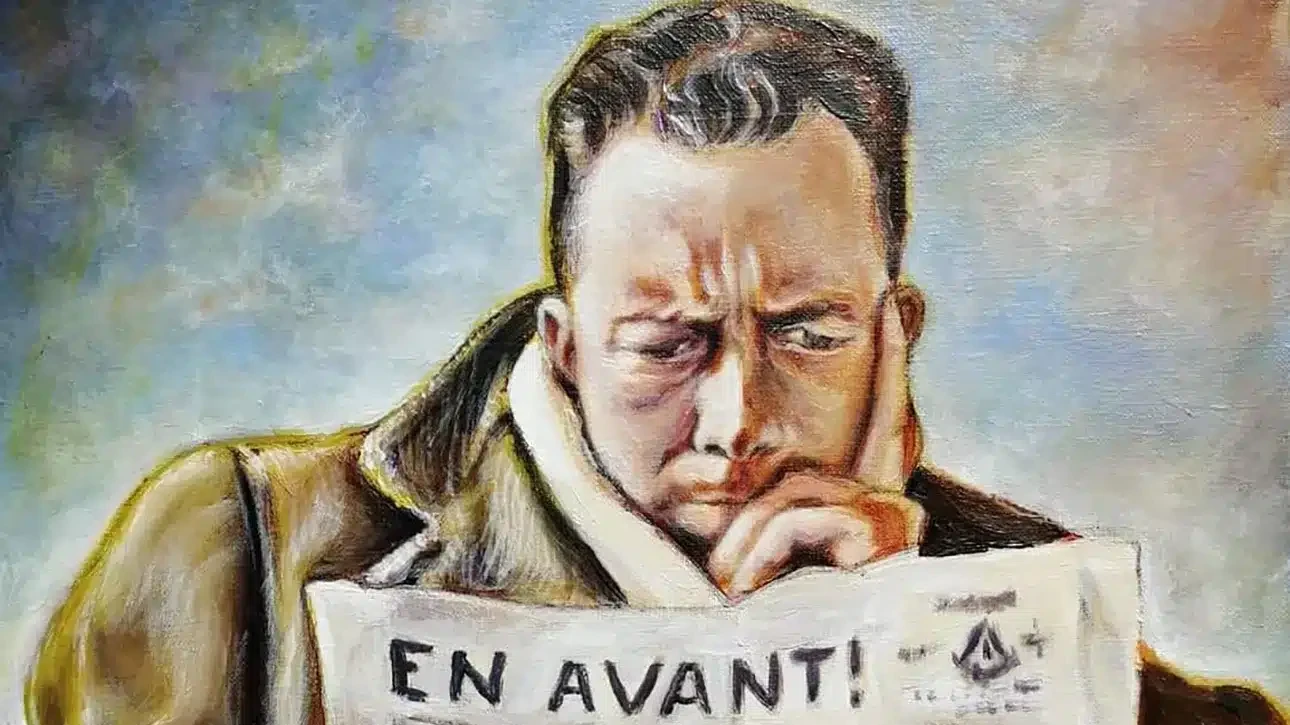
Decades after his untimely death in a car crash in 1960, Albert Camus remains one of the defining intellectual architects of the 20th century. Yet, despite his enduring cultural footprint, the French writer and philosopher has spent more than half a century battling a posthumous shadow: persistent mischaracterization. Most egregiously, Camus was not an existentialist. He explicitly rejected the label, drawing a sharp, irreconcilable line between his own philosophical framework—absurdism—and the existential doctrines espoused by contemporaries like Jean-Paul Sartre.
Now, the publication of The Complete Notebooks (translated, annotated, and contextualized by Ryan Bloom) offers a definitive corrective. Spanning 712 pages and covering the years 1933 to 1959, this monumental single-volume collection brings together Camus’ private journals for the first time. Far from an insipid or superfluous collection of writerly scraps, The Complete Notebooks is an indispensable archive. It exposes the raw materials of masterpieces like The Stranger, The Myth of Sisyphus, The Plague, and The Fall, while dismantling the myth of the unedited genius.
Camus was a writer who loved the act of revision just as much as creation. Through meticulous textual analysis, historical footnotes, and chronological charting, this publication invites scholars and general readers alike to re-engage with a humanist whose battle against an indifferent universe remains profoundly urgent.
Detailed Chronology: From the Early 1930s to the 1950s Ascent
The trajectory captured within The Complete Notebooks traces Camus’ evolution from an ambitious young provincial writer in the early 1930s to an eminent, internationally recognized cultural figure by the 1950s.
The Formative 1930s: Ornate Prose and Mediterranean Light
In Notebook I, readers encounter a 23-year-old Camus traveling through Italy, absorbing the frescoes of Giotto at the Basilica di Santa Croce in Florence. During this early period, Camus’ writing style was notably ornate—metaphors flew like kites, rich with sensory detail.
It was also during this decade that Camus laid the foundational stones for his literary career. In August 1937, he jotted down a conceptual premise:
"Novel: the man who understands that to live you have to be rich, who devotes himself entirely to making money, who succeeds, lives and dies happy."
As Bloom’s vital footnotes reveal, this entry marks the very first time Camus referred to what would posthumously be published in 1971 as The Happy Death. Following this project, Camus would deliberately pare down his prose style, stripping away ornamentation in favor of the stark, cool directness that defined The Stranger.
The Wartime Crucible and the 1940s
As the political landscape of Europe darkened, Camus’ journals reflected the existential pressures of the Second World War and the French Resistance. The notebooks chronicle pivotal literary developments:
- An early structural concept for The Stranger.
- The initial psychological contours of Jean-Baptiste Clamence, the protagonist of The Fall.
- The profound narrative influence of Herman Melville’s Moby-Dick (newly translated into French in 1941) upon the composition of The Plague (1947).
- A drafted—but ultimately unsent—letter to literary critic André Rousseau, fiercely defending The Stranger against unfavorable critique.
- The original, unpublished opening line of The Rebel, echoing the thematic gravity of The Myth of Sisyphus.
Notably, the chronology also captures fleeting historical intersections. In February 1945, Camus and George Orwell narrowly missed meeting at the famed Parisian café Les Deux Magots.
South American Interludes (1949)
A fascinating detour occurs between June and August 1949, when Camus embarked on travels through South America. Immersed in the poetry of 19th-century French writer Alfred de Vigny—whose melancholic fatalism mirrored Camus’ internal state—he engaged deeply with local literati. Camus met Brazilian novelist and poet Anibal Machado, alongside poets Augusto Frederico Schmidt and Murilo Mendes, whom Camus famously characterized as possessing "a sharp and melancholy mind."
The 1950s Cultural Ascent
By the 1950s, the notebooks track Camus’ maturation into a towering public intellectual. Yet, they also document his growing alienation from the dogmatic political orthodoxy of post-war Paris, particularly his definitive break with the French Communist Party and the Marxist intelligentsia.
Supporting Context & Metrics: The Anatomy of a 712-Page Tome
The Complete Notebooks is physically and intellectually imposing. At 712 pages, the volume presents unique editorial challenges that translators and biographers have spent decades untangling.
The Metrics of the Text
- Time Span: 26 years (1933–1959).
- Physical Scope: 712 comprehensive pages.
- Editorial Labor: Translated, annotated, and contextualized by Ryan Bloom, whose exhaustive footnotes provide indispensable historical and literary framing.
The Artifice of Autorship: Rewriting History
Readers must approach notebooks with a critical eye, and Camus was acutely aware of this. Olivier Todd, in his 1996 biography Albert Camus: A Life, noted that Camus "really wasn’t the one for first drafts" and "liked rewriting as much as the initial writing itself."
This performative curation is laid bare in Bloom’s translator’s introduction. Camus typed his notebooks at various points in his life, systematically revising and "correcting" the text. Notebooks I through III were thoroughly revised, while IV through VII received partial corrections.
These were not merely stylistic polishes; they were ideological realignments. For example, an entry from the 1930s originally read:
"I come to Communism."
In the typed, corrected version—likely executed two decades later after Camus had permanently soured on totalitarian leftism—the sentence was altered to read:
"I reject Communism."
Furthermore, Camus moved and rearranged entries to project an air of prophetic clarity, creating the illusion that his worldview was fully formed at the moment of inscription. Without Bloom’s forensic footnotes, modern readers would remain blind to these retrospective manipulations.
Official Statements & Philosophical Foundations
To understand Camus through his notebooks is to confront the core tenets of his philosophy: absurdism, humanism, and a fierce resistance to ideological abstraction.
Defining Absurdism
In The Myth of Sisyphus (1942), Camus defined the absurd as the fundamental conflict between humanity’s desperate desire for inherent meaning and the cold, silent universe’s complete refusal to provide it. As the notebooks reinforce, the universe couldn’t care less about human supplications, prayers, or theological speculations. Whether we laugh, cry, or die makes no cosmological difference.
Yet, Camusian absurdism is not an invitation to solipsistic despair. Instead, it breeds solidarity. As Camus demonstrated through his ultimate analogy—Sisyphus condemned for eternity to push a boulder up a hill, only to watch it roll back down—we must imagine Sisyphus happy. The struggle itself toward the heights is enough to fill a human heart.
The Rejection of Hope and Ideology
Throughout the notebooks, Camus launches a persistent attack against abstract systems and ideological dogmatism. He viewed ideologies as dangerous mechanisms that subordinate flesh-and-blood human beings into mere ciphers.
Crucially, Camus rallied against hope. To Camus, hope points toward an unpromised, speculative future, thereby distracting individuals from the immediate reality of existence. To live authentically, one must remain completely rooted in the present, fully cognizant of one’s mortality.
As captured in the newly translated pages, Camus saw the perils of abstraction clearer than most of his contemporaries. Being alive—in all its fragile, transient absurdity—is the ultimate rebellion against a meaningless world.
Future Outlook: The Indispensability of Camus for Modern Readers
Many archival collections of established authors prove to be insipid, self-indulgent, and ultimately superfluous. The Complete Notebooks, however, stands as a rare exception.
As society navigates an era defined by digital alienation, algorithmic polarization, and anxieties over systemic collapse, Camus’ writings offer a vital anchor. The notebooks do not present a pristine, infallible guru; they present a flawed, searching human being trying to make sense of a turbulent century.
For Camus scholars, Bloom’s edition sets a new gold standard for translation and annotation. For general readers, hanging out with Camus via these pages feels akin to conversing with an avuncular friend—someone who understands that modern days can stretch on indefinitely, containing months of emotional weight within mere minutes.
Ultimately, The Complete Notebooks reinforces why Albert Camus remains eternally vital. With a single sentence, he forces us to pause, think, re-evaluate, feel, and realize a singular, liberating truth: to be fully, consciously alive is the greatest rebellion against the absurd.









Belum ada komentar. Jadilah yang pertama berkomentar!