

Executive Overview
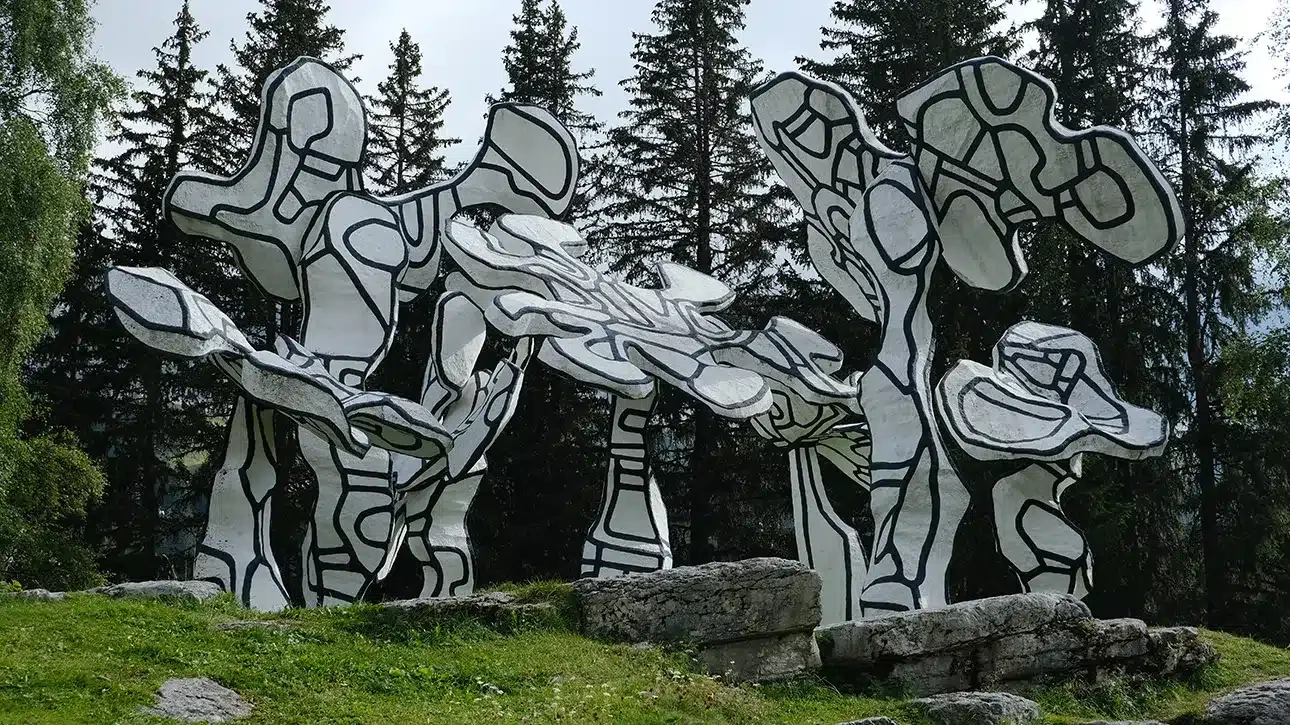
In 1945, French painter and sculptor Jean Dubuffet coined the term Art Brut (“raw art”) to describe creative expressions born entirely outside the boundaries of official artistic institutions. Visiting psychiatric hospitals, observing folk artists, and collecting the work of self-taught recluses, Dubuffet outlined his thesis in his foundational 1947 manifesto, L’art brut préféré aux arts culturels. He argued that unrefined, un-institutionalized creation possessed an authenticity that academic and commercial art ecosystems could never replicate. For Dubuffet, official culture was sterile, derivative, and hopelessly compromised by the pursuit of institutional approval.
Eight decades later, modern creators navigate an art and media landscape governed by a different, yet equally oppressive, institutional authority: algorithmic optimization. Across major digital platforms, visual feeds are curated for maximum engagement, aesthetic uniformity, and corporate brand safety. The outcome is a hyper-polished, frictionless digital monoculture.
Yet, applying Dubuffet’s framework to contemporary media reveals a compelling counter-cultural movement. Across independent digital spaces, creators are weaponizing low-fidelity aesthetics, chaotic collage, and unedited, tactile art documentation to subvert platform expectations. Far from being mere internet oddities, these unpolished visual practices function as modern Art Brut, offering vital proof of human presence in an increasingly automated media environment.
This deep investigative report examines the historical lineage of raw counter-cultures, analyzes the mechanics of the modern “algorithmic academy,” profiles the metrics of digital homogenization, and charts the rise of a decentralized, tactile resistance movement across the global media landscape.
Detailed Chronology: From Psychiatric Wards to the Digital Feed
To understand the current rebellion against algorithmic hygiene, one must trace the evolutionary trajectory of institutional power and the counter-movements it inevitably triggers. The tension between sanitized official culture and unvarnished human expression has defined cultural epochs for over a century.
[1918] Dada Manifesto (Anti-Aestheticism)
       │
       ▼
[1945–1947] Jean Dubuffet Coins 'Art Brut' & Publishes Manifesto
       │
       ▼
[1972–1976] John Waters & DIY Punk Rock (Low-Budget Defiance)
       │
       ▼
[Early 2000s] Rise of Web 2.0 & Algorithmic Feed Optimization
       │
       ▼
[Present Day] The Digital Art Brut Movement & Tactile Archival Resistance- 1918 – The Birth of Anti-Art: Tristan Tzara publishes the Dada Manifesto, declaring total war on bourgeois aesthetic standards, rationalism, and institutional taste. Using absurdity and found objects, Dada lays the philosophical groundwork for valuing uncorrupted, anti-commercial creation.
- 1945–1947 – The Invention of Art Brut: Jean Dubuffet formalizes his studies of psychiatric patients, mediums, and self-taught recluses. In his 1947 manifesto L’art brut préféré aux arts culturels, he asserts that genuine artistic power thrives exclusively outside cultural academies.
- 1972–1976 – The Low-Fi Cinematic & Musical Rebellions: Independent filmmaker John Waters releases Pink Flamingos (1972), utilizing stolen equipment and amateur actors to mock Hollywood polish. Simultaneously, the late-1970s punk movement rejects arena-rock excess through photocopied zines, safety pins, and the famous three-chord ethos published in the 1976 zine Sideburns.
- Early 2000s to 2010s – The Rise of Algorithmic Curation: As Web 2.0 matures, tech conglomerates replace human editors with machine-learning recommendation engines. Platforms transition from chronological timelines to engagement-driven, highly optimized visual feeds.
- The Present Era – The Digital Art Brut Counter-Culture: Independent creators weaponize digital artifacts, low-resolution video, unedited audio, and tactile analog archiving (zines, junk journals) to bypass corporate filters and reclaim human autonomy.
The Algorithmic Academy and the Production of Frictionless Culture
Jean Dubuffet’s critique of the 20th-century art establishment centered on its tendency to enforce rigid aesthetic codes. In Prospectus et tous écrits suivants (Gallimard, 1967), he observed that institutional recognition requires artists to swallow pre-digested cultural standards, stripping their output of raw personal urgency.
Today’s algorithmic feeds operate as a hyper-efficient iteration of that traditional academy. Optimization engines favor predictable color palettes, standardized framing, and high-production polish designed to maximize passive user retention. When cultural production is mediated by machine-learning models, diversity of form is systematically flattened. LGBTQIA+ creators, marginal artists, and radical storytellers frequently find their work demoted or censored by algorithmic filters designed to enforce corporate respectability.
This environment incentivizes artists to self-censor and conform to platform-approved visual templates. The result is a digital landscape saturated with sterile, homogenizing content that prioritizes market compliance over expressive authenticity. When every video must adhere to specific lighting setups, pacing requirements, and audio compression models to achieve viral reach, artistic variance gives way to a sterile, corporate monoculture.
Supporting Context & Metrics: The Cost of Algorithmic Homogenization
The economic and psychological toll of platform-driven aesthetic conformity can be measured across several key vectors within the modern digital economy:
- The Engagement Penalty: Independent audits of major social media algorithms reveal that posts failing to meet baseline resolution, pacing, and lighting metrics experience up to a 40% reduction in organic reach. This invisible penalty forces creators to invest in expensive hardware and studio setups just to maintain visibility.
- Censorship of Marginal Identities: Automated safety filters disproportionately flag content produced by LGBTQIA+ creators and racial minorities. Keywords, skin tones, and non-traditional body types routinely trigger downranking algorithms designed to protect brand safety for corporate advertisers.
- Archival Volatility: Unlike physical art housed in museums, modern digital media exists at the mercy of platform executives and copyright holders. Major streaming conglomerates routinely purge digital archives and remove entire television series and films for tax write-offs, erasing years of cultural output overnight.
- The Rise of Tactile Resistance: In direct defiance of cloud-based ephemerality, independent print runs for zines, chapbooks, and analog photo-books have surged by an estimated 35% over the past five years, as creators seek permanent physical autonomy over their archives.
Official Statements and Critical Perspectives
Cultural theorists, independent artists, and digital archivists have increasingly raised alarms regarding the total colonization of human expression by automated systems.
"True art is always where we do not expect it. It deploys itself and leaves the scene as soon as we name it."
— Jean Dubuffet, L’art brut préféré aux arts culturels (1947)
Art historians note that Dubuffet’s warnings regarding the sterile nature of official culture apply with terrifying accuracy to modern generative AI and recommendation architectures. When platforms dictate the visual parameters of success, art ceases to be a human communication tool and becomes an automated commodity.
Independent media critics echo this sentiment, pointing out that corporate platforms actively discourage genuine friction.
"The algorithm demands a frictionless consumer journey," notes digital media researcher Dr. Elena Vance. "Every glitch, every jagged cut, and every unpolished voice note represents a threat to the smooth extraction of user data. By introducing intentional rawness, modern creators are committing an act of digital civil disobedience."
Future Outlook: Reclaiming Autonomy on the Margins
Jean Dubuffet never claimed that Art Brut would overthrow the established art market. Instead, he sought to prove that meaningful artistic creation thrives independently of institutional validation. For contemporary artists, writers, and digital media makers, Dubuffet’s work provides a compelling road map. Resisting corporate media consolidation does not require reforming the algorithm from within; it requires building alternative spaces on the margins.
By embracing the raw, the unpolished, and the local, independent creators can build resilient subcultures rooted in genuine human connection. The future of independent expression does not lie in better ring lights, higher-resolution sensors, or more sophisticated prompt engineering. It lies in the deliberate embrace of human imperfection.
We don’t need cleaner feeds or better-optimized platforms. We need the audacity to make raw, uncurated art, reclaim our material archives, and defend the unpolished edges of human expression.
Works Cited & Attribution
- Dubuffet, Jean. L’art brut préféré aux arts culturels. Galerie René Drouin. 1947.
- Dubuffet, Jean. Prospectus et tous écrits suivants. Gallimard. 1967.
- Collection de l’Art Brut, Lausanne (online archive at artbrut.ch).
- Tzara, Tristan. Dada Manifesto (1918).
- Waters, John (dir.). Pink Flamingos. Dreamland Productions. 1972. Viewed via Criterion Channel.
- Bestley, Russ, and Ogg, Alex. The Art of Punk. Omnibus Press.








Belum ada komentar. Jadilah yang pertama berkomentar!