

Executive Overview
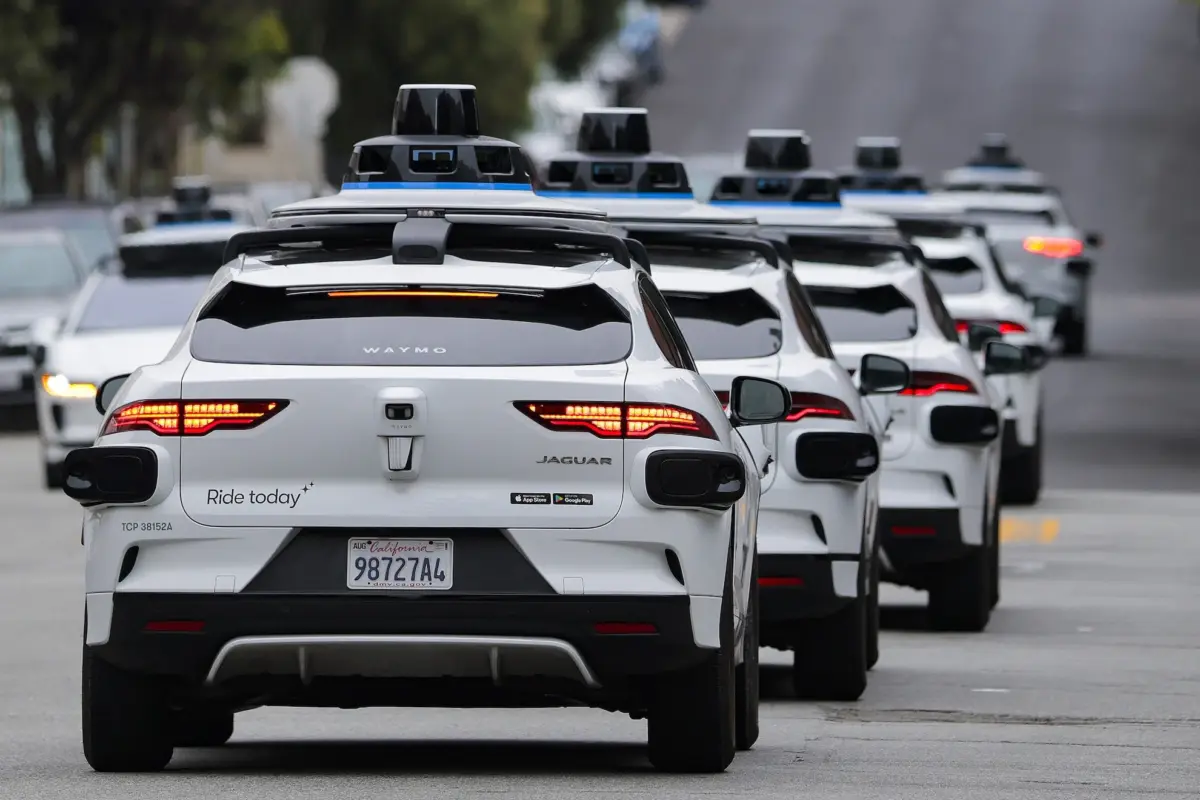
The rapid, often chaotic commercial expansion of autonomous vehicle (AV) fleets in California has reached a definitive regulatory turning point. Governor Gavin Newsom has officially signed Senate Bill 1246 into law, establishing a stringent framework that holds major robotaxi operators—including industry heavyweights like Tesla, Waymo, and Zoox—directly accountable for the public disruptions, traffic gridlock, and emergency response interference caused by their driverless vehicles.
Under the sweeping legislation, AV companies will be legally mandated to provide immediate, on-the-ground support via local incident technicians when their vehicles malfunction, crash, or stall out in active roadways. Furthermore, the legislation introduces teeth to municipal oversight by penalizing companies that leave disabled robotaxis blocking police officers, firefighters, or paramedics for more than 30 minutes during critical incidents.
Senate Bill 1246 (SB 1246), introduced by state Senator Dave Cortese, represents a direct legislative response to mounting public frustration and federal pressure. For years, California cities—particularly San Francisco and Los Angeles—have served as living laboratories for autonomous driving technology. While tech advocates champion these vehicles as the future of sustainable, efficient urban mobility, a string of highly publicized breakdowns has soured public perception. From robotaxis driving blindly into active crime scenes to stalled vehicles blocking firefighting apparatuses on their way to life-or-threatening calls, the friction between automated fleets and public infrastructure has escalated from a minor nuisance into an urgent public safety crisis.
Beyond on-the-ground accountability, the new law tackles the murky waters of "remote operations." It imposes strict geographic and licensing parameters on companies utilizing off-site intervention, mandating that any remote driver directly operating a vehicle must be based within the United States and hold a valid U.S. driver’s license. As the industry prepares for the law’s July 2028 effective date, stakeholders across the board are taking stock of what this means for the future of commercial autonomy. While regulators celebrate a victory for civic safety, operators are adjusting their operational blueprints to comply with a legal landscape that signals the end of Silicon Valley’s self-regulated honeymoon period.
Detailed Chronology: From Street-Level Chaos to Legislative Action
The path to Senate Bill 1246 was paved by a steady accumulation of operational failures, public outcries, and escalating friction between autonomous technology developers and municipal emergency services. To understand the necessity of the new law, one must trace the timeline of incidents that forced lawmakers to step in.
The Rise of Robotaxi Disruptions
Over the past three years, as companies like Waymo—the undisputed leader in the U.S. commercial robotaxi space with a fleet of approximately 4,000 autonomous vehicles nationwide—scaled their footprints, incidents of erratic behavior multiplied. While Waymo operates roughly 1,200 vehicles in the San Francisco Bay Area alone, its expansion into other major California metropolitan areas exposed vulnerabilities in how autonomous software handles unpredictable urban environments.
In numerous instances, Waymo and competing AV fleets encountered dead ends, construction zones, or heavy fog, causing the vehicles to freeze in the middle of active intersections. Rather than smoothly navigating around obstacles, these vehicles frequently went "brain-dead," blocking traffic lanes and forcing frustrated human drivers to maneuver dangerously around them.
The Breaking Point: Interference with First Responders
The situation deteriorated further when autonomous vehicles began intersecting with emergency operations. Media reports and investigative journalism, including a comprehensive TechCrunch investigation earlier this year, revealed alarming gaps in how AV companies handle roadside crises. Rather than operating autonomously out of trouble, companies occasionally relied on first responders to manually manage or push their stalled vehicles out of harm’s way, shifting the burden of technology management onto overworked police officers and firefighters.
In several high-profile episodes, robotaxis drove directly past police tape into active crime scenes, or parked squarely in front of fire station bay doors, delaying emergency response times. Fire departments and police unions across California began documenting these occurrences, presenting alarming logs to municipal leaders. The optics of multi-billion-dollar tech ventures delaying emergency crews responding to fires or medical emergencies proved politically unsustainable.
Federal Pressure and State Intervention
The groundswell of local complaints did not go unnoticed at the federal level. The National Highway Traffic Safety Administration (NHTSA) stepped into the fray, dispatching a formal letter to major autonomous vehicle developers. The federal agency demanded that companies formulate concrete, foolproof "solutions" to prevent their vehicles from interfering with first responders.
Recognizing that federal guidelines could take years to yield enforceable rules, California lawmakers decided to take the initiative at the state level. Senator Dave Cortese championed the legislative effort, culminating in the drafting and eventual passage of Senate Bill 1246.
When signing the bill, Senator Cortese crystallized the sentiment driving the legislation:
"California has embraced autonomous vehicles, but we cannot embrace innovation at the expense of public safety. When an autonomous vehicle crashes, breaks down, blocks a roadway in an emergency, or gets in the way of law enforcement or first responders, there must be clear accountability."
Supporting Context & Metrics: Fleet Realities and the Remote Operations Dilemma
To fully comprehend the mechanics of Senate Bill 1246, it is essential to examine the underlying architecture of modern robotaxi fleets and the diverse strategies companies employ to manage vehicles when they encounter anomalous situations.
The Scale of the Fleet
The footprint of autonomous mobility in the United States is no longer a localized experiment; it is a multi-billion-dollar commercial enterprise. Waymo stands as the dominant titan, anchoring its operations with thousands of customized Jaguar I-PACE vehicles outfitted with complex sensor suites, LiDAR, radar, and high-definition cameras. Smaller players, such as Amazon-backed Zoox, are developing custom-built, bilateral robotaxis designed specifically for dense urban passenger transit without a traditional steering wheel. Meanwhile, Tesla continues to promise a broad rollout of its "Cybercab" and Full Self-Driving (FSD) capabilities, though its regulatory path in California remains intensely scrutinized.
Deconstructing "Remote Operations"
One of the most significant and contentious aspects of SB 1246 targets how AV companies handle vehicles remotely when automated systems falter. For years, the industry has thrown around the broad term "remote operations" without clear definitions, masking a wide spectrum of technical approaches.
- Direct Teleoperation (Driving from Afar): This involves a human sitting at a remote desk with a steering wheel and pedals, actively driving the vehicle via real-time video feeds. Tesla is currently unique among major AV developers in publicly acknowledging that it employs remote operators capable of taking direct, real-time control of vehicle steering and acceleration.
- Remote Assistance and Guidance: Companies like Waymo take a different architectural approach. Rather than handing over direct steering control to a remote human, Waymo’s self-driving software remains in command at all times. If a vehicle encounters an ambiguous scenario—such as a confusing construction detour—it halts and requests guidance from a remote human assistant. The employee then provides high-level software commands, drawing a suggested path or authorizing a reroute, while the vehicle’s onboard computer executes the motion.
Intriguingly, this reliance on global workforces created another regulatory flashpoint. Waymo, for instance, maintains a distributed global network of remote assistance staff, operating out of command centers in states like Arizona and Michigan, as well as international hubs in countries like the Philippines.
The U.S. Licensing Mandate
Senate Bill 1246 directly confronts this globalized approach to remote support. Under the new law, any remote driver employed by an AV developer to intervene in vehicle operations must be based within the United States and hold a valid U.S. driver’s license.
Lawmakers argued that ensuring remote operators are intimately familiar with American traffic laws, road signage, and local driving idioms is critical to maintaining safety standards. While companies like Zoox have historically kept their remote operations teams strictly domestic, others with international support pipelines will be forced to restructure their operational workflows ahead of the 2028 compliance deadline.
Official Statements and Industry Response
The passage of Senate Bill 1246 has elicited a measured, pragmatic response from the autonomous vehicle industry. While companies initially pushed back against heavy-handed regulatory burdens, successful lobbying efforts by major operators resulted in vital amendments, transforming a potentially prohibitive bill into a compliance framework that industry leaders view as manageable.
Waymo’s Perspective
As the market leader with the most extensive commercial footprint in the state, Waymo bore the brunt of the initial legislative criticism. However, following targeted amendments that preserved the economic viability of their business model, Waymo struck a cooperative tone.
In an emailed statement to media outlets, a Waymo spokesperson shared:
"We are grateful for the amendments made to the bill, which ensure autonomous vehicle operators can still feasibly serve Californians. Waymo is committed to making roads safer in California and continually improving our service."
Waymo’s willingness to cooperate underscores the company’s maturation. Having invested heavily in winning public trust and scaling commercial rides in cities like San Francisco, Los Angeles, and Phoenix, avoiding antagonistic regulatory standoffs has become a core strategic priority.
The Mandate for Local Incident Technicians
A vital component of the new law that companies must prepare for is the requirement to provide "local incident technicians." When an autonomous vehicle suffers a systemic failure, crashes, or blocks a thoroughfare, companies cannot simply rely on automated software reboots or distant software engineers. They must deploy human personnel physically located within the region to clear the obstruction, assist police or fire personnel, and manage the immediate fallout on the ground.
Furthermore, municipal authorities will now receive mandatory, real-time data notifications regarding the location and status of vehicles during system-wide outages. This transparency ensures that city planners, emergency dispatchers, and municipal transit agencies are never left in the dark when a localized software glitch paralyzes dozens of vehicles simultaneously.
Future Outlook: Looking Toward July 2028 and Beyond
As California looks toward the implementation date of July 2028, Senate Bill 1246 establishes a new baseline for how state governments regulate emerging technologies. The next few years will serve as a crucial transition period for both regulators and industry participants.
The Role of the California DMV
The California Department of Motor Vehicles (DMV)—the primary regulatory body overseeing autonomous vehicle testing and deployment in the state—will bear the responsibility of translating the broad mandates of SB 1246 into granular administrative rules.
In the lead-up to July 2028, the DMV must draft specific guidelines defining:
- Exact response times required for local incident technicians to arrive at the scene of a disabled AV.
- Standardized penalty structures and fine amounts for vehicles blocking first responders for more than 30 minutes.
- Auditing protocols to verify that all remote drivers meet the U.S. residency and licensing criteria.
A National Blueprint?
California has historically acted as the legislative bellwether for the United States. Environmental standards, consumer privacy laws (such as the CCPA), and automotive emissions regulations pioneered in the Golden State frequently become de facto national standards adopted by other states and federal regulators.
Industry analysts predict that Senate Bill 1246 will serve as a template for other states grappling with the rapid influx of commercial robotaxis. Cities like Austin, Texas, and Miami, Florida—which have also experienced surges in autonomous vehicle testing—will likely monitor California’s implementation closely. If SB 1246 successfully curbs emergency interference without strangling technological innovation, other jurisdictions are expected to follow suit with parallel legislation.
The Balancing Act of Innovation and Safety
Ultimately, Senate Bill 1246 represents a philosophical pivot in how society regulates disruptive technologies. The era of unchecked, "move fast and break things" expansion for autonomous vehicles is drawing to a close.
As artificial intelligence and robotics increasingly infiltrate public infrastructure, lawmakers have drawn a hard boundary: technological progress cannot come at the expense of community safety. For Tesla, Waymo, Zoox, and the entire autonomous ecosystem, the message is clear. To win the future of transportation, they must first prove they can share the road responsibly with the public servants who protect it.








Belum ada komentar. Jadilah yang pertama berkomentar!