


Executive Overview
In a fascinating fusion of centuries-old Japanese spiritual heritage and modern global real estate development, Japanese real estate titan Mitsui Fudosan has officially broken ground on its monumental £1.1 billion (approximately 230 billion yen / $1.46 billion USD) expansion of the British Library in London. Rather than relying solely on the conventional Western ribbon-cutting ceremony, the project’s high-profile stakeholders swapped out scissors and satin for farm tools, sand, and sacred Shinto rituals.
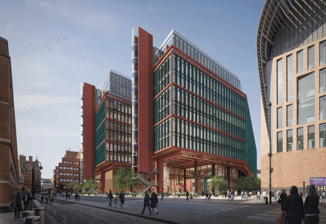
Marking Japan’s largest-scale real estate development project in the United Kingdom to date, the initiative aims to expand the footprint of one of the world’s most significant literary institutions. Situated just across the street from London’s bustling St. Pancras International Station, the upcoming multi-story complex will host advanced commercial offices, specialized rental laboratories, and vastly expanded library and community facilities.
However, it was the integration of a traditional chakko-shiki (groundbreaking ceremony)—highlighted by a purification ritual led by a Shinto priest—that truly captured the global cultural zeitgeist. By introducing sacred practices designed to appease earth deities, ensure structural safety, and foster community goodwill on British soil, Mitsui Fudosan has underscored a growing cross-cultural trend: multinational developers increasingly exporting not just capital and architectural engineering, but the rich, symbolic ethos of their homeland’s construction traditions.
Detailed Chronology: The Lifecycle of Japanese Construction Rituals
While Western developments typically favor a straightforward photo-op involving golden shovels and corporate handshakes, the Japanese construction industry abides by a comprehensive, structured sequence of ceremonies that span a building’s entire lifecycle. These customs are designed to bridge the gap between human ambition and the natural world, seeking harmony with local environments before a single brick is laid.
1. The Jichinsai (Land Purification Ceremony)
The ceremonial sequence traditionally begins with the jichinsai, a sacred Shinto purification ritual. Led by a Shinto priest—who officiated the London event, complete with local adaptation—the ritual utilizes ritualistic offerings of sacred rice wine (sake), salt, and rice. The primary spiritual objective is to pacify the tochi-no-kami (local earth deities). Developers formally ask permission to alter the landscape while praying for protection against construction accidents, structural failures, and natural disasters.
While modern secular developments occasionally bypass the religious aspects of the jichinsai, major historical and international projects like the British Library expansion lean heavily into the tradition to establish a profound sense of respect for the site. As part of this purification process, the four corners of the construction site are ritually sprinkled with ceremonial sake and salt to cleanse the land of impurities and safeguard both current laborers and future occupants.
2. The Ugachi-Zome (The Symbolic First Dig)
Following the spiritual consecration comes the focal point of the event and the primary photo opportunity: the ugachi-zome, or "first pierce." Historically, preparing a plot of land for construction in Japan required a strict three-step labor process: clearing wild weeds, digging up dense soil, and meticulously leveling the ground. Ancient folklore dictated that a safe, enduring home could not be erected without this precise sequence. Consequently, the modern groundbreaking ceremony replicates these historical labor stages through distinct ritualistic actions:

- Kari-some ("The First Cut"): The project’s designer or architect uses a traditional sickle to symbolically cut away imaginary overgrown grass.
- Kuwaire-no-gi ("The Hoe Entry Ceremony"): The client or primary stakeholder steps forward to lightly chip out a section of sand from a consecrated mound using a traditional farm hoe.
- Sukiire-no-gi ("The Shovel Entry Ceremony"): The head of construction or lead contractor uses a traditional wooden-headed shovel (suki) to flatten the sand mound, making a deeper, more substantial impact.
Throughout all three stages, participants traditionally chant rhythmic, synchronized calls of "ey, ey, ey"—a vocalization deeply embedded in Japanese collaborative labor history that helps unify the participants’ focus and energy.
3. The Naorai (The Closing Feast)
Culminating the initial groundbreaking phase is the naorai, a sacred closing feast. Participants gather to share the food and sake that were previously offered to the earth deities during the jichinsai. By consuming these blessed offerings, participants symbolically commune with the local spirits, absorbing their protection and goodwill before returning to daily life—a concept reflected in the Japanese verb naoru, meaning "to return."
4. The Joto-shiki (Raising-the-Ridgepole Ceremony)
As construction progresses and the skeleton of the building reaches its structural zenith, Japanese tradition calls for the joto-shiki. Historically, master carpenters placed intricate, symbolic talismans on the highest structural beam to ward off evil spirits and pray for the longevity of the structure. In contemporary practices, this has been streamlined into a sacred wooden wand (heisoku) or a commemorative plaque (uotofuda). This plaque typically bears the names of the master carpenter, the property owner, and the specific deities invoked to protect the building, and it is permanently sealed within the roof cavity, hidden away from the elements.
5. Community Outreach and Mochi-Throwing
In many traditional Japanese residential and commercial developments, fostering positive relations with the immediate neighborhood is treated with utmost gravity. Historically, developers and homeowners engaged in mochi-maki—a community event where freshly pounded rice cakes (mochi), coins, or sweets are tossed from the scaffolding to gathered locals. This act of generosity is designed to share the prosperity of the new development with the surrounding community, ensuring long-term harmony. While modern Londoners may not see rice cakes raining down from the St. Pancras skyline, industry watchers humorously speculate whether developers might eventually substitute local customs, such as tossing tea bags, to build rapport with British neighbors.
6. The Shunko-shiki (Construction Completion Ceremony)
Once the dust settles, the scaffolding comes down, and the building is fully realized, stakeholders assemble for the shunko-shiki. This final milestone ceremony serves a dual purpose: it officially announces the completion of the structure to the general public, and it expresses profound gratitude to every laborer, engineer, financier, and stakeholder who contributed to the physical and economic realization of the project.
Supporting Context & Metrics: The Scale of the British Library Expansion
The decision by Mitsui Fudosan to introduce these elaborate customs to the heart of London underscores the massive scale, financial weight, and strategic importance of the undertaking.
- Total Financial Investment: £1.1 billion GBP (approximately 230 billion yen / $1.46 billion USD), making it the largest real estate development undertaken by a Japanese firm in the United Kingdom to date.
- Strategic Location: Directly adjacent to the historic British Library main building and situated across the street from St. Pancras International Station—one of Europe’s premier international transit hubs.
- Infrastructure Scope: A expansive multi-story urban complex designed to blend civic culture with cutting-edge commercial enterprise.
- Facility Breakdown:
- Expanded Library Facilities: Providing the British Library—home to one of the most comprehensive and priceless book collections on earth—with state-of-the-art archival, exhibition, and public spaces.
- Commercial Office Spaces: High-end workspaces designed to attract international talent, tech firms, and corporate headquarters.
- Rental Laboratories: Specialized, high-spec life science and tech incubation labs aimed at cementing London’s status as a global hub for research, development, and biotechnology innovation.
Official Statements and Cultural Significance
The integration of the chakko-shiki into a major British infrastructure project has drawn praise from diplomats, cultural historians, and urban developers alike, highlighting the increasing value placed on cultural diplomacy in international business.
Representatives from the Embassy of Japan in the UK emphasized that large-scale foreign direct investment transcends simple financial capital; it represents a bridge between distinct cultural philosophies. By inviting British government officials, library leadership, and corporate executives to participate directly in the ugachi-zome—wielding hoes and shovels over consecrated sand—Mitsui Fudosan effectively transformed a sterile corporate milestone into an immersive, shared cultural experience.
Industry analysts note that as cross-border investments become increasingly complex, companies are looking for meaningful ways to establish local roots while honoring their corporate identity. Adopting traditional construction rites serves as a powerful statement of respect for the land, regardless of geography. It sends a clear message to the local community that the developers view their project not merely as a commercial asset, but as a long-term civic sanctuary built with care, mindfulness, and structural integrity.
Future Outlook
As construction on the British Library expansion moves past its ceremonial beginnings and into the heavy engineering phase, urban planners and cultural observers will be closely monitoring the project’s progress.
While it remains to be seen whether Mitsui Fudosan will execute the entire tripartite sequence of Japanese construction ceremonies—including the future joto-shiki roof-raising rite and the final shunko-shiki completion celebration—the foundational tone has been firmly set. The project stands as a testament to the seamless integration of ancient Eastern tradition with Western urban development.
Set against the gothic Victorian architecture of St. Pancras Station, the rising steel and glass of the new British Library wing will soon stand as a monument to international collaboration, literary preservation, and the enduring power of respecting the earth upon which we build.








Belum ada komentar. Jadilah yang pertama berkomentar!