In a sudden and unexpected eleventh-hour policy reversal, Meta has officially decided against pulling the plug on the virtual reality (VR) version of its flagship multiplayer social platform, Horizon Worlds. The announcement, delivered by Meta’s Chief Technology Officer Andrew “Boz” Bosworth during an impromptu Instagram "Ask Me Anything" (AMA) session, comes as a major reprieve for a dedicated, albeit niche, community of core users who feared the total erasure of their digital spaces.
For months, industry analysts and die-hard VR enthusiasts alike had braced for the inevitable sunsetting of the VR incarnation of Horizon Worlds. Despite being the foundational cornerstone of CEO Mark Zuckerberg’s grand pivot toward the metaverse—a multi-billion-dollar bet that famously triggered the company’s corporate rebranding from Facebook to Meta—the platform struggled to escape a persistent narrative of low user engagement, awkward avatar physics, and widespread public indifference.
However, rather than executing a total shutdown of the VR ecosystem to focus entirely on more lucrative horizons, Meta has chosen a middle path. While the company is formally pivoting its primary developer resources, engineering hours, and strategic growth initiatives toward the mobile ecosystem—where it sees exponentially higher consumer and creator traction—it will leave the existing VR runtime infrastructure online. Existing Unity-based games and virtual worlds will remain accessible to headset owners for the foreseeable future, even as the platform effectively enters maintenance mode on hardware platforms like the Meta Quest 3S.
This strategic pivot highlights a broader, industry-wide identity crisis facing spatial computing and immersive tech today: how to balance ultra-expensive, hardware-heavy VR ambitions against the frictionless, mass-market accessibility of smartphones and traditional tablets. As Meta recalibrates its footprint, competitors like Apple and Nvidia are aggressively carving out opposing paths in high-end spatial computing, leaving the VR landscape more fractured—and fiercely competitive—than ever.
Detailed Chronology: From Metaverse Genesis to the Brink of Annihilation
To fully understand the gravity of Meta’s near-death experience with Horizon Worlds on VR, it is necessary to trace the trajectory of a project that has defined Mark Zuckerberg’s modern corporate legacy.
2021–2022: The Grand Vision and Early Struggles
First launched in beta forms before opening more widely to consumers in late 2021, Horizon Worlds was heralded as the digital frontier where millions would work, play, and socialize. Built as a social virtual reality game where users could explore user-generated worlds, attend live virtual concerts, and interact via legless avatars, the platform was positioned as the software anchor for Meta’s Quest hardware line.
Almost immediately, however, the platform became a lightning rod for cultural mockery. Pokes at the platform’s primitive graphics, lack of realistic legs, and an eerie, sterile corporate aesthetic dominated tech headlines. Despite heavy marketing pushes, internal metrics leaked to the press in late 2022 revealed that monthly active user counts fell woefully short of internal projections, rarely cracking the 200,000 mark—a microscopic fraction of Meta’s overarching social media empire.
2022–2024: The Mobile Pivot and Cost-Cutting Realities
Recognizing that the high barrier to entry of a dedicated VR headset was choking mainstream adoption, Meta initiated a tactical retreat. In April 2022, the company announced it was expanding Horizon Worlds beyond headsets, setting the groundwork for a mobile and web-based rollout. This was an admission of a fundamental economic truth: consumer and creator energy was overwhelmingly concentrated on screens that fit in pockets, not heavy plastic visors strapped to faces.
As Meta weathered broader macroeconomic pressures and underwent its self-proclaimed "Year of Efficiency" under Zuckerberg, Reality Labs—the division responsible for hardware, AR, and metaverse software—began facing severe budgetary scrutiny. Billions of dollars continued to flow into the unit quarterly, yielding massive operating losses. Whispers of downsizing, feature deprecation, and project cancellations became commonplace inside the Menlo Park headquarters.
March 2026: The Reprieve
The tension reached a boiling point in early 2026, when internal murmurs suggested Meta was preparing to pull the plug entirely on the VR version of Horizon Worlds to streamline operations and consolidate its engine development around the mobile and web ecosystems.
Yet, following an outpouring of impassioned pleas from community members, creators, and loyalists who reached out directly to executive leadership, the narrative shifted overnight. During his mid-March 2026 Instagram AMA, Bosworth addressed the community directly, revealing that a decision had been made that very day to spare the VR servers from the chopping block. While new development for VR has effectively stalled, the existing ecosystem will live on, granting a reprieve to a community that refused to let its digital worlds vanish into the ether.
Supporting Context & Metrics: The Quest Hardware Landscape and Market Realities
Meta’s shifting stance on Horizon Worlds cannot be viewed in a vacuum; it is deeply intertwined with the hardware strategies that power the consumer VR market.
The Meta Quest Ecosystem
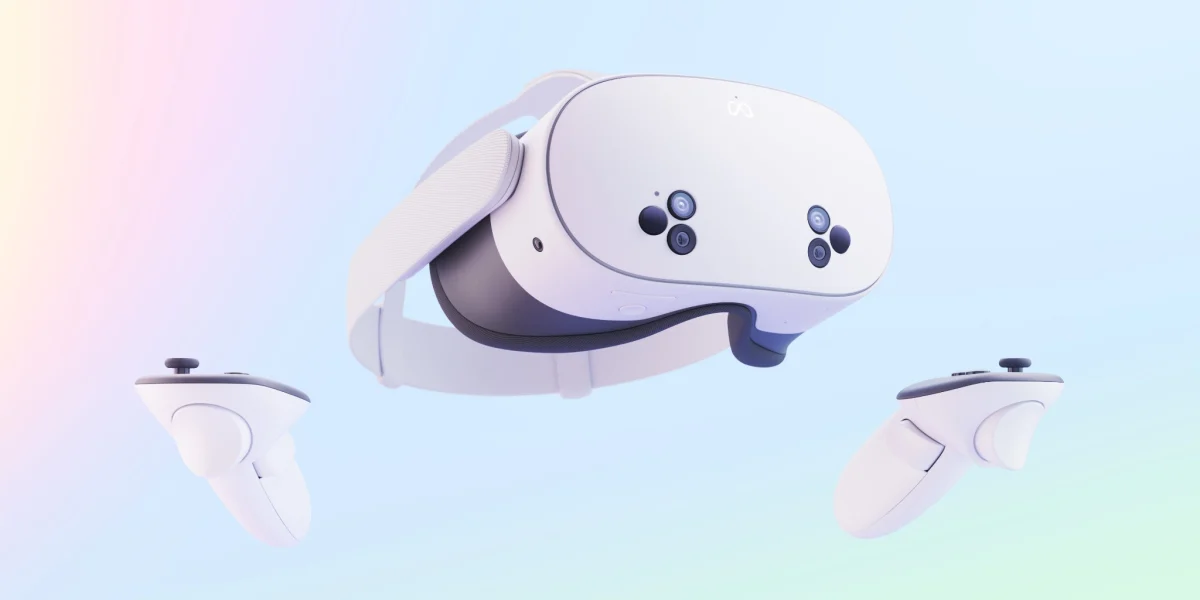
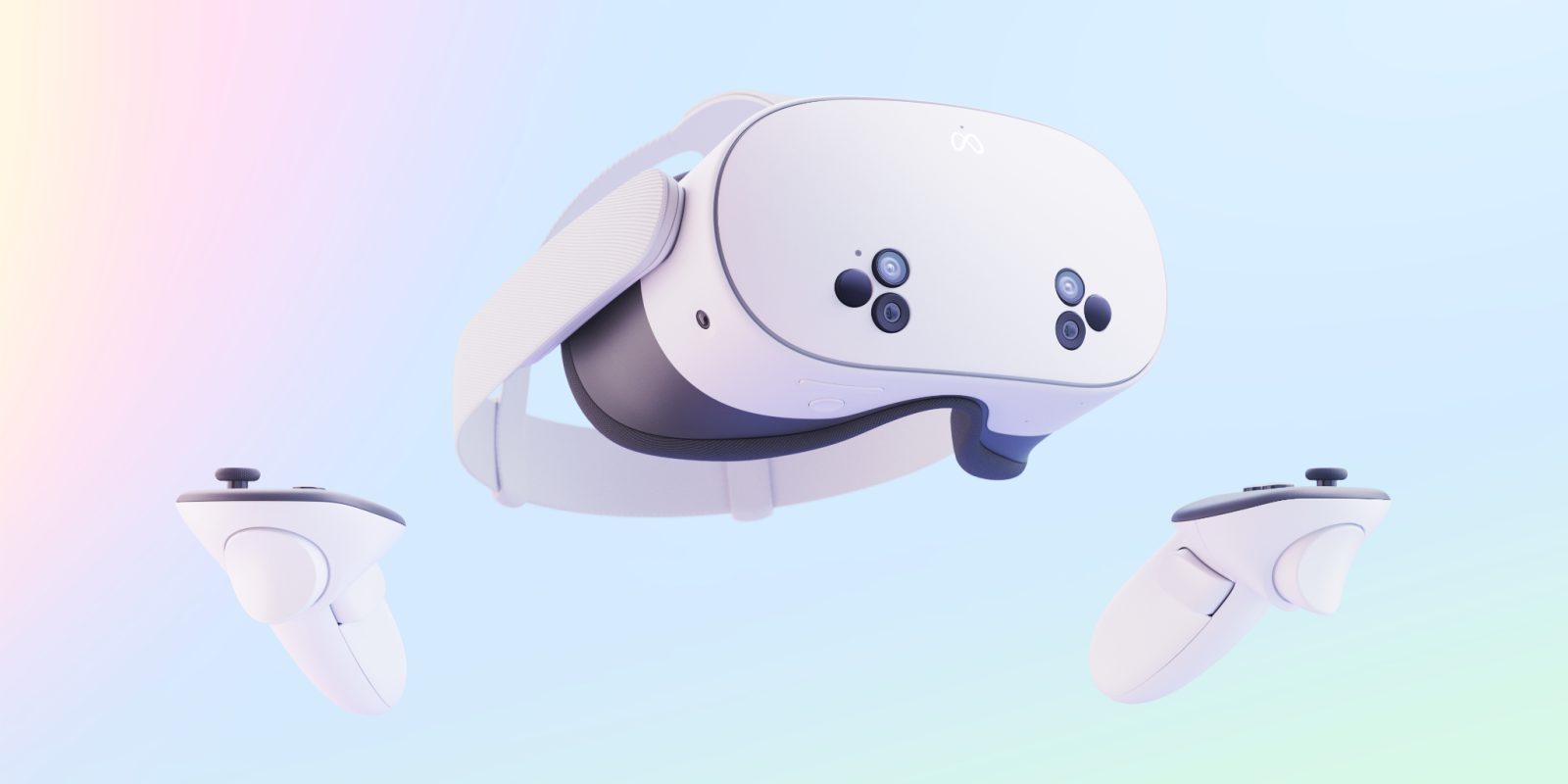
Meta remains the undisputed king of standalone consumer virtual reality. Devices like the budget-friendly Meta Quest 3S and the flagship Quest 3 have successfully lowered the financial barrier to entry for immersive computing. Gaming has consistently remained the bedrock of the Quest platform’s appeal. Users strap in not necessarily to attend corporate meetings in cartoonish boardrooms, but to experience high-octane action games, fitness apps, and immersive storytelling experiences.
By deciding to keep the Unity runtime infrastructure alive for existing Horizon Worlds games, Meta is protecting the goodwill of its hardware loyalists. If the company had abruptly disabled the software, it would have effectively bricked user-generated content collections that dedicated hobbyists spent years building, risking a massive consumer backlash that could alienate its core hardware base.
The Contrast: Apple Vision Pro, Nvidia, and High-End Spatial Computing
While Meta retreats from heavy investment in social VR software to focus on mobile reach, the high-end spatial computing market is experiencing a different evolutionary trajectory.
Apple’s Vision Pro continues to court enterprise and ultra-enthusiast markets, bolstered by major software integrations. Recently, significant waves were made when Nvidia detailed its CloudXR integration for visionOS, opening the door for hyper-realistic industrial design tools like the Autodesk VRED app. Furthermore, the upcoming release of visionOS 26.4 unlocks support for what industry experts are calling the "world’s most advanced flight simulator" on Apple’s hardware.
These divergent paths highlight a stark philosophical split in the spatial computing industry:
Meta is pivoting toward a ubiquitous, cross-platform utility model (mobile, web, and legacy VR) where social interaction and casual accessibility reign supreme.
Apple and Nvidia are doubling down on ultra-high-definition, professional-grade immersion, targeting enterprise workflows, simulation training, and high-fidelity gaming that requires massive computational horsepower.
Official Statements and Insider Insights
The reversal regarding Horizon Worlds was communicated transparently by Meta CTO Andrew "Boz" Bosworth via his social media channels. The candid remarks shed light on the internal calculus driving Meta’s product roadmap.
Addressing an inquiring user directly, Bosworth stated:
"We have decided, just today in fact, that we will keep Horizon Worlds working in VR for existing games to support the fans who’ve reached out, like yourself, who really care about that. Those, the Horizon Unity runtime games, they’re not gonna work on mobile. They’ll just be working on VR."
Elaborating on where the company’s real focus lies moving forward, Bosworth made it clear that resource allocation will heavily favor non-VR mediums:
"We’re not bringing new games. Again, most of our energy is going towards mobile and the Meta Horizon engine there. The reason for that is because that’s where most of the consumer and creator energy already was, and so we’re kind of leaning into that. But yeah, you know, for people who already have games that they like that they’re using in Horizon Worlds, will be able to download the Horizon Worlds app and use it in VR for the foreseeable future."
This statement underscores a pragmatic shift within Meta. Rather than forcing a square peg into a round hole—attempting to mandate VR as the singular medium for its social metaverse—the company is embracing a platform-agnostic approach. If users want to engage via mobile devices or web browsers, Meta will build for that scale. If a core group of VR purists wants to maintain their digital clubhouses on a Quest headset, the servers will remain powered on, though unassisted by fresh injections of major capital or feature updates.
Future Outlook: What Lies Ahead for the Metaverse and Spatial Computing?
As the dust settles on Meta’s eleventh-hour reprieve for Horizon Worlds, the broader question remains: What does this mean for the future of the metaverse?
The Death of the Monolithic Metaverse Dream
The era of the "monolithic metaverse"—where a single, uniform virtual world captures the daily attention of billions of people—is officially over. Companies are realizing that virtual reality is a specialized medium, brilliant for gaming, specialized training, and high-immersion experiences, but deeply flawed as a mass-market replacement for social media browsing or standard digital communication.
By decentralizing its strategy, Meta is proving itself to be more adaptable than its early, rigid metaverse mandates suggested. By keeping Horizon Worlds on VR alive while scaling its engine for mobile, Meta is playing a hedging game: capturing casual, everyday traffic on phones while retaining a sandbox for future AR/VR integration down the line.
Hardware Evolution and the Road to AR Glasses
Ultimately, Meta’s long-term bet is not tethered to chunky VR headsets running cartoonish social apps, but rather to lightweight, everyday augmented reality (AR) glasses. Projects like Meta’s collaborative efforts in smart eyewear point toward a future where digital overlays blend seamlessly into the physical world, stripping away the isolation of VR visors.
When—or if—that transition fully occurs, the legacy of platforms like Horizon Worlds will be viewed as a costly, chaotic, but necessary testing ground. For now, the virtual worlds built by dedicated fans on Quest headsets are safe. They may not be getting new bells and whistles, and they may be overshadowed by Meta’s mobile ambitions, but in the volatile, fast-moving world of tech, survival is a victory in its own right.










Belum ada komentar. Jadilah yang pertama berkomentar!