

Executive Overview
In the realm of Japanese horticulture and high-end gastronomy, few fruits command the cultural reverence and market value of the Shine Muscat grape. Celebrated for their taut, emerald skin, exceptional crispness, and a sugar content that routinely flirts with tropical levels of sweetness, these premium grapes are an autumnal staple enjoyed by discerning palates across the nation. Yet, even among hyper-luxurious seasonal produce, culinary innovators are constantly seeking ways to elevate perfection.
Following a surprisingly successful experiment involving traditional nukadoko (fermented rice bran) pickling—which intensely concentrated the fruit’s natural sweetness—food researchers turned their attention to an even more eccentric viral trend circulating among Japanese foodies: soaking Shine Muscat grapes in carbonated water.
Far from a superficial rinse or a brief dip in soda, this curious culinary hack requires a sustained, multi-day immersion inside an airtight vessel. The objective? To infuse the natural, juicy architecture of the grape with a sparkling effervescence without altering its structural integrity or foundational flavor profile. This investigative report chronicles the methodology, scientific implications, and sensory results of testing this viral carbonation technique on one of Japan’s most treasured agricultural exports.
Detailed Chronology: The 48-Hour Carbonation Experiment
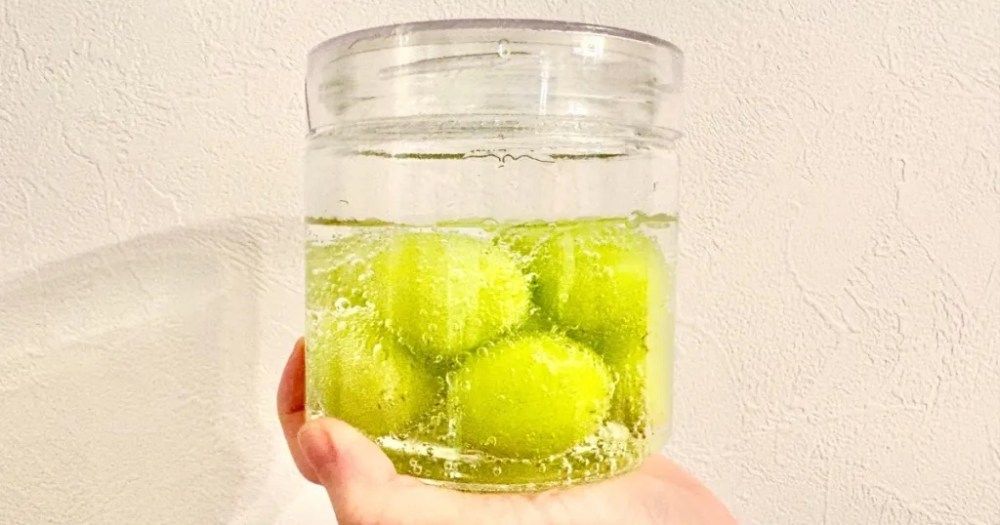
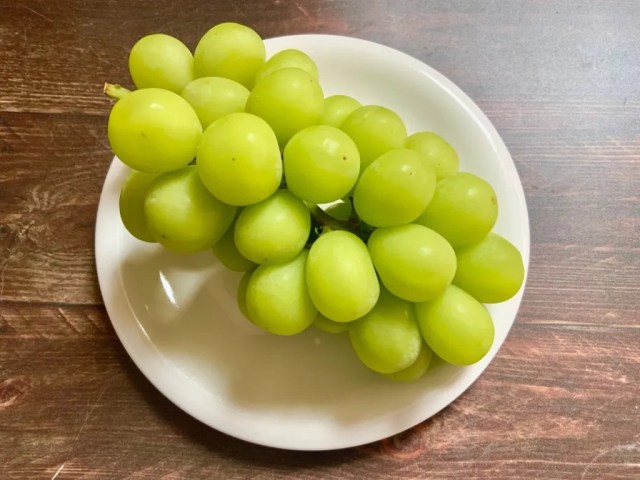
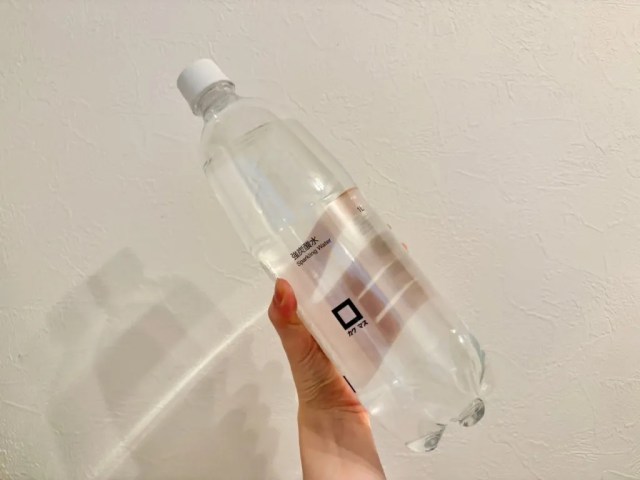
To execute the experiment with the scientific rigor demanded by such a high-value ingredient, testers bypassed half-measures and committed to the full duration recommended by online food innovators. The process required a minimalist toolkit: a fresh cluster of premium Shine Muscat grapes, standard carbonated water, and a sealable glass jar equipped with an airtight gasket.
Phase 1: Preparation and Immersion
The methodology is deceptively simple, belying the profound transformation that occurs over time.
- Selection & Cleaning: Pristine Shine Muscat grapes were meticulously washed and inspected to ensure the skins were free of blemishes. A control group of untreated grapes was set aside for comparative baseline analysis.
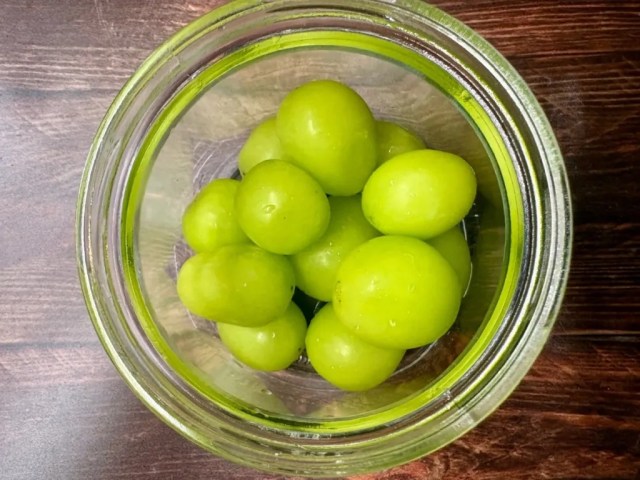
- Container Loading: The primary batch of grapes was gently placed into the sealable glass jar, taking care not to rupture the delicate skins.
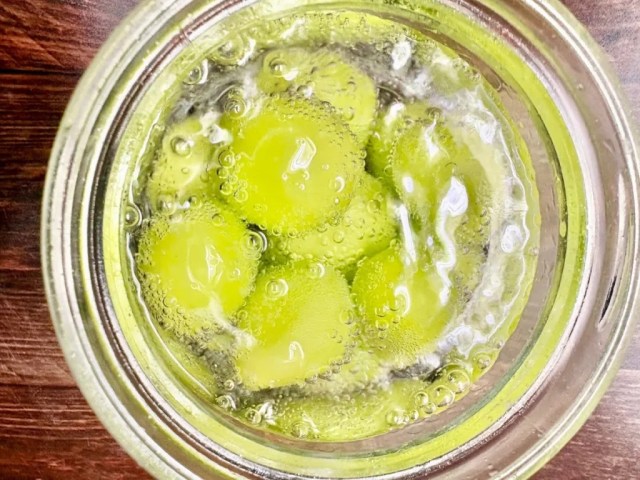
- The Carbonated Bath: Plain, unflavored carbonated water was poured directly over the fruit until every grape was completely submerged, ensuring maximum surface area contact with the carbon dioxide-infused liquid.
- Airtight Sealing: The lid was firmly latched down, creating a pressurized, closed system. This step is critical; any leakage in the seal allows the trapped carbon dioxide gas to escape into the refrigerator atmosphere rather than dissolving into the fruit’s cellular matrix.
Phase 2: The Refrigerated Incubation Period
The sealed jar was placed into a refrigerator and left undisturbed for a duration spanning between 12 hours and 48 hours. Given the premium price tag associated with authentic Shine Muscats, researchers opted for the maximum duration of 48 hours to ensure the carbonation process reached its theoretical saturation point.
Phase 3: Unsealing and Physical Inspection
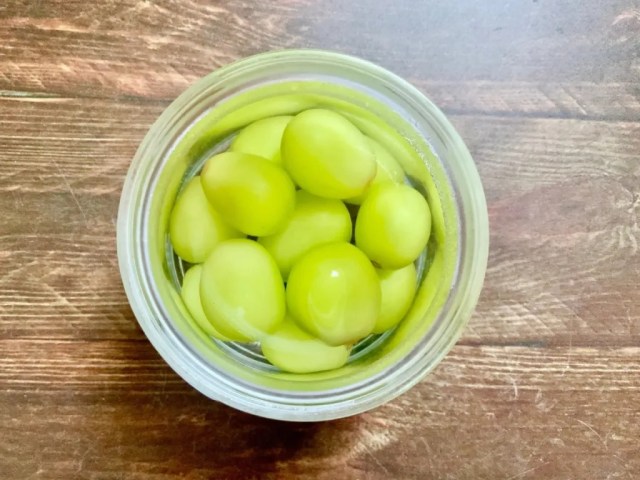
Upon retrieving the jar after two full days of cold storage, the first noticeable indicator of a chemical interaction was auditory and visual: all visible carbonation had completely vanished from the liquid. Opening the lid yielded neither the sharp hiss of escaping pressure nor the sight of active bubbles rising through the water.
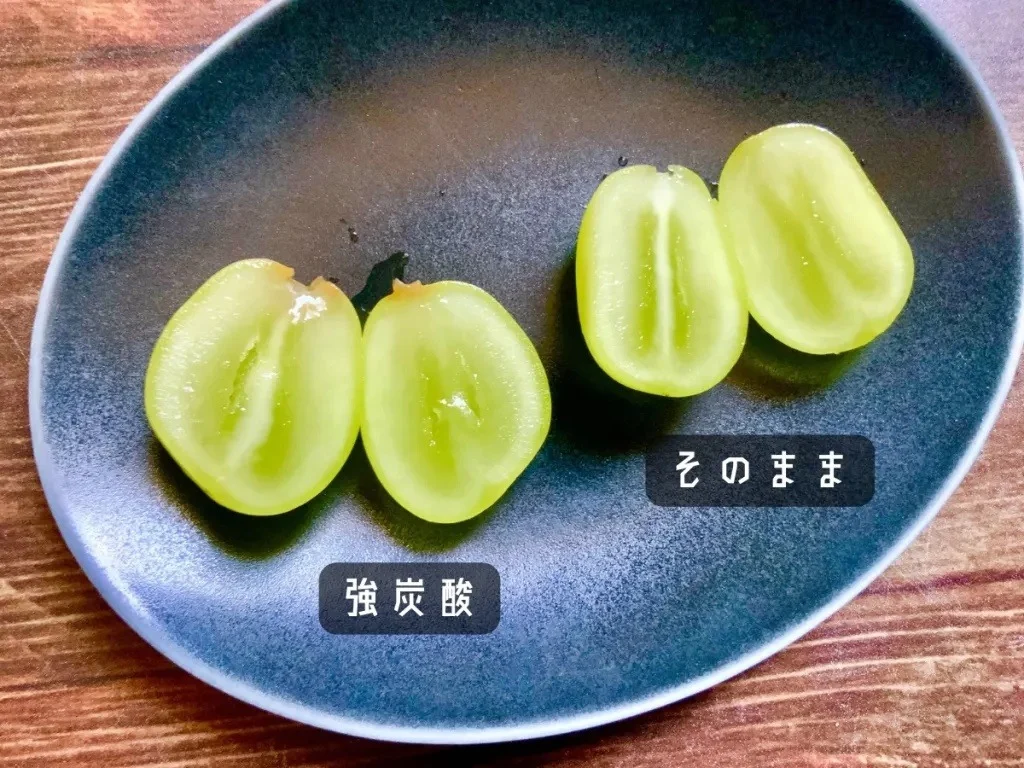
When extracted and placed side-by-side with the control group, the treated Shine Muscats displayed no discernible outward changes. Their vibrant green hue, plump contours, and glossy sheen remained entirely unaltered. Subsequent slicing of the grapes to examine their cross-sections revealed no structural degradation, discoloration, or cellular collapse within the translucent inner flesh. Visually, the two-day soda bath left no fingerprint.
Phase 4: Sensory Evaluation
The ultimate test, however, lay in the tasting. When bitten into, the treated Shine Muscat delivered an immediate and surprising sensory revelation. While the interior flavor profile remained unmistakably that of a high-grade Shine Muscat—bursting with deep, unadulterated fruit sugars—the outer layer had undergone a profound textural and tactile shift.
The carbonation previously trapped in the surrounding water had successfully transferred into the taut skin of the grape. Upon biting through the exterior, the taster was greeted with a delightful, localized "pop" of effervescence. It was an unexpected culinary magic trick: a naturally sweet piece of fruit delivering the refreshing, tongue-tingling sensation of a carbonated soft drink without any artificial additives or alterations to its core composition.
Supporting Context & Metrics: The Science of Shine Muscat
To fully appreciate why this carbonation hack works so effectively, one must examine the unique biological and market properties of the Shine Muscat grape itself.
Agricultural Significance and Market Value
Developed in Japan through meticulous cross-breeding programs by the Akitsu Grape and Persimmon Research Station (registering its patent in 2006), the Shine Muscat is a hybrid of the Akitsu-21 and Hakunan varieties. Unlike traditional table grapes that require peeling, Shine Muscats are specifically cultivated to feature an edible, thin skin that lacks any bitter tannins, coupled with a completely seedless interior and an extraordinarily high Brix score (measuring sugar content), often ranging between 18 and 20 degrees.
Because of these luxury traits, clusters frequently fetch steep prices in Japanese department stores and specialty fruit parlors (kudamonoya), ranging anywhere from $20 to over $100 USD per bunch depending on the prefecture of origin, size, and grade. Consequently, experimentation with such fruit is approached with a blend of intense curiosity and profound caution.
The Physics of Gas Transfer in Fruit Tissues
The success of the carbonation soak relies on principles of gas-liquid equilibrium and semi-permeable plant membranes. Carbonated water is essentially a solution supersaturated with dissolved carbon dioxide ($CO_2$) gas under pressure. When whole, intact fruits with resilient skins are submerged in this pressurized, chilled environment over an extended period, several phenomena occur:
- Gas Diffusion: The external pressure of the dissolved $CO_2$ forces gas molecules to interact with the outer epidermal layer of the grape.
- Skin Permeability: While the cuticle of a grape is designed to retain internal moisture and prevent foreign invasions, microscopic pores and lenticels allow for slow gas exchange over a 48-hour window, especially at chilled refrigeration temperatures which increase gas solubility in liquids.
- Texturized Effervescence: Rather than penetrating deep into the dense, sugar-rich pulp (which would require puncturing the skin), the carbon dioxide molecules concentrate primarily within the outer skin layer and the immediate sub-epidermal cells. This explains why the core flavor remains pure, while the initial bite provides the tactile sensation of a soda pop.
| Parameter | Control Group (Fresh Shine Muscat) | Experimental Group (48-Hour Soda Soak) |
|---|---|---|
| Visual Appearance | Plump, glossy, vibrant green | Identical to control; no surface blemishes |
| Aroma | Sweet, floral, muscat fragrance | Unchanged |
| Brix Score (Sugar Level) | High (18–20°) | Unchanged natively |
| Mouthfeel (Skin) | Crisp, firm snap | Crisp snap with an active, fizzy "pop" sensation |
| Mouthfeel (Flesh) | Juicily dense and sweet | Juicily dense and sweet |
Official Statements and Culinary Perspectives
While mainstream culinary institutions often focus on traditional preparations, the rise of viral food hacking in Japan has created a sub-genre of experimental gastronomy championed by culinary journalists, bloggers, and adventurous home cooks.
"We were skeptical that a simple bath in carbonated water could do anything meaningful to a fruit as refined as a Shine Muscat," noted a lead culinary tester during the trial. "Yet, the result completely reframes how you experience the fruit. It bridges the gap between fresh produce and a refreshing beverage, creating a sensory illusion that feels entirely novel."
Gastronomic experts note that this technique capitalizes on a growing consumer desire for interactive dining experiences. Food scientists point out that the method is entirely safe, provided clean equipment and potable carbonated water are utilized, as the cold refrigeration temperatures inhibit microbial growth during the 48-hour steeping window.
Furthermore, culinary stylists emphasize the social media appeal of the hack. Because the grapes retain their flawless exterior appearance, serving them at a dinner party or social gathering creates an element of surprise. Guests biting into what appears to be a standard, elegant fruit are met with an unexpected, playful burst of effervescence.
Future Outlook: The Evolution of Fruit Hacking
As social media platforms continue to democratize culinary experimentation, techniques once confined to avant-garde laboratories or specialized test kitchens are increasingly being adopted by everyday consumers. The carbonated Shine Muscat trend is a prime example of this democratization, proving that luxury ingredients can be playfully reinvented with little more than common household items—specifically, a jar, some soda water, and a generous dose of patience.
Looking forward, food enthusiasts are already speculating on the broader applications of this methodology. If the cellular structure of a Shine Muscat can successfully house and deliver carbonation, researchers are left wondering what other seasonal fruits might benefit from a pressurized soda bath. Could crisp Japanese pears (nashi), tart apples, or firm white peaches undergo a similar transformation?
While further trials will be needed to test the limits of gas diffusion across different fruit skins and densities, the success of the Shine Muscat experiment establishes a new benchmark for creative food preparation. For now, autumn in Japan offers a prime window for food lovers to test the hack themselves—transforming one of the nation’s most decadent natural treats into a sparkling, fizzy masterpiece.








Belum ada komentar. Jadilah yang pertama berkomentar!