

Executive Overview
Half a century after its theatrical debut, John Schlesinger’s Marathon Man (1976) remains an indelible touchstone of 1970s American cinema. Emerging during a golden age of gritty auteur-driven storytelling that yielded heavyweights like The Godfather, Chinatown, and All the President’s Men, this psychological conspiracy thriller carved out a uniquely chilling niche.
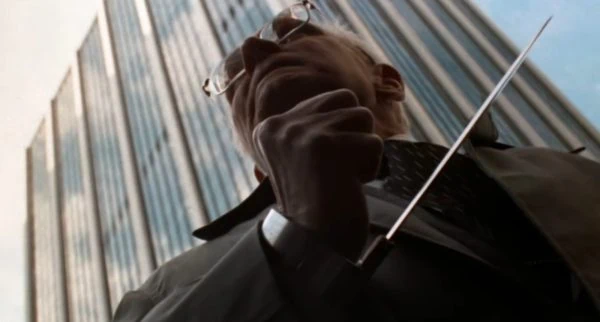
At its core, the film is anchored by two titanic forces: Sir Laurence Olivier’s bone-chilling portrayal of Nazi war criminal Dr. Christian Szell, and Dustin Hoffman’s intensely committed embodiment of Thomas Babington “Babe” Levy, an academic endurance runner swept unwittingly into a deadly international diamond-smuggling ring.

Beyond its grim narrative and enduring cultural footprint—cemented forever by the iconic, terror-inducing query, "Is it safe?"—Marathon Man was a crucible of legendary Hollywood friction, groundbreaking cinematic technology, and uncompromising artistic vision. This retrospective examines the intricate story behind the creation of one of the 20th century’s most unforgettable paranoia thrillers, exploring its turbulent production history, its technical milestones, and its lasting legacy half a century later.
Detailed Chronology: From Page to Paramount
The Prince of Screenwriters and the $500,000 Payout
The genesis of Marathon Man began with the late, legendary screenwriter William Goldman. Already celebrated for penning cinematic treasures such as Butch Cassidy and the Sundance Kid and later masterworks like All the President’s Men, The Princess Bride, and Misery, Goldman was at the absolute peak of his creative powers.
Paramount Pictures secured the rights to Goldman’s unpublished conspiracy manuscript, paying a staggering $500,000 upfront—roughly equivalent to $3.26 million today—for both the underlying property and Goldman’s services as screenwriter. Goldman later recounted drafting roughly four distinct versions of the script. However, creative friction was inevitable. At the behest of the production team, Chinatown scribe Robert Towne was brought in to execute an uncredited rewrite, specifically altering the film’s climax—a change that famously rubbed Goldman the wrong way, highlighting the fraught collaborative nature of 1970s studio filmmaking.
Adapting the Novel: Substance vs. Cinematic Paranoia
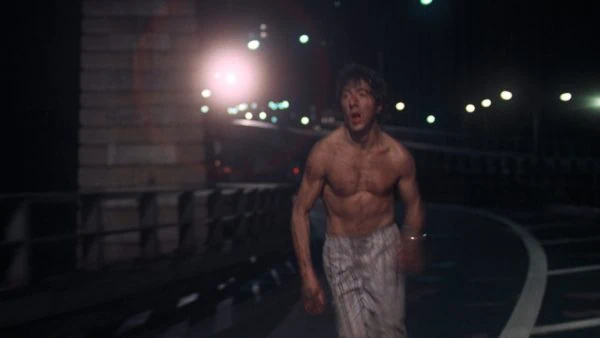
Translating Goldman’s dense text to the screen necessitated calculated narrative compromises. In the original novel, Babe Levy’s relentless running routine is directly tied to his intense preparation for the New York City Marathon, grounding his physical endurance in a tangible athletic goal. In the cinematic adaptation, the narrative strips away this hyper-specific motivation, framing Babe simply as an avid, obsessive runner to keep the focus tighter on psychological suspense rather than athletic glory.
Similarly, the dynamic involving the duplicitous Elsa Opel—Babe’s love interest—was significantly re-engineered. The novel leaned heavily into a classic Mata Hari-esque archetype, whereas the film opted for a more grounded, morally ambiguous characterization. Furthermore, the novel explores "The Division," a shadowy secret government agency intertwined with ex-Nazi operations, with granular detail. The film, by contrast, relies on a suffocating atmosphere of paranoia, keeping the audience locked squarely inside Babe’s disoriented perspective as his safe world disintegrates.
John Schlesinger’s Desperate Gamble
For director John Schlesinger, stepping behind the camera for Marathon Man was a high-stakes professional lifeline. A pioneer of the early 1960s British New Wave movement—influenced heavily by the French Nouvelle Vague—Schlesinger had directed gritty kitchen-sink dramas like A Kind of Loving and Billy Liar. He subsequently captured the Academy Award for Best Director for 1969’s Midnight Cowboy, which also featured a breakout performance by Dustin Hoffman.
However, following the grueling, ambitious production of his satirical historical drama The Day of the Locust, Schlesinger privately admitted he was "terrified he was dead in Hollywood." His career felt precariously balanced on a knife-edge. Agreeing to helm Marathon Man proved to be his salvation, revitalizing his career and cementing his reputation as a master of tension and tone.
Supporting Context & Metrics: Method Acting, Health Crises, and Cinematic Tech
The Clash of Acting Titans: Hoffman vs. Olivier
The production is perhaps most infamous for the legendary ideological collision between its two lead actors, representing two entirely different schools of craft.
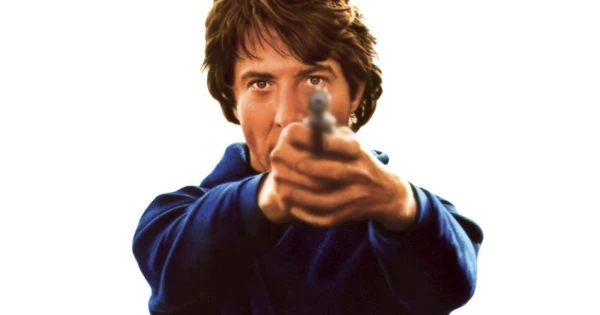
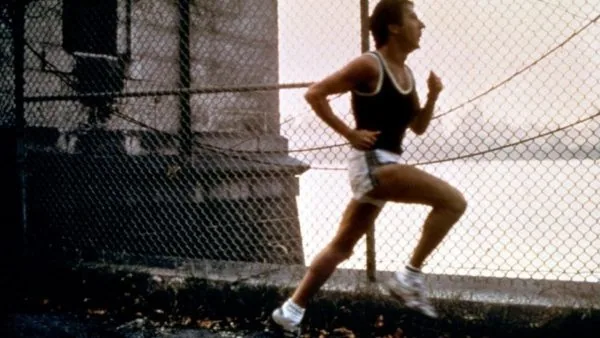
Dustin Hoffman, an ardent champion of Method acting, took his preparation for Babe Levy to grueling extremes. Having shed fifteen pounds, he ran up to four miles a day to achieve the gaunt, sinewy physique of a dedicated runner. Infamously, Hoffman refused to fake physical exhaustion; rather than relying on heavy breathing techniques, he would literally sprint half a mile right before cameras rolled so he could stagger onto the set genuinely winded.
Laurence Olivier, meanwhile, came from the hallowed traditions of British classical stagecraft. During production, the legendary actor was privately fighting a grueling battle against prostate cancer, sustained by heavy regimens of steroids and powerful painkillers. These medications wrought havoc on his short-term memory, forcing director John Schlesinger to break down Olivier’s dialogue into manageable, one- or two-line increments.
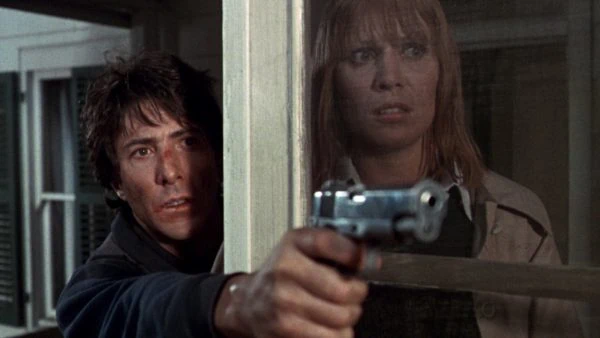
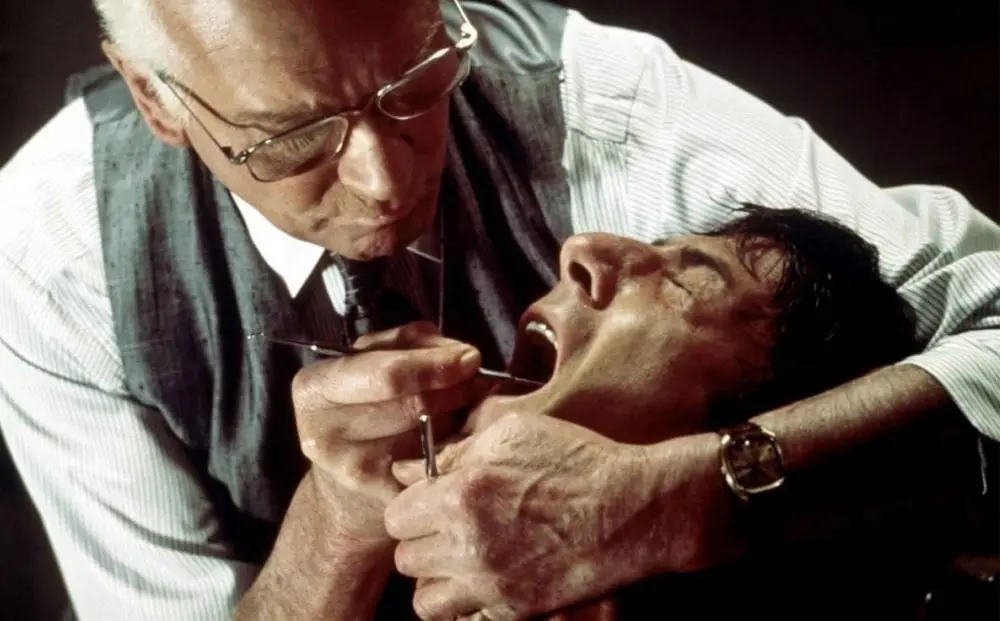
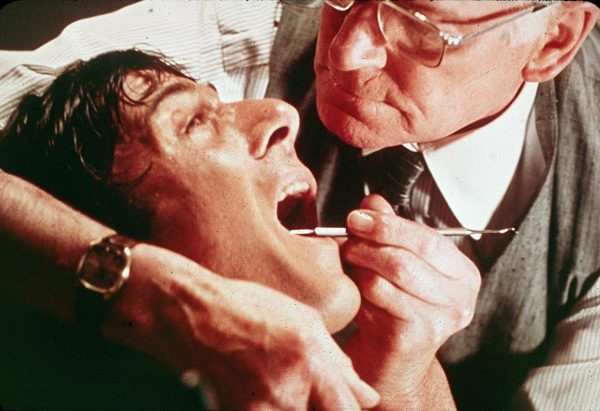
This philosophical and physical disparity birthed Hollywood folklore. As the story goes—later corroborated by Hoffman on The David Letterman Show—Hoffman arrived on set looking thoroughly exhausted and disheveled for the infamous dental torture scene. When Olivier asked why he looked so ragged, Hoffman confessed that he had pulled an all-nighter, fueled by the exhausting emotional toll of a pending divorce and the hedonistic, drug-fueled nightlife of Studio 54. Olivier reportedly looked at him with dry, patrician amusement and offered the legendary retort: "My dear boy, why not try acting? It’s much easier."
A Technological Milestone: The Steadicam’s Theatrical Debut
Marathon Man holds a quiet yet monumental place in technical film history: it was the first theatrically released feature film to utilize the revolutionary Steadicam.
Invented by cinematographer Garrett Brown in 1975, the Steadicam completely transformed visual storytelling. By employing a sophisticated system of weight distribution and balancing mechanisms, it allowed operators to capture smooth, flowing tracking shots without the need for cumbersome tracks or heavy dollies. While Hal Ashby’s Bound for Glory utilized the technology concurrently, Marathon Man won the race to theater screens, offering audiences unprecedented fluid movement that heightened the film’s disorienting, immersive dread.
Official Statements and Critical Legacy
Box Office, Critical Reception, and Awards
Produced on a modest budget of $6.5 million, Marathon Man proved to be a lucrative commercial venture, pulling in $28.2 million at the worldwide box office. Critical reception was overwhelmingly positive, and the film currently holds a robust 82% approval rating on Rotten Tomatoes. The critical consensus reads:
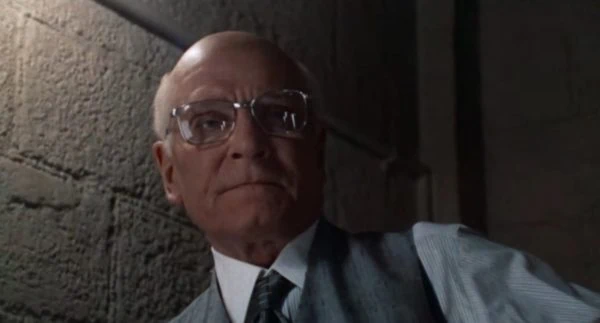
"Marathon Man runs the gamut from patient mystery to pulse-pounding thriller, aided by Laurence Olivier’s coldly terrifying performance and a brainy script by William Goldman."
The film’s awards pedigree was equally formidable. Laurence Olivier earned a well-deserved Academy Award nomination for Best Supporting Actor, alongside a Golden Globe victory in the same category. Dustin Hoffman’s searing, vulnerable lead performance was similarly honored with nominations at both the BAFTAs and the Golden Globes.
Cultural Impact and Institutional Honors
The legacy of Marathon Man endures most prominently through its ability to weaponize a universally shared, deeply visceral human dread: the dentist’s chair. Schlesinger transformed a routine dental check-up into an arena of unadulterated psychological horror.
This sequence yielded two of the most iconic contributions to cinema history recognized by the American Film Institute (AFI):
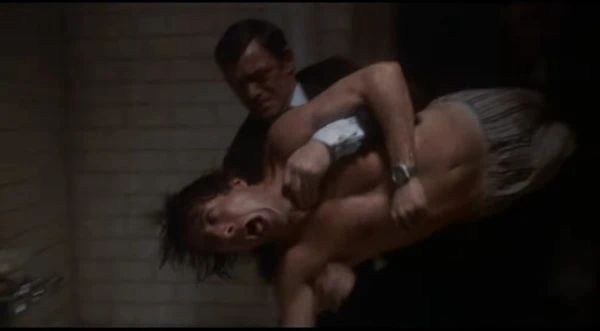
- Dr. Christian Szell was ranked #34 on the AFI’s 100 Years… 100 Heroes and Villains list.
- The terrifying, monosyllabic interrogation—"Is it safe?"—was ranked #70 on the AFI’s 100 Years… 100 Movie Quotes list.
Future Outlook: The Timeless Appeal of 70s Paranoia
As Marathon Man celebrates its golden jubilee, its thematic resonance remains remarkably potent. In an era dominated by CGI-heavy blockbusters and hyper-stylized action spectacles, the film serves as a masterclass in low-fi, high-tension storytelling driven entirely by character psychology, sharp screenwriting, and uncompromising performances.
The paranoia that permeates Marathon Man—where ordinary citizens are suddenly unmoored by invisible webs of global conspiracy, institutional betrayal, and unpunished historical evil—speaks to enduring anxieties that transcend generations. Fifty years on, the film does not merely endure as a time capsule of 1970s Hollywood filmmaking; it stands as a towering monument to the craft of suspense, daring modern audiences to look into the abyss and ask themselves the ultimate, chilling question: Is it safe?








Belum ada komentar. Jadilah yang pertama berkomentar!