

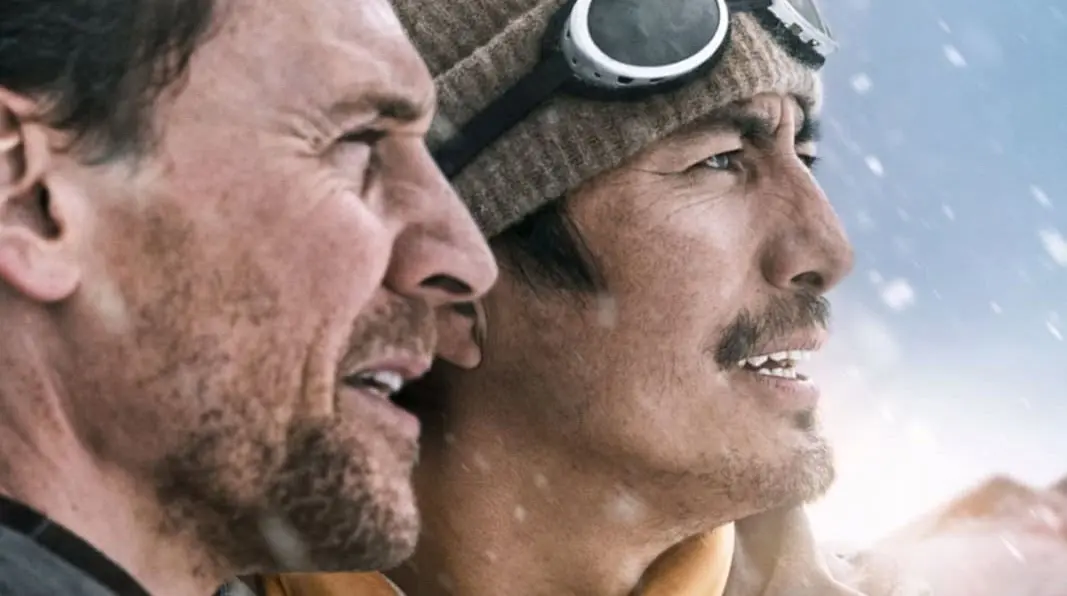
Executive Overview
The cinematic landscape of high-altitude mountaineering has historically been dominated by stories of Western ego, imperialistic conquest, and adrenaline-fueled survivalism. Films chronicling expeditions to Mount Everest—known to the Tibetan people as Chomolungma—often struggle to transcend a persistent emotional barrier, frequently framing perilous ascents as reckless, unnecessary gambles against nature. However, director Jennifer Peedom’s 2026 biographical drama Tenzing radically upends this cinematic convention. Based in part on Ed Douglas’s acclaimed nonfiction book Tenzing: Hero of Everest, a Biography of Tenzing Norgay and adapted by screenwriter Luke Davies, the film shifts the focal point away from British imperial triumph. Instead, it places the narrative squarely on the shoulders of the Indian-Nepalese Sherpa mountaineer Tenzing Norgay, who, alongside New Zealand explorer Edmund Hillary, became the first person to officially reach the summit of Mount Everest in 1953.
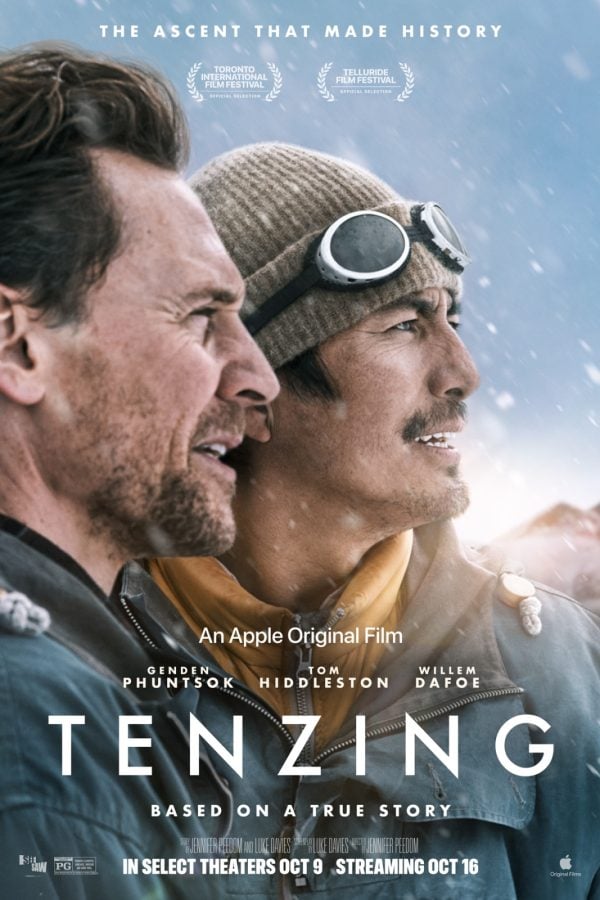
Featuring a stellar ensemble cast—including Genden Phuntsok as the adult Tenzing, Tom Hiddleston as Edmund Hillary, Willem Dafoe as Colonel John Hunt, Caitríona Balfe as Jill Henderson, and Johnny Flynn as the legendary British mountaineer George Mallory—Tenzing offers a sophisticated critique of colonial exploration versus indigenous spirituality. The film examines the clashing philosophies of Eastern reverence and Western territorialism, providing audiences with a nuanced historical retelling. While some dramatic elements and character arcs remain somewhat surface-level, the feature successfully carves out a fresh, culturally resonant space within the survival-drama genre. Distributed under the banner of high-end biographical cinema, Tenzing balances historical gravity with visual spectacle, making it one of the most talked-about releases of the 2026 cinematic calendar.
Detailed Chronology: The Making of a Legend
The narrative arc of Tenzing unfolds across dual timelines, seamlessly weaving Tenzing Norgay’s formative years with the historic, high-stakes 1953 British Mount Everest expedition.

The Seeds of Ambition: The 1920s and George Mallory
The film’s prologue establishes Tenzing’s early life as an outsider to Nepal. Orphaned during a devastating plague in the 1920s, a young Tenzing (portrayed by Tenzin Dalha) encounters the charismatic and well-equipped British mountaineer George Mallory (Johnny Flynn). To Tenzing, whose worldview is deeply spiritual, Mount Everest is not a geological obstacle to be conquered, but a living, sentient, divine entity. Watching Western climbers pierce the mountain’s slopes with steel pickaxes evokes a profound spiritual disquiet. Yet, young Tenzing is simultaneously captivated by the romanticism of the climb. Inspired by Mallory’s daring spirit and elaborate gear, he forms a quiet, steadfast resolution: one day, when he is old enough, he will reach the summit of Chomolungma—not to claim it for an empire, but to understand his own destiny upon it.
Three Decades of Marginalization and Resilience
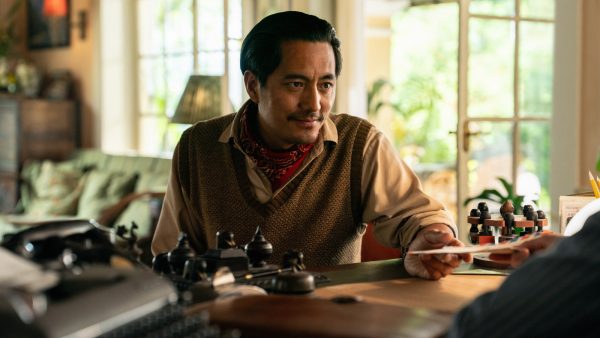
Flashing forward roughly thirty years, an older Tenzing (played with soulful, soft-spoken virtue by Genden Phuntsok) is deeply jaded by decades of systemic exploitation. Sherpas are routinely utilized as glorified, underpaid travel guides and load-bearers for foreign nations attempting yearly expeditions, often treated as subhuman labor (as illustrated by being relegated to sleeping in barns before major climbs).
Despite these indignities, Tenzing is encouraged by his close friend and expedition organizer Jill Henderson (Caitríona Balfe) to persevere. He fights fiercely for a spot in the upcoming 1953 expedition—not merely as a functional pack-mule, but as an officially recognized, equal member of the mountaineering team. This campaign takes place under the strict military command of British expeditioner Colonel John Hunt (Willem Dafoe), who is determined to learn from decades of prior catastrophic failures, ranging from monsoon season entrapments and lethal avalanches to deadly oxygen depletions.
The 1953 Summit and the Partnership with Hillary
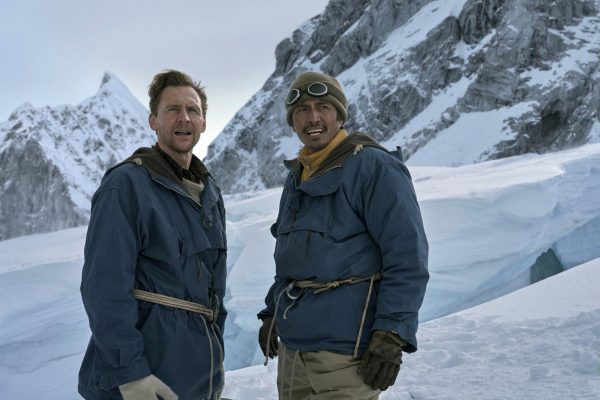
As the 1953 expedition pushes higher into the death zone, Tenzing finds a kindred spirit in Kiwi mountaineer Edmund Hillary (Tom Hiddleston). Both men frequently experience being "othered" by their upper-class British peers, forging a mutual bond through their shared reverence for the fallen George Mallory. Their evolving camaraderie forms the emotional anchor of the film’s climax.
When the expedition narrows down its final push for the summit, it is the historic pairing of Tenzing Norgay and Edmund Hillary that steps forward. Eschewing the nationalistic propaganda that plagued earlier attempts, their successful ascent on May 29, 1953, is depicted not as a victory of British colonization, but as a complex human triumph achieved through indigenous expertise, resilience, and cross-cultural partnership.
Supporting Context & Metrics: Behind the Scenes of Tenzing
To fully appreciate the cinematic achievement of Tenzing, one must examine the production metrics, casting dynamics, and thematic underpinnings that shape the film’s execution.
Cast and Crew Overview
- Director: Jennifer Peedom
- Screenplay: Luke Davies (based on Ed Douglas’s Tenzing: Hero of Everest, a Biography of Tenzing Norgay)
- Principal Cast:
- Genden Phuntsok as Tenzing Norgay
- Tom Hiddleston as Edmund Hillary
- Willem Dafoe as Colonel John Hunt
- Caitríona Balfe as Jill Henderson
- Thinley Lhamo as Dawa (Tenzing’s wife)
- Johnny Flynn as George Mallory
- Tenzin Dalha as Young Tenzing
- Supporting performances by Tenzin Jigmey, Lobsang Tenzin Meindrukbhuk, and Dhondup Tsering.
Thematic Dives: Eastern Spirituality vs. Western Conquest
One of Tenzing‘s greatest strengths lies in its exploration of the ideological divide between Western and Eastern mindsets:
- The Western Paradigm: Characterized by figures like Colonel John Hunt, mountaineering is viewed through the lens of imperial expansion, national glory, and territorial conquest—a terrestrial space race akin to conquering the moon.
- The Eastern Paradigm: Characterized by Tenzing and his fellow Sherpas, the mountain is a sacred space. Furthermore, the Sherpas display a pragmatic, survival-driven awareness: they rely on these expeditions for economic survival while quietly harboring anxieties that financial opportunities will evaporate the moment a Western nation successfully claims the summit.
- Tenzing’s Middle Ground: Tenzing himself occupies a precarious middle space. He seeks the status of an elite mountaineer, yet he refuses to turn his back on his community or betray the sacred nature of Chomolungma.
Visual and Narrative Choices
From a technical standpoint, Jennifer Peedom’s direction balances documentary-style realism with narrative drama. Operating under a PG rating, the film consciously avoids excessive, graphic depictions of bodily trauma or gore, choosing instead to focus on the psychological and philosophical weight of the climb. While the visual effects and practical mountain cinematography effectively capture the vertigo-inducing scale of the Himalayas—making the human climbers appear as fragile, antlike figures against sheer walls of ice—critics note that the sheer brutality of the elements feels somewhat sanitized until the final, breathless moments of the climax.
Official Statements and Critical Reception
The release of Tenzing has sparked significant discourse among film critics, historians, and cultural commentators regarding the proper representation of indigenous historical figures in modern cinema.
Director and Creator Intentions
Director Jennifer Peedom, renowned for her documentary work in high-altitude environments (such as Sherpa and Mountain), has repeatedly emphasized the necessity of correcting historical oversights. In promotional interviews surrounding the film’s release, Peedom noted that mainstream histories have long relegated Tenzing Norgay to a secondary footnote beneath Edmund Hillary’s towering British-sanctioned legacy.
"For decades, the narrative of Everest has been told through a singular, colonial lens," Peedom stated during production discussions. "With Tenzing, our goal was to restore the spiritual, cultural, and personal dimensions of a man who did not merely climb a mountain, but navigated a complex web of cultural expectations, grief, and national ambition."
Critical Consensus
Critical reception has been largely favorable, praising the film’s cultural sensitivity and standout performances. Reviewers have lauded Genden Phuntsok for portraying Tenzing with a quiet dignity and soulful depth that anchors the narrative. Tom Hiddleston’s portrayal of Edmund Hillary has similarly received acclaim for its avoidance of caricature, presenting the future Sir Edmund as a grounded, empathetic companion rather than an arrogant conqueror.
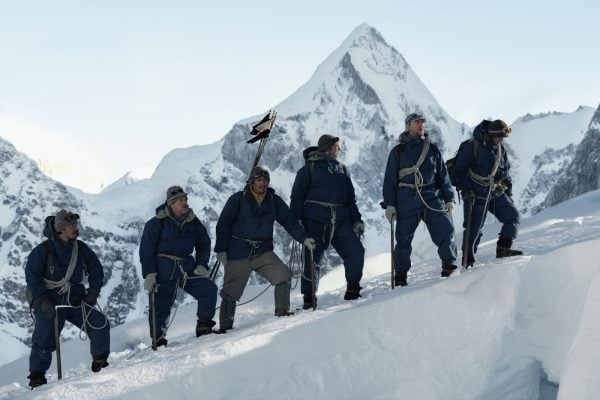
However, some critics have pointed out narrative limitations. Because the film attempts to pack decades of backstory—including Tenzing’s early orphanage, his courtship of Dawa (Thinley Lhamo) against her disapproving father, his Tibetan heritage, and his post-widowhood motivations—certain subplots feel rushed, functioning more as brief historical footnotes than fully digested dramatic arcs. Despite these structural constraints, Tenzing maintains a solid critical rating across major film platforms, universally commended for its refreshing perspective on a heavily mythologized historical event.
Future Outlook and Cultural Legacy
As Tenzing makes its mark on the 2026 film circuit, its long-term cultural legacy points toward a broader transformation in how Hollywood and global streaming platforms approach historical biopics. By shifting away from Eurocentric hero narratives, films like Tenzing pave the way for more nuanced, multi-perspective historical dramas that honor indigenous contributions without reducing them to supporting tropes.
Industry analysts are already projecting Tenzing as a strong contender for awards consideration, particularly in categories highlighting adapted screenplays, cinematography, and lead performances. More importantly, the film serves as an educational and cultural touchstone, reminding global audiences that history is rarely shaped by a single conqueror, but rather by the collaborative—and often under-acknowledged—efforts of those who understand the true spirit of the mountains.









Belum ada komentar. Jadilah yang pertama berkomentar!