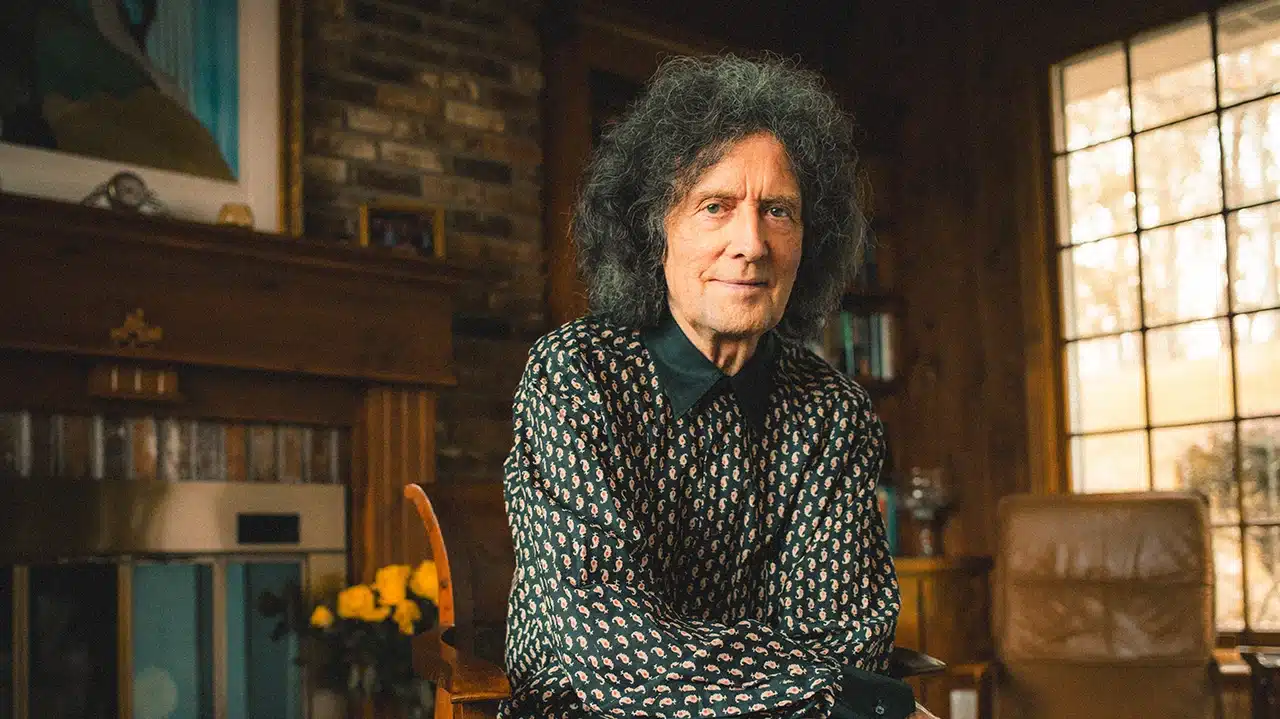
Approaching his milestone 80th birthday with the unyielding drive of an artist half his age, legendary singer-songwriter Gilbert O’Sullivan remains a towering figure in contemporary pop history. Decades after dominating the global airwaves with whimsical, melancholic, and idiosyncratic piano-driven masterpieces like "Alone Again (Naturally)," "Clair," and "Get Down," O’Sullivan is experiencing a vibrant late-career renaissance.
Marked by the release of his acclaimed new studio album, On the Record, this latest chapter in O’Sullivan’s storied career highlights an artist who refuses to be pigeonholed by genre, age, or generational expectations. From receiving the prestigious "Freedom of Waterford City and County" in 2024 to collaborating with Andrea Corr on the fragile, emotionally resonant ballad "Is That You?", O’Sullivan’s identity remains firmly anchored in his Irish heritage, even after decades of residency on the island of Jersey.
In an extensive, wide-ranging interview conducted in a luxurious Dublin hotel room, O’Sullivan opened up about the organic creation of his latest record, his early musical roots alongside future members of Supertramp, his aversion to modern digital production shortcuts, and his steadfast refusal to dwell on the morbid themes of mortality that many assume dictate the mindset of octogenarian musicians. Instead, O’Sullivan radiates an infectious, sharp-witted optimism, standing shoulder-to-shoulder with a legendary 1960s generation of artists—including Paul McCartney, Bob Dylan, and The Who—who continue to redefine what aging gracefully (or disgracefully) in the music industry looks like.
Detailed Chronology: From Waterford Windows to Global Stardom
To understand Gilbert O’Sullivan’s meticulous approach to songwriting and performance, one must trace a musical journey that began in the mid-20th century and was forged through economic hardship, working-class resilience, and an unshakeable belief in the power of the melody.
Born in Waterford, Ireland—a city with which he maintains a profound, lifelong connection, commemorated by his 2024 Freedom of the City honor—O’Sullivan’s early life laid the groundwork for his unique worldview. In 1967, a young O’Sullivan moved to London with ambitions of breaking into the burgeoning music business. Living in cramped quarters with two roommates, he faced financial constraints that would ironically shape his signature sound for the rest of his life.
"I couldn’t afford a piano tuner; it cost me £10! So, that started the ball rolling for me, and every piano I’ve owned has been de-tuned. A few songs I play in pitch, but the majority are done on piano a semi-tone below concert pitch."
Before his solo career exploded, O’Sullivan crossed paths with Rick Davies, later of Supertramp. The two musicians formed an early band while attending art school in the 1960s. O’Sullivan handled the drums while Davies played keys. The partnership yielded early demos recorded in London, but the band ultimately fractured when their bassist and guitarist opted for safer, traditional apprenticeships.
While Davies transitioned through manual labor—working on a farm and in a factory—O’Sullivan spent his days window-cleaning to survive. The hustle paid off when O’Sullivan achieved global breakthrough success with his 1970 single "Nothing Rhymed." True to form, once he secured his own commercial footing, O’Sullivan returned the favor to his old friend, inviting Davies and Supertramp to mime on Top of the Pops and enlisting Davies to play on his early records. Though a formal Supertramp reunion was permanently sidelined by Davies’ passing in 2025, the mutual respect between the two architects of 1970s pop-rock remains a foundational pillar of modern music history.
Supporting Context & Metrics: The Craft Behind On the Record
Fast forward to the present day, and O’Sullivan’s production philosophy stands as a deliberate rejection of modern digital streamlining. Recorded with acclaimed producer Ethan Johns (son of legendary producer Glyn Johns), On the Record relies on a fiercely organic, live-in-the-room methodology.
Production and Recording Metrics
Live Basic Tracks: Eschewing modern remote-collaboration tools like Skype—which contemporaries like Graham Gouldman of 10cc utilized—O’Sullivan insists on gathering musicians physically in the studio.
The Ethan Johns Approach: Musicians stand around O’Sullivan’s piano, listen to the composition, run through rehearsals, and capture a nearly live basic track before moving to minimal overdubs.
Vocal Takes: Known for his precision, O’Sullivan typically records only a handful of vocal takes (usually three), allowing his producer to stitch together the optimal performance rather than endlessly chopping audio line-by-line in the style of Dusty Springfield.
The Jersey Sanctuary: Recorded largely in O’Sullivan’s purpose-built studio on the island of Jersey—where he has resided for over a decade—the album benefits from total isolation, free from the distractions of motorways or urban noise.
Official Statements & Insights
During his discussion in Dublin, O’Sullivan offered candid commentary on the state of contemporary music, his peers, and the lyrical narratives driving On the Record.
On Collaborations and Vocalists
Speaking about his latest album’s standout duet, "Is That You?", O’Sullivan praised the emotional depth brought by The Corrs’ vocalist, Andrea Corr.
"The last album I did three years ago, I had duets with Mick Hucknall and KT Tunstall. So, this time we had 13 tracks, and I was talking to the producer, and wondered: ‘Is there a duet here?’ I picked on a couple of people who are fans of mine, Paul Weller being one. The people I went to were in the middle of their projects, so somebody said to me that Andrea was an option. So, we did. I didn’t have their records, or anything [during their heyday]. A really nice singer and person, Andrea."
On Aging and Vocal Pitch
Addressing how veteran artists adapt their performance style as they age, O’Sullivan drew fascinating comparisons to rock royalty:
"It’s a Johnny Cash scenario with his voice. [Paul McCartney’s] 84 [sic], so he can’t be hitting those high notes anymore. How could he at that age? People like Rod Stewart, they drop the pitch. I’ve done that, because as you get older, the voice gets deeper, so it makes sense to drop the pitch."
On Political Anxiety and Lyrical Themes
When pressed by interviewers on whether On the Record deals heavily with the theme of human mortality, O’Sullivan pushed back, redirecting the conversation toward geopolitical anxieties and generational resilience.
"Well, ‘See Us Gone’ has relevance to Putin’s war. He has danger at the push of a button, and if he felt he was losing, would he want to push it? I remember someone in the Russian government saying if they have to use the nuclear bomb, they would… But mortality? I wouldn’t view it that way, and what I find interesting on this album is the 1960s feel. That was the best decade for music."
Regarding the track "Growing Old Disgracefully," O’Sullivan emphasized that the song is an anthem of empowerment rather than an admission of decline:
"It’s not autobiographical, but I am of this generation. We are sidelined, and we get the argument that we should be gardening, or whatever. That’s not me saying [that’s all we’re good for], but it has that attitude. I had the title pinned on the wall for months, and the song seems to go down really well onstage. We have T-shirts with the title written on them!"
Future Outlook: The Endless Journey of a Distinctive Voice
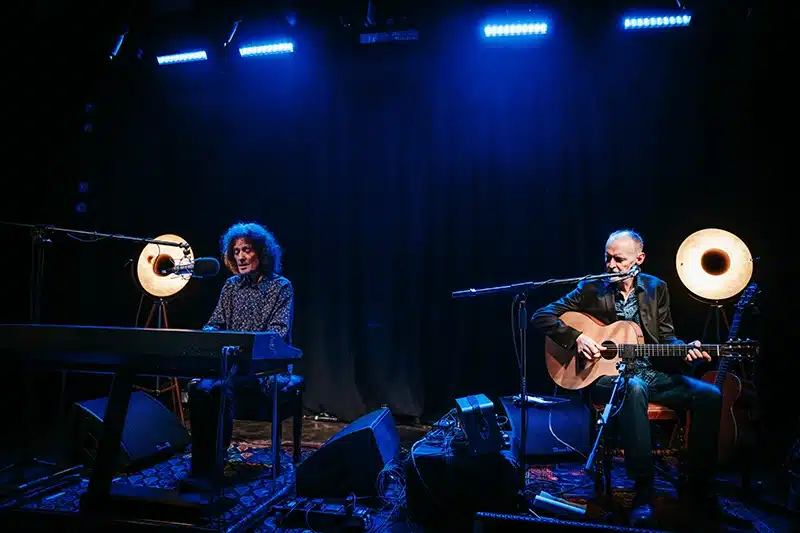
As Gilbert O’Sullivan prepares to take the stage in Dublin for an intimate 90-minute acoustic set alongside longtime guitarist Bill Shanley—delivering a masterclass in lyric-forward performance featuring classics alongside four new tracks from On the Record—it is clear his artistic fire remains unquenched.
Reflecting on his place in music history alongside peers like Bob Dylan, Paul McCartney, and The Who, O’Sullivan recognizes the value of having a distinctive voice over a conventionally "perfect" one.
"Early Dylan was an influence for me because of the vocals—Lennon/McCartney for the songwriting, Dylan too for the subject matter, but also the voice. Dylan doesn’t have a great voice, but it’s distinctive, and I don’t have a great voice, but it’s distinctive. I think there’s something better because of that. A lot of people sing really well, but are they distinctive?"
As he approaches his 80th birthday this coming December, Gilbert O’Sullivan continues to write, record, and tour with an artistic integrity that honors his Irish roots and his 1960s formation. Popular music owes him a profound debt; judging by the timeless vitality of On the Record, O’Sullivan is more than happy to keep paying that creative dividends for years to come.










Belum ada komentar. Jadilah yang pertama berkomentar!