


Executive Overview
The return of a legendary franchise is always met with a volatile mix of fervent nostalgia and uncompromising scrutiny. When Konami announced that Castlevania: Belmont’s Curse—the first proper mainline entry in the iconic gothic horror series in decades—would be developed by Evil Empire, the studio renowned for its decade-long mastery of Dead Cells, the gaming world held its collective breath. Expectations skyrocketed. Gamers anticipated a masterclass in modern metroidvania design, marrying the legendary heritage of the Belmont lineage with the razor-sharp, kinetic action that Evil Empire is globally famous for.
Yet, after spending eight immersive hours wrestling with the game’s sprawling labyrinth, the reality is far more complex. Castlevania: Belmont’s Curse is not the effortless, unmitigated triumph many hoped it would be. While it eventually unfurls into a genuinely captivating, puzzle-box architectural marvel once players cross the threshold into Dracula’s castle, its early hours are plagued by a litany of friction points.
From technical hiccups out of the gate—such as boot failures on high-refresh-rate monitors and jarring framerate stutter during cutscenes—to counterintuitive control layouts and a perplexing lack of the trademark fluidity ("juice") that defined Evil Empire’s previous work, Belmont’s Curse often trips over its own velvet cape. It is a game of stark contrasts: stunning artistic presentation and ingenious puzzle-platforming design colliding awkwardly with stiff movement physics and missed narrative opportunities.
Detailed Chronology: From Technical Hurdles to Gothic Glory
The Rocky Road In-Game and Out of the Box
The friction begins long before players even step foot onto the cobblestone streets of 19th-century France. Upon booting Castlevania: Belmont’s Curse for the first time, players are met with an ominous black screen—a sobering reminder that modern PC ports can still struggle with baseline hardware configurations. Investigation quickly reveals that the game refuses to display correctly on monitors operating at a refresh rate exceeding 120 Hz. While easily remedied by tweaking display settings, this initial stumble sets a concerning precedent.
Even after locking the experience to an in-game 120 fps cap, technical inconsistencies persist. The framerate undergoes jarring, unnatural lurches whenever the action transitions into a cutscene. For a reviewer-seasoned title, these rough edges suggest that the optimization polish applied just in time for launch left certain systemic quirks buried beneath the surface.
The Paris Prologue and the Ascent to Dracula’s Castle
Once operational, the game introduces players to Rose Belmont, navigating the foggy, gothic backdrop of France before eventually making the inevitable, terrifying pilgrimage to Dracula’s legendary fortress. The opening hours, unfortunately, serve as a testing ground for some of the game’s most frustrating design choices.

Platforming challenges in these early stages rely heavily on Rose’s whip-swinging mechanics. However, a lengthy wind-up animation on the whip introduces unnecessary input delay, complicating precision jumps over spiked abysses. Furthermore, the directional mapping for grapple points feels restrictive; holding the analog stick in the general direction of travel frequently results in missed hooks unless the player points directly at the pixel-precise anchor spot.
Compounding these platforming grievances is the combat’s evasion toolset. The forward slide—the primary dodge taught to players in the early tutorials—possesses dangerously few, if any, discernible invincibility frames (i-frames). Relying on this maneuver during early boss encounters invariably leads to swift and agonizing deaths, forcing players to unlearn standard action-game survival instincts.
The Castle Gates Open: A Turn for the Better
Despite a lackluster and occasionally punishing first act, Belmont’s Curse dramatically shifts gears once the player finally breaches Dracula’s Castle after several hours of play. Here, the level design blossoms into something genuinely special. Evil Empire injects ingenious platforming gimmicks and environmental puzzles that feel entirely fresh for the franchise.
Instead of straightforward linear progression or uninspired combat gauntlets, the castle demands intellectual engagement. Players must decipher environmental clues pointing toward Dracula’s scattered minions, turning exploration into a cerebral, methodical hunt. For veterans weary of mindless hack-and-slash loops, this puzzle-heavy, thinky approach rescues the middle stretch of the game, transforming it into an engrossing, interconnected maze well worth untangling.
Supporting Context & Metrics: The "Juice" Problem and Metroidvania Standards
Defining the "Juice" in Action Game Design
To truly understand why Castlevania: Belmont’s Curse feels occasionally discordant, one must examine a critical concept in modern game development popularized by veteran designers: "the juice."
Originally coined as shorthand for responsive, satisfying game feel, "juice" represents the cascading action-and-response feedback loop triggered by minimal user input. It encompasses elements such as:

- Screen shake: Visual feedback conveying the sheer impact weight of blows.
- Hitstop: Micro-pauses in animation frames when a weapon connects with an enemy, lending physical heft to attacks.
- Particle effects and enemy reactions: Dynamic, immediate responses from the game world to the player’s actions.
- Movement fluidity: How intuitively and effortlessly a character jumps, dodges, and sprints.
While "juicy" games do not necessarily need to be lightning-fast, they must feel alive in the player’s hands. Dead Cells—Evil Empire’s magnum opus—is universally lauded as one of the fastest, juiciest action games ever created. Similarly, Team Cherry’s Hollow Knight set an intimidating industry standard with its lightning-fast nail swipes and uncompromisingly tight, responsive dodges. Hollow Knight effectively redefined the modern metroidvania, establishing a baseline of mechanical polish that every subsequent game in the genre is inevitably measured against.
Where Belmont’s Curse Falls Short
Belmont’s Curse suffers from what can only be described as a disjointed design philosophy—it is intermittently, confusingly juiced, and then abruptly dry.
- The Fiddling Controls: Advanced traversal mechanics require complex inputs. Phasing through specific walls and floors—a staple of the later platforming challenges—is bound by default to the controller’s left trigger. Players are asked to execute high-precision sequences: hold to phase through a wall, release to wall-jump, hold again to phase through another, and release precisely above a bed of spikes. Binding this multi-layered choreography to a trigger with a long travel time introduces unnecessary human error.
- Combat Timing Discrepancies: Pulling oneself toward enemies with the whip to deliver a crushing follow-up blow feels plagued by an overly aggressive timing window that triggers too early.
- Healing Frustrations: Pop-flask mechanics require holding down a recovery button just long enough in the heat of combat to frequently trick the player into believing a heal registered—only for Rose to collapse seconds later from unhealed damage.
Budget Realities and Narrative Presentation
The game’s connection to the critically acclaimed Netflix Castlevania animated series is palpable. It features a similar dark fantasy aesthetic and even recruits a couple of the original voice actors to lend authenticity to the production.
However, this ambition highlights budget limitations. Early narrative cutscenes rely heavily on disappointing, slow panning shots over static 2D artwork. Given the rich animated heritage the game draws inspiration from, these sequences cry out for full motion animation—a lavish presentation layer that publisher Konami apparently opted not to fund.
Yet, it is not all gloom. When the game’s mechanics do land, they shine brightly. The hitstop on weapon connections is satisfyingly punchy, the core character animations are slick, and the inventory management system is elevated by gorgeous tarot card artwork. These tarot cards double as special weapons and lore-rich tactical guides for each boss, making inventory browsing an absolute aesthetic delight.
Official Statements and Industry Reception
While Konami has kept promotional messaging focused on the historic return of its flagship dark fantasy IP, early critical consensus paints a picture of a studio grappling with the immense weight of legacy. Evil Empire’s development team has previously noted the immense pressure of stepping into the Castlevania universe after years of generating original, fast-paced roguelike systems.
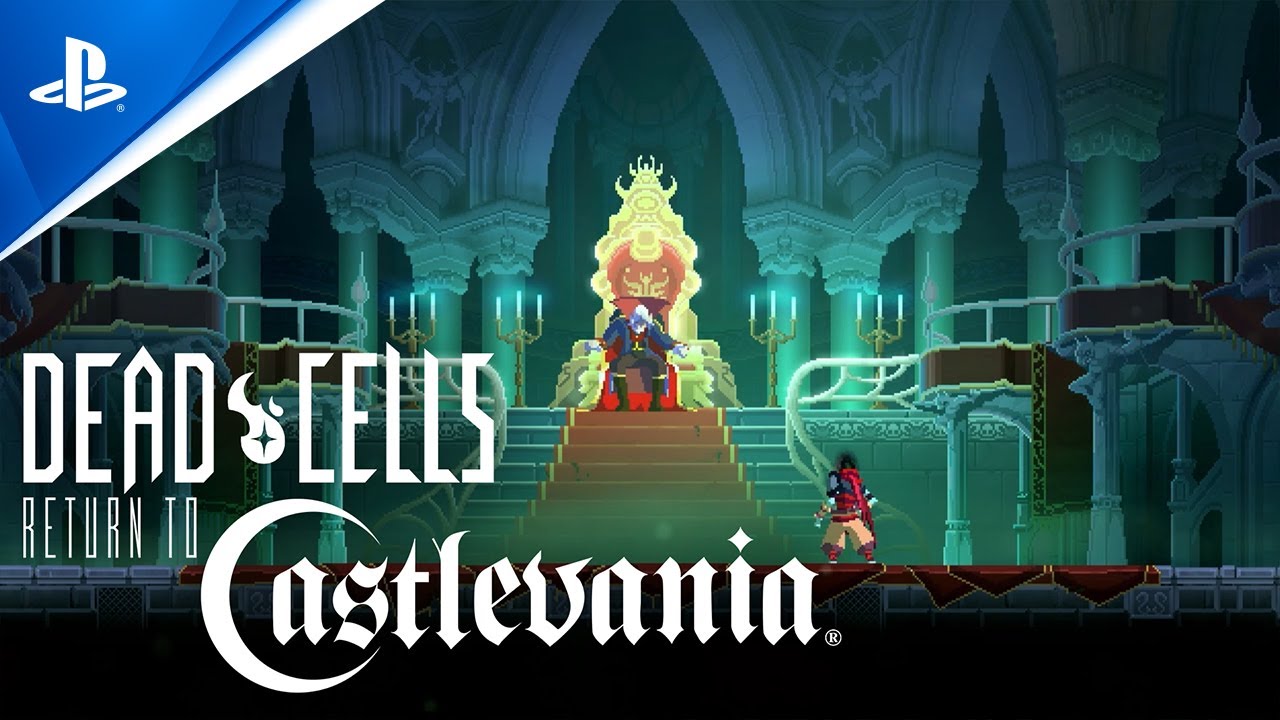
Industry analysts suggest that Belmont’s Curse may suffer from a psychological overcorrection: in their earnest endeavor to ensure the game did not simply feel like a Dead Cells reskin, the developers tweaked core movement and combat physics so drastically that they inadvertently compromised baseline accessibility and fluidity.
Future Outlook
Castlevania: Belmont’s Curse occupies a fascinating, troubled space in the current gaming landscape. It is neither a catastrophic misfire nor an unqualified masterpiece.
For patient fans willing to endure a rocky opening act, awkward PC port quirks, and overly finicky control schemes, the latter half of the journey within Dracula’s meticulously crafted castle offers deep architectural rewards and clever puzzle-solving mechanics. However, for a franchise returning from a multi-decade slumber with heavy hitters like Evil Empire at the helm, the community expected a seamless, bulletproof experience.
As patches roll out to address refresh rate issues and quality-of-life complaints, Belmont’s Curse has the foundation to become a cult favorite within the metroidvania canon. Whether it can transcend its early mechanical stumbles to achieve legendary status, however, will depend entirely on how forgiving players are of a whip that occasionally leaves a little too much slack in its swing.









Belum ada komentar. Jadilah yang pertama berkomentar!