

Executive Overview
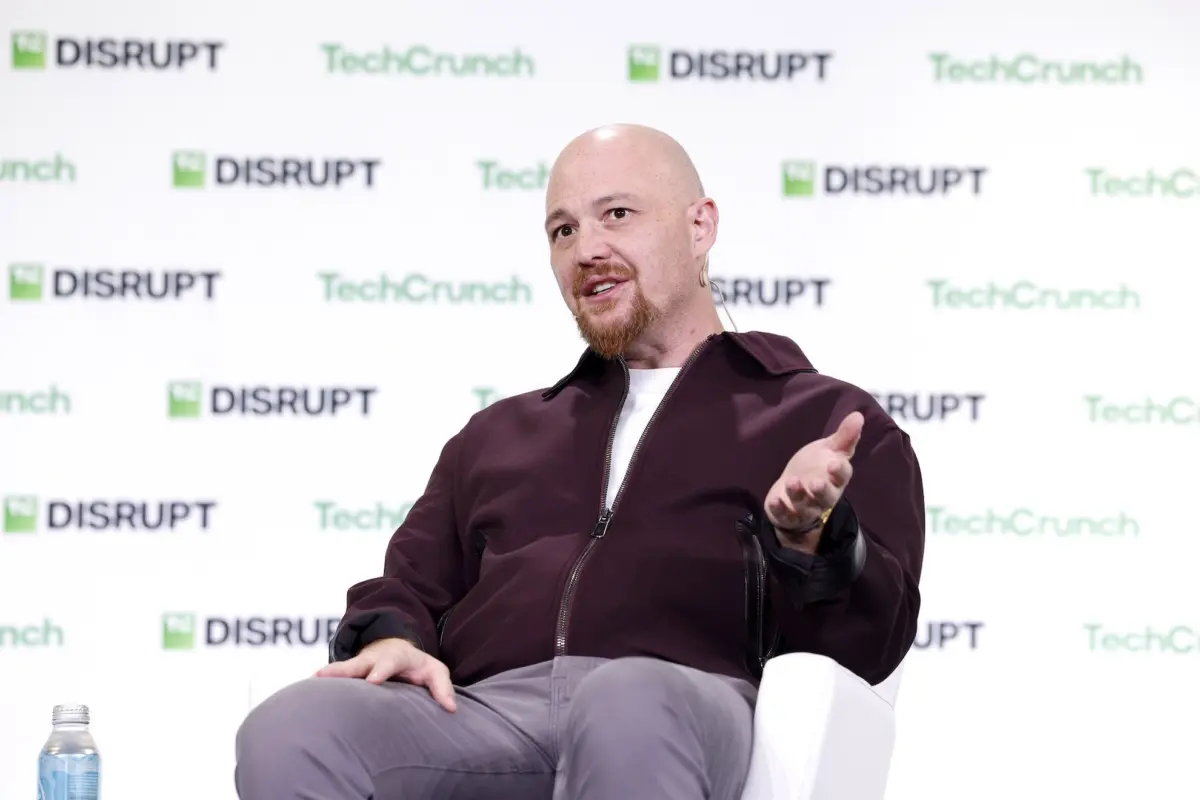
The rapidly shifting sands of the artificial intelligence sector have claimed another high-profile partnership. Speaking live onstage at the TechCrunch Disrupt conference, Amjad Masad, CEO and co-founder of the popular cloud-based software development platform Replit, dropped a bombshell revelation: the company is no longer working with Anthropic, one of its foundational large language model (LLM) providers.
The announcement sent immediate ripples through the developer and investor communities. For years, Replit’s integration of Anthropic’s Claude models had been hailed as a textbook success story of symbiotic tech collaboration. This partnership was widely credited with helping Replit scale its platform, supercharge its developer tools, and achieve a tenfold increase in revenue. However, according to Masad, the calculus has fundamentally changed. Citing a potent mix of economic factors, performance benchmarks, and evolving strategic alignment, Replit has decisively shifted its allegiance to OpenAI.
This high-stakes divorce underscores the ruthless pragmatism of the modern AI economy, where startup loyalty is perpetually subordinate to cost-efficiency, raw processing performance, and ecosystem synergy. Yet, the narrative is not without its contradictions. Insiders close to the situation have pushed back on Masad’s sweeping public declaration, suggesting that ties between Replit and Anthropic may not be entirely severed. This report explores the nuanced dynamics of the split, examines Replit’s financial and enterprise trajectory, details the performance metrics driving the shift to OpenAI, and evaluates what this means for the broader developer landscape.
Detailed Chronology: The Rise, Fall, and Sudden Shift of Replit’s AI Strategy
To fully grasp the magnitude of Masad’s announcement at TechCrunch Disrupt, one must examine the timeline of Replit’s architectural evolution and its deep-seated dependency on foundational models.
The Anthropic Era: Fueling a Tenfold Growth Surge
Replit carved out its niche as a darling of startup founders and developers by offering a cloud-based software development environment (IDE) that allows users to write, build, test, and deploy full-stack applications directly from a web browser. As generative AI began to reshape software engineering, Replit positioned itself at the vanguard of the movement, introducing automated coding agents designed to handle everything from boilerplate generation to complex application architecture.
Crucial to this ambition was a partnership forged with Anthropic. By integrating Anthropic’s industry-leading Claude models into its core infrastructure and its flagship Replit Agent, the platform achieved unprecedented capability. The synergy was undeniable. Industry reports and startup analyses noted that the collaboration acted as a massive financial and operational accelerator, helping Replit grow its revenue by an astounding 10x following the partnership’s deepening. For a time, Claude was the beating heart of Replit’s AI engine.
The Quiet Pivot: OpenAI Steals the Spotlight
The first overt cracks in the exclusive relationship appeared in August, when Replit formally announced a major strategic partnership with OpenAI. The move brought OpenAI’s cutting-edge models into the Replit ecosystem, introducing new modalities and capabilities to the platform’s user base. At the time, however, the announcement was framed as an expansion of choice rather than a replacement of existing infrastructure. There was no explicit public indication that the integration of OpenAI would spell the beginning of the end for Replit’s relationship with Anthropic.
That ambiguity evaporated at TechCrunch Disrupt. When pressed on the current status of the vendors powering Replit’s platform, Masad did not mince words. The company had officially phased out its work with Anthropic, shifting its core development infrastructure toward OpenAI’s ecosystem.
Conflicting Reports: A Partnership Truly Dead or Just Dormant?
Masad’s absolute declaration of independence from Anthropic was quickly met with skepticism behind closed doors. Insiders familiar with the commercial agreements between Replit and Anthropic pushed back against the narrative of a clean, immediate break. One source, speaking on the condition of anonymity, insisted that aspects of the partnership remain operational.
Furthermore, digital footprints complicate the timeline. Documentation and corporate blog posts published by Replit as recently as September—weeks before Masad’s Disrupt appearance—explicitly cite Anthropic models, such as Claude Fable 5 and Claude Fable 5.1, as active components powering the Replit Agent’s production environment.
When TechCrunch reached out to Replit for formal clarification to reconcile these conflicting accounts, representatives did not immediately provide a definitive statement. Whether this represents a phased deprecation, a technical transition period, or a miscommunication between executive positioning and backend reality remains a critical open question.
Supporting Context & Metrics: Why OpenAI Won the Spot
The decision to transition away from a partner as formidable as Anthropic was not made in a vacuum. Masad pointed to a triad of determining factors: cost dynamics, strategic partnership terms, and—above all—raw performance benchmarks.
The Performance Benchmark Debate
In the fast-moving world of AI coding assistants, fractional improvements in code generation accuracy, debugging capabilities, and context window management can make or break a product. Masad noted that Replit relies on a rigorous combination of internal performance metrics and public benchmarks to evaluate underlying models.
According to Masad, OpenAI’s models—specifically highlighting internal iterations referred to as Sol and Astra—consistently outperformed competing architectures when tasked with building "vibe-coded" applications from scratch. Vibe coding, a colloquial term describing intuitive, prompt-driven software creation where the human acts more as a director than a line-by-line coder, demands exceptional multi-step reasoning and contextual awareness. In Replit’s estimation, OpenAI currently holds the crown in this domain.
"I think ChatGPT is better now," Masad stated plainly on stage. "We publish a public benchmark as well, and consistently, Sol and Astra perform better on building vibe-coded applications from scratch."
Economic Realities and Cost Optimization
Beyond performance, the raw economics of running millions of daily code-generation requests at scale cannot be overstated. As AI companies scale, the unit economics of LLM inference become a dominant operational concern. Competing foundational model labs are engaged in a fierce race to the bottom on pricing, offering aggressive enterprise rates, customized compute credits, and specialized architectures.
For Replit, transitioning resources toward OpenAI was heavily influenced by cost efficiency. When an infrastructure partner offers superior performance coupled with more favorable commercial terms, the business calculus becomes difficult to ignore. In a market where capital efficiency dictates survival, Replit chose the path of optimized margins and enhanced computational output.
Official Statements and Enterprise Evolution
While the drama surrounding the Anthropic split captured headlines, Masad’s appearance at TechCrunch Disrupt also provided a fascinating window into Replit’s broader financial health, commercial maturation, and strategic pivot toward enterprise customers.
The B2B and Enterprise Revenue Surge
For years, Replit was primarily viewed as a consumer-facing tool, beloved by hobbyists, students, and indie hackers tinkering with code in their web browsers. However, Masad’s disclosures at Disrupt signal a radical transformation in the company’s revenue mix.
While declining to share absolute Annual Recurring Revenue (ARR) figures, Masad offered striking proportional metrics regarding the company’s enterprise penetration:
- Last Year: Enterprise contracts accounted for a mere 2% of Replit’s total revenue.
- This Year: Enterprise contracts have skyrocketed to represent roughly 15% of total revenue.
- Broader B2B Dominance: Business-to-business (B2B) streams now account for more than 50% of Replit’s overall revenue generation.
This shift mirrors a wider industry trend where developer-first tools consumerize bottom-up adoption before converting teams and entire corporate engineering departments into lucrative top-down enterprise contracts. By providing a secure, collaborative, browser-native development environment augmented by state-of-the-art AI agents, Replit has successfully captured the attention of corporate IT buyers looking to boost developer productivity.
Creating the Ideal "Habitat" for AI Agents
Addressing the technological requirements of the future, Masad offered a compelling analogy regarding the integration of autonomous AI agents into software development workflows. He argued that the conversation surrounding AI safety and capability must move beyond raw model intelligence and focus heavily on infrastructure orchestration.
"In the same way that us humans need a certain environment to work — you need a nice office, maybe nice good food in the office, air-conditioning, computer — agents need a habitat for them to exist and do good work," Masad explained.
He emphasized that deploying autonomous coding agents safely in production environments requires a robust infrastructural habitat comprising:
- Advanced orchestration to manage multi-step agent workflows.
- Reliable error recovery mechanisms to auto-correct broken code states.
- Rigorous safety, security, and sandboxing to prevent unauthorized system access or data leaks.
- Comprehensive networking, identity, and authorization controls to ensure enterprise-grade compliance.
According to Masad, once an organization successfully constructs this architectural habitat, the underlying model vendor becomes a modular component that can be swapped out based on performance and cost—a philosophy that clearly informed Replit’s willingness to drop Anthropic in favor of OpenAI.
Future Outlook: The Volatile Landscape of AI Partnerships
Replit’s public split from Anthropic and its consolidation around OpenAI serves as a case study for the broader artificial intelligence ecosystem. It highlights several inescapable realities of the current tech boom:
- The Commoditization of Model Providers: As foundational models become increasingly commoditized and perform at comparable levels of excellence, developer platforms hold the ultimate leverage. They can—and will—switch model providers dynamically based on minor shifts in cost, latency, and benchmark performance.
- The Battle for the Enterprise: Developer tools are no longer playing in a sandbox; they are chasing lucrative enterprise contracts. As Replit proves with its massive jump in B2B revenue, enterprise readiness, security, and sandboxing are far more important to corporate buyers than brand loyalty to a specific AI lab.
- The Fluidity of Strategic Alliances: The alliances forged between AI startups and foundational model labs are inherently fragile. Today’s exclusive partnership can quickly become tomorrow’s historical footnote as both sides scale and their strategic incentives diverge.
As Replit continues to refine its platform, integrate OpenAI’s latest technological breakthroughs, and expand its footprint in the enterprise sector, the industry will be watching closely to see if the gamble pays off. Will OpenAI maintain its performance edge, or will Anthropic—or perhaps open-source alternatives—lure Replit back into the fold? For now, Replit has made its choice, betting its technological future on the belief that ChatGPT, Sol, and Astra represent the superior engine for the next generation of software development.
Additional reporting by Lucas Roperk. TechCrunch affiliate monetization standards apply to select links within this coverage, preserving full editorial independence.








Belum ada komentar. Jadilah yang pertama berkomentar!