

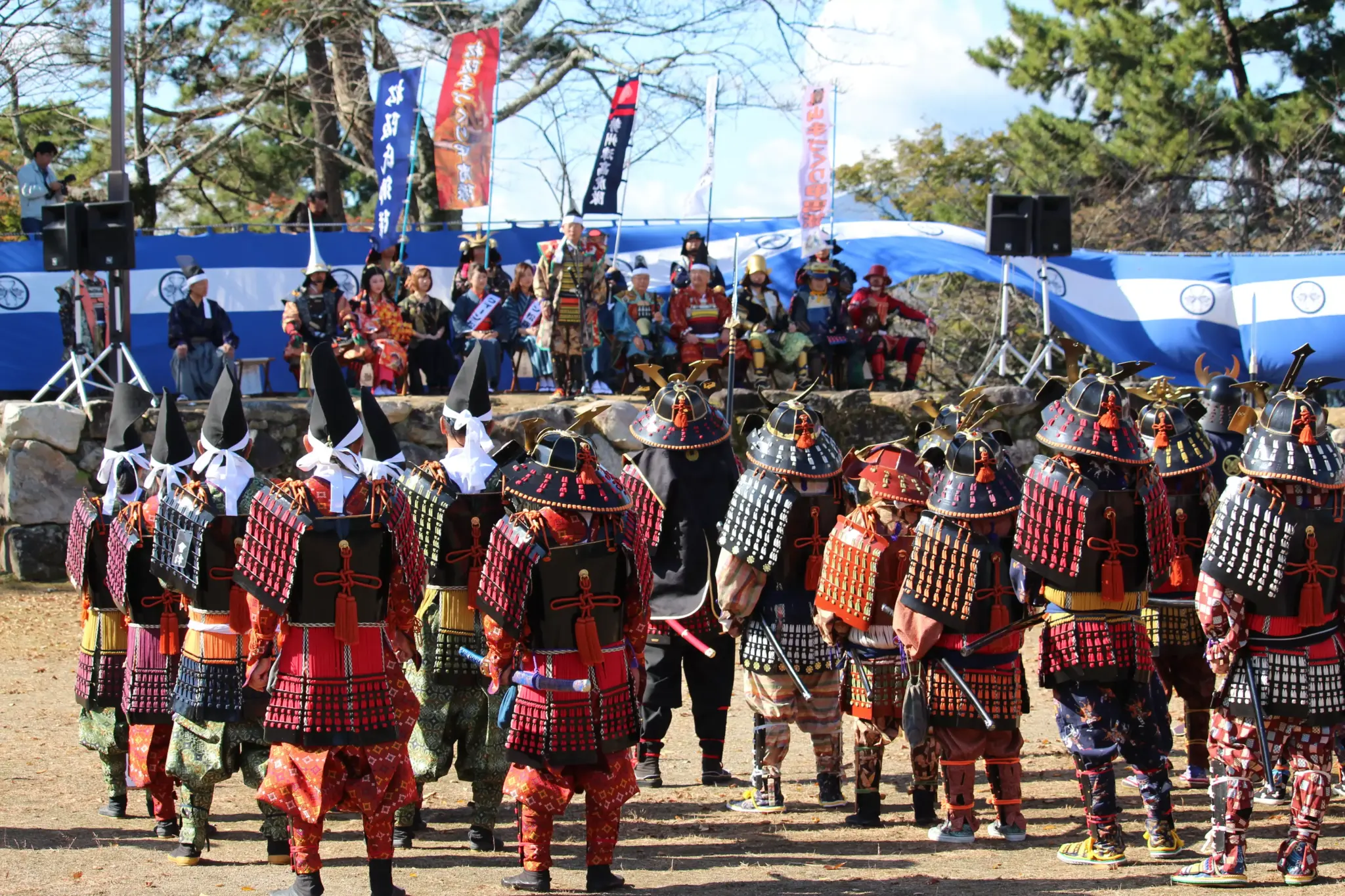
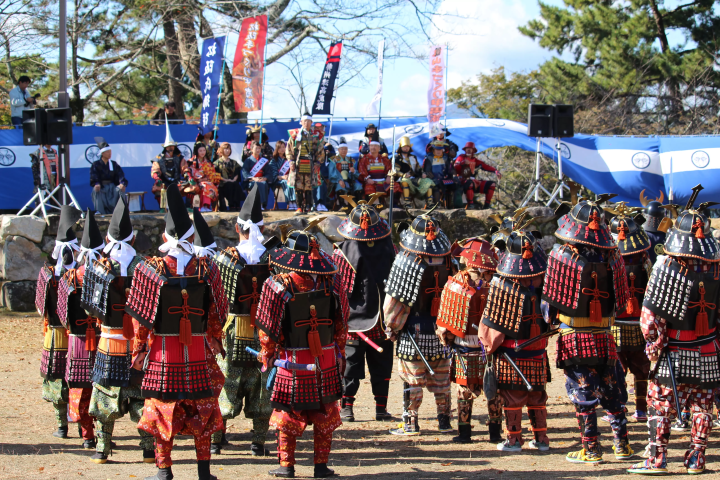
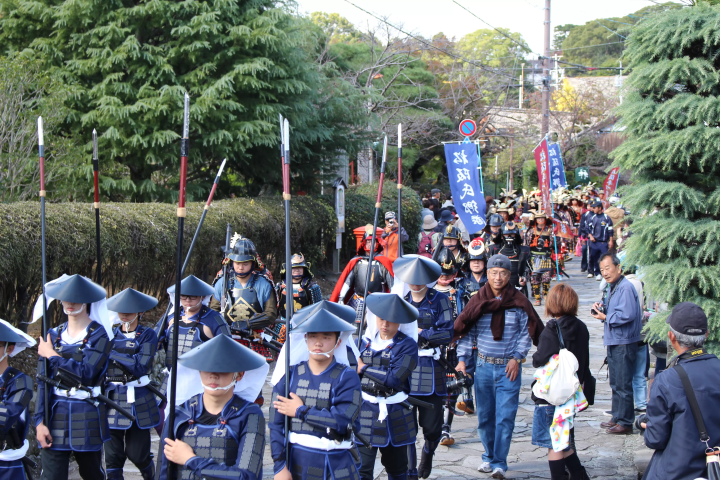
MATSASAKA, MIE — As a crisp November breeze sweeps across the venerable stone fortifications of the Matsusaka Castle Ruins, a ceremonial arrow arches through the air, silencing the early morning quiet. More than 200 volunteer warriors, clad in meticulously recreated, multi-layered samurai armor and bearing replica matchlock firearms, traditional banners, and thunderous war drums, spring into formation. This dramatic tableau marks the opening salvo of the 65th annual Ujisato Festival, an iconic fixture on Mie Prefecture’s cultural calendar held annually on Bunka no Hi (Culture Day).
For over six decades, this vibrant celebration has transformed the historic streets of Matsusaka into a living, breathing time capsule of Japan’s feudal past. Commemorating the visionary military commander and regional lord Gamo Ujisato (1556–1595)—who forged the very blueprint of the modern city in 1588—the milestone 65th iteration of the festival promises to be the most ambitious yet. Blending historical reenactment, culinary heritage, and civic pride, the event offers a profound look at how a 16th-century garrison town evolved into one of Western Japan’s most historically rich urban centers.
Executive Overview: A Milestone Celebration of Feudal Heritage
The Ujisato Festival is far more than a localized costume parade; it is a masterclass in living history and community-driven heritage preservation. Established in 1962 to honor Gamo Ujisato and his foundational contributions to regional development, the festival has expanded over the decades into a powerhouse of cultural tourism.
The 2026 edition carries special significance, marking the 65th anniversary of the event. Organizers and civic leaders have pulled out all the stops to elevate the visitor experience, introducing new historical figures to the grand procession, expanding local gastronomy showcases, and opening heritage merchant homes to immersive public programming.
Set against the backdrop of an impeccably preserved Edo-period (1603–1867) townscape—located just a 15-minute walk from Matsusaka Station—the festival bridges the gap between ancient samurai traditions and contemporary community engagement. Visitors are invited to step beyond the velvet ropes of conventional museums and walk the very stone paths traversed by samurai guards and legendary merchant dynasties centuries ago.
Detailed Chronology: A Day in the Life of the 65th Ujisato Festival
The day-long festivities unfold through a carefully orchestrated sequence of events that transport attendees step-by-step through Matsusaka’s storied past.
09:00 AM – The Opening Ceremony and Archery Ritual
The festival officially commences within the interior grounds of the Matsusaka Castle Ruins. The opening ceremony features a traditional Shinto-infused archery ritual (yabusame-style elements and ceremonial arrow flight), symbolizing spiritual purification, warding off evil spirits, and granting safe passage for the day’s impending martial maneuvers. As the ceremonial arrow finds its mark, the assembled ranks of 200-plus costumed warriors roar their approval, signaling the start of the march.
10:00 AM – The Grand Warrior Procession
At the heart of the festival is the grand warrior procession, which snakes its way from the castle ruins down through the historic townscape, passing iconic locations such as the historic Castle Guard Residences.
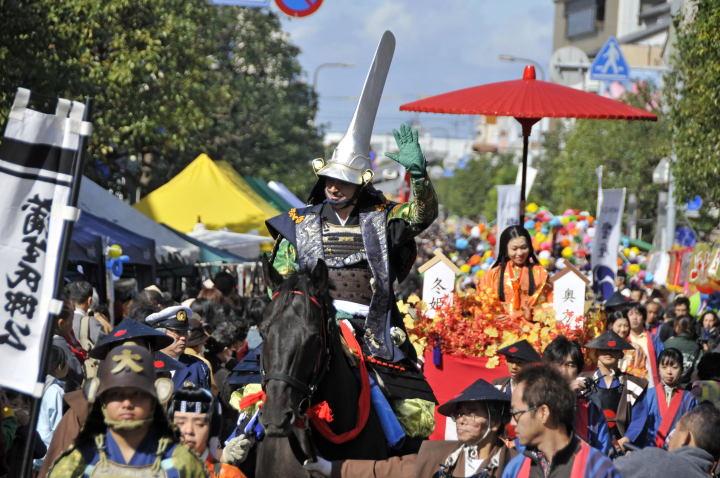
Leading the vanguard on a magnificent steed is a historical reenactor portraying Gamo Ujisato himself, instantly recognizable by his legendary, distinctively shaped helmet. Riding closely behind in an ornate, flower-adorned carriage is Fuyuhime, Ujisato’s wife, resplendent in a vibrantly colored, authentic silk kimono.
A 2026 Milestone Addition: In honor of the 65th anniversary, festival organizers have introduced a major historical expansion. Joining Gamo Ujisato in the parade for the very first time are three additional prominent historic lords of Matsusaka, each outfitted in full, period-accurate armor. This quartet of Sengoku-era commanders creates an unprecedented visual spectacle for history buffs and casual spectators alike.
Midday – Culinary Explorations and Traditional Stage Performances
As the morning procession culminates in the Matsusaka Central Shopping District, the atmosphere shifts from military solemnity to celebratory revelry. The air fills with the savory aromas of regional gastronomy.
- Matsusaka Chicken Yakiniku: Attendees can sample the city’s beloved local soul food—tender, succulent chicken grilled to perfection and smothered in a rich, proprietary sweet-and-spicy miso sauce.
- Stage Events: The central stages host a diverse cultural lineup, featuring traditional performances of the Shongai Solan and Shongai Song and Dance, alongside the energetic rhythms of the Matsusaka Suzu Odori (bell dance). Modern community groups also take the stage with vibrant hip-hop and hula dance presentations, showcasing the community’s contemporary vitality.
Afternoon – Cultural Immersion at Merchant Estates and Castle Ruins
In the afternoon, visitors are encouraged to wander off the main thoroughfares to explore Matsusaka’s architectural masterpieces:

- The Ujisato Citizens’ Tea Experience: Held within the majestic confines of the Former Hasegawa and Former Ozu Residences, this event invites guests to partake in traditional green tea ceremonies served inside the ancestral homes of some of Japan’s wealthiest historical merchant clans.
- Limited-Edition Castle Stamps: History enthusiasts can collect exclusive, commemorative castle stamps (shiroin) at festival booths within the Matsusaka Castle Ruins, marking their participation in this milestone 65th event.
Supporting Context & Metrics: The Architecture of an Empire
To truly appreciate the scale of the Ujisato Festival, one must understand the man who made it all possible and the economic empire he established.
Gamo Ujisato: The Visionary Lord
Born in 1556, Gamo Ujisato was a brilliant military commander serving under Oda Nobunaga and later Toyotomi Hideyoshi. Renowned not only for his tactical prowess on the battlefield—frequently fighting on the front lines—Ujisato was also a man of deep cultural refinement, known as one of the "Seven Disciples of Sen no Rikyu" for his mastery of the tea ceremony.
In 1588, Ujisato was assigned the Matsusaka domain. Displaying astonishing administrative efficiency, he constructed Matsusaka Castle in a mere three years. Recognizing that a secure military base required economic vitality, Ujisato enacted a revolutionary policy: he invited powerful, independent merchants from across the country to relocate to his new castle town. He granted them tax exemptions and commercial privileges, effectively laying the foundation for Matsusaka’s golden age of commerce.
The City of Rich Merchants
Ujisato’s gamble paid off exponentially. Merchants dealing in high-demand commodities such as cotton and paper amassed fortunes so vast that Matsusaka earned the national moniker "The City of Rich Merchants." Two premier examples of this wealth have been meticulously preserved as national historical assets:
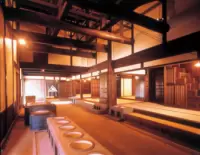
- The Former Hasegawa Residence: The primary estate of Hasegawa Jirobei, an elite Edo-period merchant. Sprawling across vast grounds, the complex features over 30 interconnected rooms, including a magnificent main house, detached private quarters, traditional storehouses, a classical stroll-style Japanese garden, and an authentic teahouse.
- The Former Ozu Residence: Belonging to Ozu Seizaemon, a titan of the Edo and Tokyo paper and cotton trade, this estate offers an unvarnished look at elite merchant opulence. A standout artifact within the residence is the "Manryo-bako"—a colossal, iron-reinforced money chest that physically symbolizes the staggering capital accumulated by the family and underscores Matsusaka’s historical dominance in Japanese trade.
Living History: The Castle Guard Residences
Adding to the authenticity of the festival route are the historic Castle Guard Residences (Gojoban Yashiki). Originally built to house the samurai warriors tasked with guarding Matsusaka Castle, this long row of samurai housing stands as one of the very few national cultural properties in Japan where descendants of the original occupants still reside to this day. When the Ujisato Festival parade passes these venerable wooden structures, the boundary between past and present completely dissolves.
Future Outlook: Preserving Heritage for the Next Generation
As the Ujisato Festival celebrates its 65th anniversary in 2026, city planners, tourism boards, and preservation societies are already looking toward the horizon. The festival serves as a vital economic and cultural anchor for Matsusaka, drawing tens of thousands of domestic and international visitors into the heart of Mie Prefecture.
Future initiatives focus heavily on sustainable cultural tourism. By integrating digital preservation technologies—such as augmented reality (AR) walking tours of the castle grounds and multilingual digital archives of the merchant family ledgers—the city aims to make its profound history accessible to a global audience without compromising the tactile authenticity of events like the Ujisato Festival.
Furthermore, the involvement of younger generations as volunteer warriors, dancers, and event coordinators ensures that the traditions forged by Gamo Ujisato over 400 years ago will continue to be fiercely protected and celebrated.
Event Summary & Logistics
- Event Name: The 65th Ujisato Festival
- Date: Tuesday, November 3, 2026 (Culture Day / Bunka no Hi)
- Time: Festivities commence from 9:00 AM onward.
- Location: Matsusaka Castle Ruins and Matsusaka Central Shopping District, Mie Prefecture.
- Accessibility: All main event venues are located within a convenient 15-minute walking radius from Kintetsu/JR Matsusaka Station, making it an ideal day-trip destination for travelers exploring the Kansai or Chubu regions.
Whether you are a dedicated Sengoku-era enthusiast, a connoisseur of traditional architecture, or simply a traveler seeking an authentic taste of Japanese culture and cuisine, the 65th Ujisato Festival stands as an unmissable autumn pilgrimage into the soul of Japan’s feudal history.






Belum ada komentar. Jadilah yang pertama berkomentar!