

Executive Overview
In the sprawling, often obsessive subculture of vinyl record collecting, minor artifacts can carry outsized cultural weight. To the uninitiated, an obi—the narrow paper band wrapped around the spine of a Japanese LP—might seem like little more than promotional clutter to be discarded upon purchase. Yet, to the seasoned crate-digger scouring Discogs or eBay, the presence of an intact obi is the ultimate marker of provenance, signifying both pristine media condition and a meticulous previous owner.
It was precisely this collector’s trophy that secured a pristine, mirror-finish copy of Sylvie Vartan’s 1974 release, La Reine de Saba, for a mere single U.S. dollar at a Japanese-themed entertainment import shop. Originally marked down from $19 due to pricing inefficiencies by inexpert staff, this serendipitous acquisition serves as a tactile gateway into a fascinating cross-cultural artifact. La Reine de Saba (The Queen of Sheba) captures the legendary French pop icon at a stylistic crossroads, bridging the gap between the sophisticated mid-century chanson tradition, the effervescent yé-yé movement of the 1960s, and the shifting pop-rock landscapes of the mid-1970s.
Far more than a standard regional compilation, this album offers a masterclass in interpretive vocal delivery, a testament to the enduring Franco-Japanese artistic synergy, and an intriguing time capsule of international pop aesthetics.
Detailed Chronology: The Evolution of La Reine de Saba
To fully appreciate Vartan’s 1974 masterpiece, one must trace its lineage through the rich tapestry of European and global pop history. The album’s chronology spans decades of songwriting, cross-continental cover versions, and specialized international releases.
[1949] ──> Edith Piaf records "Hymne à l'amour" / Yves Montand debuts "Les Feuilles Mortes"
  │
[1967] ──> Michel Laurent pens & records "Ma Reine de Saba"
  │
[1974] ──> Vartan releases "La Reine de Saba" specifically tailored for the Japanese market
  │
[1975–1987] ──> Subsequent vinyl and cassette releases expand distribution to South Korea
  │
[2013] ──> Official CD debuts in France and Japan, bridging a multi-decade archival gap
1949–1967: The Foundation of Chanson and Global Pop
The roots of the material tackled on La Reine de Saba date back to the golden era of post-war French cabaret and cinema.
- 1949: The ultimate French icon, Édith Piaf ("The Little Sparrow"), immortalized her own lyrics in "Hymne à l’amour," set to music by Marguerite Monnot. Simultaneously, Yves Montand popularized "Les Feuilles Mortes" (composed by Joseph Kosma with lyrics by poet Jacques Prévert), a melancholy masterpiece later anglicized as "Autumn Leaves."
- 1967: French singer Michel Laurent wrote and recorded "Ma Reine de Saba," a sweeping orchestral ballad that would eventually serve as the thematic anchor for Vartan’s project. That same year, André Popp and Pierre Cour’s "L’amour Est Bleu" (Love Is Blue) captured international attention, later becoming a ubiquitous standard via Vicky Leandros and Paul Mauriat.
1974: The Japanese Pivot and International Pressings
While Western pop music was rapidly hardening into standardized arena rock and heavy progressive styles, Sylvie Vartan remained an enduring superstar in France while enjoying a fiercely devoted cult following in Japan. Recognizing this distinct demographic, Vartan recorded La Reine de Saba specifically for her Japanese admirers.
- Within the gatefold sleeve, alongside meticulous Japanese liner notes, a reproduced handwritten note from the singer confirmed her intentions: "Je sais que tous mes amis japonais aiment beaucoup ‘la chanson’. C’est pour vous que j’ai enregistré spécialement ce l.p…"
- The album’s distribution footprint quickly expanded; South Korean vinyl editions followed in 1975, and cassette versions emerged in 1987. However, European markets largely missed out on this specialized pressing during its initial run.
2013–Present: The Digital Archival Era
It wasn’t until 2013 that La Reine de Saba finally saw a proper compact disc release, simultaneously hitting shelves in France and Japan. This long-overdue digital reissue allowed a new generation of crate-diggers, international archivists, and YouTube preservationists—such as remixer Sergio BR—to deconstruct, remaster, and celebrate Vartan’s daring genre experiments.
Supporting Context & Metrics: Decoding the Tracklist
La Reine de Saba is structurally bifurcated, utilizing the traditional vinyl format to contrast a sublime, ballad-heavy first half with a stylistically eclectic, risk-taking second half.
Face A: The Classic Ballad Tradition
Side one operates as a cohesive, highly cinematic suite of orchestral pop and sophisticated torch songs.
- "La Reine de Saba": Vartan infuses Michel Laurent’s original composition with a confident, modern elegance, elevating the material through emotional vulnerability and soaring orchestration.
- "Love Is Blue": Shedding the saccharine sweetness often associated with early renditions, Vartan injects a subtle, proto-disco rhythmic propulsion that hints at her future evolution into a full-fledged dance-pop queen later in the decade.
- "Hymne à l’amour": Entering Piaf’s sacred territory requires immense vocal horsepower. Vartan accomplishes this by utilizing a richer vocal timbre, stripping away background choruses, and punctuating the finale with a dramatic, commanding drum roll.
- "Les Feuilles Mortes" & "The Music Played": Balancing unadorned instrumentation (such as stark xylophones and baroque piano figures) with sprawling string arrangements, Vartan anchors these narratives with dry-eyed, heartbreaking authenticity.
- "Les Moulins de Mon Coeur": Michel Legrand’s "The Windmills of Your Mind" receives its only truly jazzy rhythm section treatment on the record, prompting contemporary producers to isolate its somber vocals for 12-inch extended club remixes.
Face B: The Eclectic Pop-Rock Laboratory
If Side A represents a polished monument to classical chanson, Side B is a fearless, occasionally jarring experiment in 1970s cross-genre pop.
- "Holidays": Borrowing heavily from Michel Polnareff’s 1972 glam-pop sensibilities, Vartan delivers a mellow yet crunchy guitar-driven track that echoes David Bowie’s Hunky Dory era.
- "Rock’n Roll Man": Originally recorded in French by her husband Johnny Hallyday, this English-language adaptation leans into a rootsy, 1970s horn-and-backup-singer arrangement reminiscent of Bobbie Gentry or Dusty Springfield.
- "Ne Me Quittes Pas": Jacques Brel’s immortal lament is delivered with exquisite piano accompaniment and a controlled, pained vibrato, instantly washing away the campy rock pastiche of the preceding tracks.
- "Bang Bang" & "Dadou Ron Ron": Bridging American girl-group history with European sensibilities, Vartan reinterprets Cher and The Crystals. Her take on "Dadou Ron Ron" replaces the classic "Wall of Sound" production with an upbeat, boogie-inflected guitar attack punctuated by an emphatic, unquestionable "Oui!"
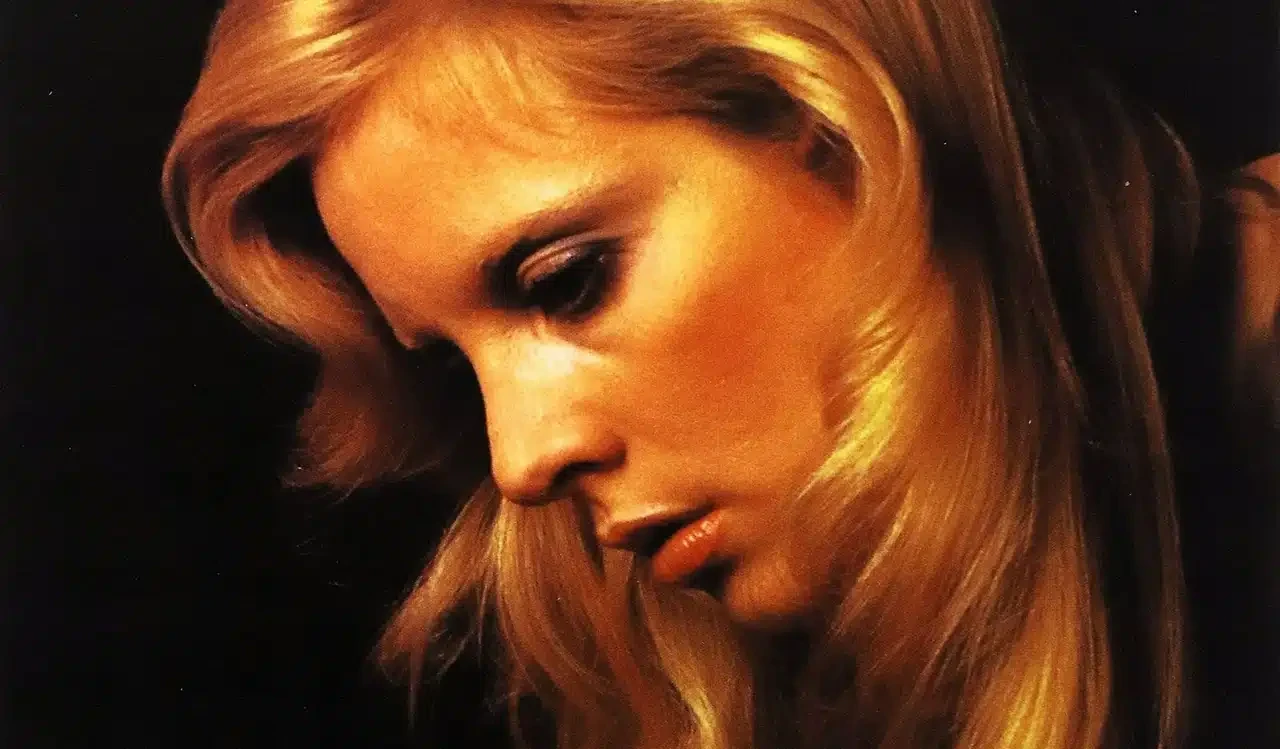
- "Qui Saura": Closing the album with a polished, double-tracked vocal performance over acoustic guitars, Vartan captures the exact mood of contemplative mindfulness promised by the record’s iconic front-cover portrait.
Official Statements and Archival Insights
The intimacy of La Reine de Saba is reinforced by the primary documentation preserved within its original gatefold packaging. The personal message penned by Sylvie Vartan to her international fanbase remains a cornerstone of the album’s historical value:
"I know that all my Japanese friends are very fond of ‘la chanson’. It’s for you that I especially recorded this LP with the most beautiful French songs and some others that I like. I hope that you enjoy listening to them as much as I did recording them. Your friend…"
Musicologists and cultural critics analyzing Vartan’s mid-70s output frequently emphasize her unique positioning as a cultural ambassador. Unlike contemporaries who remained strictly within domestic commercial boundaries, Vartan actively curated localized artistic experiences.
As noted by retrospective cultural analysts, La Reine de Saba functions as a disguised concept album. By reframing classic chanson and recontextualizing rock standards through a distinct Gallic lens, Vartan effectively authored a deeply personal love letter to her adopted homeland while simultaneously offering an exoticized, high-fidelity souvenir to her devoted East Asian audience.
Future Outlook: The Enduring Appeal of Obscure Vinyl Heritage
As physical media continues to experience a sustained global renaissance, records like La Reine de Saba represent the cutting edge of modern music archeology. The days of dismissing international pressings as regional oddities are firmly in the past.
┌────────────────────────────────────────────────────────┐
│             THE FUTURE OF VINYL ARCHIVAL               │
├──────────────────────────┬─────────────────────────────┤
│ Trend                    │ Market Implication          │
├──────────────────────────┼─────────────────────────────┤
│ Obi Strip Preservation   │ Drives secondary market     │
│                          │ premiums and authentication.│
├──────────────────────────┼─────────────────────────────┤
│ Cross-Border Remixing    │ Digital platforms (YouTube/ │
│                          │ Bandcamp) breathe new life  │
│                          │ into forgotten b-sides.     │
├──────────────────────────┼─────────────────────────────┤
│ Niche Reissues           │ Major labels increasingly   │
│                          │ look to Japanese/Asian-     │
│                          │ exclusive editions for CD/  │
│                          │ vinyl revival campaigns.    │
└──────────────────────────┴─────────────────────────────┘
The future of collecting points directly toward these cross-cultural intersections—where Japanese manufacturing quality meets European artistic heritage. Platforms like Discogs and independent record exchanges are increasingly populated by collectors searching for tactile markers of care, such as the elusive obi strip.
Furthermore, the intersection of physical crate-digging and digital preservation—exemplified by fan-led extended mixes and archival deep-dives—ensures that masterworks like Sylvie Vartan’s Japanese-market exclusive will continue to evade obscurity. For the modern audiophile, the hunt for a glistening vinyl disc protected by its original paper sash is more than a hobby; it is an active participation in the preservation of global pop history.








Belum ada komentar. Jadilah yang pertama berkomentar!