In the quiet coastal town of Kyonan, nestled within Chiba Prefecture’s ruggedly picturesque Awa District, a profound socioeconomic transformation has taken physical form. The Roadside Station Hota Elementary School (Michi-no-Eki Hotasho) stands as an arresting testament to how rural Japanese municipalities are combating demographic decline through adaptive reuse. Once a humming center of foundational education, the campus fell silent as Japan’s relentless demographic contraction—driven by decades of record-low birthrates and rural depopulation—emptied its classrooms. Rather than surrendering the property to decay, community leaders and regional planners orchestrated a masterclass in architectural repurposing.
Today, the former Hotada Elementary School operates as a thriving commercial, cultural, and hospitality hub. By converting former classrooms into boutique shops, culinary destinations, and overnight accommodations, and transforming the gymnasium into an expansive farmers’ market, the facility bridges the gap between historical preservation and modern economic survival. This investigative report examines the structural mechanics behind Hotada Elementary’s renaissance, detailing its economic impact, operational layout, community integration, and the broader implications it holds for Japan’s rural infrastructure.
1. DETAILED CHRONOLOGY & EVOLUTION: THE LIFE, DEATH, AND REBIRTH OF A CAMPUS
To understand the current vibrancy of Roadside Station Hota Elementary School, one must first trace its trajectory from an institutional pillar of Kyonan-cho to an abandoned asset, and finally to its modern incarnation as an innovative roadside station (michi-no-eki).
The Foundation and Twilight of Hotada Elementary
For generations, Hotada Elementary School served as the social nucleus for families in Kyonan, educating children from surrounding agricultural and coastal neighborhoods. However, the macro-level demographic shifts affecting the Japanese archipelago hit Chiba’s rural enclaves with particular severity. As young families migrated toward urban centers like Tokyo and Yokohama for employment, local birthrates plummeted. Year-over-year enrollment drops rendered the operation of small rural schools financially unsustainable.
Faced with consolidation mandates, the local board of education made the difficult decision to close Hotada Elementary School. The closure stripped the neighborhood of its primary communal gathering space, threatening to leave behind a vacant, deteriorating landmark that would compound the town’s economic stagnation.
The Architectural Pivot: From Classrooms to Commerce
Rather than demolishing the facility—a costly endeavor that would erase the town’s collective heritage—municipal authorities evaluated strategies for adaptive reuse. In Japan, michi-no-eki (roadside stations) act as vital economic catalysts, offering motorists parking, restrooms, and regional agricultural products. Merging the defunct school infrastructure with the established michi-no-eki framework offered an unprecedented opportunity.
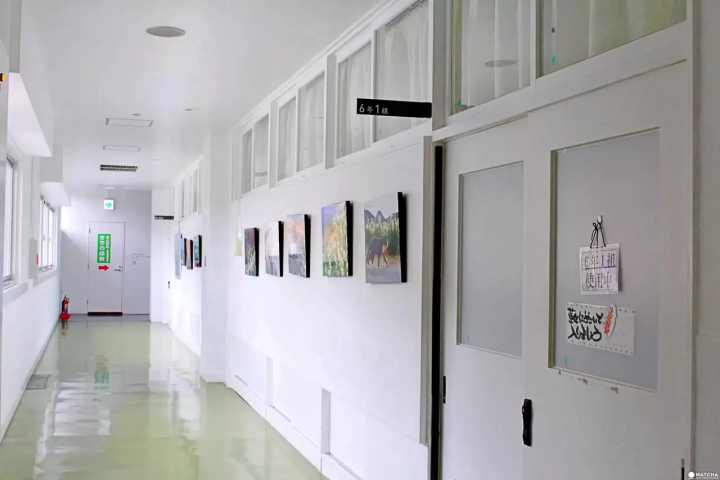
Renovation efforts began with a strict design philosophy: preserve the historical integrity of the school’s physical plant while modernizing its interior functionalities. The asphalt playground remained an expansive public plaza, while hallways retained their wooden wainscoting and institutional signage. Former administrative suites were converted into regional tourism nerve centers, and standard-issue classrooms were retrofitted to house dining establishments, artisanal boutiques, and overnight lodging quarters. The transformation effectively froze certain elements of mid-to-late 20th-century Japanese educational aesthetics in amber while injecting them with 21st-century economic viability.
2. SUPPORTING CONTEXT & METRICS: MAPPING THE FACILITY’S ECOSYSTEM
The sprawling campus is divided into distinct operational zones, each capitalizing on the institutional architecture to create a novel consumer experience.
Administrative Core: The Information Center
Upon entering the main building, visitors encounter the ground-floor information center, which occupies the former staff office. Here, regional tourism literature, maps of the Boso Peninsula, and localized transit guides are distributed. In a clever nod to the building’s origins, staff members function as "teachers," offering authoritative advice on local sightseeing and regional heritage.
Retail and Artisanal Hubs
Across the hall lies the Kyonan Department Store Kai, a curated emporium featuring goods produced by Chiba-based artisans. Unlike standard roadside station souvenir kiosks, Kai focuses on hyper-local, independent craftsmanship, offering hand-forged goods, pottery, and textiles rarely found in mainstream retail chains. Patrons can also purchase replica Japanese school cafeteria tray sets, translating institutional nostalgia into tangible consumer goods.
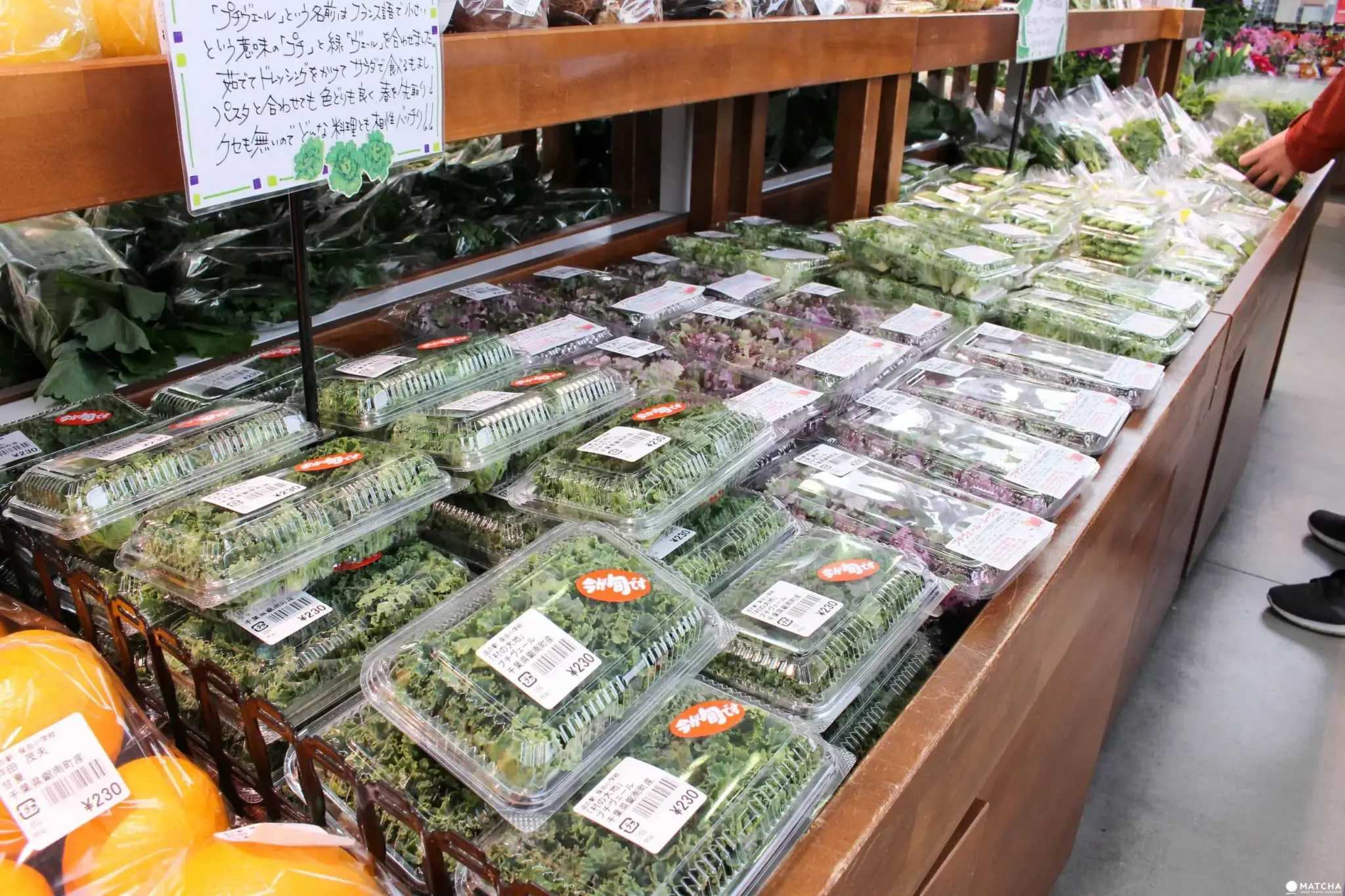
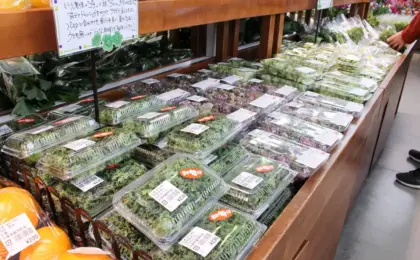
The former gymnasium has been repurposed into Kyonan Rakuichi, a high-volume farmers’ market. Local agriculturists utilize the expansive hardwood-floored space to display fresh fruits and vegetables harvested across Chiba Prefecture. Because produce moves directly from farm stalls to consumer baskets within hours of picking, the market undercuts traditional supermarket pricing while guaranteeing superior freshness.
Gastronomic Innovation: The Classroom Dining Experience
Dining at Hotada Elementary subverts conventional restaurant design. Several ground-floor classrooms have been converted into fully functioning culinary workshops and dining rooms serving semi-buffet Japanese meals, authentic Chinese cuisine, Italian trattoria fare, and artisanal cafe snacks.
Chalkboards that once bore mathematical equations now display rotating seasonal menus. Diners sit at scaled-down student desks, consuming meals while engaging with a deeply visceral sense of childhood nostalgia. Furthermore, the facility serves as a distribution point for iconic Japanese school lunch (kyushoku) specialties, including high-gluten noodles engineered to withstand thermal retention during classroom delivery, and P-miso—a savory-sweet condiment combining crunchy Chiba-grown peanuts with seasoned miso paste.
Lodging Infrastructure and Overnight Economics
One of Hotada Elementary’s most ambitious offerings is its overnight accommodation program, allowing guests to sleep within converted classrooms. The facility operates under a tiered pricing structure designed to accommodate families, couples, and group travelers:
Standard Rooms (2 to 4 guests): Adults: ¥4,000 | Elementary Students: ¥3,200 | Preschoolers (Ages 3–5): ¥2,000 | Children Under 3: Free.
Group Rooms (5 to 15 guests): Adults: ¥3,500 | Elementary Students: ¥2,700 | Preschoolers (Ages 3–5): ¥1,500 | Children Under 3: Free.
Optional Meal Plans (Reservations Required):
Breakfast: Adults/Elementary: ¥850 | Preschoolers: ¥350 (Rice, soup, side dishes) | Under 3: Free.
Bento Dinner: Adults/Elementary: ¥1,000 or ¥1,500 | Preschoolers: ¥1,000 (Kids bento) | Under 3: Not available.
Note: Accommodations require a minimum booking of two guests; single-occupancy reservations are unavailable.
While individual guest quarters lack private bathing facilities, guests have access to gender-separated public bathhouses located on campus. This communal bathing setup further reinforces the communal, ryokan-style dormitory experience.
3. OFFICIAL STATEMENTS & REGIONAL INTEGRATION
Municipal authorities and tourism boards have lauded the Roadside Station Hota Elementary School project as a benchmark for regional revitalization. In statements released by the Kyonan town administration, officials emphasize that the project was conceived not merely as a commercial enterprise, but as an institutional preservation effort.
"When Hotada Elementary closed its doors, it felt as though a piece of Kyonan’s soul had been extinguished," noted a representative from the regional tourism bureau. "By breathing new life into these hallways, we have honored the generations of students who studied here while building an economic engine that sustains our farmers, artisans, and hospitality workers. This is not just a commercial facility; it is a living archive of community memory."
The integration of the site extends beyond its physical boundaries into the surrounding natural landscape. The campus sits adjacent to the Hotada River, famously lined with Yoritomo cherry trees—an early-blooming variety botanically similar to the renowned Kawazu cherry blossom. Reaching peak efflorescence in early March, the riverbanks transform into a major agritourism destination, drawing travelers who combine a morning blossom-viewing stroll along the water with midday shopping and dining at the former schoolhouse.
4. FUTURE OUTLOOK: THE BLUEPRINT FOR RURAL RESILIENCE
As Japan confronts demographic projections anticipating a continuous decline in total population over the coming decades, thousands of public schools across the nation face the imminent threat of closure. The Ministry of Education, Culture, Sports, Science and Technology (MEXT) has increasingly encouraged local governments to evaluate adaptive reuse models for vacant public properties.
Roadside Station Hota Elementary School provides a replicable, scalable blueprint for this architectural pivot. By maintaining a delicate balance between commercial utility and emotional resonance, the facility proves that rural infrastructure can transcend its original mandate.
Future developments for the site include expanding the artisanal workshop programs to incorporate hands-on crafts instruction led by regional makers, enhancing digital infrastructure to attract remote workers seeking workation environments within historical classrooms, and deepening agricultural supply chain partnerships to increase the proportion of zero-kilometer produce sold within Kyonan Rakuichi.
For travelers navigating the Boso Peninsula, Roadside Station Hota Elementary School offers a rare intersection of past and present. It is a place where the chalk dust of yesterday meets the commercial ingenuity of tomorrow, ensuring that these hallowed halls continue to educate, nourish, and shelter visitors for generations to come.
Facility Quick Reference
Official Name: Roadside Station Hota Elementary School (Michi-no-Eki Hotasho)
Address: 724 Hota, Kyonan-cho, Awa-gun, Chiba 299-1902, Japan
Geographical Coordinates: 35.1434821° N, 139.843607° E
Core Offerings: Farmers’ market (Kyonan Rakuichi), artisanal department store (Kai), multi-cuisine dining, overnight classroom lodging, and public bathing facilities.





Belum ada komentar. Jadilah yang pertama berkomentar!