

Executive Overview
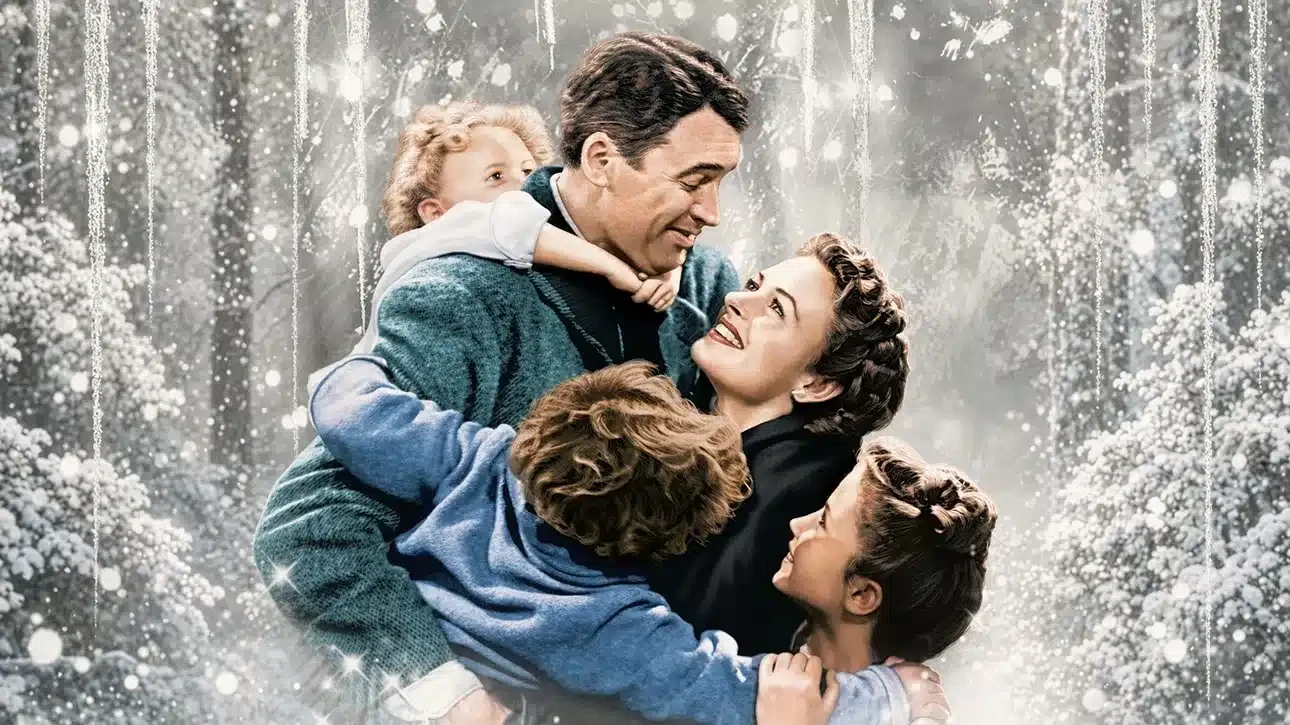
For generations of viewers worldwide, the holiday season is incomplete without the familiar, snow-dusted streets of Bedford Falls, the fictional New York town brought to visionary life by director Frank Capra in his 1946 masterpiece, It’s a Wonderful Life. Yet, beneath the comforting, ritualistic glow with which modern audiences view the film lies a complex, deeply melancholic, and surprisingly radical piece of American cinema.
A new critical evaluation of the film, Every Time a Bell Rings: The Legacy of It’s a Wonderful Life, America’s Most Beloved Holiday Film by authors Emily St. James and Lauren Theisen, peels back decades of sentimental varnish to examine the economic anxieties, post-war psychological trauma, and socio-political tensions that birthed the classic. Far from a simple fable of holiday cheer, the film acts as a profound reflection of a nation grappling with its identity in the shadow of global conflict and unbridled industrial capitalism.
This analysis explores the historical genesis of Philip Van Doren Stern’s foundational short story, the extensive screenwriting iterations by Hollywood heavyweights, the parallels between George Bailey’s sacrifices and the lived reality of America’s greatest generation—including veterans of the European theater—and the timeless relevance of a community standing up against the rapacious greed of the film’s antagonist, Henry S. Potter.
Detailed Chronology: From a Rejected Christmas Card to a Cinematic Cornerstone
The journey of It’s a Wonderful Life from an obscure holiday pamphlet to a permanent fixture of American culture is a testament to resilience, creative iteration, and happenstance.
1943: The Genesis of "The Greatest Gift"
The narrative originated as a short story titled "The Greatest Gift," written by Philip Van Doren Stern in 1943. After facing repeated rejections from mainstream publishers who failed to see its commercial viability, Stern took matters into his own hands. He self-printed the story as a 24-page pamphlet and mailed it to 200 friends and family members as a unique Christmas greeting card.
Hollywood Acquisition and Collaborative Rewrites
Fate intervened when a copy of Stern’s holiday card found its way into the hands of RKO Pictures, which purchased the film rights for producer-director Frank Capra’s newly formed Liberty Films. Recognizing the raw potential of a man granted a glimpse of a world without him, Capra, alongside a powerhouse roster of screenwriters including Dalton Trumbo, Clifford Odets, Michael Wilson, and Frances Goodrich and Albert Hackett, set to work transforming the prose into a cinematic script.
Significant narrative shifts occurred during this adaptation phase. In Stern’s original short story, the timeline where George Bailey is never born features a significantly darker trajectory for Mary Hatch (played on screen by Donna Reed): she is depicted as marrying a brutal, implicitly abusive man—a fate far bleaker than the spinster librarian timeline crafted for the film.
Furthermore, the character of Peter Bailey underwent a vital transformation. In the original text, Peter is still alive when the Guardian Angel, Clarence, intervenes, but has hardened into a bitter old man following the drowning of his son Harry (a death made possible because George was not there to pull him from the ice). In Capra’s film, Peter dies suddenly early in the narrative, forcing a young George to indefinitely shelve his dreams of global travel and higher education to assume control of the Bailey Brothers Building & Loan, while his brother Harry escapes to college and a prosperous future.
1946 Release and Critical Reception
When It’s a Wonderful Life premiered in December 1946, it was not the runaway commercial blockbuster history often assumes. While it garnered critical praise and earned five Academy Award nominations—including Best Picture, Best Director for Capra, and Best Actor for Jimmy Stewart—it underperformed at the box office, struggling to recoup its substantial production costs. It was not until decades later, following a clerical error in 1974 that allowed the film’s copyright to lapse into the public domain, that local television stations across the United States broadcast it continuously during the holidays, cementing its status as an unassailable cultural institution.
Supporting Context & Metrics: The Post-War Psyche and Socio-Economic Realities
To fully understand the weight of It’s a Wonderful Life, one must examine the socio-economic landscape of post-World War II America, a period marked by rapid industrial consolidation, shifting gender roles, and the invisible scars carried home by millions of returning servicemen.
The Veterans’ Return: Stewart, Capra, and the Lost Generation
Both director Frank Capra and star James Stewart put their Hollywood careers on hold to enlist in the United States Armed Forces during World War II. Capra produced the acclaimed Why We Fight propaganda series, while Stewart piloted B-24 bombers over Nazi-occupied Europe, rising to the rank of colonel and earning multiple decorations.
When both men returned to Hollywood, they were profoundly changed. Every Time a Bell Rings argues that the film serves as a psychological coda to Capra’s wartime documentaries. Having witnessed firsthand the unimaginable devastation of total war, Capra and Stewart struggled to reconcile the grand geopolitical justifications for the conflict with the intimate, often crushing sacrifices made by ordinary individuals.
This psychological reality was mirrored in households across the country. Countless veterans returned home carrying the weight of unexpressed trauma. For many, youthful ambitions—such as studying fine arts in New York, pursuing higher education, or embarking on international careers—were quietly surrendered to the immediate demands of familial survival and breadwinning in a rapidly shifting economic landscape.
The Economics of Bedford Falls vs. Pottersville
The antagonistic force in Bedford Falls is not merely a disagreeable old man, but an economic philosophy stripped of social responsibility. As St. James and Theisen observe, "Henry S. Potter is what happens when you remove the guardrails from America."
Potter represents the unrestrained corporate consolidation of the post-war era, where traditional, community-focused institutions like the Bailey Brothers Building & Loan—which granted mortgages based on character and human dignity rather than rigid credit scores—were targeted for hostile takeover by monopolistic capital.
- Housing Control: Potter controls working-class housing stock in "Potter’s Field," forcing families into substandard living conditions.
- Corporate Monopolization: Small independent businesses are swallowed or systematically starved out by larger conglomerates.
- Human Devaluation: When George Bailey protests Potter’s demand to pressure struggling families for mortgage payments, pointing out that "These people have children," Potter coldly replies, "They’re not my children."
This dynamic resonated powerfully with a nation emerging from the Great Depression and a global war, reminding citizens of the fragility of local autonomy against corporate centralism.
Official Statements and Critical Perspectives
The ongoing reappraisal of It’s a Wonderful Life has generated substantial commentary from cultural historians, literary critics, and filmmakers.
In their essay collection, authors Emily St. James and Lauren Theisen emphasize that the film’s enduring power relies on its meticulous attention to the humanity of every minor character in Bedford Falls. They write:
"Capra’s film puts care into sketching out every person on screen because they all matter just by virtue of their humanity… The movie really can’t exist without all the other lives that surround George Bailey. The whole point is that each person affects everyone they come into contact with."
This thematic core is reinforced by the cinematic framing of Mary Hatch Bailey, portrayed by Donna Reed. While modern viewers frequently categorize Mary as the archetypal, domestic post-war housewife, her actions throughout the narrative challenge that monolithic interpretation. During the catastrophic run on the bank, it is Mary who steps forward with her own honeymoon savings, neutralizing the crisis. Similarly, it is Mary who orchestrates the community-wide mobilization that ultimately saves George from financial and personal ruin.
Despite these moments of triumph, contemporary critics frequently point out the inherent ambiguity of the film’s resolution. The narrative structure reveals that for roughly two-thirds of its runtime, the film is not a Christmas story at all, but a gritty, often grim character study of an increasingly desperate man trapped by circumstance. As St. James and Theisen note, the movie is fundamentally "Christmas adjacent"—more akin to Die Hard than a traditional Charles Dickens adaptation—with the festive holiday cheer arriving only in its final act to offer a miraculous, yet temporally fragile, reprieve.
Future Outlook: The Ringing Bell in the 21st Century
As we look toward the future, the cultural footprint of It’s a Wonderful Life shows no signs of diminishing; rather, its thematic resonance continues to adapt to contemporary economic anxieties.
In an era defined by housing affordability crises, gig-economy precarity, and the digital consolidation of local commerce into massive multinational tech monopolies, the spectral threat of "Pottersville" feels more urgent than ever. Modern audiences increasingly recognize that the struggles faced by George Bailey—balancing personal aspirations against familial duty, fighting to keep a local institution alive against predatory financial entities, and questioning the tangible value of one’s contributions to society—are perennial human dilemmas.
The enduring legacy of Capra’s masterwork lies in its refusal to offer easy, systemic answers, instead focusing on the local, interpersonal safety nets forged by ordinary neighbors. When Clarence the angel reminds George that "Every man’s life touches so many others," he articulates an ethical framework that transcends 1940s Hollywood.
Eighty years after its initial release, the bell that rings at the end of It’s a Wonderful Life continues to sound across the decades—not merely as a nostalgic reminder of Christmases past, but as a persistent challenge to look out for one another in an increasingly complex and interconnected world.







Belum ada komentar. Jadilah yang pertama berkomentar!