As Apple continues to weave its hardware and software ecosystems into a tighter, more cohesive tapestry, dedicated software hubs have increasingly become the company’s preferred method for organizing user experiences. When iOS 26 debuted earlier this year, it introduced two major new system-level applications to the iPhone home screen, chief among them being Apple Games. Conceived as a centralized portal for all gaming activities across iPhones, iPads, and Macs, the Games app was designed to streamline how users discover, launch, track, and interact with their digital libraries.
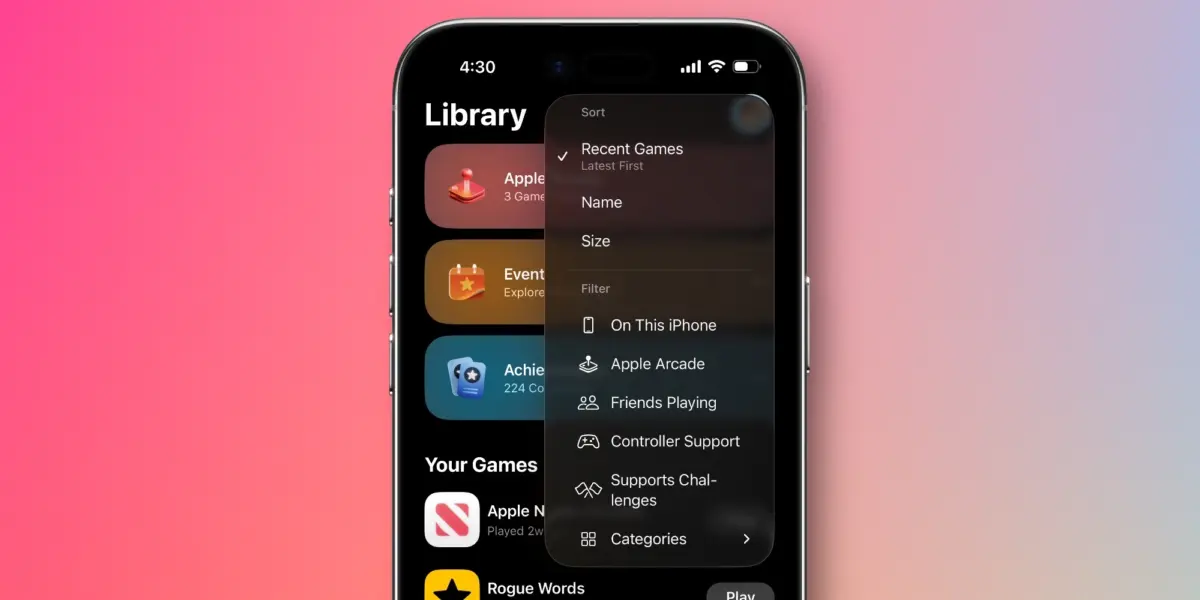
Now, as the software development cycle marches forward, Apple is preparing to release iOS 26.2 next month. Following the swift rollout of developer beta 1, Apple has officially deployed developer beta 2, offering a clearer picture of how the tech giant plans to refine its ecosystem. While the upcoming update does not introduce sweeping paradigm shifts or massive gameplay overhauls, it brings a trio of targeted, highly requested user-experience improvements to the Games app.
These updates—highlighted via a new introductory splash screen in beta 2—focus heavily on quality-of-life enhancements, filtering options, and organizational refinements. Although these tweaks may seem minor at first glance, they signal a broader, encouraging trend: Apple is actively listening to early adopter feedback and fine-tuning its native apps to ensure they genuinely serve the communities using them. This report breaks down the new features arriving in iOS 26.2, examines the strategic importance of the Apple Games app within the broader iOS ecosystem, and explores what these iterative updates mean for the future of mobile and cross-platform gaming on Apple devices.
Detailed Chronology: The Evolution of Apple Games
To understand the significance of the iOS 26.2 update, it is essential to trace the recent timeline of Apple’s unified gaming strategy. For years, gaming on iOS, iPadOS, and macOS existed in a somewhat fragmented state. While the App Store served as the primary marketplace, and Game Center managed achievements and multiplayer matchmaking behind the scenes, users lacked a dedicated, unified dashboard to manage their installed titles, track progress, and connect with friends across devices.
The Inception: iOS 26 and the Birth of Apple Games
The landscape shifted dramatically in September with the release of iOS 26. Alongside other system-wide revamps, Apple introduced two brand-new native apps directly to the iPhone home screen. The Apple Games app was instantly positioned as the central command center for modern digital entertainment on Apple hardware.
Designed to bridge the gap between traditional mobile gaming and AAA experiences available via Apple Arcade and the Mac App Store, the hub aimed to aggregate:
Installed game libraries across the user’s Apple ID ecosystem.
Social features, allowing gamers to see what friends are playing and compare achievements.
Curated editorial content, recommendations, and promotional events.
Direct access to Apple Arcade subscriptions and exclusive titles.
The Iterative Path: Transitioning to iOS 26.2
While the initial launch of the Games app provided a solid foundation, early adopters and power users quickly identified areas where the interface could be streamlined. Feedback poured into developer forums and feedback assistant channels, noting that as libraries grew, navigation could sometimes feel cluttered, and finding specific genres or sorting through extensive lists lacked granular control.
Apple moved quickly to address these friction points. In early November, timelines for the iOS 26.2 release window were solidified, pointing toward a public launch in December. Shortly after, Apple rolled out developer beta 1, quietly embedding foundational code for the app’s upcoming refinements.
Today marks the arrival of developer beta 2, which brings these subtle changes to the forefront. Most notably, beta 2 introduces a dedicated splash screen that explicitly showcases the new filtering and sorting capabilities baked into the app, confirming that Apple intends to make these improvements a core part of the iOS 26.2 marketing and user-onboarding narrative.
Supporting Context & Metrics: The Strategic Value of the Games App
To fully appreciate why Apple is investing engineering resources into refining a utility app like Apple Games, one must examine the company’s broader financial and strategic ambitions within the gaming sector.
The Shift Toward Services and Engagement
Over the past decade, Apple has steadily transformed from a pure hardware manufacturer into a massive services powerhouse. Services—encompassing iCloud, Apple Music, Apple TV+, Apple Pay, and Apple Arcade—represent one of the company’s most reliable and fastest-growing revenue streams.
Gaming sits at the intersection of hardware performance and services engagement. With the introduction of powerful Apple Silicon chips (ranging from the A-series in iPhones to the M-series in iPads and Macs), Apple devices possess raw graphical horsepower capable of running console-quality titles like Resident Evil, Death Stranding, and high-fidelity mobile masterpieces. However, powerful hardware alone does not guarantee a thriving gaming culture; users need a seamless software ecosystem to discover, organize, and engage with those titles.
The Apple Games app is the glue holding this hardware-software synergy together. By centralizing the gaming experience, Apple aims to:
Increase App Store Discovery: Help users find hidden gems and Apple Arcade exclusives that might otherwise get lost in the massive sea of traditional App Store listings.
Drive Retention and Re-engagement: Use social features, activity feeds, and quick-launch widgets to remind users to return to their favorite games.
Enhance Cross-Platform Continuity: Reinforce the value proposition of owning multiple Apple devices by seamlessly syncing gaming progress and library data between an iPhone, an iPad, and a Mac.
Quality-of-Life Improvements as Retention Drivers
The updates arriving in iOS 26.2 may not be flashy enough to lure brand-new users who have completely ignored the app thus far, but that is not their primary purpose. In product design, retention is often won or lost in the micro-interactions.
By introducing advanced filtering options, cleaner categorization, and more intuitive layout structures in iOS 26.2, Apple is removing daily friction for its core user base. When an app feels snappy, organized, and responsive to user preferences, players are far more likely to keep it on their primary home screen rather than relegating it to a distant app library folder.
Official Statements and Developer Insights
While Apple typically lets its software updates speak for themselves through release notes and developer documentation, the overarching philosophy behind the iOS 26.2 feature rollout has been communicated via updated App Store guidelines and beta documentation.
According to the official developer release notes accompanying the latest beta builds, the engineering teams have focused heavily on backend stability coupled with frontend usability. A spokesperson close to the iOS development cycle noted that user feedback collected during the initial weeks of iOS 26’s deployment served as the primary catalyst for the new filters seen in beta 2.
"Our goal with the Apple Games app has always been to create a frictionless, unified home for all play across our platforms," shared an internal software development brief. "Listening to our developer and early-adopter community allows us to refine the utility of the hub, ensuring that as libraries expand, finding and enjoying your favorite titles remains effortless."
Independent developers and beta testers have also weighed in enthusiastically across community platforms like Reddit and X (formerly Twitter). Early testers have praised the new filtering tools for making massive libraries manageable, particularly for users who bounce frequently between casual puzzle games on their iPhones and high-end immersive titles on their iPads or Macs.
Future Outlook: What Lies Ahead for Apple Gaming
As we look past the imminent release of iOS 26.2 next month, the trajectory of the Apple Games app points toward an increasingly central role in the ecosystem. Several key areas will define the app’s evolution over the coming software cycles:
1. Deeper Social and Multiplayer Integration
As Apple continues to refine Game Center protocols and leverage its ecosystem’s tight integration, future iterations of the Games app are widely expected to introduce richer social features. This could include cross-platform voice chat integration, more robust activity sharing, and streamlined tournament matchmaking directly from the hub.
2. Expansion of Cross-Platform Cloud Syncing
With unified hardware architectures spanning mobile and desktop chips, the boundary between mobile gaming and traditional desktop gaming continues to blur. Enhancing how the Games app handles save states, cloud progression, and cross-device ownership will be vital as more developers bring AAA titles to the ecosystem.
3. Continuous Iteration Based on Feedback
The rapid turnaround from bug report to beta implementation seen in iOS 26.2 demonstrates a healthy development pipeline. If Apple maintains this responsive cadence, the Games app is poised to evolve from a basic utility drawer into an indispensable command center for every gamer operating within the Apple ecosystem.
Community Discussion and Reader Engagement
The introduction of iOS 26.2 beta 2 and its subsequent feature highlights brings us back to the ultimate arbiters of the software: the users.
Have you been actively utilizing the Apple Games app since its debut in iOS 26, or has it sat quietly on your home screen? How do you manage your digital gaming library across your Apple devices? More importantly, do any of the new filtering and quality-of-life changes arriving in iOS 26.2 excite you, or are there other features you are hoping Apple will implement in future updates?
We invite you to share your thoughts, experiences, and wishlist items in the comments section below as we count down to the official public release of iOS 26.2 next month.














Belum ada komentar. Jadilah yang pertama berkomentar!