

Executive Overview
Apple is preparing to make its most aggressive and unified push into the smart home ecosystem to date. According to recent reports from industry insiders, the Cupertino-based tech giant is slated to officially unveil an entirely new hardware category on Tuesday: a Siri-powered smart home hub tentatively named the HomeView.
For years, Apple’s footprint in the connected home sector has been somewhat fragmented. While software frameworks like HomeKit and hardware products like the HomePod and Apple TV have carved out loyal niches, they have largely failed to dominate a market heavily saturated by Amazon’s Echo ecosystem and Google’s Nest lineup. The HomeView is designed to fundamentally change that dynamic. Driven by Apple’s high-performance A18 chip and deeply integrated with advanced machine learning capabilities, the new hub represents a holistic command center for residential automation.
The unveiling will not stop at a single product. Alongside the debut of the HomeView, Apple is expected to refresh cornerstone legacy hardware, including updated iterations of the Apple TV set-top box and the compact HomePod mini. Furthermore, reports indicate that Apple has forged a strategic partnership with electronics giant LG to launch a suite of branded smart home accessories—including smart locks, thermostats, and smart doorbells.
This comprehensive rollout signals a pivotal shift in Apple’s hardware strategy. By bringing physical control interfaces, advanced voice interaction through Siri, and proprietary smart home infrastructure under one unified umbrella, Apple is positioning itself to capture a much larger share of the modern connected household.
Detailed Chronology: From Rumors to Reality
The journey toward Apple’s upcoming smart home hardware reveal has been a protracted one, marked by developmental hurdles, shifting priorities, and repeated strategic recalibrations.
The Early Rumors and Architectural Shifts (2023–2024)
Speculation that Apple was engineering a dedicated home hardware device with a built-in display first began circulating in earnest several years ago. Industry analysts noted that while Apple’s software engineering teams were steadily refining the HomeKit architecture, the lack of a dedicated physical display placed the company at a competitive disadvantage against rivals like Amazon and Meta, whose smart displays had already established a firm foothold in kitchens and living rooms across the globe.
Initial prototypes reportedly suffered from identity crises: were they meant to be repurposed iPads mounted on walls, or standalone entertainment and control consoles? As Apple refined its hardware roadmap, the engineering teams decided on a dedicated operating system framework tailored specifically for ambient home use—a hybrid between iOS, tvOS, and specialized spatial computing interface elements.
Siri Challenges and Delays (2025)
By early 2025, anticipation for an imminent product launch reached a fever pitch. However, structural challenges behind the scenes forced a delay. Industry reports highlighted that Apple’s engineering division—specifically the teams tasked with advancing Siri—was struggling to meet the performance and responsiveness thresholds required for a device intended to act as the beating heart of a smart home.
The integration of complex, generative AI capabilities and localized processing models meant that Siri needed a hardware engine powerful enough to run sophisticated tasks directly on the device, ensuring user privacy and low latency. These delays pushed the product’s internal release timeline into late 2026, giving Apple the necessary window to integrate its latest generation silicon into the chassis.
The Silicon Breakthrough and Naming (Mid–Late 2026)
The breakthrough arrived when Apple decided to power the device with the A18 chip—the same high-efficiency, high-performance silicon architecture designed to handle advanced, on-device artificial intelligence workloads. With the processing power puzzle solved, the product solidified its internal codename and consumer-facing identity: the HomeView.
As leaks intensified in the fall of 2026, Bloomberg’s Mark Gurman reported that Apple had locked in a Tuesday announcement date, with retail availability slated for mid-November. This timing places the HomeView squarely in front of consumers ahead of the critical year-end holiday shopping season, setting up a high-stakes showdown in the consumer electronics marketplace.
Supporting Context & Metrics: The Smart Home Landscape in 2026
To understand the strategic importance of the HomeView, one must examine the current state of the smart home market and Apple’s historical positioning within it.
Market Dynamics and Competitor Footprints
For the better part of a decade, the smart home market has been a two-horse race between Amazon and Google. Amazon’s Echo Show series and Google’s Nest Hub displays became ubiquitous fixtures in modern households, serving not just as music players or video screens, but as the central nervous systems for connected lighting, security cameras, and climate control systems.
Apple, meanwhile, took a decidedly different route. Through HomeKit (and its modern evolution, Apple Home), the company prioritized user privacy, end-to-end encryption, and stringent security protocols. While consumers and privacy advocates applauded these measures, they often came with a trade-off: higher hardware certification costs for manufacturers, a narrower selection of compatible accessories compared to rival platforms, and a glaring absence of an Apple-branded screen to manage it all.

The Hardware Strategy: Two Form Factors
According to supply chain leaks and insider reports, Apple is addressing the diversity of home layouts by launching the HomeView in two distinct models:
- The Countertop Edition: Designed with an integrated, weighted stand, this model is built for mobility around the house, easily sitting on kitchen islands, bedside tables, or office desks. It functions as an ambient information display, digital photo frame, and quick-access control panel.
- The Wall-Mountable Edition: Engineered for permanent installation, this variant is designed to replace traditional light switches, intercom systems, or thermostat panels on household walls. It acts as a fixed architectural command center for the entire home.
Both versions will leverage the processing muscle of the A18 chip to run complex local computations, ensuring that voice commands processed via Siri happen almost instantaneously without always needing to ping remote cloud servers—a massive win for both speed and data privacy.
Expanding the Ecosystem: The LG Partnership and Peripheral Hardware
A smart display is only as powerful as the devices it controls. Recognizing this, Apple has reportedly forged a strategic partnership with South Korean electronics giant LG to manufacture a curated lineup of branded smart home accessories.
Set to be announced alongside the HomeView, this hardware suite will include:
- A Smart Lock: Featuring secure biometric and device-based authentication integrated directly into Apple Wallet.
- A Smart Thermostat: Utilizing advanced machine learning routines to optimize home energy consumption.
- A Smart Doorbell: Offering high-definition video feeds, spatial audio communication, and advanced person-recognition algorithms processed securely via HomeKit Secure Video.
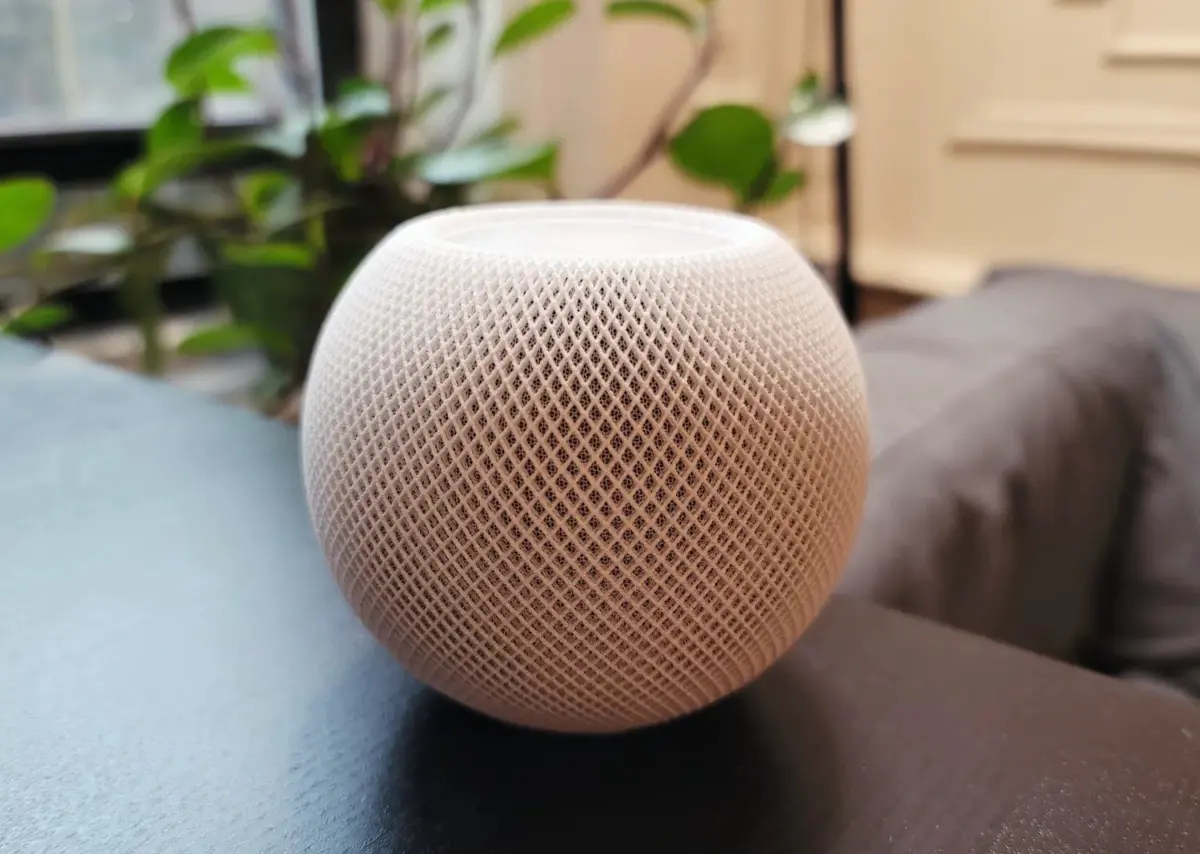
In addition to these LG-partnered devices, Tuesday’s event will see the debut of refreshed legacy hardware: an updated Apple TV set-top box equipped with faster processing capabilities to handle advanced media streaming and casual gaming, and a new generation of the HomePod mini, offering improved acoustic fidelity and tighter spatial awareness via Apple’s ultra-wideband chips.
Official Statements and Industry Analysis
While Apple has maintained its traditional pre-announcement silence, leaks and deep-dive analyses from top-tier tech journalists have provided a clear picture of the corporate philosophy driving this new hardware push.
Market analysts view the HomeView as a long-overdue correction in Apple’s hardware strategy. “Apple has spent years attempting to win the living room through audio devices and streaming boxes,” noted one prominent tech industry researcher. “The HomePod was an audiophile triumph, but a commercial niche. The Apple TV is beloved, but it lacks ambient utility. The HomeView is the missing link—it bridges the gap between personal computing and ambient home automation.”
Furthermore, the decision to embed the A18 chip signals a clear message regarding Apple’s stance on artificial intelligence in the home. By refusing to rely entirely on cloud-based processing for everyday smart home routines, Apple is doubling down on its core brand differentiator: privacy. Users can manage security systems, lock doors, and view camera feeds knowing that sensitive data processing is occurring locally on the device’s silicon.
Future Outlook: What the HomeView Means for Consumers and the Industry
The launch of the HomeView and its accompanying ecosystem expansion will reverberate across the consumer electronics industry for years to come.
For the Consumer
For households already entrenched in the Apple ecosystem—utilizing iPhones, iPads, Macs, and Apple Watches—the HomeView promises a frictionless extension of their digital lives. Imagine walking into the kitchen, having Siri recognize your voice, and instantly seeing your personalized morning briefing, calendar appointments, and home security status displayed seamlessly on a gorgeous, high-resolution screen.
For smart home enthusiasts, the introduction of standardized, Apple-certified hardware (via the LG partnership and third-party manufacturers adopting the Matter standard) will make building and managing a secure, responsive connected home easier than ever before.
For Competitors
Amazon and Google now face a formidable new challenger. While both companies maintain a massive installed base of smart displays, Apple’s unrivaled brand loyalty, premium hardware design aesthetic, and industry-leading stance on data privacy give it a unique advantage among affluent consumers. If the HomeView succeeds in capturing market share, it could force competitors to re-evaluate their own privacy frameworks and hardware pricing strategies.
The Road Ahead
Tuesday’s announcement will mark the official starting gun for Apple’s new era in smart home technology. As pre-orders go live and the first wave of devices reaches consumer doorsteps in mid-November, the tech world will be watching closely to see if the HomeView can successfully transform the way we interact with our living spaces. If Apple’s historical track record of redefining mature hardware categories is any indication, the connected home is about to get a major upgrade.









Belum ada komentar. Jadilah yang pertama berkomentar!