

Executive Overview
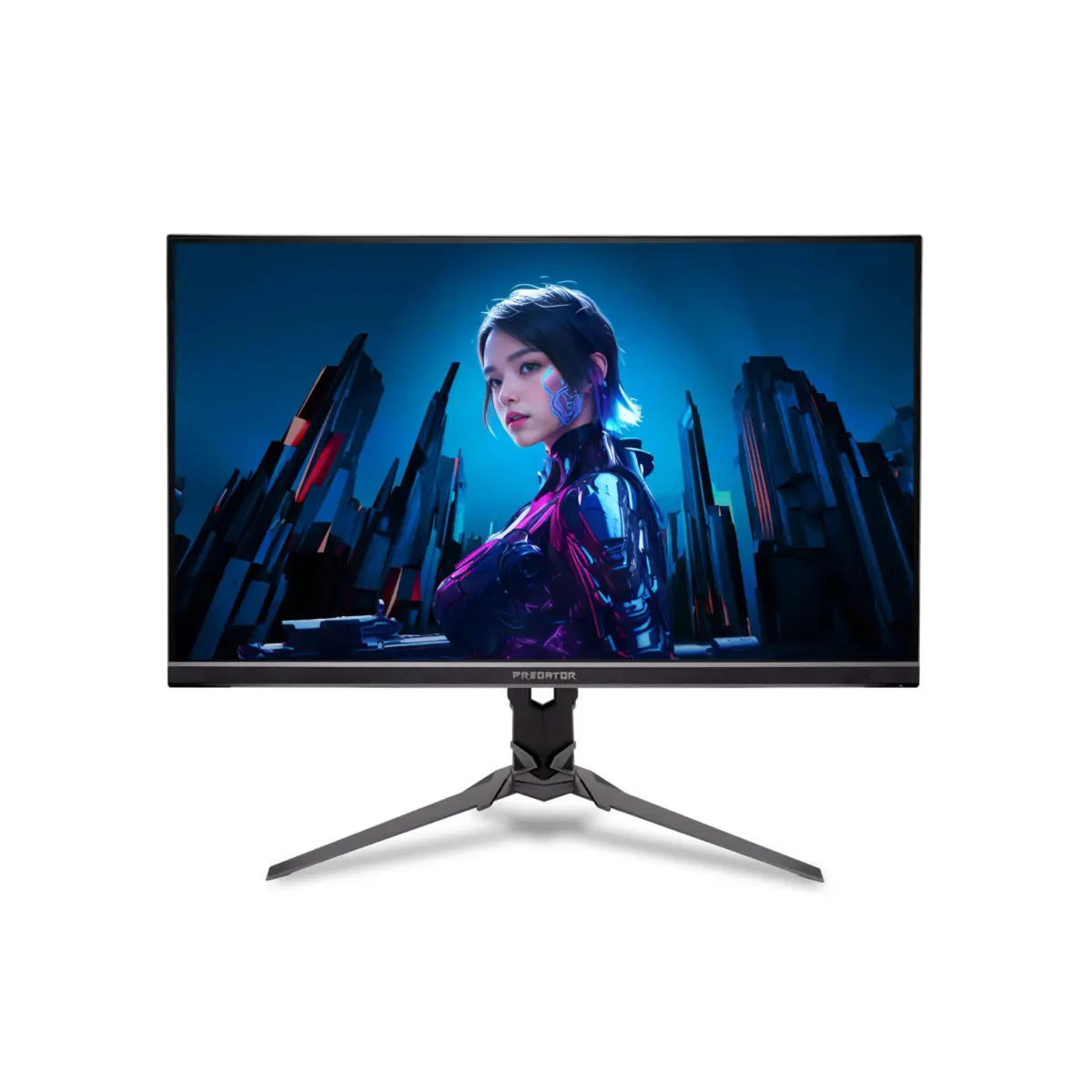
The consumer technology landscape has reached a monumental milestone in visual display engineering. At IFA 2026, Acer dramatically redefined the boundaries of competitive gaming hardware by pulling back the curtain on the Predator XB253Q U1—the world’s first commercially announced gaming monitor to break the four-digit refresh rate barrier, operating at a staggering, unprecedented 1000Hz.
While consumer displays have spent the past several years inching upward through the 240Hz, 360Hz, and 500Hz thresholds, Acer’s leap to 1,000 frames per second represents a quantum shift in engineering philosophy. Designed explicitly for elite esports athletes and hardcore competitive gamers who prioritize instantaneous motion clarity and near-zero latency above absolute pixel density, the Predator XB253Q U1 is poised to rewrite the rulebook on human-machine interaction in fast-twitch digital battlegrounds.
However, the headline-grabbing 1000Hz panel was merely the crown jewel in a much broader, highly aggressive hardware offensive. Alongside the Predator flagship, Acer unveiled a sweeping ecosystem of next-generation displays spanning the Predator, Nitro, and ProDesigner portfolios. Utilizing cutting-edge panel technologies—including QD-OLED Penta Tandem architecture, high-density Mini LED backlighting with thousands of local dimming zones, and sophisticated Dynamic Frequency and Resolution (DFR) switching modes—Acer is aggressively targeting every tier of the market, from professional colorists and creative directors to immersive single-player enthusiasts and multi-genre competitors.
As the industry prepares for the commercial rollout of these displays heading into 2027, this sweeping hardware refresh signals a definitive maturation of display tech, where compromises between resolution, color fidelity, and refresh rates are increasingly mitigated by intelligent multi-mode engineering.
Detailed Chronology of the IFA 2026 Showcase
The unveiling of Acer’s massive display lineup at IFA 2026 was orchestrated as a masterclass in technological escalation, moving step-by-step from ultra-fast esports innovations to ultra-dense creative workhorses.
The Esports Vanguard: The 1000Hz Milestone
The centerpiece of Acer’s press event was undoubtedly the introduction of the 24.5-inch Predator XB253Q U1. For years, display scientists and panel manufacturers debated whether the human eye could perceive the difference between refresh rates exceeding 500Hz. Acer answered this query definitively by pushing Full HD (1920 x 1080) resolution hardware into the four-digit realm.
To achieve a stable 1000Hz signal delivery without catastrophic ghosting, smearing, or color degradation, Acer integrated its proprietary Visual Response Boost Pro (VRB Pro) technology. This advanced strobing and pixel-overdrive system ensures that motion artifacts are practically eradicated, giving competitive players an unobstructed view of fast-moving targets. Furthermore, recognizing the physical strain associated with marathon gaming sessions, Acer equipped the monitor with a specialized Circular Polarizer technology, which curtails harsh ambient glare and lowers optical fatigue. Complementing this hardware is native support for both AMD FreeSync Premium and NVIDIA G-SYNC Compatible synchronization standards, ensuring frame delivery remains tear-free even under severe system load.
The Visual Perfectionist: Predator X32 V3 QD-OLED
Shifting away from pure speed toward absolute visual fidelity, Acer introduced the 31.5-inch Predator X32 V3. Targeting enthusiasts who refuse to compromise on contrast and color accuracy, this monitor utilizes a state-of-the-art QD-OLED Penta Tandem panel.
Operating at a crisp 4K resolution with a robust 180Hz refresh rate, the X32 V3 bridges the gap between high-resolution immersion and fluid motion. Acer’s factory calibration guarantees a Delta E color accuracy score of less than 1, accompanied by a phenomenal 99 percent coverage of the wide DCI-P3 color gamut. Backed by VESA DisplayHDR True Black 400 certification, the panel delivers true, emissive blacks and infinite contrast ratios, making it equally viable for cinematic single-player gaming and high-end media consumption.
The Versatile Hybrid: Predator XB273K V7 DFR
Recognizing that many gamers split their time between sprawling open-world RPGs and high-octane competitive shooters, Acer developed the 27-inch Predator XB273K V7. Powered by Dynamic Frequency and Resolution (DFR) technology, this monitor eliminates the need for users to choose between high resolution and high frame rates.
The panel can dynamically switch on-the-fly between a gorgeous 4K resolution at 160Hz for visual grandeur and a lightning-fast Full HD resolution at up to 500Hz for competitive advantage. This dual-mode flexibility represents a major leap in display utility, providing two distinct monitors in a single physical chassis.
The Nitro and ProDesigner Expansions
Acer’s announcements extended deep into its mainstream Nitro family and professional ProDesigner segment:
- Nitro XV275X P: A powerhouse 5K monitor featuring an ultra-dense 2,304-zone Mini LED backlight, VESA HDR1400 certification, and DFR capabilities allowing a shift from 5K at 165Hz to QHD at 330Hz.
- Nitro XV275U Z2 & XV270U Z3: Dual-mode champions offering triple refresh-rate configurations, maxing out at an exceptional 520Hz at HD resolution.
- XZ340CKR P: A sprawling 34-inch curved ultrawide display capable of seamlessly transitioning from 5120 x 2160 at 180Hz down to an ultra-smooth WFHD at 360Hz.
- ProDesigner PE270X P: Tailored specifically for professional content creators, combining 5K resolution, a 2,304-zone Mini LED backlight, HDR1400, and factory-calibrated Delta E < 1 color accuracy.
Supporting Context & Metrics
To fully appreciate the magnitude of Acer’s 2026 display portfolio, one must examine the underlying hardware metrics and the historical trajectory of display evolution over the past decade.
Understanding the 1000Hz Paradigm
In traditional display pipelines, a 60Hz monitor refreshes the image every 16.67 milliseconds. A 144Hz panel drops that window to 6.94ms, while a 360Hz screen shrinks frame times down to 2.78ms. At 1000Hz, the time interval between frames collapses to a minuscule 1.0 millisecond.
| Metric / Specification | Predator XB253Q U1 (Flagship) | Predator X32 V3 | Nitro XV275X P |
|---|---|---|---|
| Panel Size & Type | 24.5-inch Standard | 31.5-inch QD-OLED Penta Tandem | 27-inch Mini LED |
| Native Resolution | Full HD (1920 x 1080) | 4K UHD (3840 x 2160) | 5K / DFR (QHD 330Hz) |
| Peak Refresh Rate | 1000Hz | 180Hz | 165Hz (5K) / 330Hz (QHD) |
| HDR Certification | VESA DisplayHDR 400 | VESA DisplayHDR True Black 400 | VESA HDR1400 |
| Color Accuracy | Standard Esports Profile | Delta E < 1 (99% DCI-P3) | Delta E < 1 (ProCreator grade) |
| Adaptive Sync | FreeSync & G-SYNC Compatible | Native VRR Support | Advanced Adaptive Sync |
While human reaction times typically sit around 150ms to 250ms under optimal conditions, perceptual studies conducted within esports laboratories indicate that elite gamers can detect subtle differences in input latency and visual tracking fluidity well beyond traditional refresh boundaries. At 1000Hz, motion blur caused by sample-and-hold display limitations is virtually eliminated, allowing players to track moving targets across chaotic battlefields with unprecedented spatial accuracy.
The Engineering Hurdles of Mini LED and QD-OLED
Acer’s deployment of 2,304-zone Mini LED backlighting in models like the Nitro XV275X P and ProDesigner PE270X P highlights the industry’s aggressive push to rival OLED contrast levels using traditional LCD architectures. By shrinking backlight diodes and applying localized dimming matrices containing over two thousand zones, these monitors achieve blinding peak brightness levels (HDR1400) while mitigating blooming effects.
Conversely, the adoption of QD-OLED Penta Tandem technology in the Predator X32 V3 addresses historical longevity and brightness concerns associated with organic light-emitting diodes, ensuring vibrant saturation and deep black levels without sacrificing long-term panel durability.
Official Statements and Industry Impact
Industry analysts present at IFA 2026 immediately recognized Acer’s announcements as a watershed moment for the PC hardware ecosystem. While specific executives refrained from detailing internal sales projections during the initial briefings, statements issued by Acer’s product development divisions emphasized a core philosophy: uncompromising specialization.
"The era of the one-size-fits-all monitor is officially over," noted a senior product strategist during the Acer hardware briefing. "Modern digital consumers range from competitive athletes requiring microsecond response times to cinematic creators demanding absolute color fidelity. With the Predator XB253Q U1, we have proven that physical limitations are simply engineering challenges waiting to be solved. We are not just raising the ceiling; we are building an entirely new floor for what players can expect from their visual hardware."
Independent hardware reviewers and esports organizations have also chimed in, praising the practical inclusion of Dynamic Frequency and Resolution (DFR) technology. For years, gamers faced a binary choice: purchase a high-resolution panel hampered by low refresh rates, or buy a high-speed, low-resolution screen unsuitable for productivity or cinematic immersion. By perfecting dual-mode DFR switching—allowing users to pivot between 5K/165Hz and QHD/330Hz, or 4K/160Hz and FHD/500Hz—Acer has effectively solved the hardware dilemma for enthusiast PC builders.
Future Outlook: Looking Toward 2027 and Beyond
As the dust settles on IFA 2026, the immediate focus shifts to the commercial realization of these ambitious products.
The crown jewel of the lineup, the Predator XB253Q U1, is scheduled to hit retail shelves in Q1 2027, carrying a recommended starting price of US$1,099 in North America and €1,099 in the EMEA region. While regional rollouts—including precise availability and pricing for markets across Southeast Asia—remain unannounced at press time, local distribution networks are expected to clarify launch timelines closer to the Q1 window.
What Lies Ahead for Display Technology?
The arrival of 1000Hz displays opens up fascinating questions regarding the future of PC graphics processing. Driving a 1000Hz monitor at native Full HD resolution requires GPU architectures capable of outputting astronomical frame rates. While titles like Counter-Strike 2, Valorant, and Overwatch 2 can reach ultra-high frame rates on top-tier esports rigs equipped with next-generation graphics cards, mainstream adoption of 1000Hz hardware will undoubtedly accelerate the development of advanced frame generation and upscaling algorithms.
Furthermore, as manufacturing yields improve for high-density Mini LED and multi-layer QD-OLED panels, features currently reserved for flagship tiers—such as DFR dual-mode switching and 2,000+ zone local dimming—will likely trickle down into more affordable mid-range segments.
Acer’s bold showing at IFA 2026 has irrevocably altered the competitive landscape. By daring to cross the four-digit threshold and simultaneously refining the boundaries of resolution, color accuracy, and adaptive performance, Acer has set a towering benchmark for the display industry. The race to the ultimate visual experience is no longer a distant theoretical exercise—it is happening right now, and the future of gaming looks clearer, faster, and more brilliant than ever before.









Belum ada komentar. Jadilah yang pertama berkomentar!