The enduring cultural footprint of Rumiko Takahashi’s legendary manga and anime catalog continues to expand, driven most recently by the runaway success of the modern Ranma ½ television anime adaptation. Capturing the hearts of a new generation of viewers while striking a powerful chord of nostalgia among veteran otaku who grew up on the late-1980s and early-1990s broadcast, the series has cemented its place in contemporary pop culture. While fans eagerly await the scheduled October premiere of Season 3—maintaining a steady seasonal cadence that follows Season 1 in the fall of 2024 and Season 2 in 2025—the commercial merchandise ecosystem surrounding the franchise is booming.
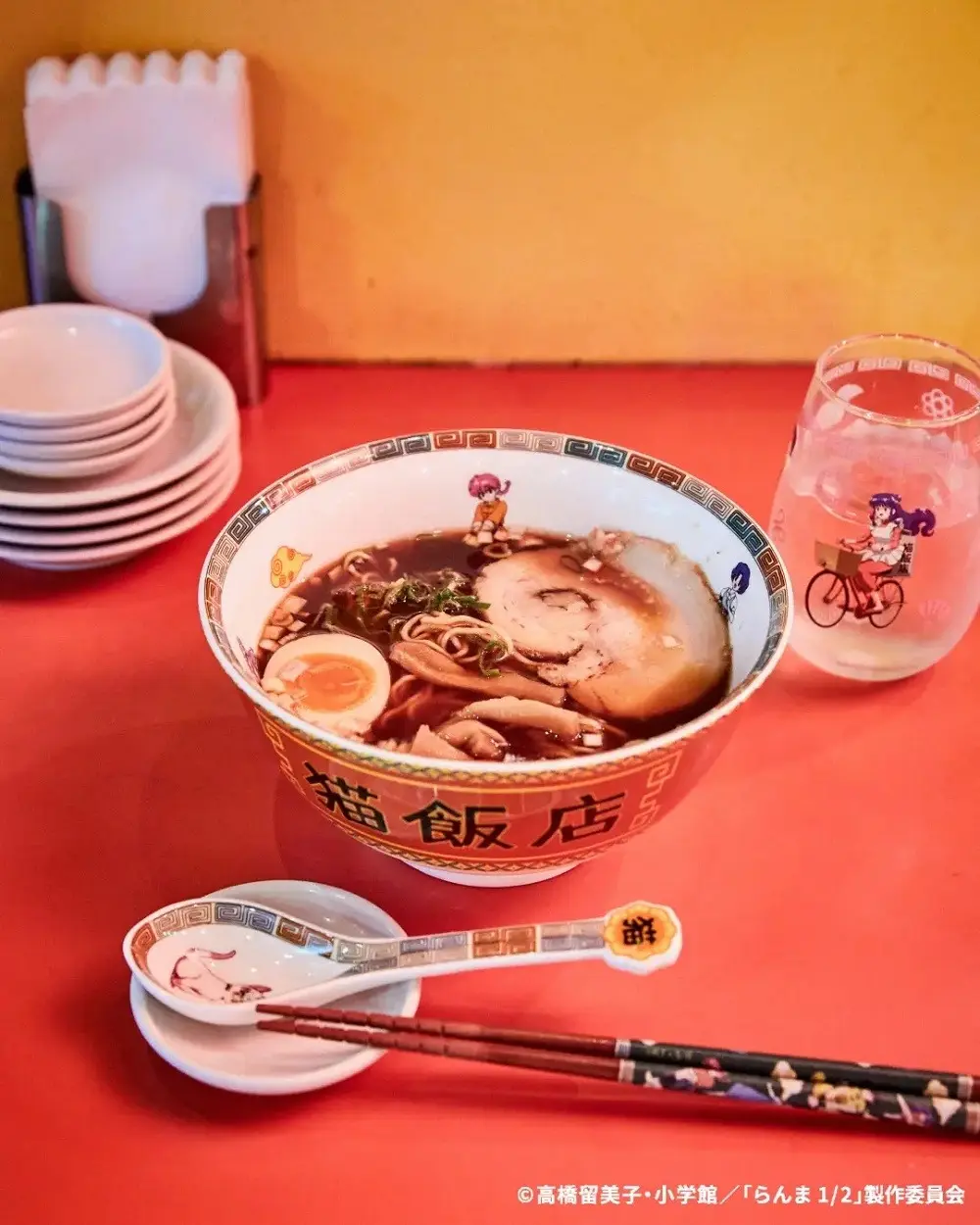
Capitalizing on this momentum, prominent Japanese lifestyle, apparel, and home-goods brand Studio Clip has launched an officially licensed merchandise line that deftly bridges the gap between everyday utility and unbridled fandom. Centered primarily on the iconic aesthetics of the in-universe Cat Café (Nekohanten)—the bustling Chinese restaurant operated by the grandmother of fan-favorite character Shampoo—the collection introduces a clever array of stoneware, kitchenware, and carrying goods. Ranging from microwave-safe ramen bowls bearing classic illustrations to whimsical, character-inspired accessories like a P-chan oven mitt and a metallic delivery-box insulated bag, the lineup is designed for cooking, carrying, and, above all, admiring. Released on September 18 across Studio Clip’s physical brick-and-mortar storefronts and its official online domain, the collection represents a masterclass in modern anime merchandising, marrying high-utility design with deep-cut narrative references.
Detailed Chronology: The Revival and Merchandising Pipeline
To understand the significance of Studio Clip’s new lifestyle collection, one must examine the carefully orchestrated timeline that brought Ranma ½ back to the forefront of global entertainment.
The Rebirth of a Martial Arts Classic
Rumiko Takahashi’s original Ranma ½ manga serialized in Shogakukan’s Weekly Shōnen Sunday from 1987 to 1996, creating a blueprint for romantic-comedy battle shonen that influenced decades of subsequent creators. The classic anime adaptation by Studio Deen, which ran from 1989 to 1992, remains a cherished touchstone of early anime fandom overseas and domestically in Japan.
However, the landscape of anime production underwent a seismic shift in the decades that followed, characterized by seasonal models, higher production values, and faithful, source-accurate adaptations. In response, a brand-new contemporary Ranma ½ anime adaptation was greenlit, designed to introduce the cursed martial artist Ranma Saotome—who transforms into a girl when splashed with cold water and reverts to a boy with hot water—to modern audiences.
Fall 2024: Season 1 of the Ranma ½ remake premieres, immediately capturing critical acclaim and viral social media traction. The updated animation style, combined with the timeless humor of Takahashi’s writing, successfully bridges a generational divide between original fans and Gen-Z viewers.
Fall 2025: Season 2 airs, maintaining the high viewer retention and solidifying the series as a permanent fixture of contemporary anime programming blocks.
October 2026: Season 3 is officially slated to begin broadcasting, keeping the production cadence tight and preventing the prolonged narrative gaps that often plague seasonal anime.
The Studio Clip Collaboration Timeline
Recognizing the multi-demographic appeal of the franchise, Studio Clip initiated development on a cross-category lifestyle collection. By focusing on home goods and practical accessories rather than traditional collector figures or standard acrylic stands, the brand carved out a distinct niche for itself in the crowded anime merchandise market.
Early September 2026: Promotional materials, press releases via PR Times, and product catalogs are unveiled, detailing the extensive collaboration between Studio Clip and the Ranma ½ production committee.
September 18, 2026: The official launch date. The entire product lineup drops simultaneously across Studio Clip’s nationwide retail network in Japan and through their digital e-commerce platform via the Dot-St shopping portal, triggering immediate demand and swift online inventory turnover.
Supporting Context & Metrics: Breaking Down the Collection
The Studio Clip collection stands apart through its thoughtful material selection, clever narrative tie-ins, and accessible price points. Rather than relying on simple logo-slapping, the design team integrated deep-lore elements that will instantly resonate with dedicated fans.
Kitchenware and the Nekohanten Aesthetic
The emotional core of the collection draws inspiration from the Nekohanten, serving as a visual love letter to Shampoo’s culinary domain.
Stoneware Ramen Bowls and Spoons: Crafted for durability and daily culinary use, these ceramic bowls feature charming illustrations of core characters. Crucially for modern consumers, the bowls are certified microwave- and dishwasher-safe, ensuring they are not merely decorative art pieces confined to a glass display cabinet.
The Cat-Motif Ceramic Spoons: Accompanying the ramen bowls are matching ceramic spoons. A delightful micro-detail is incorporated at the very tip of the handle: the embossed kanji character for "cat" (neko), nodding both to the restaurant’s theme and Shampoo’s cursed transformation into a felines-fearing cat form when splashed with cold water.
Two-Tiered Bamboo Steamer: A standout functional piece for Asian cuisine enthusiasts. Beyond its primary purpose for steaming dumplings or buns, its aesthetic charm makes it an innovative, rustic desktop organizer for small household items, trinkets, or stationery.
Ceramic Tea Service & Glass Tea-Strainer Mug: Catering to quieter, more traditional moments of domestic relaxation, the collection includes a dedicated tea set and a contemporary glass mug equipped with an integrated tea strainer, adorned with subtle franchise motifs.
Carrying Goods, Storage, and Novelty Accessories
Practicality meets whimsy in the accessory segment of the lineup, featuring clever designs that reference iconic elements of Takahashi’s lore.
Insulated Delivery Box Bag: Perhaps the most ingenious design in the entire catalog, this thermal lunch/shopping bag is meticulously modeled after the metallic delivery boxes used by the Cat Café for its chaotic neighborhood ramen deliveries.
P-chan Oven Mitt: Ryoga Hibiki’s adorable, perpetually lost alter-ego—the black-marked little black pig P-chan—is immortalized as an oversized kitchen oven mitt. The design turns a routine kitchen safety tool into an interactive cosplay-adjacent experience for home cooks.
Eco-Shopping Bags & Plushie Pouches: Lightweight folding eco-bags designed for sustainable daily errands. One standout iteration folds away entirely inside a plush figurine of female Ranma. When not deployed as a grocery carrier, the plushie doubles as a stylish bag-strap charm or keychain.
Embroidered Cotton and Satin Totes: Premium everyday bags featuring tasteful, minimalist embroidery that allows fans to display their affinity for the series in professional or casual public settings without drawing excessive, garish attention.
Financial Metrics and Accessibility
Pricing strategy plays a critical role in the success of anime lifestyle collaborations. Studio Clip positioned its items within mainstream consumer budgets:
Entry-to-Mid Range Items (Stoneware, Mugs, Small Accessories): Priced predominantly between 2,000 and 3,000 Japanese Yen, making them accessible impulse purchases for casual shoppers and students.
Premium Items (Eco-Bag with Plushie Combo): Capped at the collection’s highest price point of 4,400 yen (approximately US$28), reflecting the dual-manufacturing cost of producing both a functional textile bag and a high-grade plush charm.
Official Statements and Industry Insights
In promotional statements released via PR Times, representatives for Studio Clip emphasized that the collaboration was envisioned as a fusion of lifestyle comfort and nostalgic escapism.
"With the Ranma ½ anime resonating so powerfully across generations today, our goal was to create items that seamlessly integrate into the daily routines of our customers," a Studio Clip representative noted during the rollout. "Whether you are a fan who watched the original broadcasts in the late 1980s or someone who discovered the characters through the modern Netflix/streaming adaptations, these pieces bring a touch of comforting warmth—and a dash of Nekohanten chaos—straight into your kitchen and wardrobe."
Industry analysts point out that lifestyle-focused anime collaborations represent a growing market sector. While traditional figurine collectors and manga readers remain vital demographics, brands are increasingly targeting millennial and Gen-X adults who possess disposable income and prefer merchandise that serves an organic function within a modern apartment or household. By partnering with a brand like Studio Clip—known for its natural, relaxed aesthetic—the Ranma ½ IP successfully bridges otaku culture with mainstream interior design trends.
Future Outlook: The Expanding Ranma Universe
As the autumn of 2026 approaches, the convergence of Season 3’s premiere and the retail success of lifestyle merchandise like Studio Clip’s collection signals a robust, healthy commercial ecosystem for the franchise.
The strategy of pacing anime seasons across consecutive autumn blocks (2024, 2025, and now 2026) has proven exceptionally effective at maintaining sustained public interest without exhausting production studios or alienating audiences through multi-year hiatuses. This continuous cultural relevance provides an ongoing runway for retail partners to release curated seasonal goods.
For fans outside of Japan, the accessibility of Studio Clip’s online storefront—paired with international proxy services and forwarding networks—ensures that global enthusiasts can participate in the merchandising wave. Whether collectors choose to use the stoneware ramen bowls for actual midnight noodles, display the P-chan oven mitt proudly in their culinary workspaces, or carry their groceries inside a plush female Ranma pouch, this collection demonstrates that the chaotic, martial-arts-fueled romance of Rumiko Takahashi’s masterpiece is as vibrant, charming, and commercially viable today as it was nearly four decades ago.


![New Ranma 1/2 anime tableware and lifestyle goods are appropriately multi-faceted [Photos]](https://soranews24.com/wp-content/uploads/sites/3/2026/09/40.jpg?w=1000&h=525&crop=1)
![New Ranma 1/2 anime tableware and lifestyle goods are appropriately multi-faceted [Photos]](https://soranews24.com/wp-content/uploads/sites/3/2026/09/0_1d3d5b.jpg?w=640)
![New Ranma 1/2 anime tableware and lifestyle goods are appropriately multi-faceted [Photos]](https://soranews24.com/wp-content/uploads/sites/3/2026/09/2_36b247.jpg?w=640)
![New Ranma 1/2 anime tableware and lifestyle goods are appropriately multi-faceted [Photos]](https://soranews24.com/wp-content/uploads/sites/3/2026/09/3_75891a.jpg?w=640)
![New Ranma 1/2 anime tableware and lifestyle goods are appropriately multi-faceted [Photos]](https://soranews24.com/wp-content/uploads/sites/3/2026/09/4_cb2ec2.jpg?w=640)
![New Ranma 1/2 anime tableware and lifestyle goods are appropriately multi-faceted [Photos]](https://soranews24.com/wp-content/uploads/sites/3/2026/09/5_6f06c6.jpg?w=640)
![New Ranma 1/2 anime tableware and lifestyle goods are appropriately multi-faceted [Photos]](https://soranews24.com/wp-content/uploads/sites/3/2026/09/6_fcc3bd.jpg?w=640)







Belum ada komentar. Jadilah yang pertama berkomentar!