

Executive Overview
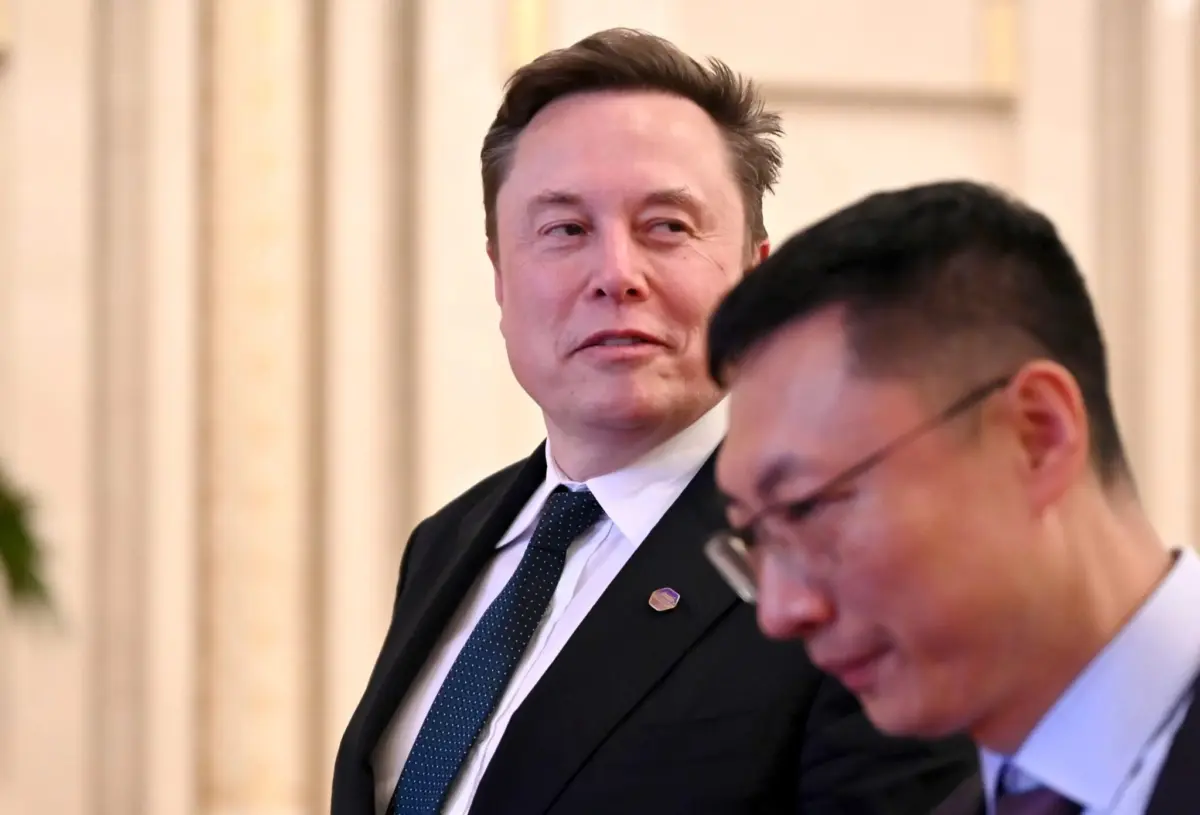
The battle for dominance in the world’s most populous digital economy has taken a remarkably personal and combative turn. SpaceX Chief Executive Officer Elon Musk has launched a fierce, public attack on Indian billionaire Mukesh Ambani, mockingly dubbing the Reliance Industries chairman the country’s “prime minister” to suggest an outsized, undue influence over government policymaking. The escalating feud—played out across social media platform X—underscores the intense friction accompanying SpaceX’s long-delayed attempts to deploy its Starlink satellite internet service in India.
Musk’s frustration boils down to a simple, unyielding commercial barrier: despite years of effort, strategic distribution partnerships, and the securing of preliminary regulatory greenlights, Starlink remains locked out of commercial operations in India. Accusing domestic telecommunications oligarchs of gatekeeping to protect entrenched business models, Musk has directly challenged Ambani to permit fair competition.
However, the path to India’s digital frontier is fraught with intricate regulatory guardrails, fierce domestic corporate competition, and a government determined to assert its sovereignty. While Musk paints a picture of monopolistic obstruction, Indian officials and rival telecom giants paint an entirely different picture—one of rigorous security protocols, level regulatory playing fields, and a booming market where foreign heavyweights must play by local rules. This high-stakes showdown not only dictates the future of satellite broadband in South Asia, but also highlights the broader geopolitical and economic challenges faced by Western tech giants trying to capture the Indian consumer base.
Detailed Chronology: From Strategy to Social Media Hostilities
The confrontation between Musk and India’s corporate elite is the culmination of years of regulatory maneuvering, tactical partnerships, and shifting policy debates.
Years of Preparation and Strategic Alliances
SpaceX’s pursuit of the Indian market spans several years, marked by high hopes and repeated roadblocks. Recognizing that breaking into India’s heavily regulated telecom sector required powerful local allies, Starlink made significant strategic moves. Notably, the company struck high-profile distribution agreements with both Reliance Jio—Ambani’s telecom powerhouse—and Bharti Airtel, India’s second-largest telecom operator. These partnerships were designed to clear the path for consumer adoption the moment regulatory approvals were handed down.
The Spectrum Debate: Administrative Allocation vs. Auctions
Long before Musk’s recent social media tirades, a fierce policy battle was fought over how satellite spectrum should be allocated in India. Starlink lobbied heavily for an administrative assignment process, arguing that satellite spectrum differs fundamentally from terrestrial mobile spectrum and should be granted rather than auctioned.
Conversely, Reliance Jio fiercely pushed for auctions, contending that a competitive bidding process is the only way to ensure a level playing field between satellite providers and traditional telecom companies. Ultimately, the Indian government sided with the administrative allocation framework under a newly introduced telecom bill, granting an early victory to Musk’s camp—though it did little to accelerate actual operational deployment.
The Stalling of Commercial Operations
Despite securing key regulatory clearances that initially made the launch seem like a matter of "when, not if," Starlink has remained unable to flip the switch on commercial operations. Frustrated by the protracted timeline, Musk launched a barrage of accusations on X earlier this week, asserting that unnamed "oligarchs" were deliberately blocking the launch to shield their own business interests.
The rhetoric escalated sharply on Thursday when Musk directly targeted Ambani, posting, "Is Ambani the real boss of India?" By Friday, the attack reached its peak. Musk posted a direct appeal to the Reliance chairman, arguing that Starlink could democratize internet access in remote regions, enhance educational opportunities for children, and empower small businesses.
"Naturally, you would prefer to maintain your monopolistic exploitation of the great people of India, but would you nonetheless consider allowing Starlink to compete?" Musk wrote.
Reliance Jio and its parent company, Reliance Industries, maintained a strategic silence, declining to immediately respond to requests for comment.
Supporting Context & Metrics: The Battlegrounds of Telecom and Tech
To understand the ferocity of this corporate war, one must examine the massive stakes involved in the Indian digital ecosystem, as well as SpaceX’s broader struggles in the country.
A Billion-User Digital Frontier
India represents the ultimate prize for global technology and telecommunications companies. With a population exceeding 1.4 billion people and over a billion internet users, the market offers unprecedented scale. However, connecting rural and remote populations requires advanced infrastructure—a gap that low-Earth-orbit (LEO) satellite constellations like Starlink aim to fill.
Yet, SpaceX is not the only player eyeing this lucrative pie. Mukesh Ambani’s Reliance Jio commands India’s largest telecom operator, boasting hundreds of millions of subscribers. Furthermore, Jio has forged a joint venture with Luxembourg-based SES, while Bharti Airtel is a major shareholder in Eutelsat OneWeb. Both domestic giants are aggressively building out their own satellite broadband capabilities to capture the next wave of digital adoption, making the impending entry of Starlink an existential threat to their market dominance.
The Tesla Parallel: Navigating Indian Bureaucracy
Starlink’s delays mirror the hurdles Musk encountered while trying to bring Tesla into the Indian market. After years of public negotiations, teases, and regulatory debates regarding import tariffs, Tesla officially launched in India last year.
However, the rollout has been remarkably sluggish. Data cited by Electrek reveals that Tesla registered a mere 699 vehicles during its first 12 months of deliveries. The primary culprit has been prohibitive import duties, which pushed the launch price of the Model Y in India to nearly double its U.S. price tag. Although Tesla implemented price cuts earlier this year, its electric vehicles remain vastly more expensive for the average Indian consumer than their American counterparts, illustrating the friction foreign enterprises face when attempting to scale in South Asia under high-tariff regimes.
Official Statements: Government Pushback and Regulatory Realities
The Indian government has reacted swiftly and firmly to Musk’s allegations, rejecting any notion of favoritism, monopoly protection, or undue corporate influence.
The Ministry of Communications Responds
In an official statement released on Thursday, India’s Ministry of Communications pushed back aggressively against Musk’s characterization of the regulatory landscape. The government maintained that India’s regulatory framework for satellite communications is entirely "fair and non-discriminatory."
Addressing the operational delays, the ministry clarified that Starlink—alongside two other licensed satellite operators—is currently undergoing mandatory security assessments. These exhaustive evaluations must be successfully completed before any entity can be assigned satellite spectrum and begin commercial broadcasting. Crucially, the ministry emphasized that all three competing operators are currently at "broadly the same regulatory stage," directly dismantling Musk’s claim that Starlink is being uniquely targeted or singled out for obstruction.
Telecom Minister Addresses Monopoly Claims
Echoing the ministry’s defense, India’s Telecom Minister Jyotiraditya Scindia delivered a sharp rebuke to Musk’s monopoly claims on Friday.
"India does not allow a monopoly in any sector," Scindia stated, reinforcing that the nation’s regulatory bodies operate independently and transparently to foster fair market conditions for both domestic and international enterprises. The government’s stance is clear: national security protocols and statutory compliance cannot be bypassed, regardless of a company’s global prestige or the market capitalization of its founder.
Future Outlook: Where Does Starlink Go From Here?
As the dust settles on the latest social media exchange, the immediate future of Starlink in India remains shrouded in uncertainty.
The standoff highlights a fundamental tension in modern global commerce: the clash between Silicon Valley’s "move fast and break things" philosophy and the methodical, security-conscious regulatory processes of developing superpowers. While Musk’s public outbursts may draw global attention and rally his digital following, they risk alienating the exact regulatory bodies and political leaders whose sign-offs are mandatory for operational success.
For Starlink to finally launch in India, SpaceX must navigate the remainder of the security assessment phase patiently, complying with New Delhi’s statutory requirements without alienating local stakeholders. Meanwhile, Reliance Jio and Bharti Airtel will continue pressing forward with their own terrestrial and satellite offerings, ensuring that when Starlink finally touches down in India, it will face one of the most fiercely contested and mature digital landscapes on the planet.
Ultimately, the resolution of this conflict will send a powerful signal to the global tech community regarding how India—now an economic and technological powerhouse—manages the delicate balance between welcoming foreign direct investment and safeguarding national sovereignty, regulatory integrity, and domestic economic interests.







Belum ada komentar. Jadilah yang pertama berkomentar!