


Date: September 6, 2026
Location: Nago City, Okinawa Prefecture, Japan
Executive Overview
Okinawa’s cultural landscape is anchored by a rich, distinct heritage that separates it from mainland Japan, shaped by centuries of maritime trade, dynastic rule, and deep-rooted spiritual traditions. At the heart of this cultural identity lies Ryukyu Dance (Ryukyu Buyou), an officially designated Important Intangible Cultural Property of Japan. Originally developed during the Ryukyu Kingdom era to entertain and impress visiting imperial Chinese envoys (sappōshi), these traditional performances remain a vibrant expression of Okinawan soul.
In an effort to bring this intangible heritage closer to contemporary travelers, the Oriental Hotel Okinawa Resort & Spa—situated in Nago City as an official partner hotel of the high-profile JUNGLIA Okinawa adventure park—has established a dynamic cultural programming initiative. By collaborating with elite young performing artists such as the acclaimed professional dance troupe Rokka (also known via their community presence, Mutsunohana), the resort offers guests immersive encounters with classical court dances and dynamic folk numbers during peak travel seasons like Golden Week and summer vacation.
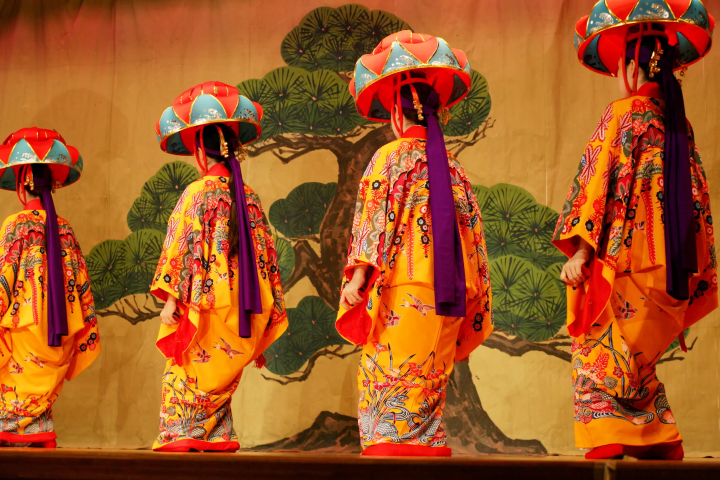
This comprehensive report examines the historical evolution of Ryukyu Dance, the strategic integration of living arts into luxury hospitality at the Oriental Hotel Okinawa Resort & Spa, upcoming regional performance schedules for September 2026, and the evolving future outlook for cultural tourism in northern Okinawa’s Yambaru region.
Detailed Chronology: The Evolution of Ryukyu Dance
To fully appreciate the performances hosted at the Oriental Hotel Okinawa Resort & Spa, one must trace the historical trajectory of Ryukyu Dance from royal palaces to contemporary stages.
[14th – 19th Century] ──► [2009] ──► [Present Day]
Ryukyu Kingdom Era        Designated as Important    Resort Collaborations &
(Entertaining Envoys)     Intangible Cultural Prop.  Public Outreach (Rokka)
The Royal Court Origins (The Ryukyu Kingdom Era)
During the height of the Ryukyu Kingdom (spanning roughly the 15th to the 19th centuries), the island chain served as a bustling hub of maritime trade across East and Southeast Asia. Central to its diplomatic strategy was its tributary relationship with Imperial China. When imperial envoys (sappōshi) visited Shuri Castle, the Ryukyu royal court spared no expense in showcasing its sophistication.

Grand banquets featured elaborate musical suites and choreographed dances designed to project dignity, elegance, and political stability. These foundational movements formed the bedrock of Classical Dance (Koten Buyou), characterized by solemn postures, refined hand gestures, slow-paced breathing, and richly textured, vibrantly colored traditional costumes dyed in regional techniques like Bingata.
Evolution into Ordinary Life (Zou Odori)
As the political landscape shifted and interactions expanded beyond the royal inner circles, theatrical and performance traditions trickled down into the daily lives of ordinary Okinawan citizens. This gave rise to Ordinary Dance (Zou Odori). Unlike the solemn restraint of classical court pieces, Zou Odori draws inspiration from everyday community life, agricultural cycles, and local folklore. These routines are marked by friendly, humorous, and deeply dynamic physical expressions, utilizing props such as fans, towels, and small drums (eisa elements) to engage audiences directly.
National Recognition and Modern Preservation
Recognizing its irreplaceable value to Japanese and world intangible heritage, the Japanese government officially designated Ryukyu Dance as an Important Intangible Cultural Property in 2009. Today, practitioners undergo rigorous training to preserve the exact musical intonations of the sanshin (a traditional three-stringed snake-skin lute), classical vocal accompaniments (uta-sanshin), and intricate choreography that has been passed down across generations.
Supporting Context & Metrics: The Resort and Cultural Synergy
The convergence of luxury hospitality and classical arts is exemplified by the Oriental Hotel Okinawa Resort & Spa, which operates under the guiding concept of "LOVE OKINAWA DISCOVER YAMBARU."
Architectural and Spatial Integration
Located at 1490-1 Kise, Nago City, the property is strategically designed to reflect its natural surroundings:
- The Lobby Atrium: An open-air architectural marvel filled with dense greenery, consciously designed to evoke the lush, primal atmosphere of the Mori of Yambaru (the ancient forests of northern Okinawa).
- Accommodations: Spacious guest rooms exceeding 44 square meters, offering panoramic views of the East China Sea.
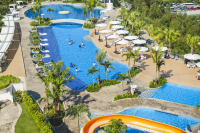
- Recreational Scale: Features an expansive 170-meter terraced swimming pool—one of the longest resort pools in the prefecture—alongside dedicated family areas, a kids’ pool, and universal rooms accommodating guests of all generations.
Strategic Location for Regional Exploration
Beyond its interior amenities, the hotel serves as an optimal geographic anchor for travelers:

- JUNGLIA Okinawa Official Partnership: As an official hotel for the upcoming major theme park JUNGLIA Okinawa, guests enjoy streamlined access to the region’s newest entertainment destination.
- Yambaru National Park: Located on the doorstep of a UNESCO World Natural Heritage site, encouraging eco-tourism and deeper exploration of Okinawa’s endemic flora and fauna.
Official Statements and Artist Profiles: The Rokka Troupe
The authenticity of the cultural programming at the Oriental Hotel Okinawa Resort & Spa is guaranteed through its partnership with Rokka (Mutsunohana), a professional performing arts group founded by elite scholars who pursued advanced degrees in Ryukyu Dance and Kumiodori (Okinawa’s traditional musical theater) at the prestigious Okinawa Prefectural University of Arts Graduate School.
Artistic Philosophy
Although individual members have trained under different classical master schools (ryūha), the collective unites with a singular mission: breaking down institutional barriers to make traditional Okinawan performing arts accessible, engaging, and emotionally resonant for contemporary audiences and international visitors alike. Their stage work extends beyond standalone dance numbers into full-scale theatrical productions, Kumiodori dramas, and interactive educational showcases.
Troupe Roster
- Takeshi Igei
- Manami Kakazu
- Yukimasa Kakazu
- Sayaka Kina
- Tamaki Tamaki
(Travelers can follow the troupe’s ongoing projects and performance schedules via their official community presence on Instagram under @mutsunohana_06).

Regional Performance Schedule: September 2026
For visitors staying at the Oriental Hotel Okinawa Resort & Spa or touring Okinawa Prefecture during September 2026, several high-profile public performances and educational outreach programs offer deep dives into local performing arts:
1. Kumiodori Tour: Midori the Flower Seller, Ryugu Denshin, Kijimuna
- Date: Sunday, September 6, 2026
- Time: 14:00 JST
- Location: Chatan Nirai Center, Kanai Hall
- Admission Fees:
- Adults: ¥2,500
- Children (Elementary & Junior High): ¥1,000
- Parent-Child Pair Ticket (1 Adult + 1 Child): ¥3,000
- Preschool Children: Free (Ticket required)
2. National Theatre Okinawa Outreach Performances: Bo-shibari and Warifu
The prestigious National Theatre Okinawa is hosting specialized Okinawan Theater Appreciation Classes featuring classic comedic and dramatic pieces.
- Performance Dates & Times:
- Thursday, September 17, 2026: 10:30 AM (Note: Afternoon 14:00 performance cancelled)
- Friday, September 18, 2026: 10:30 AM (Note: Afternoon 14:00 performance cancelled)
- Saturday, September 19, 2026: 14:00 JST
- Location: National Theatre Okinawa, Main Hall (Urasoe City)
- Admission & Ticketing Details:
- September 17 & 18 (Morning Sessions): Free admission for university students and younger (Advanced reservations required; capacity is strictly limited to younger demographics).
- September 19 (Saturday Session): General Admission ¥2,700; University students and younger: Free (Advanced reservations required).
- Box Office Inquiries: National Theatre Okinawa Ticket Counter (TEL: 098-871-3350)
Future Outlook: The Intersection of Luxury Hospitality and Living Heritage
As Okinawa Prefecture continues to evolve as an international tourism destination—bolstered by infrastructure projects like JUNGLIA Okinawa and increased eco-tourism focus on Yambaru National Park—the demand for authentic, non-superficial cultural engagement is at an all-time high.

Resorts that rely solely on sun-and-sand models are increasingly pivoting toward holistic destination-marketing strategies. By embedding living national treasures directly into guest itineraries, properties like the Oriental Hotel Okinawa Resort & Spa are redefining what it means to travel responsibly. Guests no longer have to choose between modern comfort and historical education; instead, they can relax in a 44-square-meter mountainside room overlooking the East China Sea, swim in a 170-meter infinity pool, and step into the living history of the Ryukyu Kingdom all under one roof.
Planning Your Stay
To secure reservations for upcoming seasonal cultural events, explore specialized room packages, or plan your journey as a base for exploring northern Okinawa, visit the official channels:
- Official Website: Oriental Hotel Okinawa Resort & Spa Official Website
- Direct Booking: Make a Reservation
- Address: 1490-1 Kise, Nago City, Okinawa Prefecture, 905-0026, Japan


Belum ada komentar. Jadilah yang pertama berkomentar!