

Executive Overview
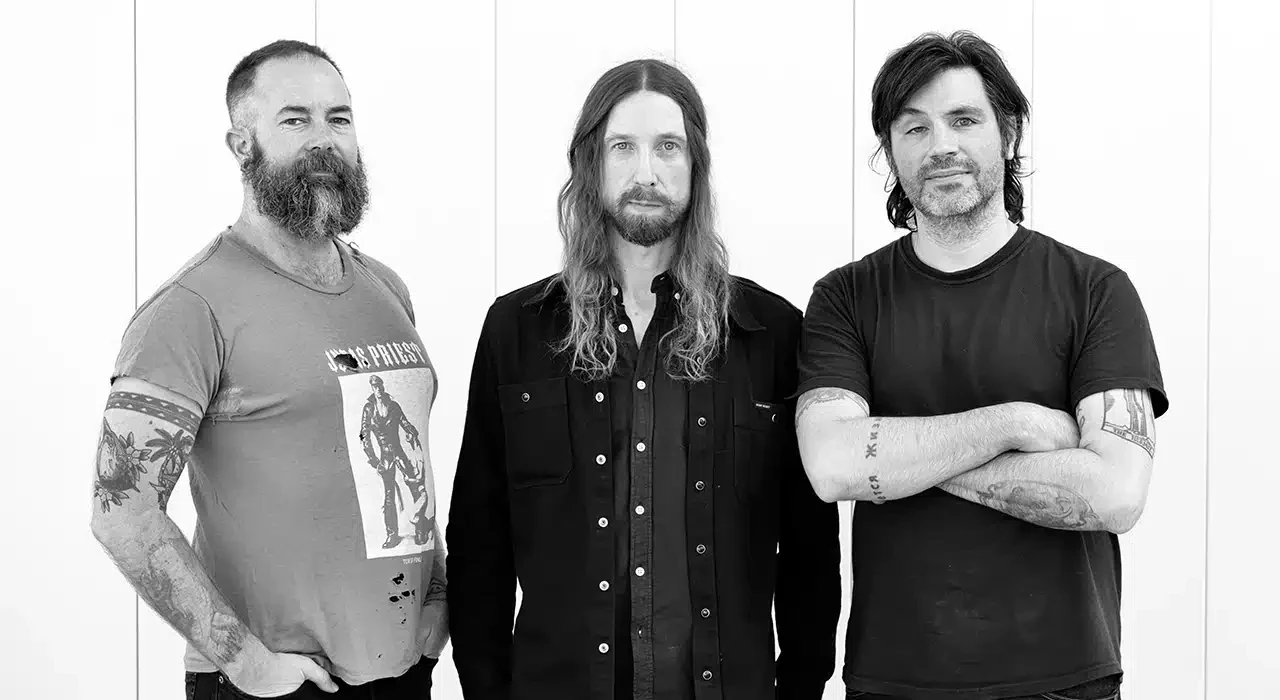
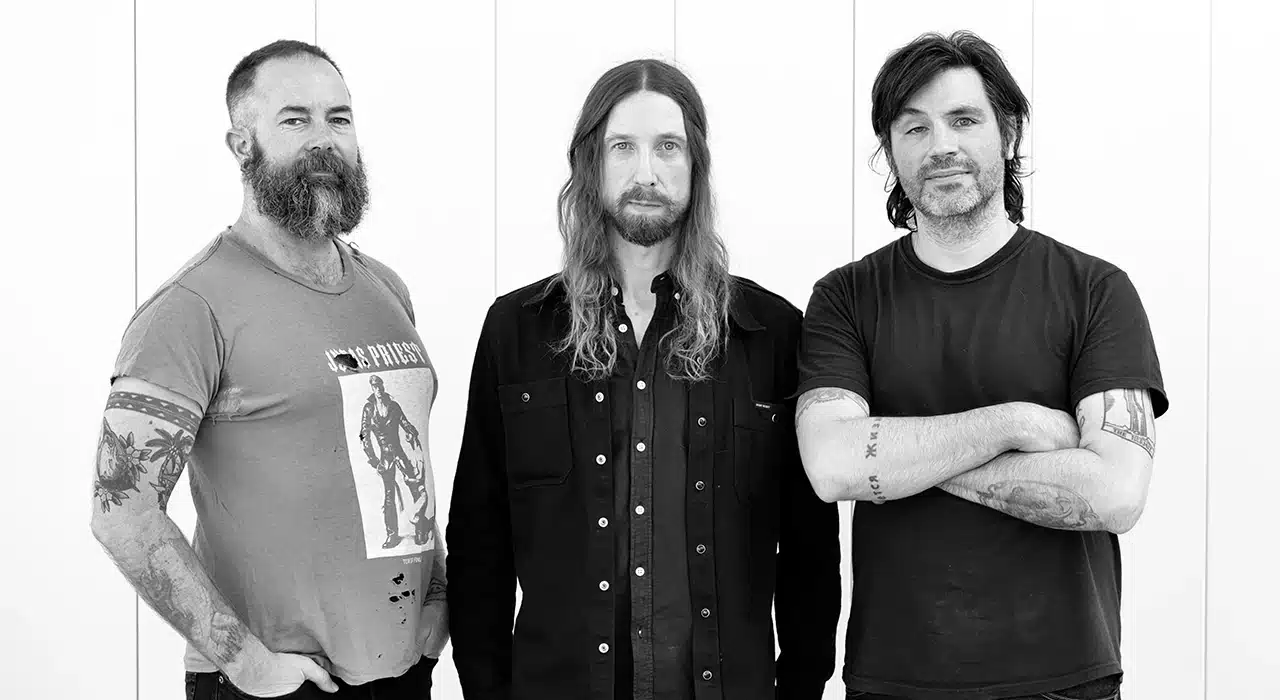
To speak the discography of Chicago-based post-metal heavyweights Russian Circles is to recite a sequence of industrial encryption codes. Empros, Blood Year, Station, Gnosis, Enter—monosyllabic, stark titles that evoke subterranean installations, desolate geographies, and concrete bunkers lost to time. For more than two decades, the instrumental trio—comprising guitarist Mike Sullivan, bassist Brian Cook, and drummer Dave Turncrantz—has forged a distinct path across a frosty sonic terrain. Operating entirely without a vocalist to anchor narrative meaning, the band relies on downtuned, heavily distorted textures, polyrhythmic time signatures, and soaring dynamic arcs to communicate.
With the late-summer release of their ninth studio album, Nine via Sargent House, the band broke character. Opting for a literal, unvarnished title that marks both their ninth long-player overall and Cook’s eighth since joining the fold for 2007’s Station, Russian Circles sidestepped cryptic mythmaking in favor of blunt chronology.
In the wake of the album’s release and ahead of their grueling North American tour, guitarist Mike Sullivan sat down to discuss the internal mechanics of Nine, the band’s linear approach to composition, their enduring creative partnership with producer Kurt Ballou, and the unglamorous, blue-collar reality of sustaining an underground instrumental band in the 21st century. Far from a victory lap, Nine represents a masterclass in organic evolution—a testament to a band that continues to stretch its boundaries while relying on the strict internal limitations that have defined its career.
Detailed Chronology
The Long Arc: From Enter to Nine
Russian Circles emerged from the vibrant Chicago underground in 2004, releasing their landmark debut, Enter, in 2006. The addition of Brian Cook on bass ahead of 2007’s critically lauded Station cemented the lineup that would carry the group through two decades of relentless touring and critical acclaim.
As the band approaches its 20-year milestone in the fall of 2026—a longevity rare in the volatile landscape of heavy underground music—their historical footprint continues to expand. Commemorative vinyl reissues, such as the recent anniversary edition of 2016’s Guidance, point to an ensemble increasingly aware of its legacy. Yet, as Sullivan emphasizes, chronological markers carry little creative weight beyond serving as logistical milestones.
[2004: Band Formed] --> [2006: Enter] --> [2007: Station (Cook Joins)] --> [2011: Empros] --> [2016: Guidance] --> [2022: Gnosis] --> [2026: Nine & 20-Year Milestone]The Anatomy of Nine and the Art of the "Tether"
The genesis of Nine spans multiple years and showcases the band’s signature method of sequential, interconnected songwriting. A defining characteristic of Russian Circles’ recent LPs is the presence of "tethers"—thematic threads and recurring motifs that bridge one album to the next.
The album’s epic second single, "Eluvial," shares a clear family resemblance with the title track of 2022’s Gnosis. Both tracks span nearly ten minutes, opening with delicate, atmospheric restraint before erupting into a wall of volcanic noise. However, "Eluvial" also integrates electronic textures into the traditional guitar-bass-drum framework—a development that required years of meticulous refinement.
"The whole back half of ‘Eluvial’, the whole black metal orchestrated part, was the first thing I got under my hands for Gnosis," Sullivan explains. "I’ve been working on that since 2022 or so. The latter half of that song was in place right after Gnosis, so it makes sense that it sounds like that era. But the first half of the song took years to find. I wasn’t working on the riff continually; I put it to the side when I realized it’d need a whole front half."
It wasn’t until years later that Sullivan and drummer Dave Turncrantz developed the opening movement, with Cook subsequently layering atmospheric electronic keyboards into the mix. This touch-and-go methodology allows the band to maintain multiple creative ideas simultaneously, preventing forced composition and preserving the raw spontaneity of their arrangements.
Supporting Context & Metrics
The 2012 El Rey Showcase: A Watershed Moment
Reflecting on the span of nine LPs invites a look back at pivotal moments in the band’s trajectory. Among them stands a legendary 2012 headlining performance at the El Rey Theatre in Los Angeles. Curated as a showcase for Sargent House artists, the evening featured a line-up of emerging acts that would each define the subsequent year of heavy music:
- Deafheaven: Premiering the foundational textures of their breakthrough 2013 "blackgaze" masterpiece, Sunbather.
- And So I Watch You from Afar: Bringing a ferocious, exuberant brand of math-rock instrumentalism captured on 2013’s All Hail Bright Futures.
- Chelsea Wolfe: Demonstrating the dark, transcendent sonic evolution that flowered on 2013’s Pain is Beauty.
- Russian Circles: Closing the night on the heels of their 2011 tour-de-force Empros, delivering a masterclass in post-metal a year before the release of their universally acclaimed Memorial.
Technical Architecture: The Ballou Factor and Gear Selection
A vital catalyst for the band’s evolving guitar tone from Guidance onward is engineer and Converge guitarist Kurt Ballou. Ballou’s presence in the control room has provided Russian Circles with a pristine, aggressive sonic edge without stripping away their individual signatures.
- Amplification: On Nine, Sullivan relied heavily on Hiwatt amplifiers—the foundational pillar of his live rig.
- Studio Philosophy: Sullivan credits Ballou not merely for his gear knowledge—such as guiding Sullivan through a meticulous audition of late-1950s Gibson Les Pauls—but for his distinct production ethic. "He doesn’t have a bag of tricks he relies upon where he’s using some specific filter or piece of gear," Sullivan notes. "He leaves room for each musician to sound like themselves."
- Ergonomics and Innovation: Following a devastating 2021 tour theft in Chowchilla, California, which saw the loss of essential instruments including Sullivan’s 1985 Gibson Les Paul, Sullivan turned to Sacha Dunable of Dunable Guitars. Drawn to Dunable’s ergonomic designs and commitment to the underground community, Sullivan collaborated with the builder to engineer a hybrid instrument combining classic Gibson tonewoods (mahogany neck and body, maple top, ebony fretboard) with contemporary shapes built for absolute playability.
Official Statements
On Longevity and the "Open Marriage" of Collaboration
Reflecting on two decades in an industry notorious for rapid turnover, Sullivan maintains a stance of grounding humility:
"As far as us and our trajectory: to me, it’s immense gratitude that people still care about us, and that we can prepare and tour records in a day and age where there’s so many bands and subgenres, people being splintered all over. It’s not lost on me that we still get to do it, so the older I get and the more I see how rare it is for bands to be around this long… it’s almost humorous, like, ‘This is funny, but let’s keep going, make sure that we take this seriously.’"
This mutual respect extends directly into the trio’s writing process. Sullivan likens the band’s open-door creative policy to an "open marriage," where no instrument or bizarre arrangement is dismissed out of hand:

"We trust each other: if Brian came up with a great banjo part, it’s whatever’s cool to us. If Dave pulled out a solo drum part, we’d be cool with that. A lot of our songs start with [Dave and I] sending a song to Brian, and he’ll add a minute and a half of intro with just his material. We’ve done everything, so everything’s open. We’re very aware of what we like, but we’re very hesitant to say no; we’ll try out every idea before we say no."
On Classical Influence and "Arletta"
One of the most intriguing moments on Nine is the brief, echoey acoustic interlude "Arletta." Rather than a throwaway ambient track, the song serves as a thematic mirror to the aggressive black metal movements found in the back half of "Eluvial."
Sullivan reveals that the piece was born from a desire to "reverse engineer" a classical guitar interpretation of Mikis Theodorakis’s Epitafios No. 3 in D Minor, as performed by classical virtuoso John Williams. While Theodorakis’s original recording utilized rapid tremolo picking reminiscent of black metal, Williams reinterpreted the work through classical guitar traditions. Sullivan mapped these overlapping vocal lines across "Arletta" and "Eluvial," though he admits the connection is so deeply buried that "you’d have to be a psychopath to hear it."
Future Outlook
The Blue-Collar Reality of the Road
As Russian Circles embarks on their North American tour supporting Nine, Sullivan remains realistic about the physical demands of modern touring. Dispelling romanticized notions of 1970s rock-and-roll decadence, he describes the day-to-day grind with stark clarity:
"We’re not a ‘bus band’, so it’s very much a laborious tour for us. There’s not much fucking around in parking lots at venues before the crowd gets there. We’re just chatting with our buds in the van all day long, then you get to the club. You make sure your gear works, then you go eat dinner, then you go to the show, then you pack up, and the next day you go to a new city. We have limitations, and limitations are our strengths."
The Next Horizon: Becoming a Better Musician
Looking past the horizon of the Nine tour cycle, Sullivan’s ultimate goal is not merely to maintain his status as a premier heavy metal guitarist, but to expand his holistic understanding of music. Emphasizing continuous education, listening widely, and pushing boundaries through osmosis, he views artistic longevity as an ongoing act of translation between the head, the heart, and the instrument.
"A lot of it is head and heart: expression is the name of the game. Are you making someone feel something? I like to build suspense, build tension and release it. The human element of music is what I appreciate, and that’s expression."









Belum ada komentar. Jadilah yang pertama berkomentar!