

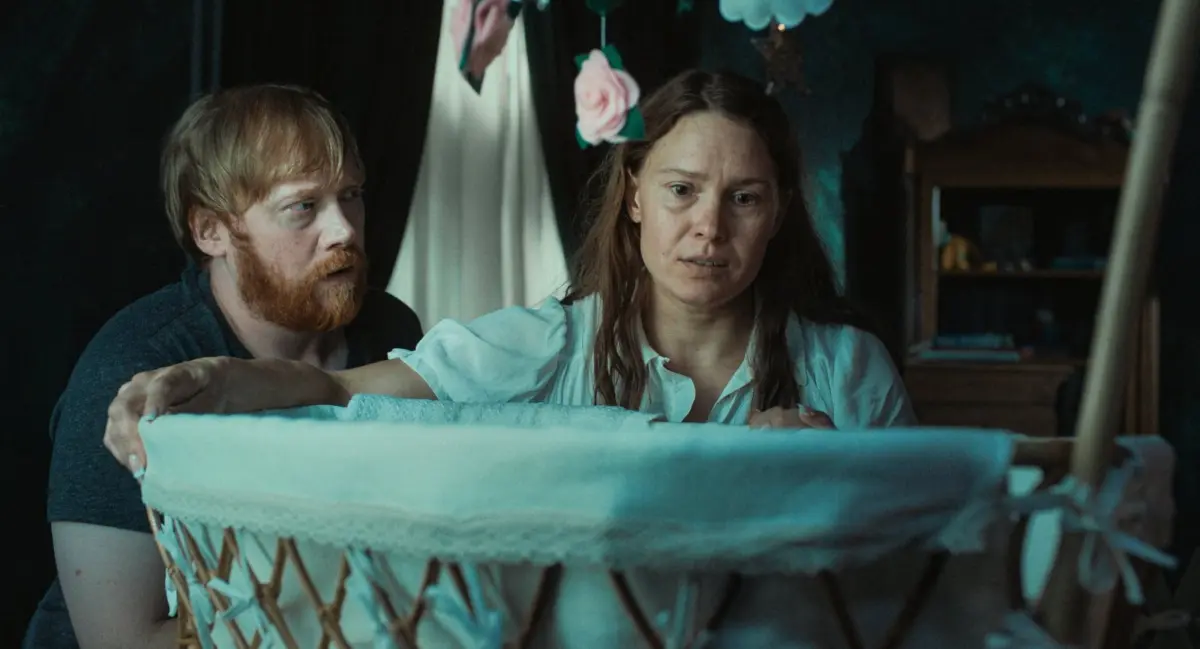
In the rapidly evolving landscape of contemporary horror cinema, distinct regional folklore continues to serve as an invaluable wellspring for filmmakers seeking to subvert traditional narrative tropes. Directed by acclaimed filmmaker Hanna Bergholm, the 2026 feature film Nightborn boldly enters this cinematic arena, offering a chilling, psychologically dense exploration of postpartum trauma, maternal alienation, and the primordial terror of the unknown. Starring Seidi Haarla alongside Rupert Grint, Pamela Tola, Pirkko Saisio, Rebecca Lacey, and John Thomson, Nightborn establishes itself as a visceral cinematic entry that marries the ecological dread of classic folk horror with the intimate, psychological suffocation of modern domestic thrillers.
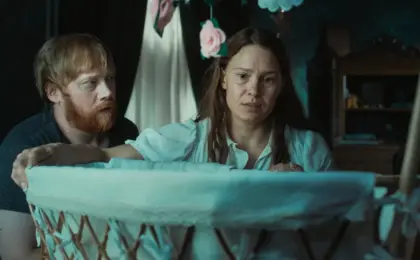
Drawing thematic and aesthetic parallels to idiosyncratic genre entries such as Noomi Rapace’s 2021 Icelandic fable Lamb, Nightborn leverages Finnish folklore to prey upon deep-seated parental anxieties. At its core, the narrative follows Saga (Seidi Haarla) and her British husband Jon (Rupert Grint) as they retreat from urban life to settle in the isolated, dilapidated Finnish forest home of Saga’s youth. What begins as a nostalgic homecoming quickly curdles into a waking nightmare following the birth of their son, Kuura. While those around her offer placating reassurances, Saga becomes gripped by an unshakeable, visceral conviction that something is profoundly and unnervingly wrong with her newborn child.
This exhaustive review and analysis explores Nightborn through multiple analytical vectors, examining its structural narrative progression, the socio-cultural context of its production, the technical craftsmanship behind its soundscapes and visual design, and its broader positioning within the modern horror ecosystem. Through a blend of high-concept fantasy and grounded psychological breakdown, Bergholm’s latest work demands a rigorous examination of how modern horror portrays the complexities, taboos, and terrors of parenthood.
Detailed Chronology
The Return to the Roots: Setting the Stage
Nightborn initiates its narrative arc with a deliberate, atmospheric establishing sequence. Saga and Jon traverse a winding, claustrophobic country lane in a foreign-yet-familiar landscape, arriving at an isolated clearing dominated by a sprawling, nature-reclaimed homestead. The house itself acts as a primary antagonist of sorts—a crumbling architectural monument where sunlight has not pierced the wooden floorboards in years, and where aggressive, encroaching foliage physically punctures the interior walls.
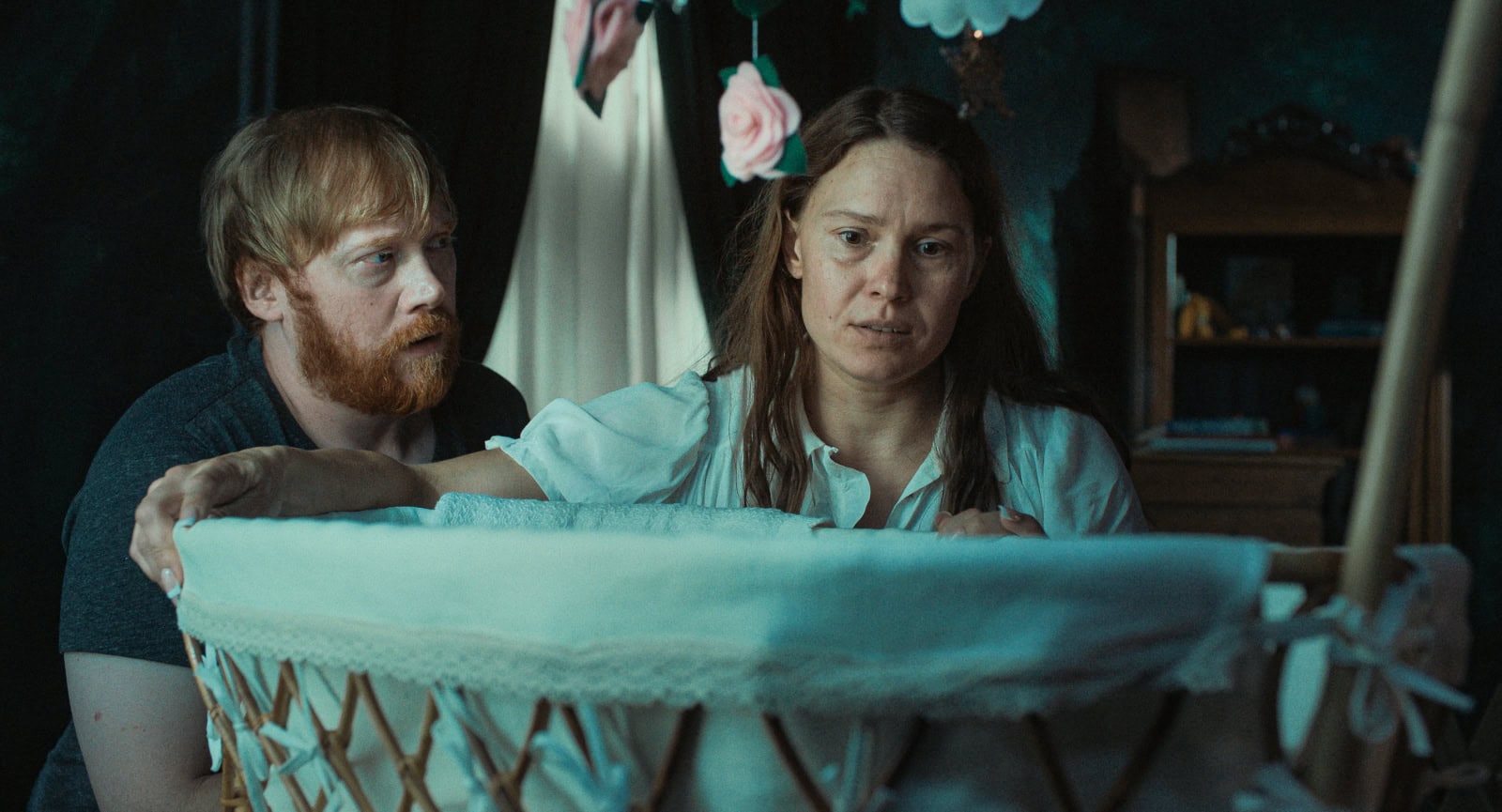
Director Hanna Bergholm establishes an immediate tactile connection between the human characters and the surrounding wilderness. In a sequence invoking distinct shades of The Wicker Man, Saga seeks a primal communion with the forest. Moving past anthropomorphic, Gigeresque knubs adorning the ancient trees and responding to faint, subterranean whispers, she demands that the woods grant her the fulfillment of motherhood. Kneading the mossy forest floor and physically embracing the gnarled bark, she pushes past a pursuing Jon—whose limbs are aggressively snagged and held back by tendril-like, finger-like branches. This visceral, earthy union culminates nine months later in a harrowing, blood-soaked delivery room scene defined by anxious expressions and the deeply unsettling, inhuman cries of the newly arrived infant, Kuura.
The Crucible of Postpartum Despair
As the narrative progresses, the film transitions from ecological mysticism into a grueling, psychological endurance test. The focal point of this descent is the relentless, soul-piercing vocalizations of baby Kuura. The sound design department of Nightborn executes a masterclass in auditory dread; the infant’s unholy cries are deliberately constructed to be shrill, relentless, and requisitely intolerable for both the characters on screen and the audience in the theater. This auditory assault serves a vital narrative function, vividly externalizing the sheer exhaustion, sensory overload, and emotional alienation experienced by a new mother pushed past her breaking point.
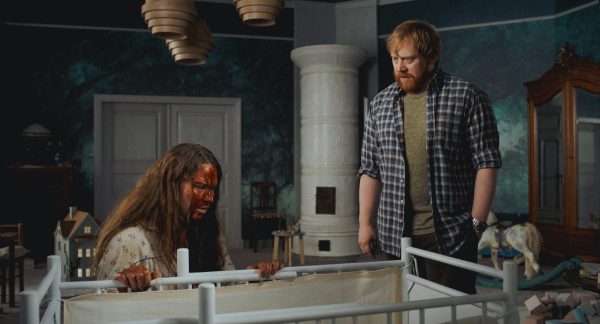
Concurrently, Bergholm and the screenwriting team lean heavily into a minimalist visual strategy regarding the infant himself. Eschewing the conventional impulse to fully reveal creature effects early on, the production shrouds Kuura in perpetual darkness, revealing him only through fleeting silhouettes—reminiscent of a miniature, feral presence—or keeping him physically turned away from the camera lens. By leaving the visual manifestation of the child largely to the audience’s imagination, the film amplifies the psychological ambiguity at the story’s heart: Is Saga suffering from a severe, unaddressed postpartum psychosis, or is she genuinely nursing a malevolent, non-human entity spawned by the forest itself?
Supporting Context & Metrics
The Cinematic Lineage of Nordic Folk Horror
Nightborn arrives at a time of unprecedented global appetite for Nordic and Scandinavian horror cinema, a subgenre characterized by its heavy reliance on stark landscapes, localized mythology, and an unhurried, atmospheric build-up. Films like Ari Aster’s Midsommar (set in Sweden), Valdimar Jóhannsson’s Lamb (Iceland), and Hanna Bergholm’s own breakout feature Hatching (2022) have collectively proven that international audiences are deeply receptive to stories that weaponize folkloric traditions against contemporary psychological frameworks.

| Film Title | Release Year | Primary Setting | Core Thematic Focus | Critical Reception Index |
|---|---|---|---|---|
| Lamb | 2021 | Iceland | Grief, maternal obsession, rural isolation | High (Favorable) |
| Hatching | 2022 | Finland | Repressed domestic trauma, body horror | High (Favorable) |
| Nightborn | 2026 | Finland | Postpartum psychosis, ecological dread, folklore | Strong (Critical acclaim for lead performance) |
As detailed in the metrics above, Nightborn occupies a vital space in this lineage. While Lamb explored grief through a surreal, melancholic lens, and Hatching utilized avian body horror to dissect familial repression, Nightborn targets the specific, historically underrepresented trauma of postpartum alienation. By anchoring these fantastical elements in the tactile reality of rural Finland, the film bridges the gap between ancient superstitious fears—such as the changeling myths prevalent in European folklore—and modern medical understandings of maternal mental health.
Character Dynamics and Performance Architecture
The structural integrity of Nightborn relies almost entirely on the dynamic between its two central performers: Seidi Haarla as Saga and Rupert Grint as Jon.
- Seidi Haarla as Saga: Haarla delivers a relentlessly physical and emotionally uncompromising performance. Transforming from a confident woman eager to embrace a sprawling family into an isolated, traumatized figure consumed by fear and self-doubt, Haarla embodies the cinematic taboo of the "unsympathetic mother." Her portrayal does not ask for immediate comfort; instead, it demands empathy for a woman whose identity is violently eclipsed and rewritten by her child.
- Rupert Grint as Jon: Grint functions as the narrative’s indispensable anchor. Playing the British husband attempting to navigate a foreign culture, an increasingly unhinged wife, and an impossible domestic situation, Grint utilizes his established everyman persona. While his performance relies on familiar comedic and exasperated beats, this levity is crucial for maintaining the film’s tonal balance, preventing the narrative from collapsing under the weight of its own unrelenting darkness.
Official Statements
While traditional promotional press circuits for independent horror features often emphasize jump scares and creature design, the creative team behind Nightborn has consistently pivoted toward the thematic weight of the project during early promotional interviews and festival press conferences.
Director Hanna Bergholm addressed the psychological underpinnings of the film in early production notes, highlighting her desire to explore the terrifying metamorphosis of motherhood:

"When we look at traditional monster movies, the creature usually comes from the outside, breaking into the safety of the home. With Nightborn, the terrifying element arrives from the inside, emerging from the very bond that is supposed to be sacred. We wanted to examine how a mother’s intuition can become a battleground—where the society around her tells her everything is fine, but her instincts tell her she is holding a stranger, or worse, an ancient force of the earth."
Lead actress Seidi Haarla elaborated on the physical and emotional toll required to bring Saga’s psychological deterioration to life on screen:
"Saga is not written as a comforting character, and that was precisely what drew me to the role. Society places an enormous, often impossible amount of pressure on women to instantly love and adapt to motherhood without friction. When that doesn’t happen, the isolation is total. Playing Saga meant leaning into that absolute, suffocating loneliness—where you cannot even trust your own mind, let alone the people who are supposed to support you."
Future Outlook
As Nightborn transitions from its festival circuit appearances to wider distribution via platforms such as Shudder and theatrical avenues, its long-term trajectory within the horror genre appears exceptionally promising. The film capitalizes on a growing appetite for elevated, intellectually challenging horror that refuses to rely solely on cheap jump scares, choosing instead to interrogate complex socio-cultural and psychological themes.
Critical Legacy and Genre Evolution
The reception of Nightborn points toward a broader evolution in how folk horror interacts with domestic spaces. Rather than keeping ancient curses confined to remote woods or abandoned villages, contemporary storytellers are increasingly dragging those primal forces directly into the nursery, the kitchen, and the marital bed. This domestic erosion of safety resonates strongly with modern audiences navigating an uncertain socio-economic and ecological climate.
Furthermore, the critical acclaim directed toward Seidi Haarla’s uncompromising performance suggests that Nightborn will likely cement its status as a benchmark for psychological creature features throughout the mid-2020s. While some critics note that the film’s second half occasionally leans a bit too heavily into traditional monster-movie mechanics—diluting some of the ambiguity that makes its opening acts so deeply unsettling—the overall package remains a triumph of mood, sound design, and thematic ambition.
Ultimately, Nightborn succeeds because it understands a fundamental truth of the horror genre: the most terrifying monsters are not those that lurk in the shadows of the deep forest, but those that question our sanity, erode our identities, and test the absolute limits of human endurance within the confines of our own homes. As Hanna Bergholm continues to carve out a distinct space for Nordic horror on the global stage, Nightborn stands as a grim, stressful, and remarkably assured testament to the darker sides of creation.






Belum ada komentar. Jadilah yang pertama berkomentar!