


Executive Overview
The landscape of modern cinematic franchises is characterized by a constant tension between nostalgic reinvention and sprawling, philosophical world-building. For the Alien franchise—a pillar of science-fiction and horror history since its inception in 1979—this tug-of-war has defined its trajectory over the past decade. Following the critical and commercial success of Fede Álvarez’s standalone interquel, Alien: Romulus (2024), 20th Century Studios initially set its sights on expanding that specific narrative corner. However, those plans have seemingly stalled, sliding into the proverbial development hell.
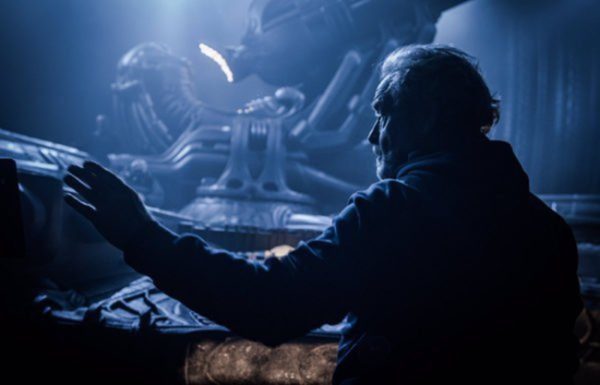
In a surprising strategic pivot, studio executives are now looking backward to move forward, returning to the grand, existential prequel arc originally mapped out by franchise creator Ridley Scott. According to industry reports from The Hollywood Reporter, development is officially underway on a brand-new project that will directly follow Scott’s philosophical prequels, Prometheus (2012) and Alien: Covenant (2017).
While Ridley Scott is currently attached strictly in a producer capacity, the studio has enlisted writer Aaron Guzikowski—renowned for his work on Denis Villeneuve’s Prisoners and the Scott Free-produced sci-fi television series Raised by Wolves—to pen the screenplay. This new feature exists completely independent of the previously discussed Romulus sequel pipeline. Instead, its narrative gravitational pull centers squarely on the haunting legacy of David, the rogue, god-complex-driven synthetic played unforgettably by Michael Fassbender.
As Disney and 20th Century Studios continue to parse out the multi-tentacled future of one of cinema’s most valuable intellectual properties, this unexpected revival of the Prometheus continuity signals a commitment to resolving lingering existential threads. It proves that the philosophical questions raised by Scott over a decade ago about creation, hubris, and artificial intelligence remain too potent to leave buried in cryosleep.
Detailed Chronology: The Zigzagging Path of the Alien Franchise
To understand the significance of this latest development, one must trace the winding, often turbulent history of the Alien timeline, both on-screen and behind the scenes.
1979–1997: The Original Quadrilogy and Industrial Terror
The journey began when Ridley Scott directed the 1979 masterpiece Alien, a masterclass in atmospheric dread that married industrial aesthetics with H.R. Giger’s biomechanical monster design. Helmed by Sigourney Weaver’s iconic Ellen Ripley, the film spawned a legendary cinematic universe. James Cameron injected high-octane tactical action into the sequel Aliens (1986), followed by David Fincher’s nihilistic Alien 3 (1992) and Jean-Pierre Jeunet’s stylistic Alien Resurrection (1997). For over a decade, the franchise lay dormant, save for crossover experiments like Alien vs. Predator (2004) and Aliens vs. Predator: Requiem (2007).

2012: The Paradigm Shift of Prometheus
In 2012, Ridley Scott made a triumphant return to the sandbox he helped create, though he opted to subvert expectations. Instead of a traditional monster-in-a-spaceship thriller, Prometheus served as a philosophical prequel. It shifted the thematic focus away from the standard Xenomorph lifecycle, introducing audiences to the "Engineers"—an ancient, god-like extraterrestrial civilization responsible for seeding life on Earth.
While visually breathtaking and narratively ambitious, Prometheus polarized audiences and critics alike. Some lauded its grand theological inquiries and atmospheric depth, while others criticized its convoluted plotting and baffling character decisions. Despite the division, the film grossed over $403 million worldwide against a production budget of roughly $130 million, proving that appetite for the franchise remained robust.
2017: Alien: Covenant and the Retreat to Familiar Terrors
Intending to bridge the gap directly into the events of the 1979 original film, Scott developed a trilogy arc. The second installment, Alien: Covenant (2017), leaned back into traditional creature-feature conventions while retaining the philosophical weight of its predecessor. It prominently featured Michael Fassbender pulling double duty as David and Walter, diving deep into themes of creation, artistic destruction, and synthetic autonomy.
However, Alien: Covenant underperformed at the domestic box office, grossing $74 million in North America against a global total of $242 million. Coupled with shifting studio priorities, plans for the third direct prequel—which would have presumably explored the consequences of David’s horrific experiments on board the colony ship Covenant—were quietly shelved.
2019–2024: The Disney Acquisition and Alien: Romulus
The corporate landscape shifted dramatically in 2019 when The Walt Disney Company acquired 21st Century Fox. Under Mouse House management, IP strategies were re-evaluated. Rather than untangling Scott’s complex mythological threads, Disney opted for a clean, accessible slate. They handed the keys to filmmaker Fede Álvarez, whose 2024 standalone film Alien: Romulus acted as an interquel set between the events of Alien and Aliens.
Romulus was a critical and commercial triumph, netting over $350 million globally by blending nostalgic iconography with modern horror sensibilities. Naturally, talks of a Romulus sequel quickly circulated. However, development roadblocks have since slowed those momentum-heavy plans down, opening a strategic window for 20th Century Studios to dust off Scott’s dormant prequel notes.
Supporting Context & Metrics: The Business of Space Horror
The financial viability of the Alien franchise has always depended on a delicate balance between budget control and visual spectacle. Examining the box office metrics of the modern era illustrates why 20th Century Studios is willing to hedge its bets across multiple divergent creative pathways.
| Film Title | Release Year | Director | Estimated Budget | Global Box Office | Critical Reception (Rotten Tomatoes) |
|---|---|---|---|---|---|
| Prometheus | 2012 | Ridley Scott | ~$130 Million | ~$403.4 Million | 79% (Audience: 68%) |
| Alien: Covenant | 2017 | Ridley Scott | ~$97 Million | ~$242.2 Million | 65% (Audience: 55%) |
| Alien: Romulus | 2024 | Fede Álvarez | ~$80 Million | ~$350.6 Million | 80% (Audience: 85%) |
These figures reveal a fascinating industry dynamic. While Prometheus remains the highest-grossing prequel entry globally, its higher production overhead cut into profit margins compared to the leaner, meaner financial models of Covenant and Romulus.
Bringing Aaron Guzikowski on board indicates a deliberate effort to anchor the new prequel project in strong narrative foundations. Guzikowski is no stranger to high-concept, tension-heavy storytelling. His work on Denis Villeneuve’s Prisoners demonstrated an exceptional mastery of psychological suspense, while his collaboration with Ridley Scott’s production company, Scott Free Productions, on HBO Max’s ambitious sci-fi series Raised by Wolves proved he can successfully navigate complex, world-building science fiction involving artificial intelligence and theological subtexts. Furthermore, his current involvement in scripting the animated adaptation of Hideo Kojima’s Death Stranding underscores his fluency in dense, cerebral mythologies.
Official Statements & Industry Insights
While 20th Century Studios has kept official press releases regarding the plot under strict wraps, industry insiders close to the production have offered clarity on how this new venture fits into the broader corporate strategy.
According to reports verified by The Hollywood Reporter, this nascent project is entirely separate from the stalling Alien: Romulus follow-up initiatives. The primary narrative "connective tissue" bridging this new film to the franchise’s history is the character of David—the brilliant, deeply unhinged synthetic portrayed with chilling precision by Michael Fassbender in Prometheus and Covenant.
Though Fassbender is not officially attached or contracted at this early, embryonic stage of development, the creative blueprint explicitly requires his presence or narrative shadow to make logical sense. In Alien: Covenant, viewers last saw David in complete control of the colony ship, smuggling two facehugger embryos aboard alongside thousands of sleeping human colonists. Leaving that dangling narrative thread unresolved has long gnawed at dedicated fans of Scott’s prequel era.

Speaking in past interviews regarding his vision for the continuation of the prequel narrative, Ridley Scott expressed persistent enthusiasm for expanding past the traditional Xenomorph parameters:
"You’ve got to go back to the engineering. We came from somewhere. The beast is played out. It’s done. You have to reinvent. When I did Prometheus, I thought it was fresh. People said, ‘We want the monster.’ So I gave them the monster in Covenant, but it’s time to look deeper."
This creative philosophy underscores why the studio is returning to the drawing board with Scott and Guzikowski. Rather than relying solely on nostalgic creature jump-scares, the studio is willing to bank once more on high-concept cosmic horror.
Future Outlook: Navigating a Fragmented Franchise
As 20th Century Studios charts its course, the studio appears to be adopting a multi-pronged approach to the Alien intellectual property. Much like modern superhero universes or prestige horror brands, the studio is positioning itself to cater to distinct segments of its fanbase:
- The Core Mythological Audience: Addressed by the new Ridley Scott/Aaron Guzikowski project, appealing to fans who prefer philosophical world-building, questions of human origin, and the chilling machinations of David the android.
- The Traditional Survival-Horror Audience: Potentially addressed by whatever form the Alien: Romulus continuation eventually takes once its development hurdles are cleared, focusing on claustrophobic terror, corporate greed, and classic Xenomorph mechanics.
- Expanded Media: Backed by ongoing cross-media experiments, such as television expansions and high-profile adaptations, keeping the brand ubiquitous in pop culture.
Whether Michael Fassbender ultimately returns to reprise his role as cinema’s most dangerous android, or whether the film takes a structural pivot with new synthetic iterations, the revival of the Prometheus timeline proves that Ridley Scott’s cosmic sandbox still holds untapped depths. For sci-fi purists who prefer their horror laced with existential dread and theological ambiguity, the beacon from planet LV-223 is flickering back to life.






Belum ada komentar. Jadilah yang pertama berkomentar!