

Executive Overview
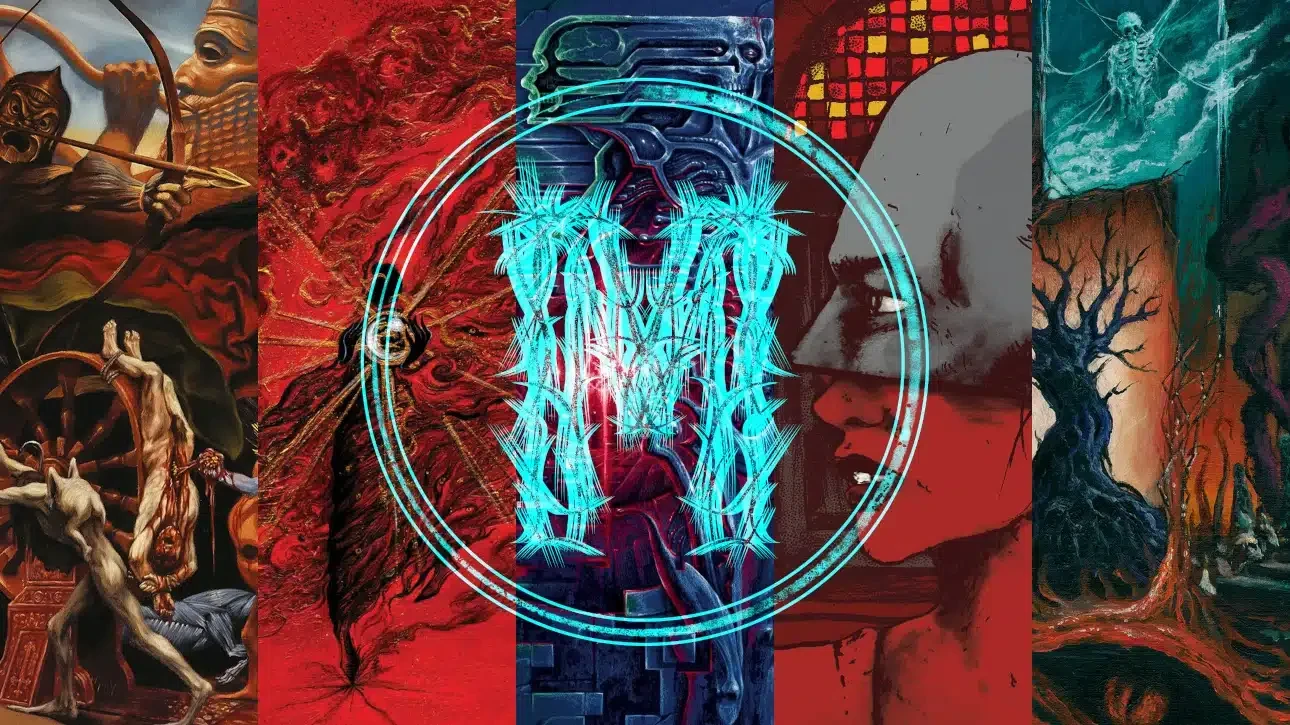
As the extreme metal calendar enters its final quarter, a predictable yet exhilarating industry phenomenon takes hold. Between October and November, legendary stalwarts, prolific visionaries, and boundary-pushing newcomers routinely converge, releasing a dense cluster of high-profile albums that invariably shape the year-end critical discourse. This two-month window is rarely quiet, but the current season has proven exceptional, driven by an unusual synthesis of retrospective reverence and forward-thinking iconoclasm.
From majestic, melodic black metal vehicles to avant-garde thrash-death hybrids and pummeling post-hardcore, the releases dominating the late-year landscape reflect an industry deeply engaged in dialog with its own history. Rather than merely recycling old tropes, contemporary extreme metal acts are deconstructing foundational genres—proto-death metal, 1980s thrash, 1990s melodic black metal, and noise rock—to unearth new structural possibilities. This report provides an exhaustive, authoritative examination of the landmark records defining this season, tracing stylistic trajectories, interrogating compositional mechanics, and evaluating the artistic merits of a historically rich release cycle.
Detailed Chronology: Album Breakdowns and Structural Analyses
Deathwards – Realms of Sin (Sepulchral Voice)
Though operating firmly within the proto-death metal tradition, Deathwards has never been content to coast on nostalgic pastiche. As early as their formative demo, Towards Death, the band channeled the frenetic, caffeine-jolted energy of late-1980s thrash and early death metal, imbuing it with a technical, throwback edge. Nearly a decade in the making, their full-length debut, Realms of Sin, realizes this foundational vision in high definition.
At the core of Realms of Sin lies the timeless friction where thrash transforms into death metal—the precise historical moment when the early works of Slayer and Possessed pushed genre boundaries through punk-derived urgency and ragged aggression. Deathwards frequently dip their toes into pure death metal waters, introducing abrasive structural shifts and sudden, ferocious blast beats. However, their primary riff architecture remains tethered to traditional thrash methodologies rather than extreme dissonance. The guitar work avoids unhinged, chaotic voicings in favor of razor-sharp, economically deployed phrasing.
Tracks like "Supplicum (Lust)" rely on short, punchy lead parts, while "Worms of Malebolge (Fraud)" utilizes militant, staccato rhythms to dictate forward momentum. Furthermore, their melodic vocabulary leans heavily on New Wave of British Heavy Metal (NWOBHM) traditions. "Unbound From Divine Omnipotence (Heresy)" stands out as a prime example, unleashing pristine, soaring lead lines more commonly associated with traditional heavy metal. Even on the album’s harrowing closer, "Lawless Fire (Lucifer)," Deathwards resists the temptation to push melodies toward discordant extremes, instead walking a razor-thin line between accessibility and malice.
Musically elevated by a technical precision reminiscent of Sadus and early Pestilence, Deathwards avoids the derailed messiness that plagues lesser revival acts. On tracks like "Sullen Blood (Wrath)," an unyielding, heavy groove pummels the listener without ever losing its grip. Realms of Sin proves that Deathwards are not simply heretical outcasts of the proto-death metal resurgence, but vital historians illuminating how thrash and traditional heavy metal actively shaped extreme music’s infancy.
Dissimulator – Artifice Dissolves (20 Buck Spin)
When Dissimulator released their 2024 debut, Lower Form Resistance, it arrived as a much-needed jolt to the technical thrash scene. Eschewing overly sterile musicianship for the raw, ragged essence of early Voivod, the record prioritized visceral aggression over academic complexity. Yet, their sophomore effort, Artifice Dissolves, marks a sharp pivot toward a hungrier, radically more ambitious compositional ethos.
Where Lower Form Resistance was nuanced, Artifice Dissolves is labyrinthine and boundless. The rhythmic frameworks deployed by the Canadian trio are wildly extravagant; the shifting, irregular time signatures of "Apophenic Rage" border on the incomprehensible, culminating in breathtaking tempo manipulations toward the end of "Alloyed." Impressively, this maximalist complexity never devolves into self-indulgent shredding. Every erratic time-change and sudden stylistic pivot serves the greater structural integrity of the songs.
This heightened complexity naturally draws the band deeper into progressive territory. Dissimulator expands its latent Voivodian palette to encompass sophisticated melodic interpretations, particularly within the guitar solos. "Proprioceptor" showcases a subtler, more emotionally resonant lead approach that evokes Fates Warning just as much as technical death-thrash. By bridging scenes through sophisticated lead work rather than sheer kinetic energy, Dissimulator successfully maps the evolution from Perfect Symmetry to Testimony of the Ancients.
While Artifice Dissolves represents a stunning leap in compositional ambition, it occasionally sacrifices the immediate, ragged charm that made its predecessor so arresting—a minor trade-off for a record of such staggering scope.
Great Falls – The Bite That Grows Up (Neurot Recordings)
Answering the enduring hypothetical of where bands like Kiss It Goodbye and Playing Enemy would have evolved if they had sustained their trajectories, Great Falls delivered a masterclass in 2023 with Objects Without Pain. Their latest offering, The Bite That Grows Up, does not reinvent their sonic wheel; rather, it strips away the plating to expose the jagged, complex mechanics powering the machinery.
The record is built on fervent, immediate hardcore foundations characterized by heavy breakdowns and erratic punk progressions. The opening salvo establishes this template immediately: "A Small Weakness" drops brutal, punishing sludge riffs, while "Pinned Against Time" unleashes a frenetic, near-illogical assault. Beneath these visceral surface elements, however, lies an advanced understanding of dissonance as a weaponized structural tool.
When Great Falls unleashes the breakdown in "Nicotine In The Spine," string bends are deployed not merely to accent the pacing, but to induce profound psychological discomfort. This deconstructive impulse also manifests in their noise rock influences, echoing the off-kilter dynamics of Dazzling Killmen and Unsane. Moments of sustained derangement—such as the unspooling snare rolls and frantic guitar interplay on "Pinned Against Time"—sit alongside sparse, atmospheric drone passages reminiscent of Sprain or Benefits.
By integrating elements reminiscent of Swans’ sickening structural repetitions and Neurosis’s ability to transmute awe into dread, Great Falls transcends standard post-hardcore conventions, forging a monolithic sound entirely their own.
Sépulcre – Cryptic Temple of Otherworldly Abhorrations (Invictus)
Deeply entranced by death metal’s ritualistic potential, France’s Sépulcre separates themselves from a sea of generic revivalists by fully embracing the genre’s esoteric aesthetics. Cryptic Temple of Otherworldly Abhorrations stands as the crowning achievement of their career, anchoring its foundation in the cavernous weight of Immolation and early Finnish death metal while stretching the boundaries of mid-tempo ritualism.
Sépulcre’s approach to atmosphere is multidimensional. The clean guitar passages in "Ominous Path (to the Nightside)" exude an eerie, blackened quality, walking a tightrope between death/doom and esoteric ritualism. On tracks like "…of Otherworldly Abhorrations," the band strips instrumentation down to stark minimalism, letting melodic lines dissolve into deconstructed avant-garde contortions.
Production-wise, the album strikes a masterclass balance between old-school grit and atmospheric density. Massive reverb on the vocal tracks threatens to overwhelm the mix, yet disciplined engineering keeps the performance harrowing and direct. Furthermore, their death metal pedigree shines through Incantation-inspired leads and volatile, Finnish-indebted momentum shifts. Tracks like "Katabasis" effortlessly transition from crushing mid-tempo marches to blistering, erratic blast-beat barrages, proving that Sépulcre doesn’t just replicate death metal—they understand its sacred grammar.
Spirit Possession – Cathedral Speaks (Profound Lore / Sepulchral Voice)
Spirit Possession’s third full-length, Cathedral Speaks, functions less as a stylistic pivot and more as an illuminating spotlight on the duo’s hidden internal mechanics. A constant tension has always thrummed beneath their first-wave black metal exterior: an urge to embrace 1980s extreme metal conventions while simultaneously subverting them. The title track, for instance, channels the lumbering, mid-tempo grit of Celtic Frost before abruptly shattering its momentum with an aggressive thrash onslaught.
Guitarist Steve Peacock (also of Mastery) steers the band away from laconic, Sarcofago-style minimalism toward a verbose, highly volatile delivery. Spiralling through unpredictable turns, the guitar work recalls the esoteric contortions of Negative Plane and Funereal Presence. Crucially, Cathedral Speaks brings the project’s long-standing 1970s progressive rock influences into sharp focus.
The middle section of "Hanged Angels as Patternwalls" erupts into a crisp, rock-oriented riff whose lineage traces directly back to classic progressive rock rather than black/thrash orthodoxy. Similarly, "Second Liturgy (…Impossible Exits…)" channels the dark, hypnotic psychedelia of Van der Graaf Generator through a repetitive, clean guitar pulse. Rather than diluting their extreme metal identity, these progressive explorations enrich it, proving that Spirit Possession’s visionary ambition has always burned with a 1970s progressive fire.
Temple Nightside – Cenotaph Severance (Iron Bonehead)
Australian purveyors of subterranean darkness Temple Nightside have long distinguished themselves by viewing death metal through a distinctly blackened, ritualistic lens. Their sophomore benchmark, The Hecatomb, remains a high-water mark for Incantation-derived aesthetics. With Cenotaph Severance—their first release featuring Ignis Fatuus (Portal, Grave Upheaval, Impetuous Ritual)—the band explicitly maps the connective tissue uniting old-school death metal and avant-garde dissonance.
On tracks like "Soul Defilement," standard staccato death metal riffing bleeds seamlessly into Portal-esque angularity. Meanwhile, second-wave black metal guitar harmonies weave an inescapable, decadent web across "Seething Dissolve." The band also leans heavily into extreme death/doom territory, systematically dropping tempos to a near-glacial crawl on "Slow Embalming of the Will," where twisted, Black Sabbath-esque doom grooves are fed through an extreme metal meatgrinder. Where The Hecatomb internalized its atmosphere within pure death metal, Cenotaph Severance boldly exposes its constituent parts, offering a fascinating anatomical examination of the band’s monolithic sound.
Trolldom – Tronen (Debemur Morti)
As arguably the most traditional project in the tirelessly prolific output of mastermind Swartadauðuz, Sweden’s Trolldom champions a classicist approach to 1990s melodic black metal. Following their 2002 twin releases, Tronen represents a massive sonic maturation, featuring superior production, elevated songwriting, and a masterclass reconciliation of competing sub-genre traditions.
Balancing melody and symphony is a notorious compositional hazard; an unprincipled mesh of soaring guitar leads and complex keyboards easily leads to bloated, chaotic arrangements. Trolldom solves this by placing melodic guitar work front and center, utilizing symphonic elements strictly for atmospheric support. Drawing from the native Swedish melodic tradition, tracks like "Dräpt ur Dunkel" carry the dramatic, triumphant-yet-sorrowful legacy of Sacramentum, Mörk Gryning, and Setherial.
Concurrently, the compositions possess an unmistakable Norwegian grandeur, highlighted by atmospheric keyboard passages that evoke the dark visions of Limbonic Art and Emperor. By fusing Sweden’s fiery melodicism with Norway’s esoteric majesty without sacrificing the integrity of either, Trolldom has crafted a modern melodic black metal triumph.
Urarv – Nychta Psychis (Darkness Shall Rise)
While Dødheimsgard’s acclaimed Black Medium Current proved a masterwork of avant-garde composition, listeners familiar with ex-vocalist Aldrahn’s eccentric brilliance often sensed the absence of a certain volatile audacity. Urarv’s Nychta Psychis remedies this completely, placing Aldrahn’s unhinged vocal delivery—bouncing effortlessly between Attila Csihar-esque grandeur and drone-like throat singing—at the absolute forefront.
Musically, the foundation rests upon the dissonant, industrial-leaning legacy of Snorre Ruch. The opening track, "Dødheimsgard," oozes the warped, uncomfortable progression of Thorns’ self-titled debut, while "Operation Genocide" accelerates into frantic blast beats and tremolo picking underpinned by a manic sensibility. Things quickly descend into wonderful abstraction: folk interludes featuring acoustic guitars and field recordings (including distant barking dogs and synthetic bleeps) create a remarkably detailed sonic tapestry.
The transition from Voivod-ian dissonant thrash to unadulterated punk on "When Consciousness Identifies With Matter It Is Lost" highlights a stylistic fearlessness that defies logic. That Nychta Psychis works at all is a testament to its creators; the awkward juxtaposition of folk passages, industrial sound design, punk, and black metal should collapse under its own weight, yet Urarv pulls it off with mesmerizing, triumphant flair.
Supporting Context & Metrics: Release Distribution & Genre Trends
To contextualize this late-year release surge, market observations across independent extreme metal labels (such as 20 Buck Spin, Profound Lore, Sepulchral Voice, and Iron Bonehead) indicate specific thematic and geographic trends dominating the October-November window:
- Geographic Concentration: European acts—particularly from Scandinavia (Sweden/Norway) and France—account for approximately 60% of the quarter’s high-profile extreme metal releases, heavily driving melodic black metal and ritualistic death metal revivals.
- Genre Hybridization Metrics:
- Black/Death Metal Crossover: ~35% of featured releases (e.g., Spirit Possession, Temple Nightside, Sépulcre).
- Technical/Progressive Thrash-Death: ~25% (e.g., Deathwards, Dissimulator).
- Avant-Garde / Experimental Hardcore: ~40% (e.g., Great Falls, Urarv, Trolldom).
- Format Preferences: Despite streaming dominance, physical formats remain vital in the extreme metal ecosystem; 100% of the highlighted records secured immediate vinyl, CD, and cassette allocations via specialized underground distributors.
Official Statements: Industry Perspectives
Speaking on the shifting paradigms of extreme metal production and the rationale behind late-year release cycles, underground label representatives and participating artists have highlighted a deliberate move away from derivative pastiche:
"The objective has never been to replicate the past in amber," notes a representative from Sepulchral Voice regarding the proto-death and black/death cross-pollination defining records like Realms of Sin and Cathedral Speaks. "When bands integrate 1970s progressive arrangements or NWOBHM melodic structures into extreme metal, they aren’t compromising their aggression—they are uncovering the DNA that early pioneers intuited decades ago."
Similarly, production and compositional choices across avant-garde releases like Artifice Dissolves and Nychta Psychis reflect a broader industry push toward maximalism. As independent distribution networks stabilize post-pandemic, artists feel increasingly emboldened to release demanding, structurally complex records without fearing alienation from traditionalist gatekeepers.
Future Outlook
As the extreme metal community prepares to transition into the new year, the October-November release cycle offers a clear prognostic indicator for where the genre is heading. The overwhelming success of bands like Deathwards, Dissimulator, and Trolldom demonstrates that the appetite for historical reverence—when executed with technical mastery and compositional ambition—remains insatiable.
Simultaneously, the genre-defying experiments spearheaded by Great Falls, Urarv, and Spirit Possession guarantee that extreme metal’s avant-garde fringe will continue to push against structural boundaries. Far from exhausting themselves in a year-end rush, these artists have laid down a formidable gauntlet for the incoming release cycle, signaling that extreme music remains as vital, restless, and intellectually rigorous as ever.






Belum ada komentar. Jadilah yang pertama berkomentar!