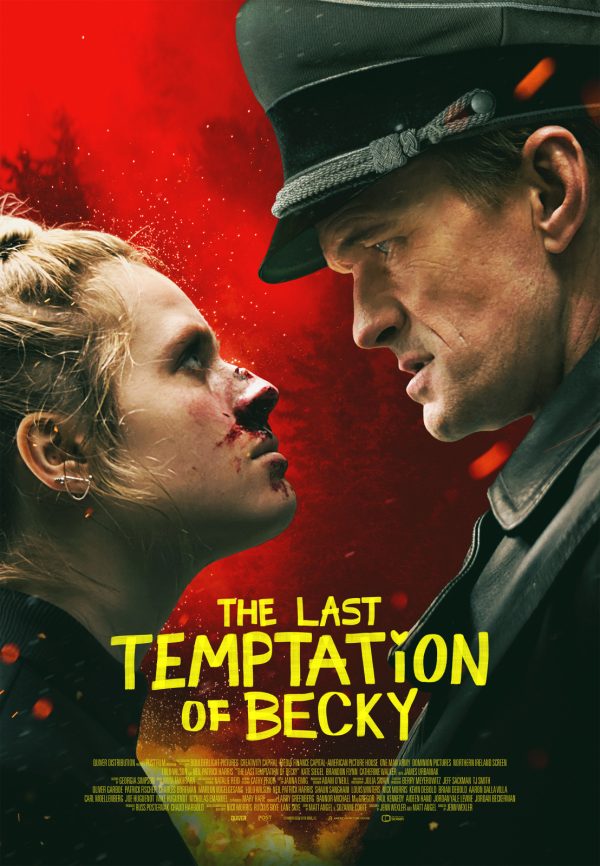
The cinematic landscape of action-thrillers has long relied on the reliable, cathartic appeal of vengeance, but few modern franchises have weaponized this trope with the hyper-stylized tenacity of the Becky series. Released in 2026, The Last Temptation of Becky marks the latest chapter in the blood-soaked saga of its eponymous anti-heroine. Directed by Jenn Wexler and co-written by Wexler alongside Matt Angel—who conceptualized the story with Suzanne Coote—the film brings back Lulu Wilson in the career-defining role she has inhabited and physically matured into over the past six years.
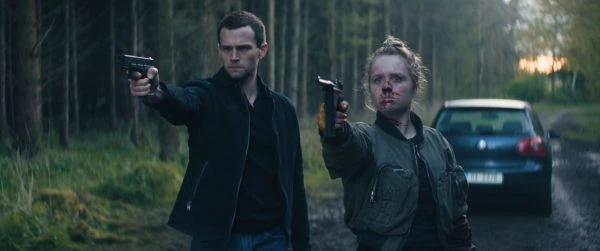
This installment trades the domestic isolation of the original film for the shadowy arenas of international espionage. Becky is no longer merely a resourceful teenager lashing out against home invaders; she is now an operative for the Central Intelligence Agency (CIA). Her mission takes her deep into the dense, haunting forests of Poland to infiltrate a seemingly quaint family-run inn. Unbeknownst to casual travelers, this establishment sits adjacent to The Wolf’s Lair—Adolf Hitler’s infamous World War II military headquarters.
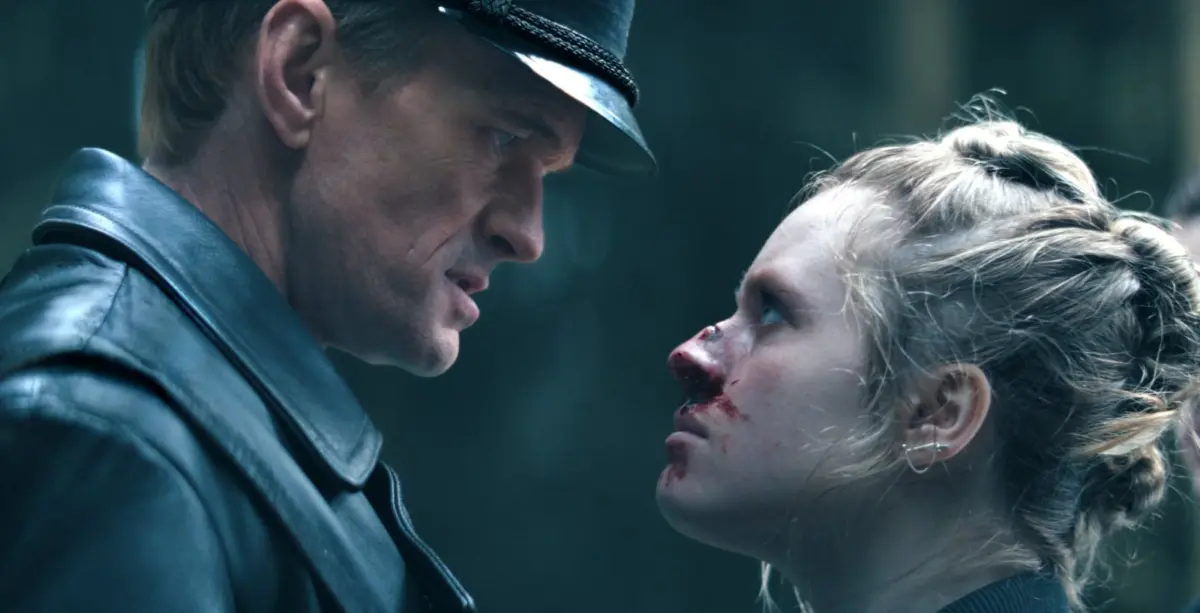
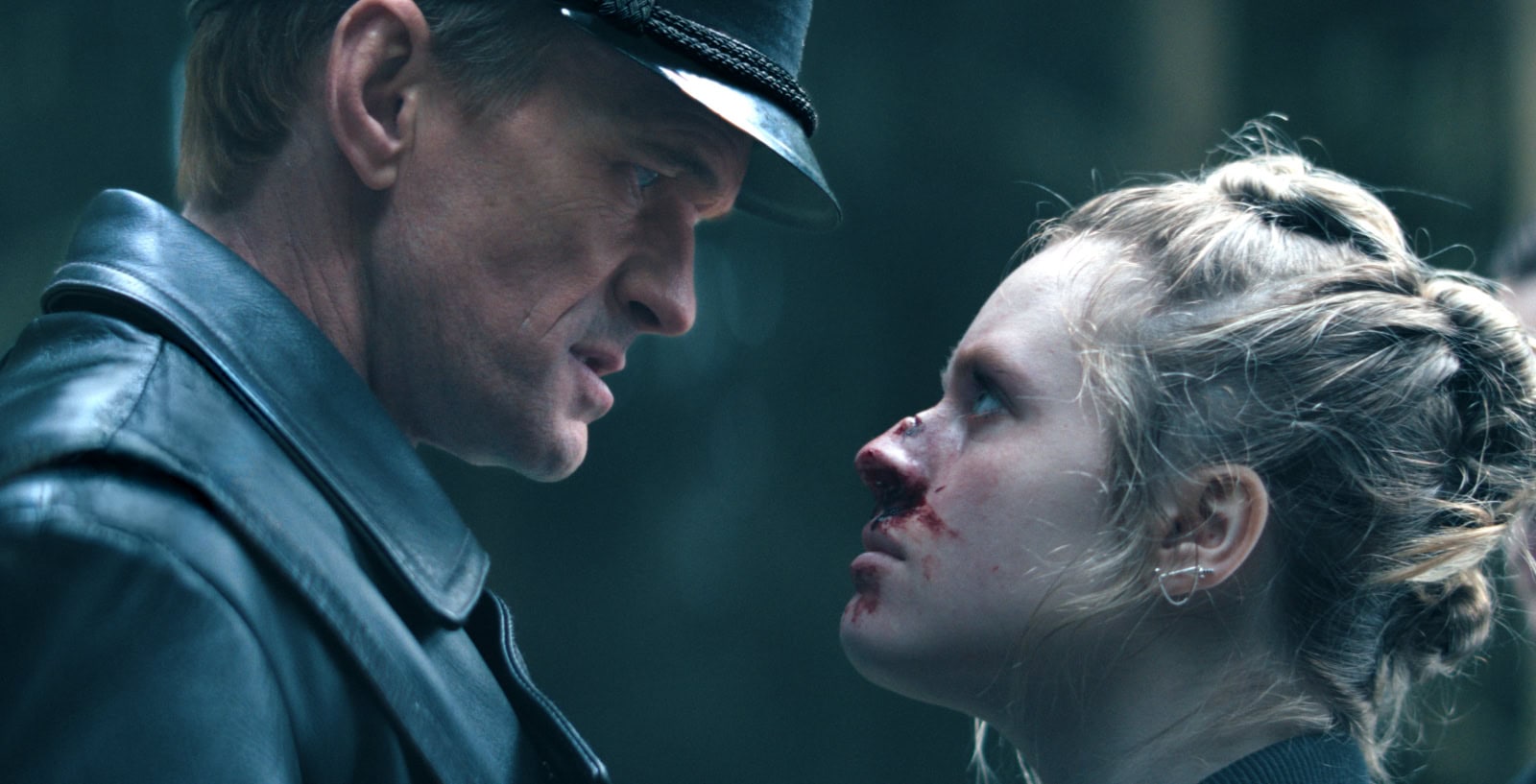
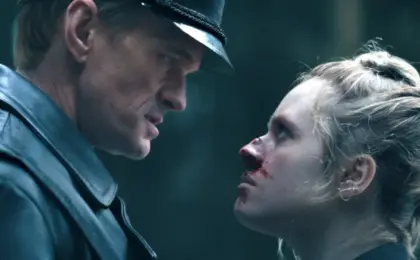
At the helm of this insidious family operation is General Wilhelm Reuss, portrayed against type by veteran comedic and dramatic actor Neil Patrick Harris. Reuss is not merely a proprietor of hospitality; he is an ideological zealot harboring ambitions of orchestrating the rise of the Fourth Reich. Driven by a long-standing narrative arc involving a mysterious key pursued in previous entries, Becky’s mission quickly devolves into a high-stakes, brutal game of survival and ideological retribution.
While The Last Temptation of Becky continues the franchise’s tradition of delivering crowd-pleasing, unapologetic violence against fascist adversaries, it simultaneously wrestles with the familiar creative bottlenecks that have plagued the series. Critics note that despite the elevation of Becky to a federal intelligence operative, the film occasionally stumbles in expanding her psychological interiority, relying instead on a well-worn narrative blueprint. Nevertheless, bolstered by Wilson’s hardened, uncompromising performance and a series of memorably visceral set-pieces—including harrowing confrontations with radicalized youth—the film ultimately delivers the visceral goods that its dedicated fan base demands.
Detailed Chronology
Act I: The Intelligence Apparatus and the Polish Incursion
The narrative of The Last Temptation of Becky opens with a stark reminder of the protagonist’s professional evolution. Now officially enlisted as a CIA field agent, Becky is thrust immediately into a high-octane operational failure that serves to establish her current psychological and professional baseline. The opening sequence demonstrates that despite her institutional backing, Becky’s methodologies remain resolutely chaotic; standard operational protocols routinely disintegrate, forcing her to improvise frantically when "Plan C"—or any viable fallback—fails to materialize.
These early moments feature fleeting glimpses into Becky’s internal state through psychological debriefings and sparse narration. These scenes emphasize the inescapable toll of an abnormal adolescence defined by continuous trauma and violence. Yet, the film wastes little time dwelling on bureaucratic introspection. The narrative quickly pivots to the primary objective: tracing the whereabouts of a cryptic, MacGuffin-driven key that has served as a central focal point across the franchise’s continuity.
Intelligence trails point toward a remote, picturesque inn nestled within the rural expanses of Poland. Operating this establishment is a seemingly ordinary family whose outward hospitality masks a sinister lineage. The patriarch, General Wilhelm Reuss (Neil Patrick Harris), is the descendant of a prominent Third Reich official whose historical ties to Hitler’s inner circle run deep. Upon arrival, Becky wastes no time establishing her psychological dominance. Before violence erupts or the family fully comprehends the lethal threat standing on their threshold, Becky delivers a chillingly sardonic piece of wordplay—"Is that Reich?"—before slipping away into the surrounding forest to reconnoiter the sprawling ruins of the adjacent World War II bunkers.
Act II: Into the Woods and the Inversion of Innocence
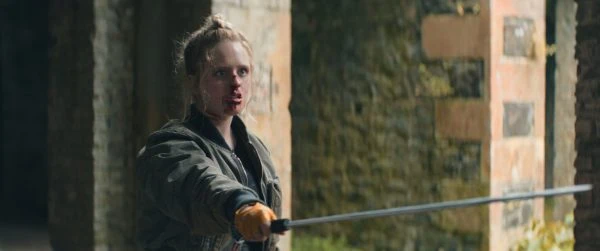
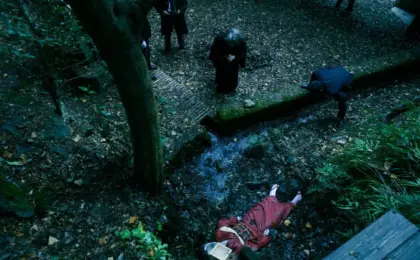
As Becky explores the decaying concrete corridors and mist-shrouded woodlands of The Wolf’s Lair, the film shifts into a tense game of cat-and-mouse. Director Jenn Wexler uses the historical weight of the location to amplify the atmospheric dread, contrasting the mundane trappings of the family-run inn with the subterranean horrors of fascist legacy.
A notable structural shift in this installment involves the role of children within the antagonist’s ranks. In a deliberate inversion of the dynamic established in the first film—where Becky herself was the solitary youth fighting off monstrous adults—General Reuss’s children are active, zealous participants in the hunt for the CIA operative. Wexler pulls no punches in these sequences; the children are portrayed not as helpless victims of circumstance, but as radicalized combatants thoroughly indoctrinated into their family’s fascist ideology.
This narrative choice leads to a series of intense, uncompromised one-on-one battle sequences between Becky and her youthful pursuers. Eschewing traditional cinematic taboos regarding violence against minors, the film depicts these skirmishes with unflinching brutality. At least one of these encounters escalates to a grim, visceral conclusion that subverts audience expectations and raises the stakes of Becky’s tactical predicament.
However, this middle stretch of the film occasionally bogs down in structural pacing issues. Much of the narrative momentum relies on an extended waiting game—anticipating the inevitable eruptions of bloodshed while the audience awaits explicit clarification on Reuss’s grand design for the recovered key. Furthermore, critics have noted that Harris’s performance as Reuss, while game for the material, occasionally suffers from a screenplay that underutilizes his enigmatic potential compared to the scene-stealing, against-type villainy previously delivered by actors like Kevin James and Seann William Scott in earlier entries.
Act III: The Climax and the Rise of the Fourth Reich
The narrative tension culminates when Reuss’s overarching plot—utilizing the key to unlock the remnants of fascist infrastructure and ignite a neo-Nazi renaissance—reaches its explosive fruition. The resulting confrontation within the bowels of the historical bunker system is a masterclass in grand-guignol absurdity and unfiltered cinematic catharsis.
The screenplay justifies its earlier pacing dips by delivering a climax defined by jaw-dropping spectacle and unrelenting violence. As Reuss’s plans unravel, Becky transitions from an undercover infiltrator into an unmitigated force of retribution. Lulu Wilson anchors these chaotic sequences with a stoic, world-weary physicality that channels contemporary sociopolitical anxieties. Notably, her character sports a jacket emblazoned with explicit, hostile messaging directed at fascists—a direct visual manifestation of the audience’s desire for unyielding resistance against modern extremism.
The resolution leaves the antagonists comprehensively neutralized, reaffirming Becky’s status as an enduring icon of vigilante justice. While the film concludes without offering groundbreaking developmental milestones for its protagonist’s inner emotional life, it fulfills its fundamental artistic contract: delivering a crowd-pleasing, unapologetically violent crusade against the ideological descendants of the Third Reich.
Supporting Context & Metrics
To fully contextualize The Last Temptation of Becky, one must examine the trajectory of the franchise as a whole. Launched simply as Becky in 2020, the original film caught audiences and critics by surprise with its hard-R rating, dark comedic timing, and unapologetic gore. Directed by Jonathan Milott and Cary Murnion, the first film established Lulu Wilson as a formidable action lead.
Metric / Detail
Becky (2020)
The Wrath of Becky (2023)
The Last Temptation of Becky (2026)
Director
Jonathan Milott, Cary Murnion
Matt Angel, Suzanne Coote
Jenn Wexler
Primary Setting
A secluded forest lake house
A roadside diner and suburban homes
A Polish inn near The Wolf’s Lair
Antagonist Actor
Kevin James
Seann William Scott
Neil Patrick Harris
Protagonist Status
Traumatized teenager
Drifter seeking autonomy
CIA field agent
Primary Theme
Home invasion survival
Vengeance and personal identity
International fascist conspiracy
The transition of directorial duties from film to film has allowed the franchise to experiment with tonal shifts. While the second installment leaned heavily into road-trip exploitation aesthetics, Jenn Wexler’s entry in 2026 infuses the narrative with European espionage elements and historical gothic horror undertones, utilizing the real-world notoriety of Hitler’s East Prussian headquarters.
Critical reception for The Last Temptation of Becky reflects a steady appreciation for its steadfast commitment to genre thrills, balanced against critiques of narrative repetition. Review aggregators place the film firmly in "crowd-pleaser" territory, earning praise for its practical effects work, Wilson’s commanding screen presence, and the sheer audacity of its villainous setup. However, reviewers frequently highlight that the franchise’s reluctance to deeply explore Becky’s psychological scars beyond surface-level framing prevents the series from ascending to high-art status—a compromise that fans of the exploitation genre are largely willing to forgive.
Official Statements
The production team and cast have been vocal regarding the thematic ambitions and logistical challenges of bringing The Last Temptation of Becky to life.
Director Jenn Wexler addressed the decision to transport the hyper-local violence of the earlier films into an international espionage framework during a press statement prior to the film’s release:
"We wanted to take everything that made Becky an icon of modern vengeance and scale it up without losing her core identity. Becky isn’t a traditional superhero; she’s a survivor who has been forced to institutionalize her trauma. Dropping her into Poland, right next to the physical ghosts of the Third Reich, allowed us to ask: what happens when a localized monster-slayer is handed a global map of fascism?"
Lulu Wilson reflected on growing up alongside the character over a six-year production span, emphasizing the physical and emotional evolution required to portray Becky as a CIA operative:
"Playing Becky across these different stages of her life has been the defining journey of my career so far. When we started, she was a kid reacting purely out of grief and rage. Now, as a CIA agent, she’s calculated, but that underlying fury hasn’t gone anywhere—if anything, it’s more focused. Putting on that jacket with the anti-Nazi messaging wasn’t just a costume choice; it felt like a direct statement on the world we’re living in today."
Co-writer Matt Angel commented on the introduction of Neil Patrick Harris as General Wilhelm Reuss and the deliberate decision to subvert audience expectations through the family dynamic:
"We needed an antagonist who could project urbane sophistication while hiding absolute moral rot. Neil brought a chilling precision to General Reuss. By surrounding him with an entire family—including children—who view fascism as a generational family business, we created a pressure cooker for Becky. It forces her into uncomfortable conflicts that test her limits in ways previous villains simply couldn’t."
Future Outlook
As the dust settles on the theatrical and streaming deployments of The Last Temptation of Becky, industry analysts and franchise enthusiasts are already speculating on the longevity of the IP. The film’s robust performance within genre-specific box office metrics and digital platforms indicates that audiences maintain an insatiable appetite for mid-budget, high-concept exploitation action.
Several narrative avenues remain open should the studio greenlight a fourth installment. With Becky now firmly established within the international intelligence apparatus—yet operating with a distinct lack of institutional obedience—future storylines could explore her rogue operations against global syndicates operating outside traditional geopolitical borders. Furthermore, the ambiguous fate of certain underground networks hinted at in the 2026 film provides ample narrative fodder for expanding the cinematic universe.
Ultimately, The Last Temptation of Becky solidifies Lulu Wilson’s status as a modern action icon while cementing Jenn Wexler’s stylistic chops within the genre. While the franchise may continue to face constructive criticism regarding its cyclical plot structures, its unwavering dedication to delivering unadulterated, cathartic cinematic justice ensures that Becky’s war against fascism will remain a vital fixture of contemporary action cinema for years to come.







Belum ada komentar. Jadilah yang pertama berkomentar!