

Executive Overview
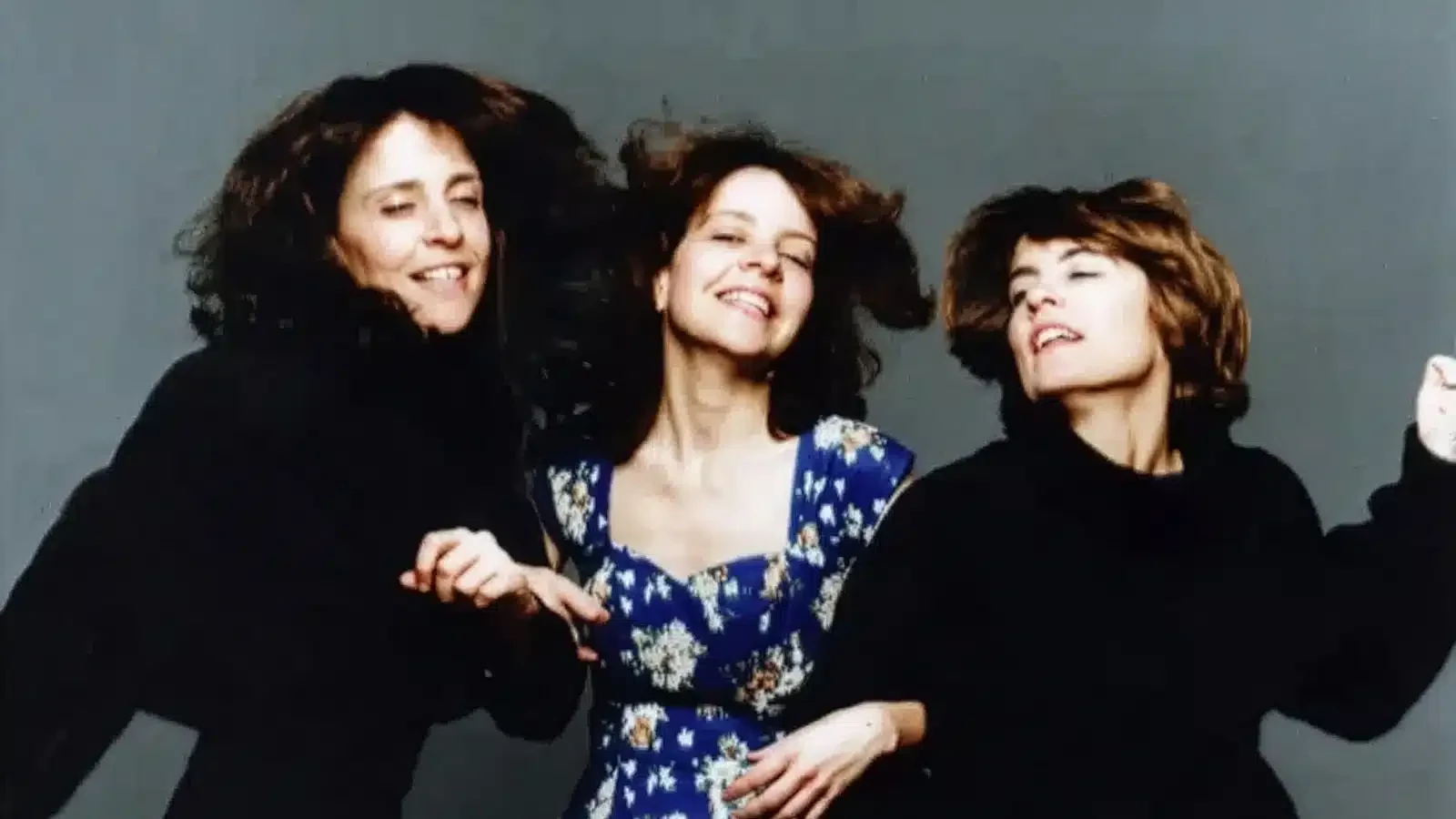
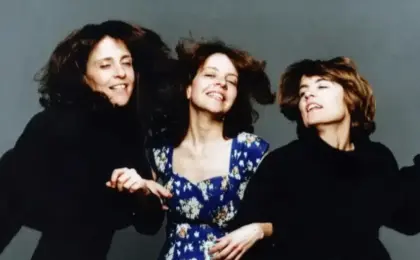
“We are Maggie and Terre and Suzzy,” announced the opening line of the first track on the Roches’ eponymous 1979 debut album. Produced by Robert Fripp—the sonic architect behind King Crimson and a frequent collaborator with Brian Eno and David Bowie—the record defied easy categorization from its very first note. To listeners versed in Fripp’s cerebral progressive rock or his avant-garde excursions with Talking Heads and Blondie, his presence on a folk-adjacent vocal harmony record was startling. Yet for the Roche sisters—Maggie, Terre, and Suzzy—genre borders were merely suggestions to be crossed, ignored, or dismantled entirely.
Before Suzzy rounded out the trio, Maggie and Terre Roche had already established themselves as formidable industry insiders, contributing backing vocals for Paul Simon and releasing a critically acclaimed 1975 folk-country-pop duets album, Seductive Reasoning. But when the three New Jersey-raised, Greenwich Village-associated sisters joined forces, they forged something entirely anomalous in the American musical landscape. Blending angelic, three-part vocal interplay with a vinegary, uncompromisingly sharp lyrical wit, the Roches operated outside the conventional machinery of the entertainment-industrial complex.
Though they never achieved the stadium-filling mass appeal of their contemporaries, the sisters cultivated a fierce, enduring loyalty among peers, critics, and discerning fans. They were frequently described as "toughies," embodying a hard-edged humanity that viewed the world with a wry, unvarnished irony. Though the passing of Maggie Roche in 2017 brought a definitive close to the trio’s chapter, and their final collaborative studio album arrived over two decades ago, the core of their catalog demands a radical re-evaluation. Far from being polite purveyors of coffeehouse folk, the Roches were, in the deepest and most authentic sense of the word, a punk band.
Detailed Chronology: Ten Masterclasses in Uncompromising Artistry
To understand the latent edge running through the Roches’ discography is to trace a path through experimental folk-pop, new wave angularity, and defiant self-possession. Ten key recordings encapsulate their singular aesthetic.
1. "Hammond Song" (The Roches, 1979)
Produced by Robert Fripp "in audio verité" with zero sonic trickery, the Roches’ debut single immediately set them apart from the standard Greenwich Village folk revivalists. Supported by Tony Levin’s anchoring bass and Fripp’s signature, searing guitar lines—dubbed "Fripperies"—the track marries lush, impenetrable vocal harmonies with narrative tension. Advisers warn a protagonist against venturing "down to Hammond" with "that fella," but the warning falls on determined, independent ears. Decades later, the song’s indelible melodies and lyrical hooks continue to be sampled and covered across genres, proving that its stark emotional architecture can withstand everything from new wave interpretations to modern heavy metal covers.
2. "Nurds" (Nurds, 1980)
For their sophomore outing, the sisters enlisted Roy Halee, renowned for his work with Simon and Garfunkel, to helm the board. However, the musical DNA of Nurds owed more to the spiky, jagged energy of Patti Smith and London’s post-punk scene, utilizing rhythm section veterans from Television and the Patti Smith Group. Long before internet culture weaponized or reclaimed the term, the title track served as a defiant anthem of self-acceptance. In true Roches fashion, they subverted any pigeonholing immediately afterward by following the track with a lush, completely a cappella rendition of Cole Porter’s 1933 standard, "It’s Bad for Me."
3. "Want Not Want Not" (Keep on Doing, 1982)
Despite the return of producer Robert Fripp and bassist Tony Levin for their third studio album, this track strips away ambient pretension in favor of pure, propulsive energy. Driven by acoustic guitars, frantic piano, and synchronized handclaps, the song channels a breathless velocity and an anti-establishment attitude that feels distinctly aligned with the ethos of the Ramones. It is a masterclass in packing punk-rock urgency into an acoustic framework.
4. "Keep on Doing What You Want / Jerks on the Loose" (Keep on Doing, 1982)
The album opens with a bold, completely straight-faced rendition of the "Hallelujah Chorus" from Handel’s Messiah—a brilliant, disruptive provocation for any unsuspecting listener. The album-closing title track merges new wave sensibilities with post-punk atmosphere, summoning the spectral, drumless melancholy of Joy Division’s Closer alongside the mechanical crispness of Devo. Serving as a de facto manifesto, the two-part title encapsulates the sisters’ refusal to compromise their artistic compass.
5. "The Angry Angry Man" (Another World, 1985)
Facing commercial pressures to deliver a more radio-friendly sound, the Roches worked with multiple producers on Another World. Yet, their glossier 1980s sheen never masked the biting reality of their songwriting. Beneath glittering production values lay tales of urban isolation, displacement, and vulnerability—hymned through pristine three-part harmonies referencing being "face down at Folk City." On stage, the trio recast these tracks as pure rock and roll, proving that art pop and roots rock could coexist seamlessly.
6. "Pounding" (Crossing Delancey Soundtrack, 1988)
Continuing down their polished 1980s avenue, the Roches delivered this gem for the romantic comedy Crossing Delancey. The track operates as a sophisticated bridge between the slick pop-punk of the Go-Go’s and the melodic storytelling of 1960s girl groups, filtered entirely through the sophisticated harmonic lens of three seasoned singer-songwriters.
7. "Big Nuthin’" (Speak, 1989)
Co-produced by Jeffrey Lesser, Speak embraced glistening, electronic soundscapes that felt years ahead of their time. While traditionalists might hesitate to label synthetic 1980s pop as punk, "Big Nuthin’" delivers a devastating cultural critique regarding unfulfilled expectations and the superficiality of modern identity. Accompanied by a playful music video that deconstructs media fabrication, the song anchors its catchy chorus in profound existential deflation: "I guess I never knew how big nuthin’ could be."
8. "Too Tough Hide" (A Dove, 1992)
Produced by Stewart Lerman, A Dove was largely a gentle, ethereal collection—making the inclusion of "Too Tough Hide" all the more striking. Here, the Roches stepped into Western-soundtrack rock, or "cowpunk." Rather than tracking a traditional frontier gunslinger, however, the song examines an urban apartment dweller who has cultivated an impenetrable, defensive emotional armor.
9. "When You’re Ready" (Can We Go Home Now, 1995)
Bookended by a spoken-word intro reminiscent of Laurie Anderson ("I am about to lift up the Empire State Building with my thumb"), this Stewart Lerman-produced track embodies the DIY ethos at its most whimsical and fearless. Refusing to adhere to structural norms, the song showcases the Roches not merely as musicians, but as artistic visionaries operating on an entirely different plane of existence.
10. "No Shoes" (Moonswept, 2007)
Written by Brooklyn-based performer Paranoid Larry, this wry, comedic litany of everyday dissatisfaction serves as a fitting bookend to the Roches’ catalog. Co-produced by Lerman and the sisters, the track captures their lifelong ability to balance deep observational watchfulness with self-effacing humor. Lines like "That really blows / He had no nose / That really sucks / He had no luck" invite an aggressive, full-throttle hardcore punk overhaul while remaining entirely true to the sisters’ singular worldview.
Supporting Context & Metrics: Assessing the Legacy
To properly contextualize the Roches’ impact within the broader music industry, one must look beyond traditional commercial metrics like Billboard chart placements or RIAA certifications, arenas where the trio deliberately chose not to play the standard game.
| Metric / Indicator | The Roches’ Standing | Industry Context |
|---|---|---|
| Primary Genre | Chamber Folk / Art Pop / New Wave | Frequently miscategorized as standard coffeehouse folk. |
| High-Profile Collaborators | Robert Fripp, Paul Simon, Roy Halee, Tony Levin, Stewart Lerman | Demonstrates immense cross-genre respect from prog-rock, folk, and art-pop icons. |
| Core Vocal Style | Complex, unassisted three-part close harmony | Highly influential among contemporary indie-folk revivalists. |
| Commercial Strategy | Total artistic autonomy; zero concession to commercial trends | Resulted in cult status rather than mainstream saturation. |
Industry analysts and music historians frequently point to the Roches as a missing link between the Greenwich Village folk tradition and the cerebral, art-damage aesthetics of downtown Manhattan’s post-punk explosion. Their ability to command the respect of virtuosos like Robert Fripp—who famously demanded authentic performances without artificial sweetening—underscores a level of musicality that transcended genre boundaries.
Official Statements and Archival Reflections
In various radio interviews and archival profiles throughout their active decades, the sisters frequently addressed the persistent confusion surrounding their identity, their sound, and their place in the musical ecosystem.
Reflecting on their aggressive independence during a vintage radio appearance, the trio laughed off a reporter’s mispronunciation of their name, which accidentally aligned them with the burgeoning punk movement. One sister famously quipped, "We are a punk band," sparking laughter in the studio. Yet, cultural critics reviewing their catalog decades later have validated that sentiment.
In a retrospective essay, musicologist and critic Robert Christgau noted:
"The Roches made music that was deceptively homespun on the surface, but underneath lay a sharp, unyielding core of psychological acuity. They didn’t need distorted guitars to be dangerous; their weapons were perfect pitch, narrative irony, and an absolute refusal to pander."
Furthermore, Robert Fripp reflected on his initial production sessions with the trio in liner notes and interviews, praising their unique internal calibration:
"Working with Maggie, Terre, and Suzzy was an exercise in absolute purity. They didn’t require external validation because their musical intuition was already operating at a level most musicians spend a lifetime trying to reach."
Future Outlook: The Enduring Relevance of The Roches
As the music industry continues to re-examine the margins of 20th-century art and popular culture, the legacy of the Roches is experiencing a quiet, profound renaissance. Younger generations of indie artists—particularly those utilizing complex vocal arrangements and unfiltered lyrical perspectives—frequently cite the sisters as foundational influences.
While a physical reunion of the original trio is rendered impossible by Maggie Roche’s passing in 2017, and Terre and Suzzy continue to pursue respected independent paths in music and writing, the recorded legacy remains intact and ripe for discovery. Streaming platforms and vinyl reissues have introduced their catalog to listeners who value authenticity over algorithmic gloss.
Ultimately, the Roches’ enduring message is one of radical self-possession. Whether facing down commercial expectations in the 1980s or singing a cappella arrangements of Cole Porter standards in the middle of a new-wave record, Maggie, Terre, and Suzzy proved that true artistic punk rock has nothing to do with volume, and everything to do with refusing to compromise who you are.



Belum ada komentar. Jadilah yang pertama berkomentar!