


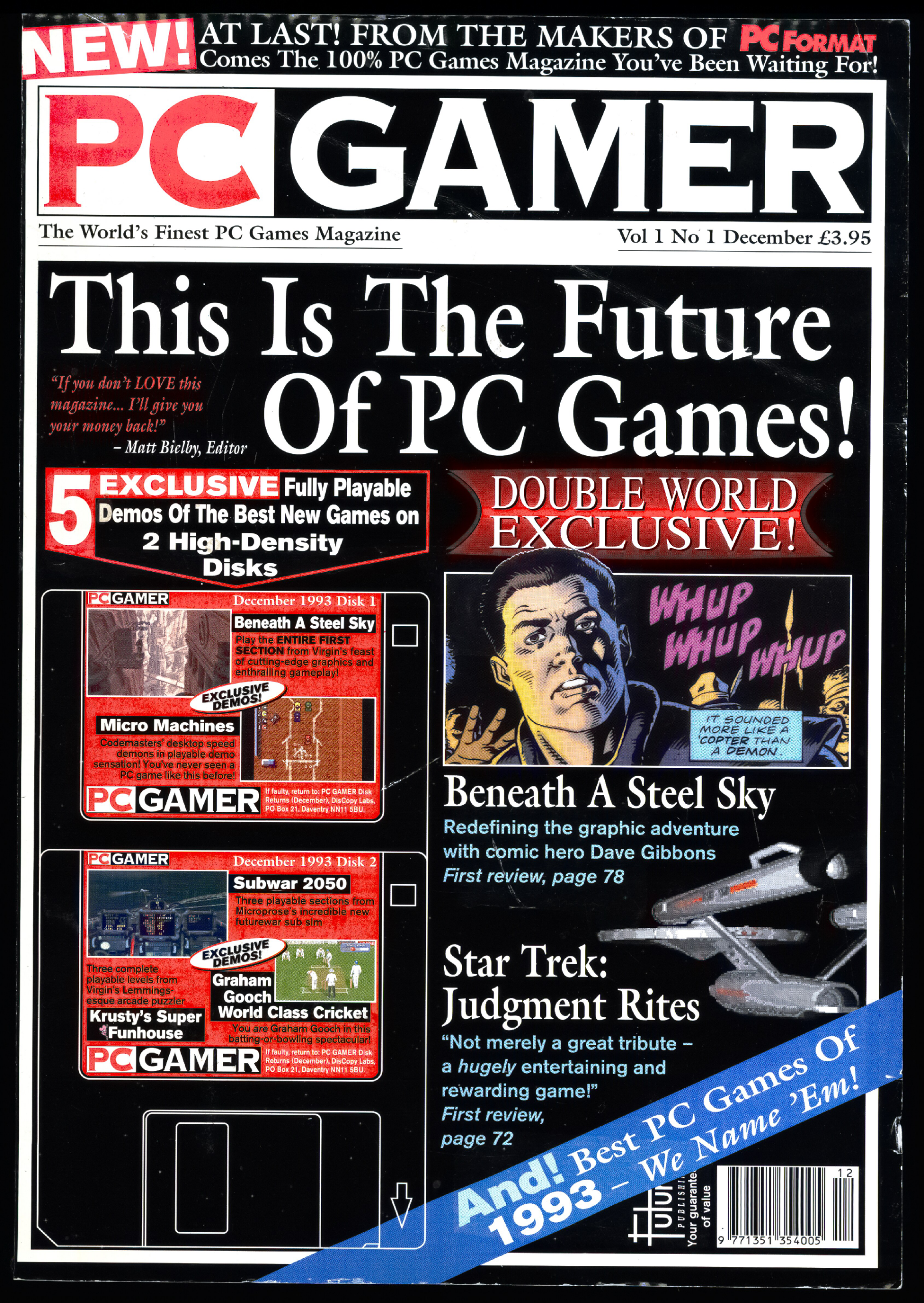
In the winter of 1993, the nascent British video game industry witnessed a landmark release that would cement its place in digital folklore: Beneath a Steel Sky. Published in the inaugural issue of PC Gamer (UK, December 1993), the game arrived wrapped in a tidal wave of hype, two years of rigorous development, and towering expectations. Developed by Revolution Software—then riding high on the relative success of their 1992 mythological debut, Lure of the Temptress—this oppressive, futuristic techno-thriller discarded fantasy tropes in favor of a gritty, cyberpunk landscape crafted in close collaboration with legendary comic book artist Dave Gibbons (Watchmen, Give Me Liberty).
Upon its release, critics faced a dense interactive tapestry that brazenly borrowed from speculative fiction legends like Philip K. Dick and William Gibson, while injecting a uniquely British brand of puzzle design and cynical wit. For foundational critic Garry Whitta, writing in PC Gamer #1, the game was "a must-buy for all serious adventure fans." Yet, contemporary retrospective analysis and historical critical counterpoints reveal a complex piece of interactive media: a title caught in an identity crisis between brooding noir atmosphere and jarringly upbeat musical accompaniment, elevated nonetheless by unforgettable companion dynamics and stellar environmental art. This retrospective explores the origins, reception, and lasting legacy of a cyberpunk classic that ultimately paved the way for modern narrative-driven adventure gaming.
Detailed Chronology: From Concept to Cyberpunk Milestone
The genesis of Beneath a Steel Sky dates back to the early 1990s, following the completion of Revolution Software’s Lure of the Temptress. Seeking to pivot away from high fantasy toward hard-edged science fiction, the studio forged a formidable creative partnership with Dave Gibbons. While an initially planned video game adaptation of Alan Moore and Dave Gibbons’ Watchmen famously collapsed, Gibbons redirected his creative energies toward Revolution’s new venture. He provided the dystopian cityscape designs, key character concepts, and essential narrative frameworks that would define the game’s aesthetic identity.
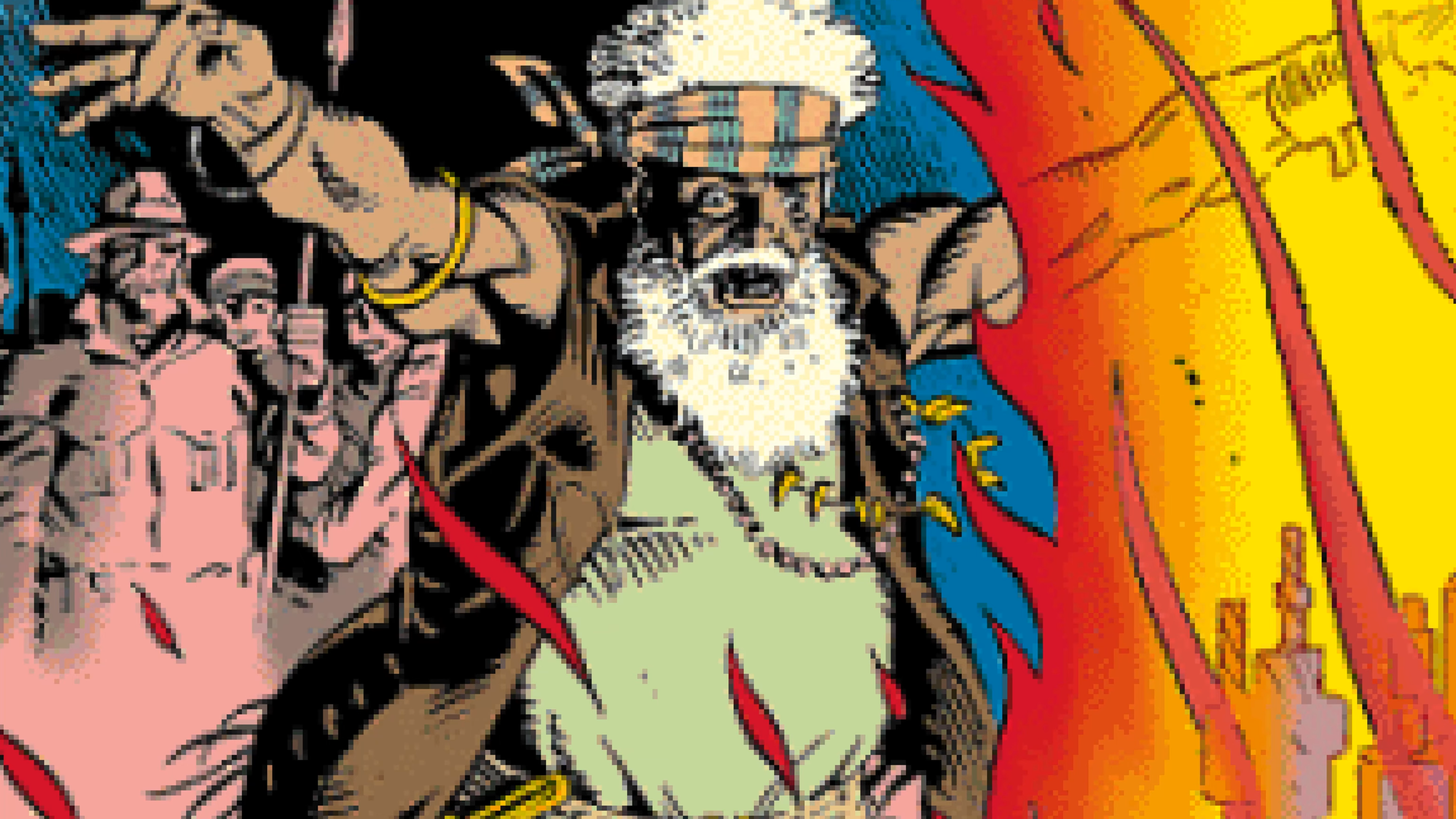
The World of the Upper City and "The Gap"
Set in a fractured, near-future dystopia where traditional world governments have utterly collapsed, Beneath a Steel Sky presents a bleak vision of corporate authoritarianism. Ravaged by severe ecological degradation and unchecked pollution, human society has fractured vertically: the ultra-wealthy nouveau riche retreat deep underground or into secure enclaves, while the impoverished working classes are relegated to towering, claustrophobic megastructures stretching high into the sky.
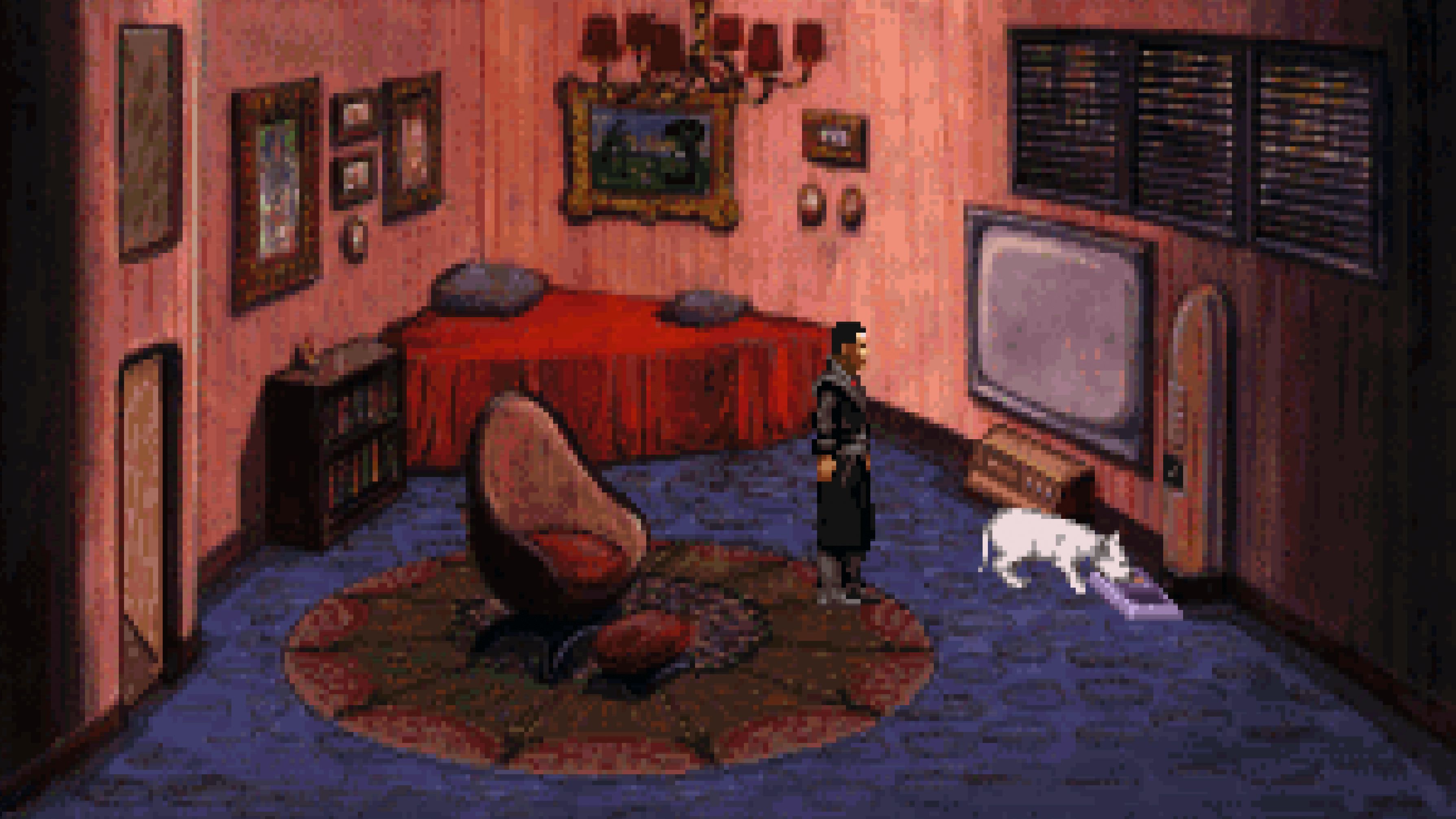
Beyond these monolithic urban centers lies "The Gap," a desolate, radioactive desert inhabited by outcasts, survivalists, and those who reject the authoritarian safety of the city. It is here that the game introduces its protagonist, Robert Foster—a rugged, raincoat-clad outsider. Foster’s tranquil isolation in The Gap is abruptly shattered when sinister corporate security forces kidnap him without explanation. Following a suspicious helicopter crash that leaves him stranded high within the oppressive upper tiers of the towering metropolis, Foster must begin his perilous descent to uncover the truth of his abduction.
The Puzzle Design and the Evolution of Joey
True to the point-and-click adventure genre conventions of the early 1990s, Beneath a Steel Sky relied heavily on inventory management, environmental interaction, and intricate puzzle-solving across roughly 100 distinct locations. Players were tasked with navigating security checkpoints, avoiding totalitarian guards, and manipulating corporate machinery.

However, the game’s narrative heartbeat is anchored by the relationship between Foster and Joey—a wise-cracking, sentient artificial intelligence. Beginning the game as a humble circuit board, Joey can be plugged into various cybernetic and robotic chassis encountered throughout the journey. This mechanic not only offered practical gameplay utilities for solving environmental puzzles but also introduced a well-scripted, classic adversarial chemistry that humanized the digital landscape.
Supporting Context & Metrics: Analyzing the 1993 Critical Landscape
When PC Gamer published its maiden UK issue in December 1993, the adventure genre was locked in a golden age dominated primarily by LucasArts’ output (such as Monkey Island and Indiana Jones and the Fate of Atlantis) and Sierra On-Line’s sprawling series. Beneath a Steel Sky entered this arena with immense ambition, yet it struggled with internal tonal consistency—a friction documented by the magazine’s initial reviewers.
Critical Metrics & Comparative Overview
| Feature / Element | Beneath a Steel Sky (1993) | Contemporary LucasArts Peers |
|---|---|---|
| Developer | Revolution Software | LucasArts |
| Aesthetic Direction | Cyberpunk Noir (Dave Gibbons) | Cartoon / Cinematic Realism |
| Primary Tone | Gritty, Techno-Thriller, Suspenseful | Humorous, Swashbuckling, Satirical |
| Key Companion | Joey (Modular AI circuit board) | Various dynamic NPCs / Solo protagonists |
| Scale | ~100 distinct locations | Varies (~50–80 locations) |
| Pacing / Puzzles | Logical inventory combos, corporate conspiracy | Narrative-driven gags, environmental interaction |
The Tonal Divide: Whitta vs. Bielby
While Garry Whitta lauded the game’s plotting and immersive conspiracy, praising its ability to keep players in the dark to fuel investigative curiosity, peer critic Matt Bielby offered a compelling counterpoint in the same review package. Bielby highlighted a fundamental tonal dichotomy that plagued the
"What do you best remember about the Monkey Island games? More than likely, it’s not the graphics… No, it’s probably the jokes. And that for me, is where Beneath A Steel Sky falls down. It’s just not funny… But simply that a few jokes would have spiced things up a bit."
Furthermore, Whitta himself critiqued the game’s fluctuating atmosphere. Despite Dave Gibbons’ breathtaking background art and an accompanying promotional mini-comic that established a grim, rain-slicked cyberpunk mood, the game’s auditory direction often faltered. Rather than utilizing haunting, atmospheric synthesizer soundscapes akin to Ridley Scott’s Blade Runner, the in-game soundtrack frequently featured buoyant, incongruous melodies reminiscent of contemporary pop radio jingles. This friction prevented Beneath a Steel Sky from achieving total, uninterrupted immersion, showcasing a young development team experimenting with how narrative tone, audio, and visual design intersect.
Official Statements and Retrospective Insights
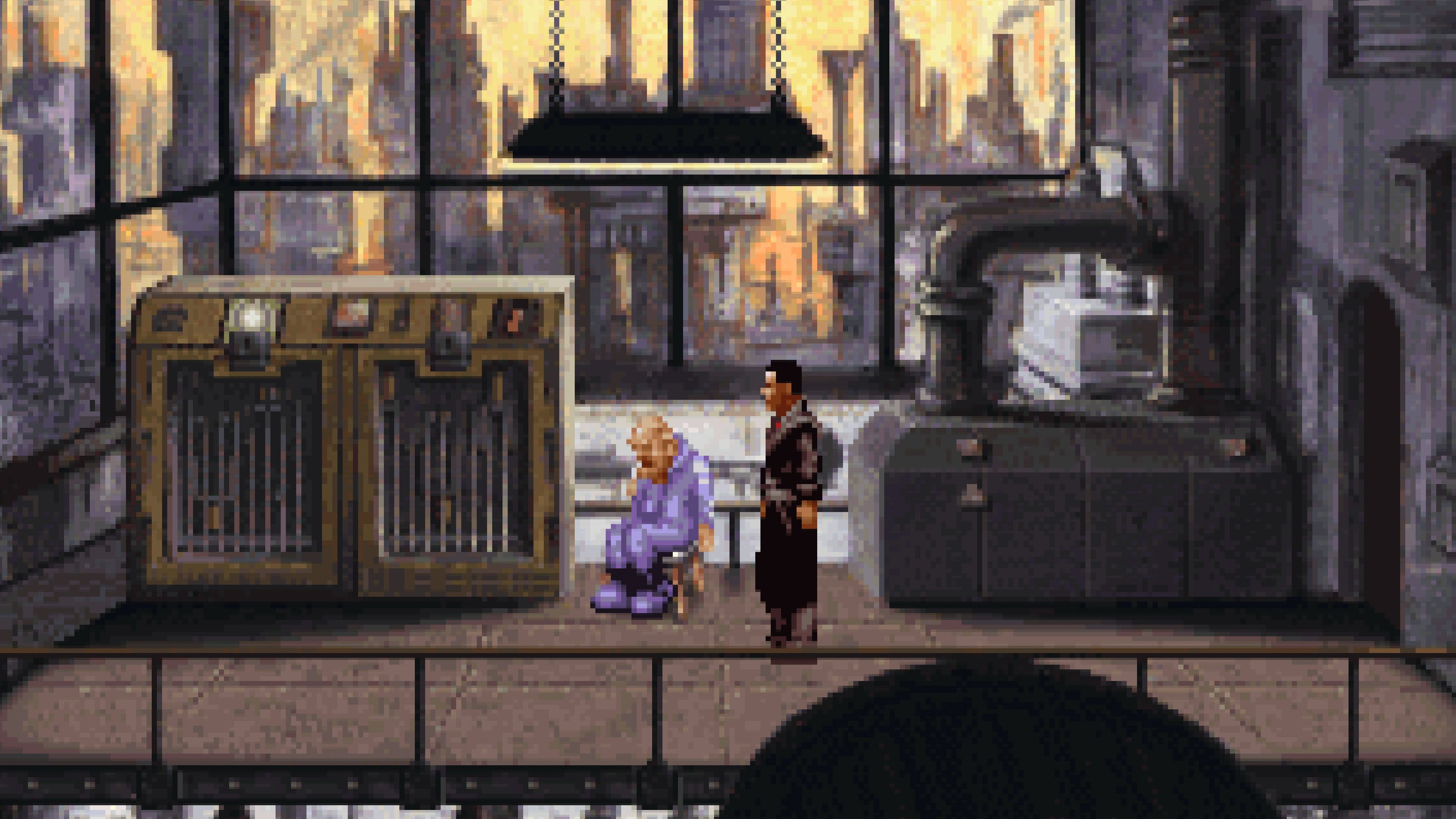
Decades after its initial release, Beneath a Steel Sky is celebrated not merely as a relic of 1993 PC gaming, but as a foundational pillar of European graphic adventure design. Revolution Software’s integration of comic-book artistry permanently altered expectations for visual fidelity in a pre-3D era.
Reflecting on the era, archive historians and modern critics often point out that Gibbons’ hand-drawn aesthetic remains far more visually cohesive and enduring than the clumsy early 3D polygons that swept the industry later in the decade. The artistic success of the title proved that 2D graphical fidelity, when executed by a master illustrator, could outlast the march of technological hardware upgrades.
The game’s cultural footprint ultimately justified a long-awaited crowdfunding campaign, culminating in the 2020 release of its sequel, Beyond a Steel Sky. While the sequel transitioned the franchise into full 3D environments—earning a stellar 81% review score from PC Gamer’s Ian Evenden—purists continue to look back at the 1993 original as the definitive articulation of Foster and Joey’s dystopian universe.
Future Outlook: The Enduring Legacy of Point-and-Click Sci-Fi
As the video game industry continues to revisit classic IPs through remasters, spiritual successors, and narrative-driven indie revivals, the footprint of Beneath a Steel Sky remains clearly visible. Modern adventure games owe a significant debt to Revolution Software’s willingness to tackle mature, socio-political themes—such as corporate dominance, artificial intelligence ethics, and environmental collapse—long before such concepts saturated mainstream interactive entertainment.
For modern players, the original 1993 classic stands as an essential historical artifact. It demonstrates how tight collaboration between comic artists and software developers can produce a universe rich enough to span decades, inspiring sequels and maintaining a devoted following nearly thirty years after its initial print run in PC Gamer. Whether unravelling corporate conspiracies in the upper towers of Union City or bantering with a circuit-board-bound AI, Beneath a Steel Sky remains an unassailable classic of the adventure genre—a true must-buy for all serious fans of interactive storytelling.





Belum ada komentar. Jadilah yang pertama berkomentar!