

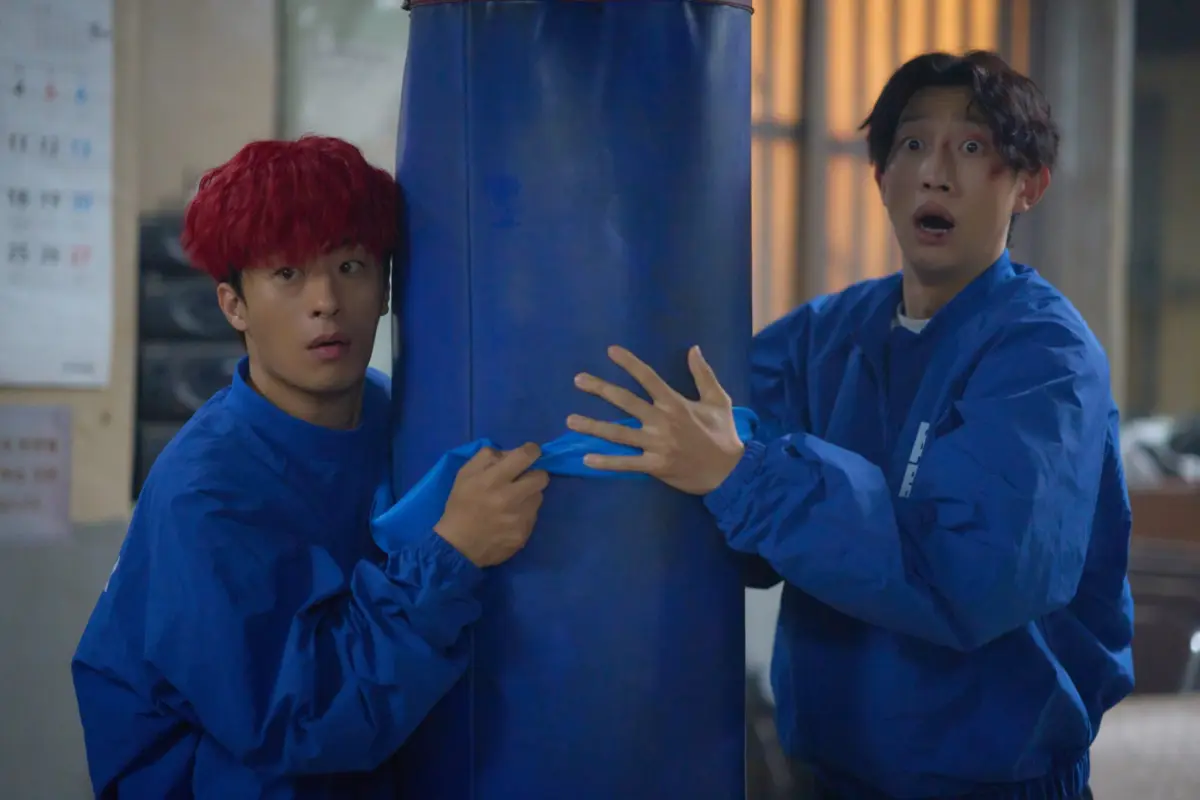
As the global appetite for webtoon adaptations continues to reshape the cinematic landscape, few upcoming projects have captured the industry’s attention quite like Reawaken Man: The Red. Slated for a theatrical release on September 30, this high-stakes action thriller breaks away from the brooding, untouchable tropes typically associated with superhuman protagonists. Instead, it anchors its cosmic-tier premise—the ability to resurrect 72 hours after death—to the thoroughly grounded, anxiety-ridden existence of an unemployed job seeker.
At the center of this narrative storm is versatile South Korean actor Koo Kyo Hwan, who steps into the role of Seok Hwan, a man whose only initial qualification is an unyielding, almost comedic reservoir of unfounded self-confidence. Adapted from the popular digital manhwa, the film promises a kinetic blend of gritty combat, supernatural escalation, and deeply human comedy. Promotional campaigns have heavily leaned into this duality, recently highlighting three distinct charms that make Seok Hwan less of an infallible superhero and more of a mirror for the modern working-class struggle.
While Seok Hwan’s physical form undergoes dramatic mutations with every resurrection—culminating in a striking shock of red hair and amplified strength—his internal motivations remain delightfully mundane. Whether he is botching job interviews due to a terminal inability to filter his thoughts, daydreaming about spicy tteokbokki in the middle of a vehicular death race, or bickering with his younger sister over the correct water-to-noodle ratio for ramen, the character subverts standard genre expectations. This comprehensive report delves into the anatomy of Reawaken Man: The Red, exploring its plot mechanics, character psychology, the broader context of its production, and its positioning within the contemporary Korean box office ecosystem.
Detailed Chronology: From Webtoon Panels to the Silver Screen
The journey of Reawaken Man: The Red from a serialized digital comic strip to a major motion picture reflects a calculated strategy by production houses to mine established intellectual property with built-in fandoms. The source webtoon, celebrated for its visceral action sequences and deadpan humor, established a universe where extraordinary abilities do not exempt individuals from the banal cruelties of modern economics.
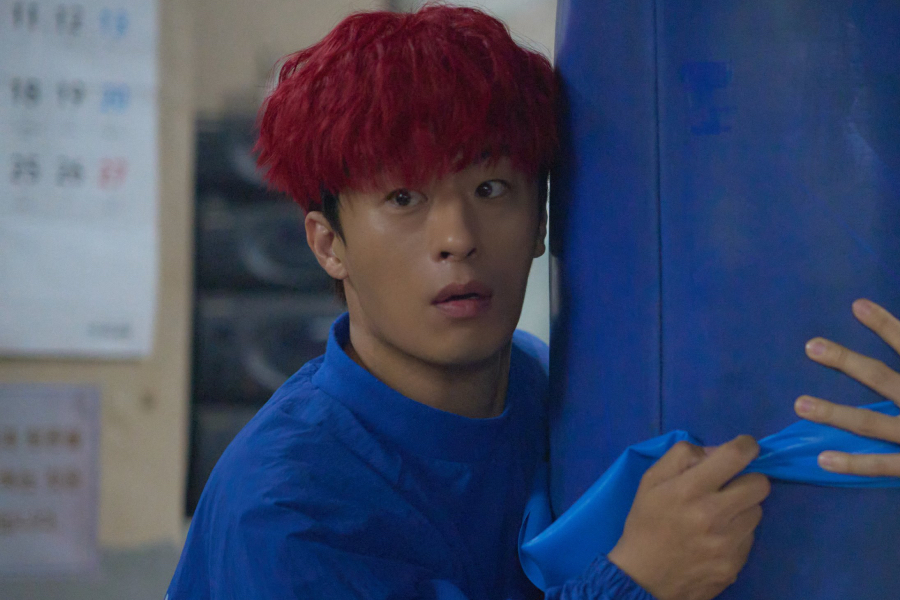
Phase One: The Introduction of Seok Hwan
In the narrative chronology established by the film’s promotional rollout, viewers are first introduced to Seok Hwan in his natural habitat: the unemployment queue. Armed with nothing more than sheer bravado, Seok Hwan bounces from one disastrous job interview to the next. His downfall is consistently his inability to suppress his inner monologue, leading potential employers to reject him outright. Yet, this persistent failure fails to dent his morale. He retreats to his domestic sphere to conduct mock interviews with his younger sister, Ye Rin (portrayed by Kim Si Ah), establishing a warm sibling dynamic that grounds the fantastical elements of the story.
Phase Two: The Catalyst and the Resurrection Curse
The inciting incident of the film occurs when Seok Hwan dies, only to abruptly wake up 72 hours later. This supernatural awakening serves as a double-edged sword. While it grants him a second lease on life—and progressively greater physical strength with each cycle—it also triggers a cascading series of existential complications. His hair begins to take on an unmistakable red hue, signaling the accumulation of his regenerative power. More dangerously, his miraculous survival draws the attention of ominous shadowy forces.
Phase Three: The Arrival of Black and the High-Speed Pursuit
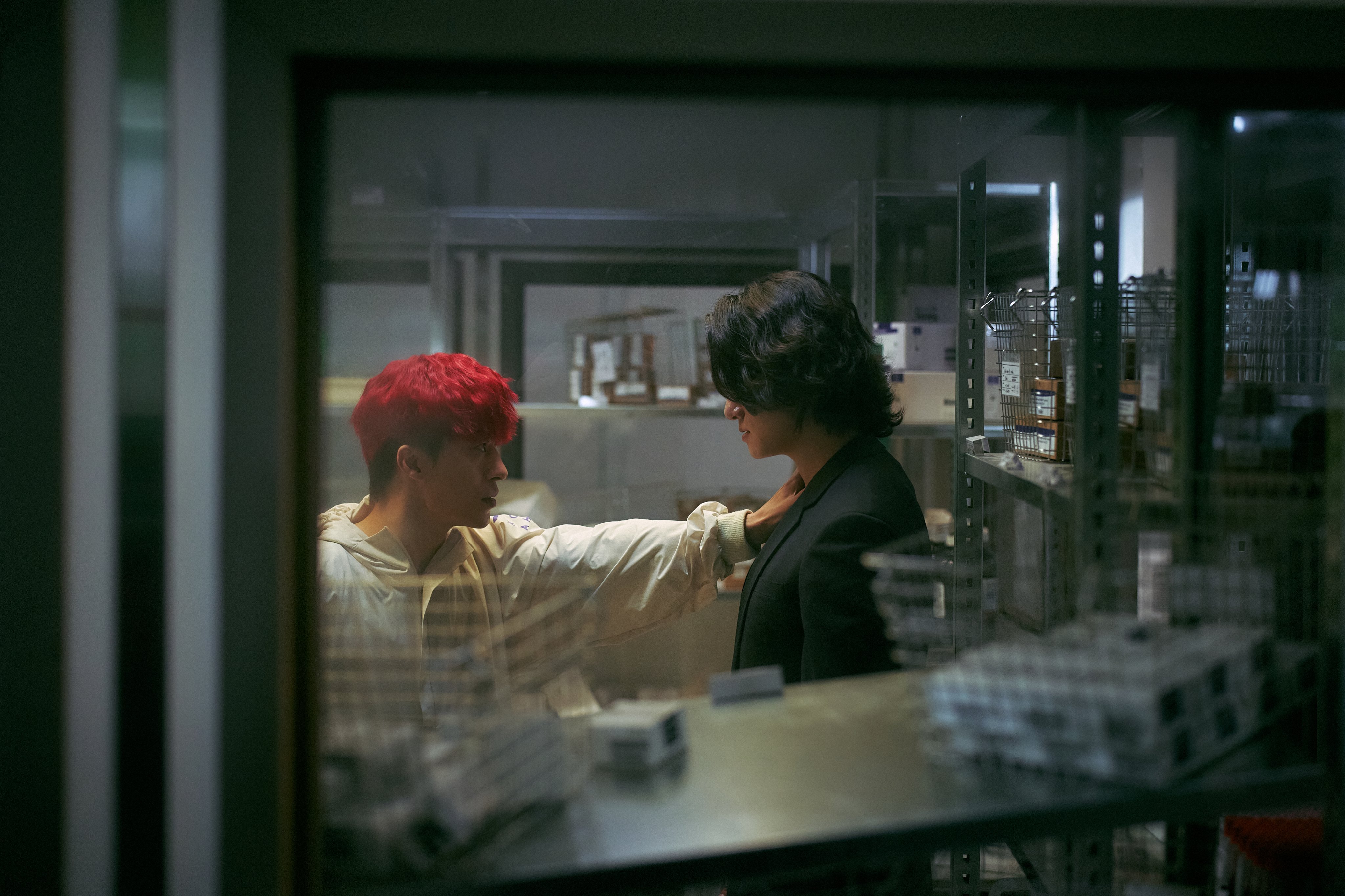
As Seok Hwan begins to grapple with his newfound mortality—or lack thereof—he becomes the primary target of a mysterious antagonist known as Black, played with menacing intensity by Shin Seung Ho. Black possesses the terrifying ability to manipulate the minds of others, turning ordinary environments into psychological and physical minefields.
The ensuing conflict shifts the film into a high-octane thriller. A standout sequence features a terrifying car chase through claustrophobic urban alleys, where Seok Hwan finds himself dodging lethal threats while simultaneously processing the existential terror of his pursuers. True to the film’s idiosyncratic tone, this life-or-death crisis is juxtaposed with Seok Hwan’s sudden, intrusive craving for tteokbokki, perfectly illustrating how the character marries high-stakes peril with everyday human appetite.

Supporting Context & Character Dynamics
To fully understand the narrative weight of Reawaken Man: The Red, one must examine the ensemble cast and the psychological architecture of its protagonist. The film relies heavily on the chemistry between Koo Kyo Hwan, Kim Si Ah, and Shin Seung Ho to bridge the gap between high-concept fantasy and domestic realism.
The Sibling Anchor: Seok Hwan and Ye Rin
At the beating heart of Seok Hwan’s characterization is his profound devotion to his family. Despite possessing the capacity to cheat death, his ultimate aspirations remain astonishingly modest. His primary goals upon securing a steady income are twofold: to treat his family to a lavish meal of premium grilled beef with his first paycheck, and to reliably cover Ye Rin’s college tuition.
Kim Si Ah’s portrayal of Ye Rin provides a necessary foil to Seok Hwan’s delusions of grandeur. Their interactions are refreshingly devoid of melodramatic tropes; instead, they squabble over mundane domestic matters, such as the precise amount of water required to boil a packet of instant ramen. This meticulous attention to ordinary sibling friction ensures that when the narrative escalates into supernatural warfare, the emotional stakes remain anchored in a recognizable reality.
[Seok Hwan: Superpowered Resurrection]
       │
       ├─► Motivation 1: Pay off Ye Rin's tuition (Family First)
       ├─► Motivation 2: Buy premium grilled beef with paycheck
       └─► Reality Check: Arguing over ramen water & failing job interviews
The Antagonist: Shin Seung Ho as "Black"
Providing the narrative friction against Seok Hwan’s laid-back resilience is Shin Seung Ho’s character, Black. Where Seok Hwan represents chaotic, accidental survival fueled by blue-collar determination, Black embodies calculated, institutional menace. His mind-manipulation abilities introduce a psychological dimension to the action choreography, forcing Seok Hwan to rely on more than just brute physical strength or his 72-hour resurrection cycle. The clash between Black’s cerebral dominance and Seok Hwan’s stubborn refusal to stay dead forms the primary conflict of the second and third acts.
Official Statements and Production Insights
The creative team behind Reawaken Man: The Red has been vocal about the unique tone they aimed to achieve. In recent press releases and character featurettes, the production emphasized that the film’s charm lies in its deliberate refusal to take its superhero elements too seriously.
"Seok Hwan is not your traditional savior of the universe," notes a production insider. "He is someone who has to worry about rent and resume formatting one minute, and dodging a mind-controlling assassin the next. Koo Kyo Hwan brings a specific brand of vulnerable authenticity to the role that keeps the comedy sharp and the emotional stakes believable."
Directors and writers adapted the original webtoon material with a focus on pacing, ensuring that the transition from quiet, comedic domestic scenes to explosive, red-tinted action sequences felt organic. The choice of Koo Kyo Hwan—widely acclaimed for his eclectic filmography and ability to blend quirky humor with intense dramatic delivery—was viewed as critical to capturing the source material’s distinct flavor.
Furthermore, the involvement of rising star Kim Si Ah and powerhouse antagonist Shin Seung Ho rounds out a cast designed to appeal to both webtoon purists and mainstream cinematic audiences. Promotional campaigns have heavily utilized interactive trailers and character breakdowns to build momentum ahead of the late-September premiere, positioning the film as a late-summer blockbuster counter-programming choice.
Future Outlook & Market Positioning
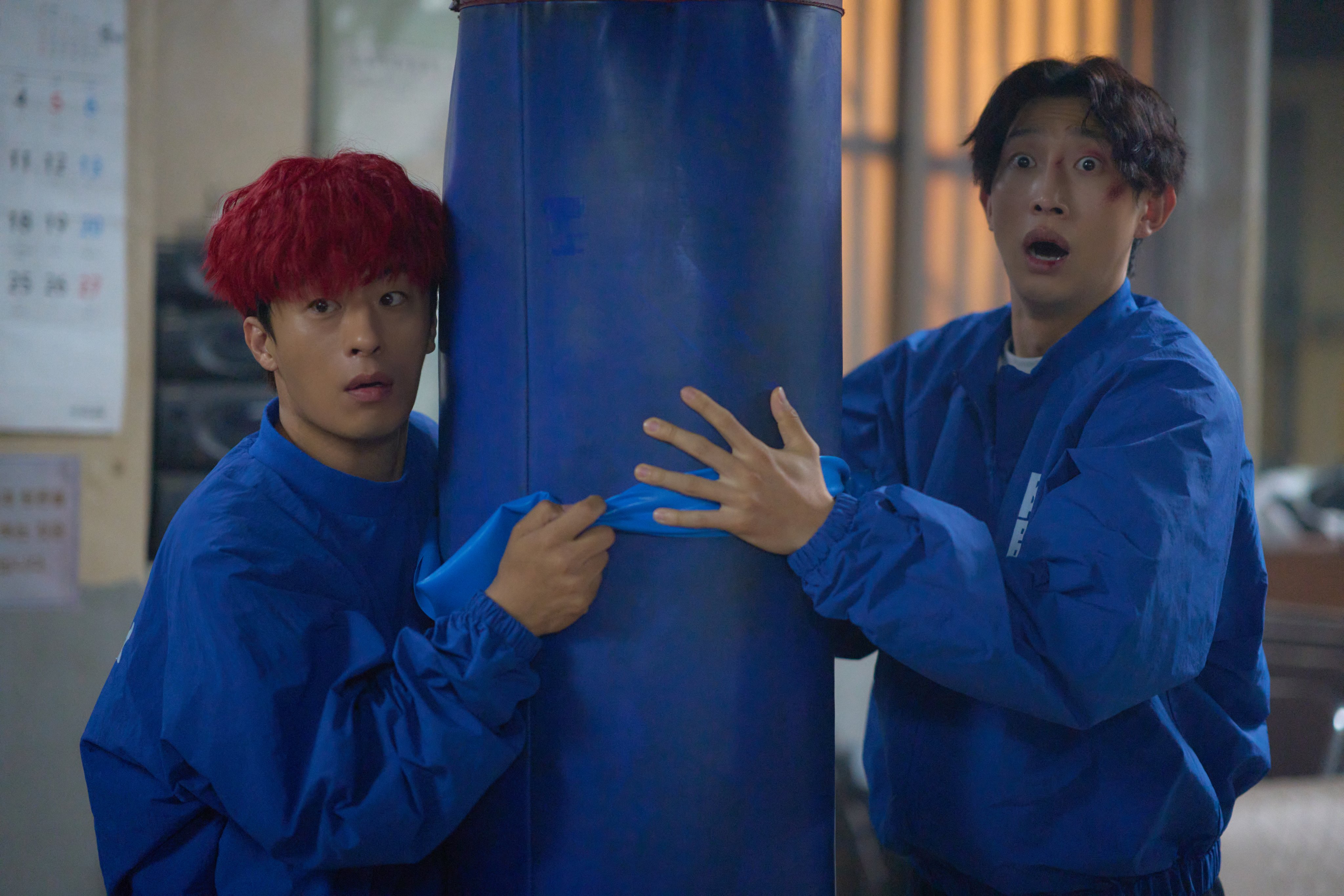
As the Korean film industry navigates post-pandemic theatrical recovery, studios have increasingly turned to proven intellectual properties and genre-blending experiments to secure box office stability. Reawaken Man: The Red sits precisely at this intersection, combining the serialized loyalty of webtoon readers with the broad commercial appeal of high-concept action-comedy.
Box Office Expectations for the September 30 Release
Opening on September 30, Reawaken Man: The Red enters a competitive theatrical window. However, its unique tonal signature—distinguishing it from darker, more austere noir thrillers that frequently dominate Korean cinema—gives it a distinct marketing advantage. By leaning into relatable socioeconomic anxieties (job hunting, rising tuition costs, the simple desire for comfort food like tteokbokki) while delivering top-tier CGI and stunt choreography, the film targets a broad demographic ranging from Gen Z webtoon fans to older audiences seeking unpretentious entertainment.
Potential for Franchise Expansion
Given the expansive nature of the source webtoon universe, industry analysts are already eyeing Reawaken Man: The Red as a potential franchise starter. If the film achieves critical and commercial success, the universe offers a wealth of auxiliary characters, expanded lore regarding the mechanics of resurrection, and opportunities for cinematic crossovers.
For now, all eyes remain fixed on Koo Kyo Hwan’s chaotic, red-haired journey. As audiences prepare to fill theaters on September 30, the prevailing sentiment is one of eager anticipation: a chance to root for a superhero who would undoubtedly prefer to finish his bowl of spicy rice cakes before saving the day.









Belum ada komentar. Jadilah yang pertama berkomentar!