

Executive Overview
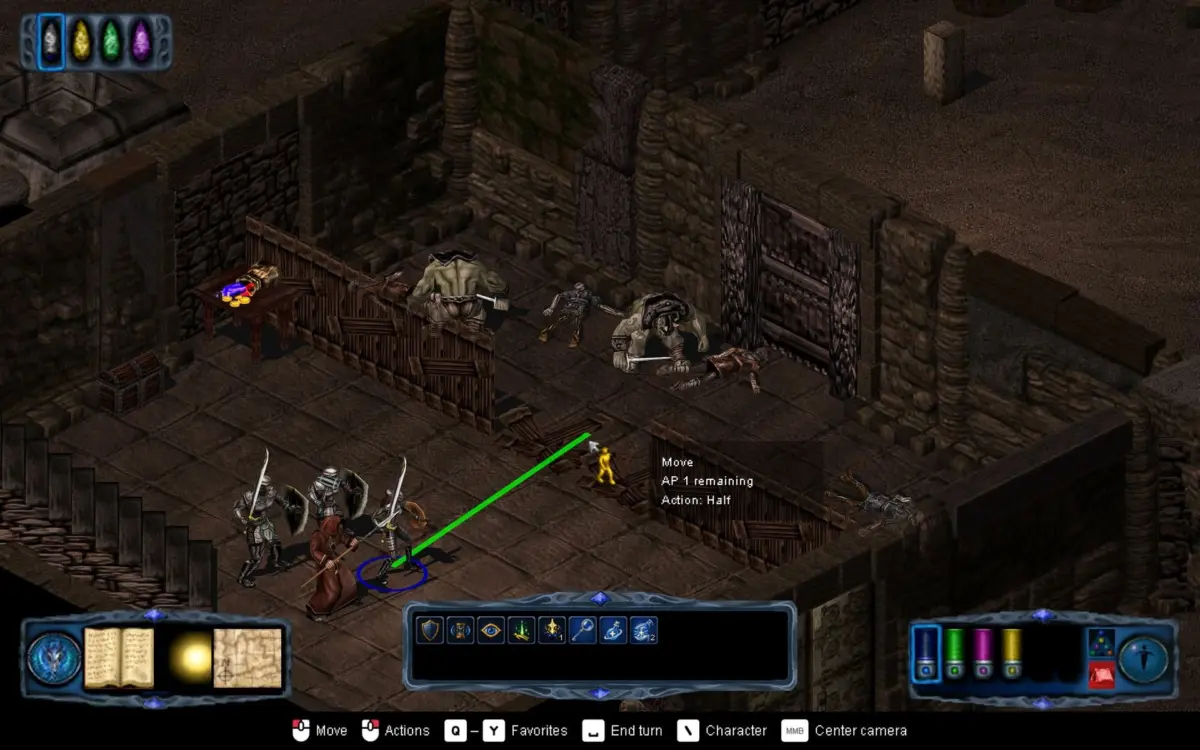
Few video game launches in the history of the personal computer era achieved the catastrophic infamy of Pool of Radiance: Ruins of Myth Drannor. Released in 2001 by Stormfront Studios and published by SSI, the turn-based tactical role-playing game arrived with immense expectations as a spiritual successor to the legendary Gold Box Dungeons & Dragons titles of the late 1980s and early 1990s. Instead of cementing a triumphant return for the legendary tabletop franchise in the digital sphere, the game’s debut is remembered by industry veterans alongside Daikatana as a textbook example of a disastrous rollout.
At launch, Ruins of Myth Drannor was plagued by a staggering array of software bugs that corrupted save files, made essential quest items vanish into the digital ether, and—most notoriously—wiped out critical operating system files during the uninstallation process. The resulting backlash effectively crippled the game’s commercial legacy and cast a long, dark shadow over its reputation for over two decades.
Now, more than twenty years later, publisher SNEG has pulled off a miraculous technical resuscitation. Bringing the long-neglected title to modern storefronts via Steam and GOG, this contemporary re-release completely eliminates the historical stability hazards while introducing quality-of-life enhancements such as widescreen resolution support, robust controller integrations, adjustable combat pacing, contextual tooltips, and a streamlined action bar.
While the title remains a rudimentary, combat-heavy dungeon crawler rather than a lost narrative masterpiece, its return offers both a fascinating historical artifact for tabletop enthusiasts and a surprisingly engaging, low-stakes comfort game for modern retro-RPG aficionados.
Detailed Chronology
The 2001 Launch: A Masterclass in Software Catastrophe
To understand the magnitude of the Pool of Radiance: Ruins of Myth Drannor re-release, one must examine the perilous landscape of PC gaming at the turn of the millennium. Anticipation was fever-pitch high. The game promised to translate the brand-new, highly anticipated Third Edition (3.0) Dungeons & Dragons ruleset into a fully 3D isometric and tactical environment.
However, when copies hit retail shelves in mid-2001, early adopters quickly realized they had purchased a technical nightmare. Within days of its debut, gaming forums and tech support lines were flooded with panicked reports. The software was aggressively unstable, suffering from memory leaks and severe engine fractures.
The tipping point for the community, however, was the uninstaller. Due to a critical programming oversight, executing the uninstall sequence did not merely strip the game directories from a user’s hard drive; it targeted the root Windows directory, indiscriminately deleting vital system files. For thousands of players, removing a faulty game meant being forced to entirely reformat and reinstall their computer’s operating system.
Reviews of the era were blistering. Critics compared the rollout to the most infamous corporate blunders in interactive entertainment history. Despite patches and community-driven workarounds issued in the months that followed, the damage to the game’s reputation was permanent. SSI’s parent company restructured, and the title was relegated to the dustbin of digital history as an ominous warning regarding QA testing.
The Wilderness Years and Community Resilience
For over twenty years, playing Ruins of Myth Drannor required a masochistic level of dedication. Running the game on modern hardware was a frustrating exercise in compatibility patches, wrapper configurations, and perpetual anxiety over save-file corruption.
While subsequent adaptations of the D&D ruleset—such as Troika Games’ critically acclaimed The Temple of Elemental Evil in 2003—managed to implement the 3.5 rules with greater fidelity and depth, Ruins of Myth Drannor remained an untouchable pariah. It was a footnote in historical retrospectives, cited primarily as a cautionary tale of rushed development cycles and inadequate quality assurance pipelines.
The 2024 SNEG Revival
The modern landscape of digital distribution has fostered a thriving market for retro preservation, spearheaded by specialized publishers like SNEG, Nightdive Studios, and GOG. Recognizing that time heals even the deepest software scars, SNEG undertook the arduous task of stabilizing the source code of Ruins of Myth Drannor.
Released quietly to Steam and GOG, the new iteration requires no fan patches or virtual machine wizardry. It simply boots up, runs at modern resolutions, and—crucially—leaves Windows system files completely unmolested during removal. For a generation of players who watched the 2001 launch from the sidelines, the re-release finally offers a safe, accessible gateway into a previously forbidden chapter of PC gaming history.
Supporting Context & Metrics
Adapting the Revolutionary D&D 3.0 Ruleset
A significant portion of the original excitement surrounding Ruins of Myth Drannor stemmed from its role as an early digital pioneer for the D&D Third Edition rules. Released just as Wizards of the Coast was modernizing the tabletop experience, the 3.0 ruleset swept away decades of archaic, counter-intuitive mechanics.
Most notably, the transition from descending Armor Class (AC) to ascending AC was a monumental relief for both seasoned dungeon masters and bewildered novices. Under old-school rules, players had to wrap their heads around the fact that lower armor values—often dipping into negative integers—indicated better protection. The 3.0 rules streamlined this into a logical additive system: higher numbers meant better defense, aligning video game interfaces more cleanly with common sense.
Furthermore, the 3.0 mechanics formalized the universal d20 core mechanic: roll a twenty-sided die, add a relevant modifier, and attempt to meet or exceed a predefined Difficulty Class (DC). Anyone familiar with modern Dungeons & Dragons (such as the ubiquitous 5th Edition ruleset) will instantly recognize the structural DNA of their modern campaigns within these foundational mechanics.
Architectural Shortcomings and Limitations
Despite its historic ambitions, Ruins of Myth Drannor did not fully capitalize on the flexibility of the rules it sought to emulate. The adaptation was heavily constrained by design choices and technical limitations of the era:
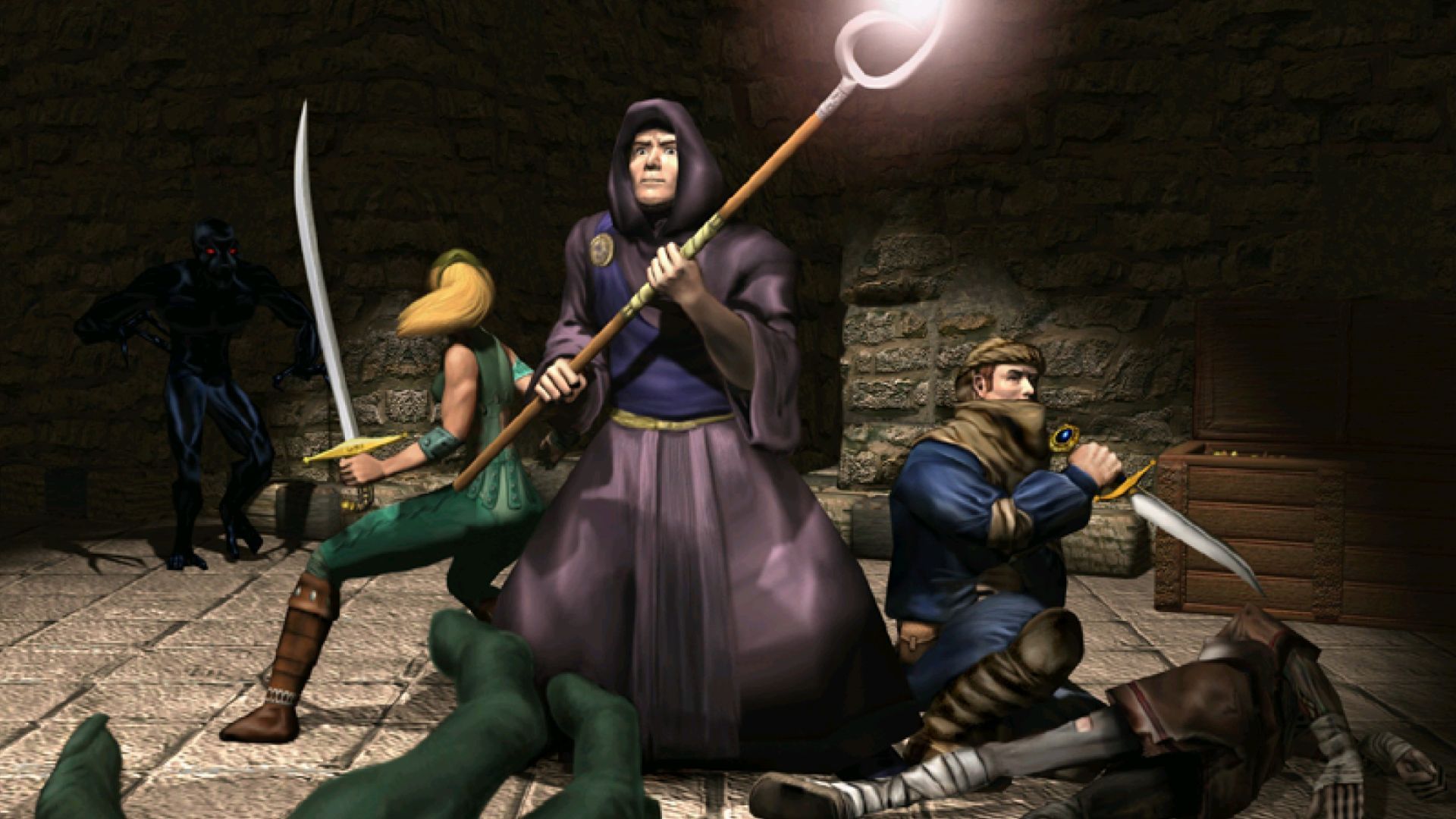
- Restricted Character Creation: Players were locked out of iconic races like halflings and gnomes. Furthermore, true arcane-casting wizards were completely absent from the roster; those seeking magic relied exclusively on sorcerers.
- Automated Progression: While level-ups allowed players to select class advancements, the granular customization of individual skill points and specialized feats was largely abstracted away by the game engine.
- Pacing and Scale: The campaign design heavily favored protracted, attritional combat over dynamic narrative branching.
Official Statements and Industry Reception
While contemporary major publisher press releases for retro re-releases are often understated, the reaction from the critical community has highlighted the strange, guilty-pleasure appeal of the newly stabilized title.
Industry critics note that while Ruins of Myth Drannor cannot be retroactively elevated to the storytelling heights of narrative-driven masterpieces like Vampire: The Masquerade – Bloodlines, its current incarnation fills a very specific niche.
"It’s junk food D&D," notes veteran critic Jody MacGregor in his retrospective analysis. "Between more demanding games, this is an ideal low-stakes guilty pleasure and I’m glad it’s finally back."
The sentiment reflects a broader industry shift toward appreciating video games not merely as flawless monuments of high art, but as historical artifacts whose rough edges and modest ambitions offer distinct, uncomplicated forms of entertainment. Without the suffocating dread of data loss, players are finally free to evaluate the game on its actual merits as a tactical dungeon crawler.
Future Outlook
The successful resurrection of Pool of Radiance: Ruins of Myth Drannor serves as a powerful testament to the viability of modern retro-preservation efforts. By stripping away technical debt, publishers are proving that even the most notoriously broken games of yesteryear can find a second life in contemporary ecosystems.
Looking forward, the return of this title signals several positive trajectories for the preservation of tabletop-derived video games:
- Heightened Standards for Source Code Recovery: The seamless integration of widescreen and controller support demonstrates that modern ports must offer more than bare-minimum emulation to satisfy today’s consumers.
- Re-evaluating Forgotten Titles: As publishers dig deeper into back-catalogs, other historically maligned or forgotten projects may receive similar rehabilitation, allowing contemporary audiences to judge them free from the hysterical panic of their original release windows.
- Sustained Interest in Classic Tactical Mechanics: Even as modern RPGs lean heavily toward cinematic presentation and real-time action, the appetite for methodical, grid-based, turn-based tactical combat remains robust.
Ultimately, Ruins of Myth Drannor has escaped its tragic origin story. No longer defined exclusively by the ghosts of uninstalled system files and shattered hard drives, it stands today as an accessible, low-stakes digital dungeon crawl—a comforting slice of gaming history that, twenty-three years later, can finally be enjoyed in peace.





Belum ada komentar. Jadilah yang pertama berkomentar!