


Executive Overview
Japan is currently experiencing an unprecedented, historic surge in inbound international tourism. As global travelers flock to the East Asian archipelago in record-breaking numbers, major urban hubs like Tokyo, Kyoto, and Osaka have transformed into bustling epicentres of multicultural activity. Yet, beneath the veneer of national growth and crowded streets lies a complex economic paradox.
In Osaka—Japan’s vibrant third-largest city, famed for its dynamic street food culture, close proximity to ancient Kyoto, and strategic placement along the lucrative Sanyo Shinkansen high-speed rail line—overall foreign tourism numbers are surprisingly trending downward. According to comprehensive statistical data released by the Osaka Convention and Tourism Bureau, the city witnessed a 9.6 percent decline in total international visitors in August 2026 compared to the same month in the previous year.
This contraction is not indicative of waning global interest. In fact, Osaka achieved historic, unprecedented milestones in August 2026, welcoming more travelers from the United States, South Korea, Taiwan, France, Hong Kong, Indonesia, and Russia than in any previous August in history. Furthermore, tourism from European nations such as Italy and Spain shattered all-time monthly records.
However, these widespread gains were completely overshadowed by a single, seismic structural shift: a catastrophic collapse in visitors from mainland China. Plummeting by 59 percent year-over-year, the reduction in Chinese travelers translated to a loss of hundreds of thousands of visitors, effectively canceling out a robust 26.7 percent surge from all other global markets combined.
At the root of this sharp contraction is an ongoing diplomatic chill triggered by a late-2025 travel warning issued by Beijing. This advisory cautioned Chinese citizens against traveling to Japan, branding the nation as unsafe. While the warning was ostensibly divorced from any actual security threats or violent incidents targeting Chinese nationals, it arrived immediately on the heels of pointed geopolitical friction between Japanese and Chinese leadership. For Osaka’s tourism economy, the fallout offers a stark reminder of how quickly international relations can rewrite local economic fortunes.
Detailed Chronology: From Diplomatic Friction to Local Economic Fallout
To understand how one of Japan’s premier travel destinations found itself fighting an economic headwind amidst a nationwide boom, it is necessary to examine the timeline of events that precipitated the crisis.
The Catalyst: Late 2025 Geopolitical Tensions
The seeds of Osaka’s tourism dip were sown in the political arena rather than the marketplace. In the final quarter of 2025, bilateral relations between Tokyo and Beijing experienced a sharp deterioration. The immediate catalyst was a public statement made by Japanese Prime Minister Sanae Takaichi during a high-profile media interview. Takaichi explicitly stated that Japan would provide logistical and strategic aid to Taiwan in the event of a military invasion by the People’s Republic of China.
For Beijing, which views Taiwan as a breakaway province subject to eventual reunification by force if necessary, Takaichi’s remarks crossed a vital diplomatic red line. The reaction from the Chinese government was swift and multi-faceted. Beyond diplomatic protests, Beijing issued an official, sweeping travel advisory cautioning Chinese citizens against visiting Japan, explicitly labeling the island nation as an unsafe destination.
The Lagged Response and Winter Observations
Because international travel—particularly outbound tourism from mainland China, which often involves complex visa applications, flight bookings, and long-term itinerary planning—relies heavily on advance reservations, the initial impact of the warning was not instantaneous. Travelers who had already booked trips through the autumn of 2025 largely honored their plans.
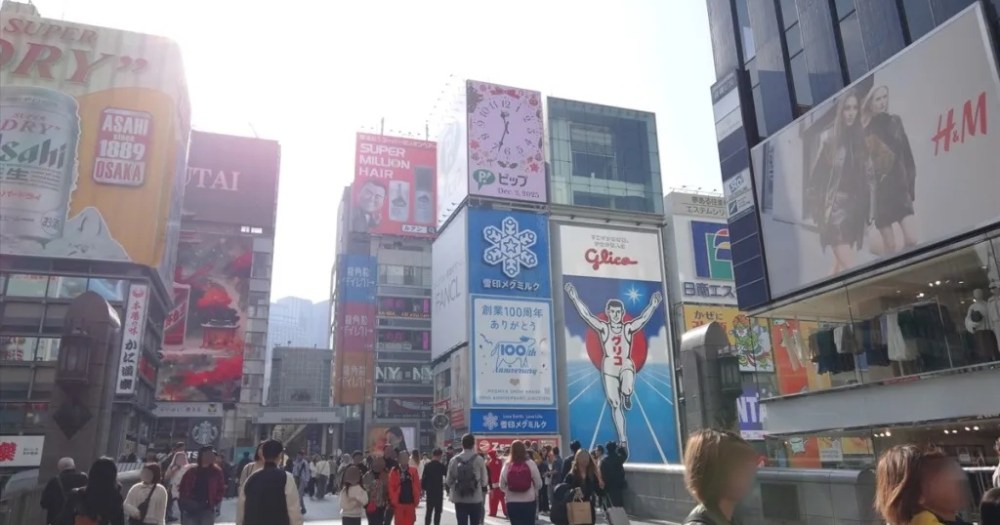
However, the pipeline of forward bookings began to dry up rapidly. By December 2025, field reports from prominent tourist districts in Osaka, such as the neon-lit Namba and Dotonbori neighborhoods, revealed a dramatic thinning of crowds. Areas that had historically been shoulder-to-shoulder with mainland Chinese tour groups suddenly featured noticeable gaps, signaling that the advisory was actively reshaping traveler behavior on the ground.
The Mid-Year Reality Check: August 2026
The true magnitude of the advisory’s long-term damage became statistically undeniable with the release of the Osaka Convention and Tourism Bureau’s data for August 2026—traditionally a peak travel month due to the summer holiday season.
While Western and other Asian markets continued their aggressive upward trajectories, setting new historical benchmarks for the city, the year-over-year comparison revealed the undeniable drag of the Chinese market. With mainland Chinese arrivals crashing by 59 percent to roughly 254,000 visitors, the math proved unforgiving. Even though non-Chinese inbound tourism surged by an impressive 26.7 percent, the sheer volume of the missing Chinese contingent dragged Osaka’s aggregate monthly performance down by 9.6 percent relative to August 2025.
Supporting Context & Metrics: The Anatomy of a Statistical Paradox
A granular examination of the Osaka Convention and Tourism Bureau’s dataset reveals a fascinating tale of two distinct tourism demographics. On one hand, Osaka’s international market diversification strategy is bearing unprecedented fruit. On the other, the heavy reliance on a single historically dominant feeder market has left the city acutely vulnerable to macroeconomic and geopolitical shocks.
The Global Surge: Breaking Records Across Continents
To fully grasp the severity of the Chinese drop-off, one must acknowledge the remarkable vigor with which the rest of the world embraced Osaka in August 2026. The city recorded its highest-ever August visitor counts from a remarkably diverse array of nations:
- North America: The United States set a new all-time high for August arrivals.
- East Asia: South Korea, Taiwan, and Hong Kong all registered record-breaking numbers for the month, reinforcing the enduring strength of short-haul regional travel.
- Europe: France established a new August benchmark, while Italy and Spain shattered records for any month in the history of Osaka’s tourism tracking.
- Eurasia & Southeast Asia: Russia and Indonesia both contributed record-breaking August delegations.
These statistics demonstrate that Osaka’s core appeal—its legendary culinary identity ("Kuidaore," meaning "eat until you drop"), its proximity to Kyoto and Nara, and its status as a central node on the Golden Route—remains profoundly potent among global travelers.
The Chinese Exodus: Quantifying the Void
Despite these widespread global gains, the Chinese market’s contraction exerted a gravitational pull that the rest of the world could not entirely counteract.
- The Drop: Mainland Chinese arrivals fell by 59 percent in August 2026 compared to August 2025.
- The Headcount: Approximately 254,000 Chinese tourists visited Osaka during the month—a figure that, while substantial on its absolute own, represents a steep drop from historical highs.
- The Net Effect: The sheer scale of this reduction completely neutralized a collective 26.7 percent growth rate achieved across all other international markets combined.
This statistical reality underscores a fundamental vulnerability in modern tourism economics: volume matters. Prior to the advisory, mainland Chinese tourists accounted for a disproportionately large share of total spending power in Osaka, frequently driving high-ticket retail sales, luxury accommodations, and large-scale group tours. The sudden evaporation of this segment exposed structural dependencies that broader, yet individually smaller, surges from nations like Spain or Italy could not immediately replace.
Official Statements: Navigating "Dire Situations" with Mascot Diplomacy
The gravity of these figures has not been lost on local municipal and tourism authorities. On September 30, during a regularly scheduled press conference, Hitoshi Mizohata, chairman of the Osaka Convention and Tourism Bureau, addressed the media to discuss the city’s economic trajectory.
A Stark Assessment
Mizohata did not attempt to sugarcoat the data. Describing the ongoing trend, he characterized the situation bluntly:
"It is a very dire situation."
The starkness of his proclamation offered a candid counterweight to the optimistic narratives often promoted by national tourism boards regarding Japan’s post-pandemic travel boom. Mizohata expressed deep regret that geopolitical disputes between national governments are increasingly bleeding into civil society and economic sectors, lamenting the failure to insulate the tourism industry from political crossfire.
A Touch of Surrealism
Adding a distinctly Japanese bureaucratic touch to an otherwise somber economic briefing, Mizohata delivered his sobering remarks while prominently wearing a plush toy of Myaku-Myaku, the controversial and surreal official mascot of the Osaka Kansai Expo. The juxtaposition of a grim economic warning delivered alongside the amorphous, multi-eyed expo mascot quickly captured the attention of local media, symbolizing the surreal balancing act local officials must perform: promoting a major global exposition while grappling with localized geopolitical downturns.
The Question of Rebound
Compounding Mizohata’s concern is the complete lack of diplomatic signaling from Beijing. As of late 2026, the Chinese government has made no move to retract or soften its travel warning regarding Japan. Consequently, the Osaka Convention and Tourism Bureau is operating in a vacuum, admitting that it holds no reliable estimation of when, or even if, Chinese tourist numbers will rebound to their former pre-advisory peaks.
Future Outlook: Resilience, High-End Pivots, and Upcoming Catalysts
While a 9.6 percent monthly decline is a serious matter for local stakeholders, industry analysts advise against excessive panic. A nuanced look at Osaka’s broader tourism ecosystem reveals numerous signs of underlying financial health and strategic adaptability.
Financial Reality vs. Headlines
It is crucial to distinguish between a drop in visitor volume and a catastrophic economic failure. A roughly 10 percent contraction in customer numbers is undoubtedly unwelcome, but it arrives on the heels of several years of explosive, multi-fold growth that far outpaced pre-pandemic baselines. Unless local hospitality businesses recklessly over-expanded their operational capacities under the assumption that the post-pandemic tourism boom would accelerate indefinitely, most establishments remain in a fundamentally sounder financial position than they were prior to the global travel resurgence.
Furthermore, forward-looking indicators for the upcoming autumn season offer immediate reassurance. According to data shared with the Osaka Convention and Tourism Bureau by local hotels, reservations for October and November 2026 are already pacing ahead of the same period in 2025.
The High-End Market Shines
Crucially, this forward momentum is being led by high-value demographics. Premium-priced and luxury hotels in Osaka are reporting particularly heavy booking volumes, indicating that the tourists currently entering the city are spending more per capita. This shift toward high-end tourism helps cushion the financial blow caused by the loss of large-scale, budget-conscious tour groups.
Strategic Pivots and Future Promotion
In response to the shifting demographic landscape, the Osaka Convention and Tourism Bureau is actively revising its marketing strategies. Post-survey analysis of foreign tourists currently visiting the city reveals that significant untapped potential remains in several key sectors:
- Nightlife: Elevating awareness of Osaka’s vibrant after-hours entertainment, dining, and izakaya culture.
- Traditional Culture: Highlighting historical and cultural touchstones that often get overshadowed by neighboring Kyoto.
- Sports and Leisure: Promoting local sporting events and regional outdoor recreation.
- Luxury Offerings: Targeting affluent independent travelers with high-end culinary experiences and bespoke luxury accommodations.
Conclusion
Osaka’s current tourism landscape is a complex study in resilience. While the shadow of geopolitical tensions and Beijing’s lingering travel warning has undeniably dented visitor volume, the city’s magnetic global appeal—bolstered by record-breaking arrivals from North America, Europe, and neighboring Asian nations—demonstrates its robust fundamental health. By pivoting toward high-value demographics and aggressively diversifying its promotional reach, Osaka is proving that even in the face of sudden diplomatic storms, its vibrant economic engine continues to adapt and endure.








Belum ada komentar. Jadilah yang pertama berkomentar!