

Executive Overview
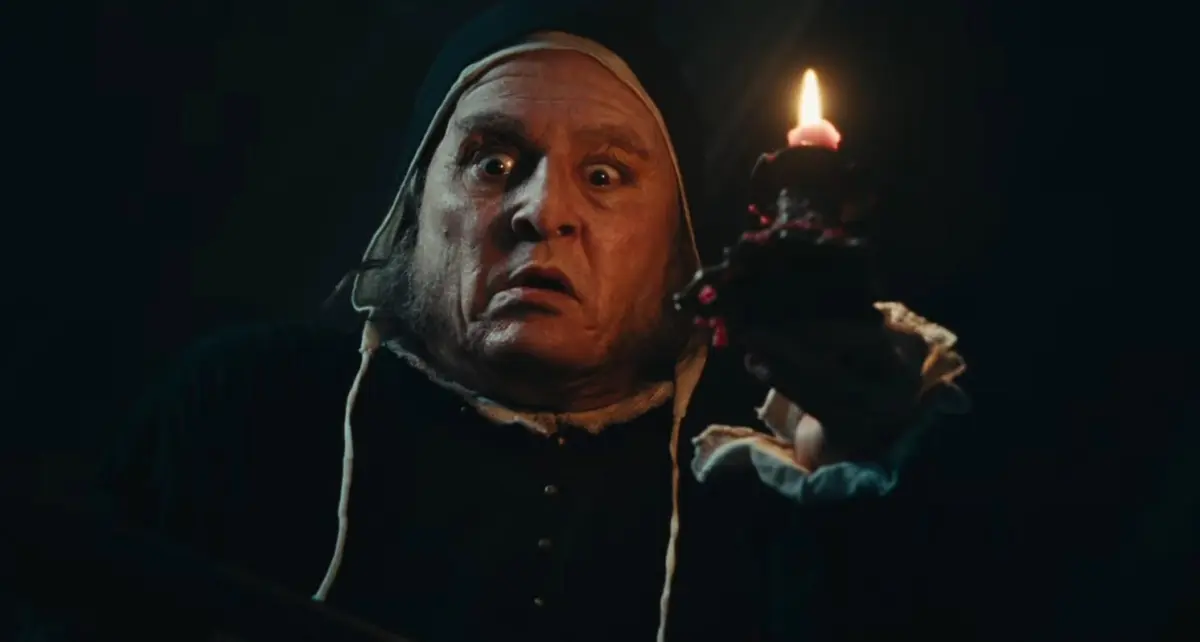
Few literary properties have proven as resilient, adaptable, or culturally entrenched as Charles Dickens’s 1843 novella, A Christmas Carol. Over the past century, the timeless tale of redemption, miserliness, and ghostly intervention has undergone countless permutations—ranging from faithful period adaptations and whimsical musical interpretations to avant-garde science fiction and beloved puppet-driven capers. Yet, the cinematic landscape continuously tests the boundaries of audience fatigue by reinventing the familiar. Enter Ebenezer (2026), a high-profile, psychologically heavy-handed reimagining directed by horror auteur Ti West and scripted by Nathaniel Halpern.
Spearheaded by a star-studded ensemble cast led by Johnny Depp in his most scrutinized live-action role in years—alongside Rupert Grint, Daisy Ridley, Sam Claflin, Ian McKellen, and Andrea Riseborough—Ebenezer attempts to marry West’s atmospheric, creeping dread with the comforting moral architecture of Victorian classicism. Rather than sticking strictly to the seasonal fable, the film expands its narrative borders into the realm of psychological thriller and gothic horror. It probes deep into the formative trauma and psychological rot of Ebenezer Scrooge long before the ghosts ever arrive at his bedpost.
However, the film’s ambition ultimately outstrips its execution. Stretching a normally lean, highly efficient moral parable into an overstuffed, two-hour psychological odyssey, Ebenezer trades narrative momentum for atmospheric bloat. While boasting striking visual design, impressive creature makeup, and a cast of elite British talent, the film struggles under the weight of its own runtime and a surprisingly somnambulant lead performance. Ultimately, Ebenezer stands as a cautionary tale of Hollywood’s fixation on deconstructing iconic villains, proving that sometimes, adding layers to a simple story only buries its heart beneath the snow.
Detailed Chronology: From Page to Screen and Beyond
To fully understand the trajectory of Ebenezer, one must examine the alignment of creative forces that brought the project to fruition. Ti West, widely lauded for revitalizing contemporary horror through his X trilogy (X, Pearl, MaXXXine), seemed an inspired, if unconventional, choice to adapt Dickens. Paired with Johnny Depp—an actor whose career has historically thrived on eccentric, stylized character work—the project generated immense industry chatter upon its initial announcement.

Pre-Production and Concept Evolution
Screenwriter Nathaniel Halpern was tasked with reframing the classic redemption arc. Instead of focusing solely on the transformative single night of Christmas Eve, Halpern’s script delves extensively into the structural mechanics of Scrooge’s upbringing. The narrative establishes a detailed backstory involving a fraught, emotionally abusive relationship with an austere father, the agonizing loss of a beloved sister, and a tragic romance that withered away under the crushing weight of nascent greed and capitalistic obsession.
To visualize this prolonged psychological deterioration, production utilized practical gothic sets, enveloping 19th-century London in an oppressive, artificial fog reminiscent of survival-horror video games like Silent Hill. Young Arthur Conti was cast to portray Ebenezer during these formative, traumatic flashbacks, establishing a direct line of sight between the vulnerable youth and the hardened, bitter curmudgeon played by Depp.
Production and Principal Photography
Filming moved at a deliberate pace, emphasizing physical sets and atmospheric lighting over heavy green-screen reliance—a hallmark of West’s directorial style. The supporting cast was assembled with notable prestige: Ian McKellen stepped in for a brief yet resonant cameo as the ghost of Jacob Marley; Rupert Grint took on the humble, downtrodden role of Bob Cratchit; and Sam Claflin and Daisy Ridley assumed the roles of nephew Fred and his supportive wife.
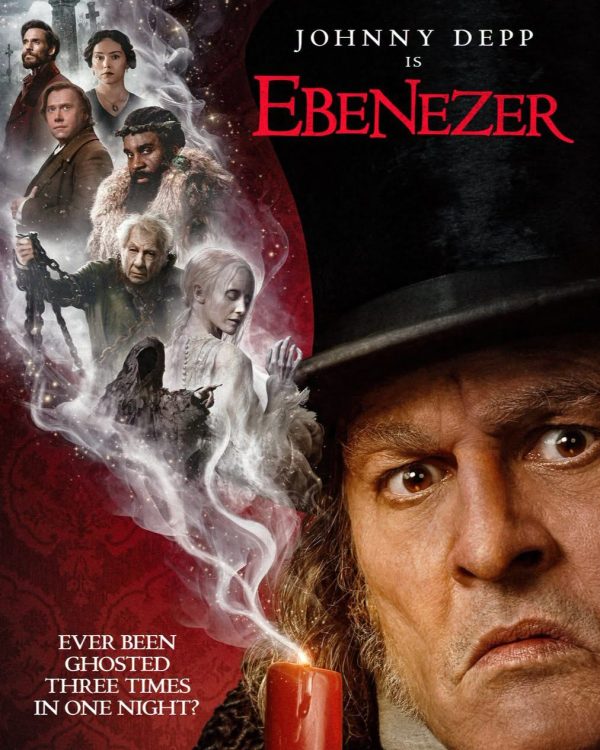
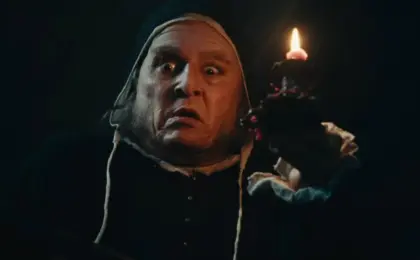
The arrival of the Christmas Spirits—traditionally magical, symbolic manifestations—was re-envisioned through West’s horror lens. Featuring Andrea Riseborough, Tramell Tillman, and Robert Strange, the Spirits of Christmas Past, Present, and Yet to Come were designed with grotesque, visceral makeup effects and haunting practical execution, framing Scrooge’s nocturnal journey not merely as an angelic lesson, but as a punishing, purgatorial gauntlet.
Supporting Context & Metrics: The Anatomy of a Bloated Adaptation
To evaluate Ebenezer critically, it is illuminating to measure its structural choices against historical adaptations of A Christmas Carol.
| Adaptation Year | Director / Lead Actor | Runtime | Primary Narrative Focus | Critical Reception / Cultural Footprint |
|---|---|---|---|---|
| 1938 | Edwin L. Marin / Reginald Owen | 69 minutes | Concise moral transformation, direct adherence to text. | Highly regarded as a classic, efficient Christmas Eve standard. |
| 1984 | Clive Donner / George C. Scott | 100 minutes | Gritty Victorian realism balanced with traditional pacing. | Celebrated for Scott’s definitive, grounded performance. |
| 1992 | Brian Henson / Michael Caine | 85 minutes | Musical, family-friendly accessibility via The Muppets. | Enduring holiday favorite balancing heart and humor. |
| 2026 | Ti West / Johnny Depp | 120 minutes | Psychological trauma, extensive childhood flashbacks, horror aesthetics. | Divisive; praised for production design, criticized for pacing and lead performance. |
The Cost of Pacing and Runtime
As the comparative metrics illustrate, Ebenezer stretches the traditional narrative framework to a full 120 minutes—nearly double the runtime of the beloved 1938 Reginald Owen adaptation. In cinematic terms, this inflation is driven entirely by the film’s obsession with backstory.
While exploring a villain’s origins can add nuance in certain storytelling mediums, A Christmas Carol relies on a specific structural velocity. The urgency of the three spirits is designed to compress time, forcing an emotional reckoning within a single, breathless night. By inserting protracted flashbacks detailing Scrooge’s childhood, his strained paternal dynamics, and his lost loves, West and Halpern deliberately deflate that urgency.
Furthermore, the film’s visual language frequently works against its emotional resonance. Ebenezer is dragged through an empty, fog-choked London that resembles a literal prison of his own making. While striking on a technical level, the relentless gloom wears down the audience, turning what should be a dynamic spiritual awakening into an exhausting slog. Even the narrative resolution stretches out indefinitely, attempting to neatly tie up emotional arcs for supporting characters who were never meant to carry multi-layered subplots.
Official Statements and Industry Reception
The rollout of Ebenezer’s promotional campaign—featuring stylized trailers highlighting its darker, horror-adjacent tone—sparked intense debate across film journalism circles and social media platforms alike.
The Creative Vision
In early promotional interviews, director Ti West defended the film’s darker tonal shifts, emphasizing that Dickens’s original text was inherently ghostly and unsettling. "People forget that A Christmas Carol is a ghost story first and foremost," West noted. "The holiday cheer only works because it pushes through absolute darkness. We wanted to look at the psychological wounds that drive a man to shut his heart off from the world in the first place. You don’t become Ebenezer Scrooge overnight; it’s a slow erosion of the soul."
Screenwriter Nathaniel Halpern echoed these sentiments, pointing to the need for contemporary storytelling to challenge audiences’ preconceived notions of classic archetypes. "We weren’t interested in making a greeting-card version of the story," Halpern stated. "Scrooge is a complex product of industrial-era pressures, familial abandonment, and self-preservation gone wrong. Giving him a history makes his redemption that much harder—and hopefully, more earned."
Critical Backlash and Audience Disconnect
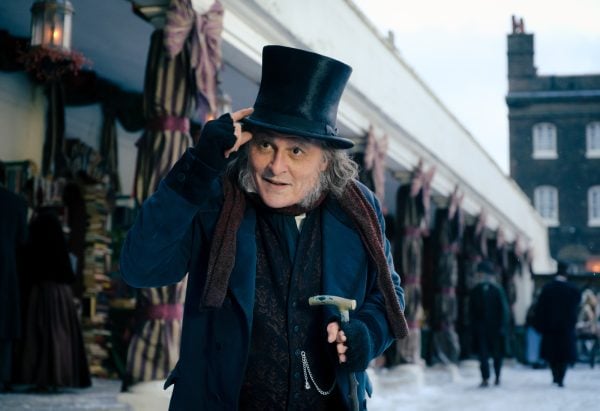
Despite the creators’ intentions, critics have been sharply divided, particularly regarding Johnny Depp’s central performance. Entering the project as his major return to Hollywood spotlight following years of intense legal and personal scrutiny, Depp’s portrayal of Scrooge has been widely described by reviewers as restrained to the point of somnambulism.

Noted critic Robert Kojder, writing for Flickering Myth, captured the prevailing critical consensus:
"There is also a chance that some of this would have worked if Johnny Depp weren’t giving such a sleepy performance… In a movie that sets itself up to be taken as a parallel for his own life, with a reference to his own acting career—sucked into a bed as he once was as a teenager in A Nightmare on Elm Street—the redemption doesn’t feel sincere or earned on behalf of the character or the actor. This is a whole lot of nothing."
Industry analysts have also pointed out the meta-textual irony running through the film. By including deliberate winks to Depp’s cinematic past—such as his character being consumed by a bed in a clear nod to Wes Craven’s 1984 horror classic—the film occasionally collapses under the weight of its own self-awareness, pulling viewers entirely out of 19th-century London and back into the mechanics of celebrity culture.
Future Outlook: The Legacy of Dickensian Reimaginings
As Ebenezer finishes its theatrical run and finds its eventual home on digital and physical home media platforms, its long-term legacy within the pantheon of holiday cinema remains uncertain.

The film serves as an interesting data point for Hollywood’s ongoing obsession with "dark, gritty" retellings of classic fairy tales and literary standards. For years, studios have sought to apply prestige horror aesthetics, psychological trauma, and deconstructive writing to universally understood tales—often under the assumption that modern audiences will reject simplicity in favor of psychological realism.
However, Ebenezer may inadvertently prove the enduring brilliance of Dickens’s original, unadorned structure. The core appeal of A Christmas Carol has never depended on knowing the exact financial mechanics of Scrooge’s childhood trauma or tracing every ancestral slight. It relies on a universal truth: that no matter how hard, cold, or cynical a person becomes, human empathy can be reawakened through reflection, remorse, and love.
For Ti West, Ebenezer represents a fascinating detour into big-budget studio filmmaking with an indie-horror sensibility. While the experiment ultimately stumbles under its own bloat and pacing issues, it undeniably expands the stylistic vocabulary applied to Christmas narratives. Whether future filmmakers take heed of Ebenezer’s shortcomings—recognizing that more runtime and more backstory do not automatically equate to more emotional depth—remains to be seen. Until then, audiences seeking a proper holiday ghost story may find themselves echoing the sentiments of many critics: when looking for true holiday magic, one doesn’t need a spirit to guide them back to the classics that already got it right the first time.






Belum ada komentar. Jadilah yang pertama berkomentar!