

Executive Overview
The landscape of mobile gaming has long been defined by a distinct divide: smartphones offer ultra-wide aspect ratios and high-refresh-rate displays optimized for fast-paced competitive play, while tablets provide expansive screen real estate at the cost of ergonomic comfort and visual adaptation. Traditional tablets typically utilize a standard 16:10 aspect ratio, a format that often leaves mobile gamers at a distinct disadvantage—particularly in Multiplayer Online Battle Arena (MOBA) titles like League of Legends: Wild Rift or Honor of Kings, where a wider field of view can mean the difference between victory and defeat.
Enter Lenovo with a disruptive solution aimed at bridging this hardware gap. Alongside its upcoming dedicated gaming smartphone, the Legion Y90, technology giant Lenovo is preparing to launch the Lenovo Legion Y700, a specialized gaming tablet designed from the ground up to conquer the limitations of traditional slate form factors.
Leaked details, official teasers, and statements from Lenovo executive Lin Lin have shed light on the device’s core specifications and innovative software features. Most notably, the Legion Y700 will introduce an Ultra-Wide Viewing Mode, enabling dynamic aspect ratio adjustments that rival smartphone displays. Combined with a powerhouse Qualcomm Snapdragon 870 chipset, a compact 8.8-inch high-resolution display, and blistering refresh rates, Lenovo is positioning the Legion Y700 as the definitive portable powerhouse for serious mobile gamers.
Detailed Chronology of Leaks and Teasers
Understanding the development trajectory of the Lenovo Legion Y700 requires tracing the breadcrumbs left across social media platforms, regulatory filings, and executive announcements.
The Inception: Teasing the Legion Ecosystem
As Lenovo expands its dedicated sub-brand, Legion, beyond traditional high-end gaming laptops and pre-built desktop towers into the mobile space, the company has adopted an aggressive dual-pronged strategy. While consumer attention initially centered on the gaming smartphone slated to bear the Legion moniker, industry insiders quickly picked up whispers of an accompanying tablet. Lenovo executives recognized that the burgeoning mobile gaming market required more than just pocket-sized devices; a segment of gamers desired larger displays without sacrificing the competitive edge found on smartphones.
Lin Lin’s Revelations on Weibo
The hype train truly accelerated when Lenovo executive Lin Lin took to the popular Chinese social media platform Weibo to share key architectural and software insights about the Legion Y700. Eschewing the typical secretive product pipeline, Lin Lin began detailing specific hardware choices, such as the inclusion of the Qualcomm Snapdragon 870 System-on-Chip (SoC).
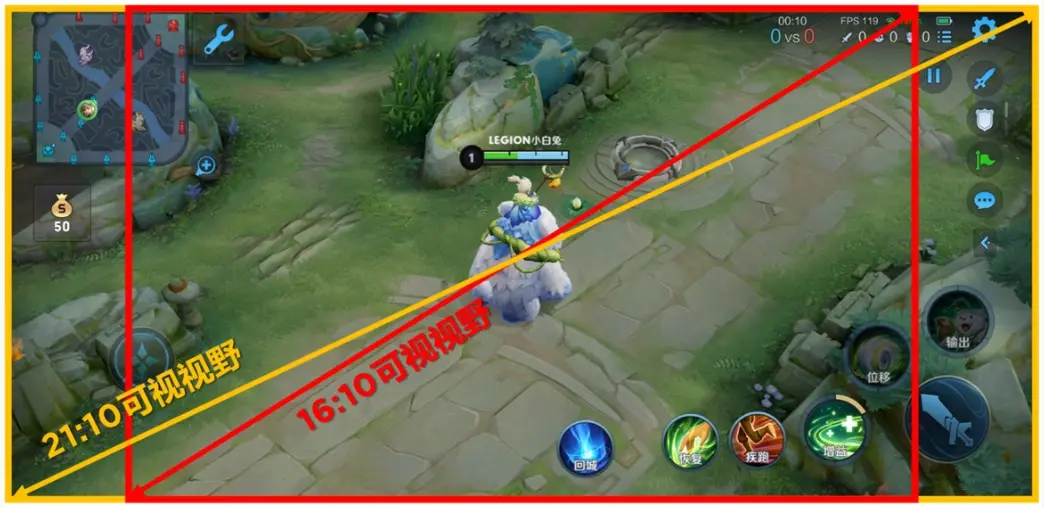
More importantly, the executive unveiled the tablet’s revolutionary aspect ratio adjustment software. By showcasing side-by-side comparisons of MOBA gameplay on a standard 16:10 tablet versus the adjusted 21:10 configuration, Lenovo demonstrated a clear understanding of the competitive frustrations plaguing tablet users. These Weibo drops transformed the Legion Y700 from a speculative rumor into one of the most anticipated mobile hardware launches of the year.
Promotional Posters and Display Confirmations
Following the executive leaks, official promotional posters surfaced online, providing high-resolution glimpses of the device’s physical form factor. These marketing materials confirmed earlier industry reports regarding the tablet’s 8.8-inch LCD display, 2560 x 1600 resolution, and high-performance tactile response rates. As leaks culminated in concrete data sheets, the gaming community began to realize that the Legion Y700 was not merely a scaled-up smartphone, but a purposefully engineered gaming peripheral built to satisfy both casual and hardcore players alike.
Supporting Context & Metrics: Hardware and Software Architecture
To truly appreciate the engineering marvel that is the Lenovo Legion Y700, one must examine the intersection of its internal components, display engineering, and groundbreaking software features.
+--------------------------------------------------------------------------+
|                     LENOVO LEGION Y700: CORE SPECS                       |
+--------------------------------------------------------------------------+
| Display Size      | 8.8 inches (Compact Tablet Form Factor)              |
| Panel Type        | High-Performance LCD                                 |
| Resolution        | 2560 x 1600 pixels                                   |
| Refresh Rate      | 120Hz                                                |
| Touch Sampling    | 240Hz                                                |
| Color Gamut       | 100% DCI-P3                                          |
| Processor (SoC)   | Qualcomm Snapdragon 870                              |
| Killer Feature    | Ultra-Wide Viewing Mode (21:10 Aspect Ratio)         |
+--------------------------------------------------------------------------+
Solving the Aspect Ratio Dilemma
The standout technical achievement of the Legion Y700 is its software-driven approach to screen real estate. Historically, tablets are manufactured with a 16:10 or 4:3 aspect ratio, optimized for media consumption, document reading, and productivity tasks such as split-screen multitasking. However, modern mobile games—particularly competitive titles developed natively for smartphones—are optimized for much wider aspect ratios, typically ranging from 19.5:9 to 21:9.
When a game designed for a wide smartphone screen is forced onto a standard 16:10 tablet, the engine often scales vertically or crops the horizontal field of view. In tactical multiplayer games, seeing an opponent milliseconds before they see you is paramount. Tablet users playing League of Legends: Wild Rift or Honor of Kings have long suffered from a restricted lateral perspective, placing them at a distinct disadvantage against opponents playing on ultra-wide smartphones.
Ultra-Wide Viewing Mode: 21:10 Engineering
Lenovo’s answer to this structural disadvantage is the Ultra-Wide Viewing Mode. This software utility allows the Legion Y700 to dynamically adjust its display aspect ratio to a staggering 21:10 format.
By expanding the horizontal field of view, the tablet replicates the display geometry of gaming smartphones, restoring parity to competitive online matches. Furthermore, Lenovo’s engineering team has integrated advanced positioning options: users are not merely locked into a stretched or letterboxed view. Instead, gamers can choose to position the active game content either centered on the screen or shifted toward the bottom of the display. This lower-third alignment is particularly ingenious for a tablet form factor, as it allows players to rest their palms comfortably on a desk or lap while keeping touch controls within natural thumb reach, mimicking the ergonomics of holding a massive smartphone.
Display Metrics: Precision and Speed
Beneath the aspect ratio software lies a formidable display panel. The Legion Y700 features an 8.8-inch LCD screen boasting a crisp 2560 x 1600 resolution. While OLED panels have their champions, high-refresh-rate LCDs remain a favorite for extended gaming sessions due to their resistance to burn-in and ability to sustain high peak brightness levels.
Performance metrics for the display are equally impressive:
- 120Hz Refresh Rate: Ensures buttery-smooth motion transitions, eliminating ghosting and motion blur during fast-paced action sequences, FPS matches, and racing games.
- 240Hz Touch Sampling Rate: Dramatically reduces input latency, registering finger swipes and taps almost instantaneously—a critical metric for competitive gaming where milliseconds dictate wins and losses.
- 100% DCI-P3 Color Gamut: Guarantees vibrant, accurate color reproduction, ensuring that game worlds pop with cinematic fidelity, deep contrasts, and lifelike hues.
Under the Hood: Qualcomm Snapdragon 870 SoC
Powering this visual array is Qualcomm’s venerated Snapdragon 870 chipset. While newer silicon generations have emerged, the Snapdragon 870 remains a legendary processor within the Android ecosystem. Famed for its exceptional thermal efficiency, rock-solid stability, and sustained performance output, the Snapdragon 870 avoids the thermal throttling pitfalls that occasionally plague more power-hungry flagship chips like the Snapdragon 888 or early Gen 1 platforms.
For a compact gaming tablet, the Snapdragon 870 strikes the optimal balance. It delivers more than enough raw processing muscle to max out graphic settings in demanding titles like Genshin Impact, Call of Duty: Mobile, and PUBG Mobile, while maintaining manageable internal temperatures that prevent the chassis from becoming uncomfortably hot during marathon gaming sessions.
Official Statements and Industry Insights
The rollout of information regarding the Legion Y700 has been meticulously orchestrated, relying heavily on executive transparency to build consumer trust and market anticipation.
Lin Lin’s Vision for Portable Gaming
In statements released across his official Weibo channel, Lenovo executive Lin Lin emphasized that the Legion Y700 was conceptualized by listening directly to the pain points of the mobile gaming community. Lin noted that while large-screen tablets offer immersive visuals, they have historically failed to cater to the nuanced demands of competitive mobile esports athletes.
"We realized that building a gaming tablet required more than simply dropping a fast processor into a larger chassis," Lin indicated in translation summaries of his posts. "Gamers need hardware that adapts to their games, rather than forcing them to adapt to hardware limitations. By introducing dynamic aspect ratio adjustment and uncompromising touch latency metrics, the Legion Y700 redefines what an 8-inch class device can achieve in the competitive arena."
Industry Reactions and Market Positioning
Industry analysts have responded favorably to Lenovo’s strategy. For years, the dedicated gaming tablet market has remained largely stagnant or underserved, dominated by general-purpose media consumption slates that lacked specialized gaming software overlays, trigger buttons, or advanced cooling architectures.
By targeting the sweet-spot 8.8-inch form factor—large enough to provide a substantial viewing area superior to any smartphone, yet compact enough to hold comfortably without hand fatigue—Lenovo is carving out a unique niche. Competitors in the Android ecosystem have largely abandoned the small-tablet category, leaving a massive vacuum that the Legion Y700 is uniquely positioned to fill.
Future Outlook: What Lies Ahead for the Legion Y700
As the technology world awaits the official, formal launch event—which is expected to detail pricing, regional availability, and complete memory/storage configurations—the Lenovo Legion Y700 stands as a testament to user-centric engineering.
Potential Global Availability and Ecosystem Expansion
While initial teasers and executive leaks have primarily targeted the domestic Chinese market (where mobile gaming and accessory-driven ecosystems enjoy massive popularity), Lenovo has a strong history of bringing its Legion hardware to global markets. Tech enthusiasts across North America, Europe, and Southeast Asia are watching closely to see if the Legion Y700 will receive a worldwide rollout.
Furthermore, the simultaneous development of the Legion Y90 smartphone suggests that Lenovo is building a cohesive, interconnected Legion mobile gaming ecosystem. Features developed for the tablet—such as advanced thermal management, shoulder trigger integration, and gaming-focused software dashboards—could cross-pollinate, creating a unified software experience across Lenovo’s entire mobile portfolio.
The Verdict on Mobile Gaming’s Future
The Lenovo Legion Y700 is more than just another entry in an overcrowded tablet market; it is a calculated response to a persistent hardware mismatch. By solving the age-old problem of tablet aspect ratios through innovative software modes like Ultra-Wide Viewing Mode, Lenovo has proven that hardware and software can work in tandem to eliminate competitive disadvantages.
Backed by the reliable thermal performance of the Snapdragon 870, a gorgeous 120Hz display, and a pocket-friendly 8.8-inch footprint, the Legion Y700 is poised to become the gold standard for portable gaming. As we await the final launch details and hands-on performance benchmarks, one thing is abundantly clear: the rules of engagement for mobile gaming tablets are about to change forever.









Belum ada komentar. Jadilah yang pertama berkomentar!