

Executive Overview
The mobile gaming landscape continues to undergo a rapid, hyper-competitive evolution, driven by consumer demand for desktop-grade performance packed into pocket-sized form factors. Amidst this fierce hardware race, Lenovo has consistently positioned its Legion sub-brand at the absolute cutting edge of mobile engineering. Although the anticipated January 1 launch date for the company’s next-generation flagship gaming smartphone—the Lenovo Legion Y90—came and went without an official marketplace debut, Lenovo has compensated by pulling back the curtain through a series of revealing teaser materials. Released primarily via Chinese social media platform Weibo, these early previews offer a comprehensive look at the industrial design, structural cooling innovations, and display specifications that will define the Legion Y90.
Building upon the foundations laid by its predecessor, the Legion Duel 2, the Legion Y90 retains a bold, unapologetically gamer-centric aesthetic while refining critical ergonomic and thermal pain points. Notably, the device eschews the controversial motorized pop-up camera of the Duel 2 in favor of a traditional, uninterrupted bezel-housing approach, ensuring a cleaner profile while optimizing internal space for advanced thermal architecture. Powered by bleeding-edge internals—including a massive, buttery-smooth high-refresh-rate AMOLED display and an advanced "Double Engine Air Cooling" system—the Legion Y90 is engineered to sustain peak performance during marathon gaming sessions without succumbing to thermal throttling.
While Lenovo has kept a tight lid on the exact revised global launch timeline, the trickle of official teasers and industry leaks points to an imminent unveiling. This comprehensive report examines the design philosophy, hardware specifications, thermal innovations, and broader market implications of the upcoming Lenovo Legion Y90.
Detailed Chronology: From Anticipated Launch to Teaser Reveal
The trajectory of the Lenovo Legion Y90 highlights the delicate dance between supply chain realities, marketing cadences, and consumer expectations in the contemporary consumer electronics sector.
The Missed Deadline: January 1, 2022
Industry insiders and dedicated mobile gamers had marked January 1, 2022, on their calendars as the definitive D-Day for Lenovo’s next-generation gaming flagship. Anticipation had reached a fever pitch following months of murmurs regarding Lenovo’s strategy to iterate on the Legion Duel 2 design philosophy. However, as the clock struck midnight and the new year commenced, the expected livestream events and press releases failed to materialize.
Rather than issuing a damage-control statement regarding supply chain disruptions or final-stage software optimizations, Lenovo pivoted gracefully. Instead of a commercial launch, the company leveraged its official channels on Weibo to drop a high-octane teaser video accompanied by detailed renders of the device. This strategic pivot shifted the narrative from a delayed launch to a calculated hype-building campaign, keeping the tech community engaged while allowing the engineering teams valuable extra weeks to polish the user experience.
The Weibo Reveal: Dissecting the Teaser Campaign
The released teaser assets offered an unprecedented, 360-degree view of the Legion Y90’s physical chassis. By showcasing the device from multiple angles, Lenovo addressed key questions regarding physical buttons, port placements, and structural geometry.
- The Rear Aesthetic: The back panel maintains the signature "bulging center" design philosophy introduced in the Legion Duel 2. This central ridge is far from an arbitrary cosmetic choice; it serves as the thermal and mechanical heart of the smartphone. Housed within this elevated central zone are the primary dual-camera array, a dual-tone LED flash unit, primary thermal exhaust vents, and an illuminated, customizable Y-shaped RGB Legion logo that anchors the device’s gaming identity.
- Ergonomic Button Layout: The teaser highlighted a thoughtful distribution of physical controls. The right-hand profile of the device plays host to the power button, which is strategically flanked by two secondary ventilation ports. Meanwhile, the volume rocker is positioned on the left-hand profile, ensuring that gamers holding the phone in a landscape orientation do not accidentally muffle audio or trigger unwanted inputs during intense firefights.
- The Camera Paradigm Shift: Perhaps the most significant structural departure from the Legion Duel 2 is the complete elimination of the side-mounted, motorized pop-up selfie camera. While innovative for streaming and landscape content creation, the pop-up mechanism introduced mechanical failure points and took up valuable internal volume. The Legion Y90 relocates the front-facing camera to the top-right corner of the top bezel, preserving a clean, notch-free, and punch-hole-free upper display area that prioritizes total immersion.
Supporting Context & Metrics: Hardware, Display, and Thermal Engineering
Underneath its aggressive exterior, the Lenovo Legion Y90 is packed with elite hardware specifications designed to satisfy the most demanding mobile enthusiasts and competitive esports athletes.
+--------------------------------------------------------------------------+
|                       LENOVO LEGION Y90: SPEC SHEET                      |
+--------------------------+-----------------------------------------------+
| Display Panel            | 6.92-inch E4 AMOLED                           |
| Refresh Rate             | 144Hz                                         |
| Touch Sampling Rate      | 720Hz                                         |
| Visual Enhancements      | HDR Support, Anti-Blue Light Certification    |
| Core Processing Unit     | Snapdragon 8 Gen 1 / Snapdragon 888 (Variant) |
| Operating System         | ZUI 13 (Gaming-Optimized)                     |
| Cooling Technology       | Double Engine Air Cooling (Active/Passive)    |
| Biometrics & Camera      | Traditional Top-Right Bezel Front Camera      |
+--------------------------+-----------------------------------------------+
The Visual Canvas: A 144Hz E4 AMOLED Masterpiece
Mobile gaming demands visual fidelity, color accuracy, and instantaneous response times. The Legion Y90 delivers on all fronts by outfitting the device with a sprawling 6.92-inch E4 AMOLED panel. Sourced from industry-leading display manufacturers, the E4 material ensures superior peak brightness levels and improved power efficiency over previous-generation panels.
- Refresh Rate: Operating at a fluid 144Hz, the display ensures that motion blurring is virtually eliminated, providing silky-smooth animations and giving competitive players a critical frame-advantage in fast-paced titles like Call of Duty: Mobile, PUBG Mobile, and Genshin Impact.
- Touch Sampling Rate: To ensure absolute precision between finger input and onscreen action, the panel features an ultra-responsive 720Hz touch sampling rate. This minimizes input latency, ensuring that split-second taps and swipes register instantaneously.
- Eye Safety and High Dynamic Range: Recognizing that mobile gamers frequently log hours-long sessions in dimly lit environments, Lenovo has integrated hardware-level anti-blue light eye protection, certified to reduce ocular fatigue. Additionally, full High Dynamic Range (HDR) support guarantees rich contrast, deep blacks, and vibrant color saturation across supported media and games.
Processing Might and Software Optimization
While exact configurations vary by regional market and SKU, the Legion Y90 is anchored by top-tier silicon. Industry telemetry strongly points toward either the flagship Qualcomm Snapdragon 8 Gen 1 or a finely tuned Snapdragon 888 system-on-chip (SoC). Paired with high-speed LPDDR5 RAM and UFS 3.1 storage, the device effortlessly chews through heavy multi-tasking, high-bitrate video recording, and graphically demanding 3D rendering.
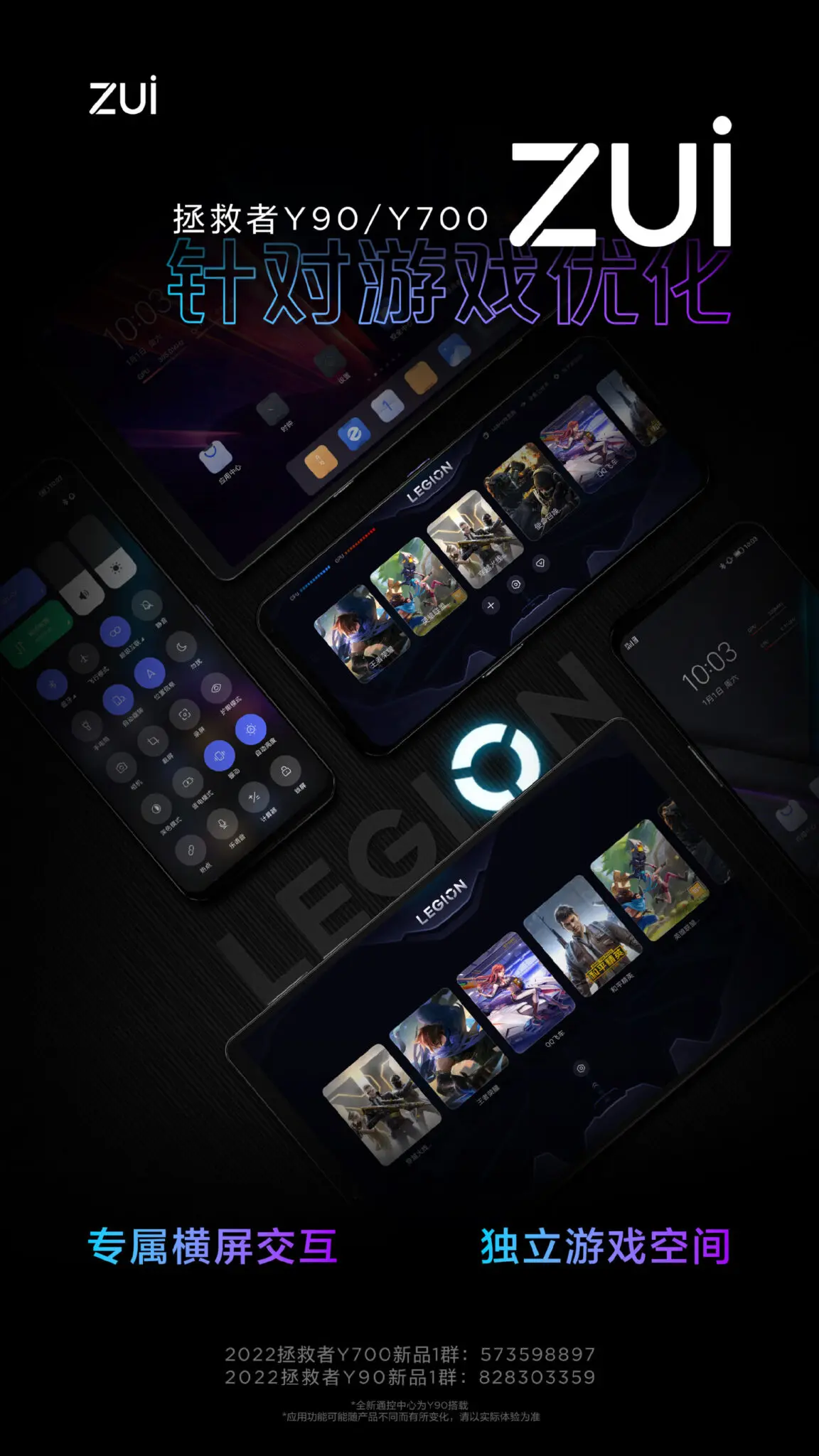
Navigating this hardware is ZUI 13, Lenovo’s proprietary software skin tailored specifically for mobile gaming. ZUI 13 introduces dedicated gaming spaces, customizable performance profiles, network acceleration tools, and advanced macro-mapping capabilities for shoulder triggers, transforming the smartphone into a true console-class gaming ecosystem.
Thermal Dominance: Double Engine Air Cooling Technology
The historical kryptonite of high-performance mobile silicon has been thermal throttling—a phenomenon where the processor automatically reduces its clock speed to prevent dangerous overheating during sustained loads. Lenovo has tackled this engineering hurdle head-on with its proprietary Double Engine Air Cooling Technology.
Unlike standard smartphones that rely solely on passive vapor chambers or graphite sheets, the Legion Y90 integrates an active-passive hybrid cooling matrix. The system utilizes dual internal fans paired with structural air ducts (positioned strategically along the rear central bump and side flanks) to forcefully expel heat generated by the Snapdragon processor. This active airflow design ensures that the device can maintain peak frame rates over hours of continuous gameplay without causing discomfort to the user’s hands.
Official Statements and Industry Insights
While formal launch presentations are still on the horizon, statements from Lenovo’s mobile product division and commentary from prominent supply chain analysts paint a clear picture of the company’s strategic ambitions.
Lenovo executives have repeatedly emphasized that the Legion ecosystem is not merely a hobbyist project, but a core pillar of the company’s consumer hardware strategy. By leveraging the engineering expertise gained from their dominant PC gaming division (Legion laptops and desktops), the mobile team has been able to apply desktop-grade cooling and tuning methodologies to a mobile architecture.
Industry analysts tracking the gaming smartphone segment note that while brands like ASUS (ROG Phone series) and Black Shark have carved out substantial market share, Lenovo’s emphasis on ergonomic layout—specifically designing the phone for horizontal, landscape-first use—gives it a unique competitive moat. The retention of physical control layouts, paired with advanced cooling, positions the Legion Y90 as a direct challenge to incumbent gaming flagships.
Furthermore, supply chain sources indicate that Lenovo is heavily focusing on aggressive pricing strategies to capture market share in competitive Asian markets before expanding outward to European and global territories. This aggressive posture suggests that despite initial scheduling hiccups, Lenovo views the Legion Y90 as a make-or-break product for cementing its reputation in the enthusiast mobile sector.
Future Outlook: What Lies Ahead for the Legion Y90
As the tech community awaits Lenovo’s official confirmation of the rescheduled launch event, anticipation surrounding the Legion Y90 continues to mount. The device represents a mature iteration of Lenovo’s gaming philosophy—one that listens to consumer feedback by dropping gimmicks like motorized pop-up cameras in favor of structural reliability, enhanced cooling, and uncompromising display technology.
Key Milestones to Watch:
- Official Global Pricing and Availability: Consumers will be closely monitoring how Lenovo prices the Legion Y90 relative to competing flagships from ASUS and RedMagic.
- Comprehensive Benchmark Testing: Once review units land in the hands of independent tech journalists, the real-world performance of the Double Engine Air Cooling system under sustained thermal loads will be put to the ultimate test.
- Software Ecosystem Evolution: Further updates regarding ZUI 13’s feature set, game optimization partnerships, and long-term software support commitments will dictate how the device ages in a fast-moving market.
In conclusion, the Lenovo Legion Y90 stands as a testament to the relentless pursuit of mobile performance. By combining desktop-level thermal engineering with a stunning 144Hz display, uncompromising processor options, and a gamer-first ergonomic layout, Lenovo is poised to make a formidable splash in the competitive gaming smartphone arena. Stay tuned as we continue to track official announcements, hands-on impressions, and comprehensive reviews in the weeks to come.









Belum ada komentar. Jadilah yang pertama berkomentar!