

Date: September 18, 2026
By: Chihiro Furukawa (Nagono Campus)
Adapted & Expanded for Global Audiences
Executive Overview
As the Aichi-Nagoya Asian Games approach, drawing international spectators, athletes, and media personnel to central Japan, the city of Nagoya is preparing for an unprecedented influx of urban traffic. Scheduled to run from September 19 to October 4, 2026, the 16-day international sporting event will scatter competition venues across the prefecture and the urban core. This geographic decentralization poses a classic logistical challenge: how to facilitate seamless, efficient transit for visitors and local professionals who need to navigate a bustling city without falling prey to transit bottlenecks.
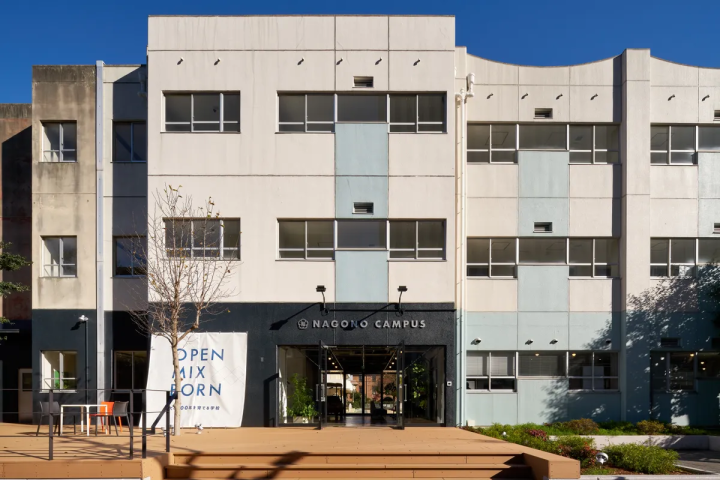
The solution is taking shape at the intersection of urban regeneration and micro-mobility. Located just a five-minute bicycle ride from Nagoya Station, Nagono Campus—a visionary co-working hub housed within a meticulously renovated 117-year-old elementary school—is stepping into the spotlight. Paired with Charichari, a prominent app-based bike-sharing service operating across Fukuoka, Nagoya, Tokyo, and Kumamoto, Nagono Campus offers an ecosystem tailored for the modern remote worker and event-goer.
Featuring an on-site Charichari port, reservation-free drop-in co-working facilities, and deep historical roots in the historic Nagono district, this facility bridges the gap between heritage preservation and future-proof urban infrastructure. This report examines how the convergence of micro-mobility and adaptive reuse is creating a blueprint for navigating major global events while enriching the everyday urban fabric of Nagoya.
Detailed Chronology: From Meiji-Era Schoolhouse to Modern Innovation Hub
To understand the unique value proposition of Nagono Campus, one must look backward through a century of local history before examining its contemporary incarnation.
1909–2015: A Century of Community Education
The site’s journey began in 1909 (Meiji 42) with the establishment of Nagono Elementary School. For 106 years, the institution served as an anchor for the local community, educating generations of Nagoya residents. However, like many urban schools across Japan, shifting demographics and a declining birthrate eventually caught up with the historic institution. In 2015, Nagono Elementary School officially closed its doors, leaving behind a sprawling brick-and-mortar legacy steeped in community memory.
2019: Rebirth under the Banner of "Open, Mix, and Born"
Rather than surrendering the historic structure to demolition—a fate common among aging urban properties—local civic and business leaders chose a path of adaptive reuse. In October 2019, the campus reopened under its current moniker: Nagono Campus.
Guided by the overarching concept of "Open, Mix, and Born," the renovated facility was designed to transition its historical mission from educating children for the past century to incubating industries and cultivating entrepreneurship for the next hundred years. Today, the campus hosts a diverse cross-section of tenants, ranging from agile tech startups to dedicated new-business innovation teams dispatched by major corporations.
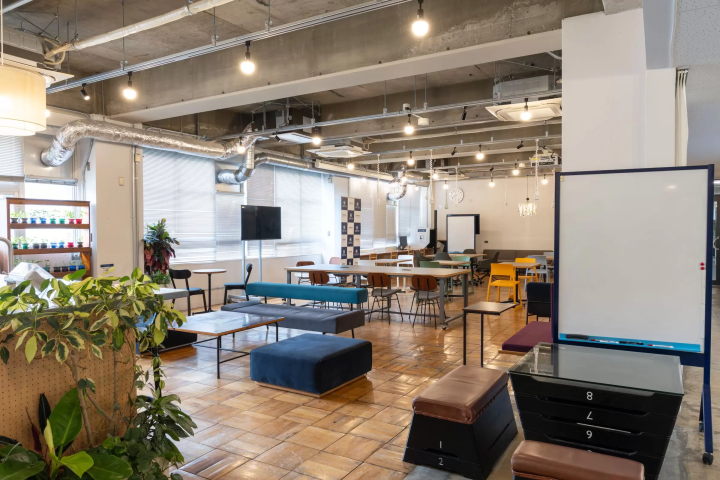
Visitors walking the halls will encounter a fascinating juxtaposition of eras: modern Wi-Fi routers and ergonomic workstations share space with preserved elements of the original school infrastructure, including vintage blackboards and student lockers.
Supporting Context & Metrics: Infrastructure, Mobility, and the 2026 Asian Games
Bridging the "Last-Mile" Gap with Charichari
Urban transit systems during major international sporting events frequently suffer from predictable stress points: trains are packed to capacity, taxi queues stretch for blocks, and walking long distances under tight schedules is impractical. This is where micro-mobility fills a critical void.
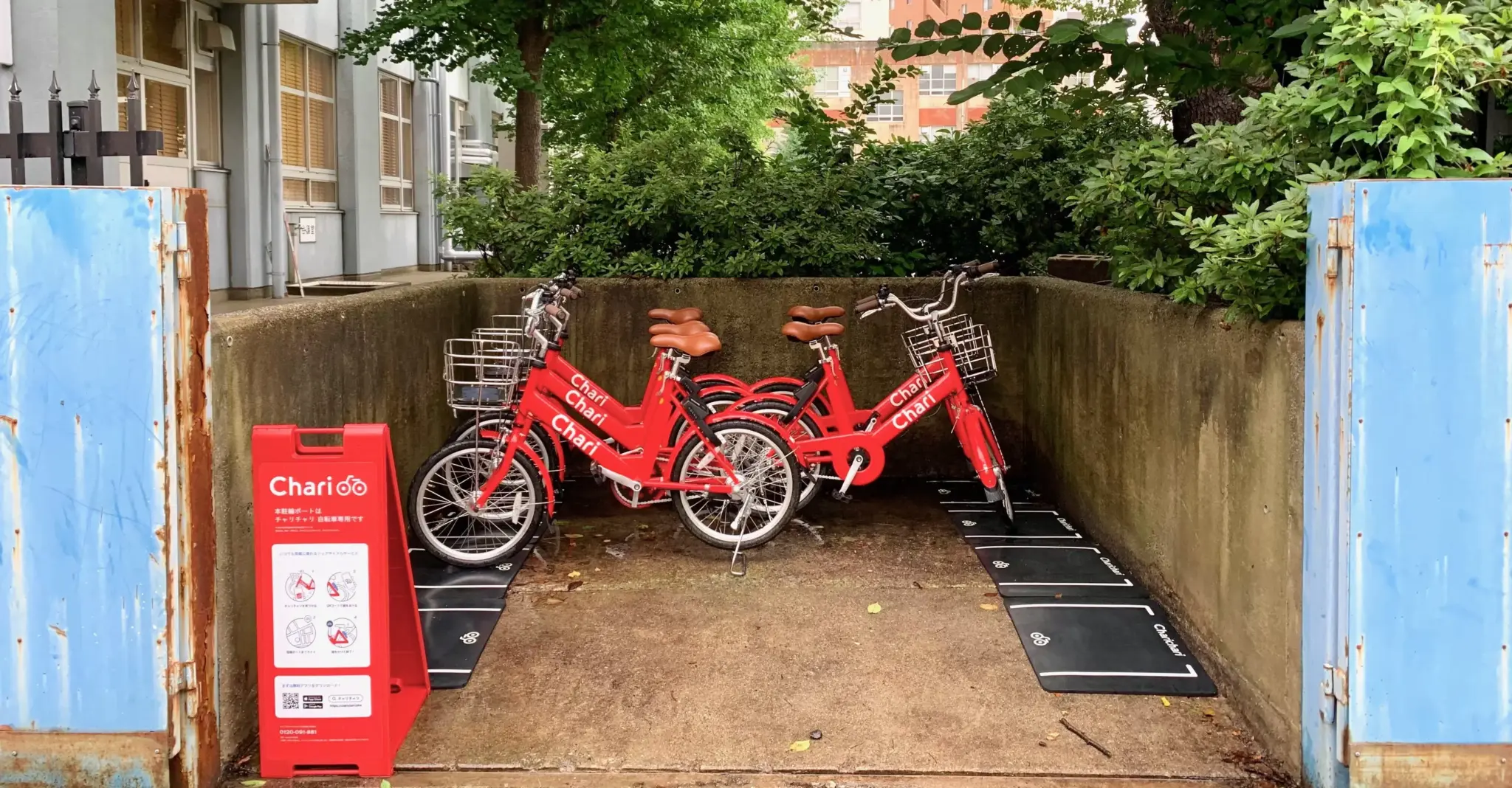
Charichari operates on a dockless, app-enabled shared bicycle model that allows users to pick up and drop off bicycles at designated ports scattered across urban centers. In Nagoya, the service provides an agile alternative to traditional public transit for trips that are "too short for a taxi, but too long to comfortably walk."
The economic and operational structure of Charichari is designed for maximum flexibility:
- Pricing Structure: Standard mechanical bicycles are billed at 6.5 yen per minute, while electric-assist bicycles are priced at 20.5 yen per minute.
- No-Commitment Micro-Billing: Because billing is calculated precisely by the minute, users face zero financial penalty for short, spontaneous trips—such as a five-minute sprint from Nagoya Station to Nagono Campus.
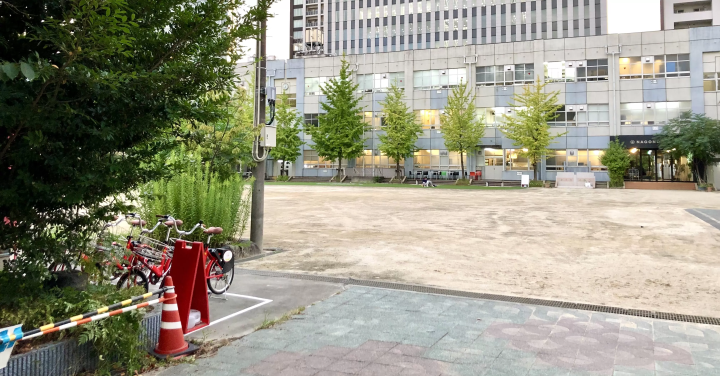
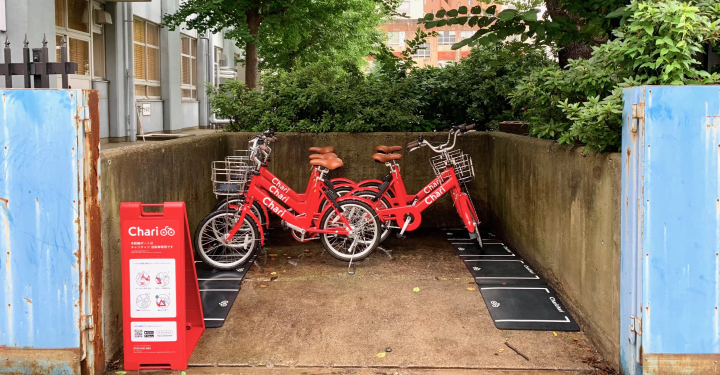
- Strategic Integration: With dedicated ports located directly on the grounds of Nagono Campus (such as the indoor "North" port and the 24-hour outdoor "South" port), commuters can transition instantly from digital workspace to open-air transit.
Geographic and Spatial Dynamics
Nagono Campus is strategically positioned to serve as a basecamp for urban exploration and remote work during the Asian Games:
- Address: 2-14-1 Nagono, Nishi-Ward, Nagoya City, Aichi Prefecture 451-0042.
- Accessibility: Approximately an 8-minute walk northwest from Nagoya Station’s Sakuradori Exit, or a 9-minute walk from Kokusai Center Station on the Subway Sakuradori Line. By Charichari, the trip from Nagoya Station drops to a mere 5 minutes.
- Surrounding Character: Situated in Nishi-Ward, the area retains the distinct architectural atmosphere of old Nagoya, providing a quiet, culturally rich counterweight to the hyper-modern commercial core surrounding the main railway station.
Official Facilities, Amenities, and Operational Metrics
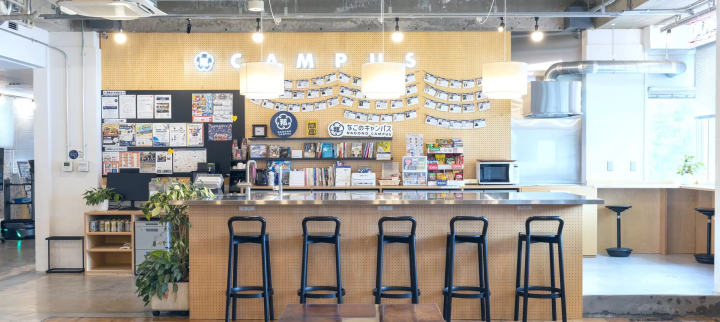
For digital nomads, remote workers, and visitors seeking a quiet space to field urgent client calls or finish project deliverables between sporting events, Nagono Campus offers robust drop-in capabilities.
Coworking Specifications and Pricing
- Walk-In Policy: No reservations are required. General visitors can access the facilities on a daily drop-in basis, though availability may occasionally be restricted during private corporate events.
- Pricing:
- General Admission: ¥1,650 per day (tax included).
- Nagoya Student Discount: ¥550 per day (tax included).
- Payment Terms: Strictly cashless payment methods are accepted; cash transactions are not processed on-site.
- Operating Hours:
- Weekdays: 10:00 AM – 9:00 PM
- Weekends & Holidays: 10:00 AM – 6:00 PM
On-Site Amenities
To maximize productivity and comfort, the co-working facilities are equipped with enterprise-grade infrastructure:
- High-speed, secure free Wi-Fi throughout the coworking zone.
- Power outlets integrated into every seat.
- Complimentary beverage service.
- Dedicated phone booths and sound-isolated concentration booths for confidential calls and virtual meetings.
- Multifunction printing terminals (available for a nominal fee).
- Accessibility Note: Because the facility preserves the historic structure of the original 20th-century school building, it does not feature an elevator. However, the drop-in coworking space is conveniently situated entirely on the first floor, eliminating the need to navigate stairwells.
Gastronomic Integration: Café "Yoake"
Located on the first floor of Nagono Campus, "yoake" operates as a Japanese-style café and restaurant that anchors the building’s community life. Opening its doors early at 8:00 AM on weekdays (closing at 5:00 PM) and extending to 6:00 PM on weekends, yoake serves breakfast and morning coffee, making it an ideal staging ground for professionals looking to fuel up before logging onto morning meetings or embarking on a city tour.
Future Outlook: A Blueprint for Sustainable Urban Tourism
Beyond its immediate utility during the 2026 Asian Games, the synergy between Nagono Campus and Charichari points toward a broader transformation in how historic neighborhoods can be sustainably integrated into modern metropolitan economies.
Weaving Heritage and Mobility
The surrounding Nagono district offers a masterclass in urban layering. Just minutes away from the campus lies Shikemichi, a historic merchant street preserving the structural layout and earthen-walled storehouses (dosu) of the Edo period. Adjacent to Shikemichi is the Endoji Shopping Street, home to legendary local institutions such as Kissaten Matsuba (widely regarded as the oldest coffee shop in Nagoya) and Shorodo, a traditional Japanese confectionery established in 1877.
With a Charichari bicycle, visitors can expand their radius effortlessly. A 15-minute ride from the campus leads directly to Nagoya Castle, from which cyclists can easily extend their journey eastward along the Cultural Path to the picturesque Tokugawa Garden.
This creates a self-reinforcing urban loop: a worker can rent a bike at the Nagono Campus (South) port in the morning, cruise through the Edo-era alleys of Shikemichi, return to the campus at 10:00 AM to execute a productive work session in a historic classroom, enjoy lunch at yoake, and secure another bicycle in the evening to dine and unwind at Endoji Shopping Street.
Expanding the Micro-Mobility Network
Recognizing the success of this integrated model, Charichari is actively seeking partnerships with local business owners, commercial property managers, and community development organizations throughout Nagoya to expand its port network. By inviting local stakeholders to host ports on private and commercial properties, the service aims to weave micro-mobility deeper into the municipal infrastructure.
As global attention converges on Aichi and Nagoya for the Asian Games, initiatives like the Nagono Campus-Charichari partnership demonstrate that accommodating massive international events does not require sacrificing local character or building intrusive temporary infrastructure. Instead, by repurposing historical assets for modern remote work and deploying flexible, human-scale transportation networks, Nagoya is offering a compelling vision of the 21st-century city: connected, sustainable, and deeply respectful of its past.
Quick Reference Summary Table
| Operational Item | Details & Specifications |
|---|---|
| Facility Name | Nagono Campus |
| Physical Address | 2-14-1 Nagono, Nishi-Ward, Nagoya City, Aichi Prefecture 451-0042 |
| Transit Access | ~8-min walk from Nagoya Station (Sakuradori Exit); ~9-min walk from Kokusai Center Subway Station |
| Shared Bike Integration | Two Charichari ports: "Nagono Campus (North)" (indoor, operational during facility hours) & "Nagono Campus (South)" (outdoor, 24/7 access) |
| Drop-In Pricing | General: ¥1,650/day; Nagoya Student Discount: ¥550/day (all tax-inclusive) |
| Payment Options | Cashless payment only |
| Coworking Hours | Weekdays: 10:00 AM – 9:00 PM / Weekends & Holidays: 10:00 AM – 6:00 PM |
| On-Site Facilities | Free Wi-Fi, seat-level power outlets, complimentary drinks, phone booths, concentration booths, paid multifunction printer |
| Parking Availability | None on-site (Public transit, nearby coin-operated parking, and shared bicycles strongly recommended) |
| Official Web Portal | https://nagono-campus.jp/ |
| Charichari Live Map | https://charichari.bike/map?region=NGO |








Belum ada komentar. Jadilah yang pertama berkomentar!