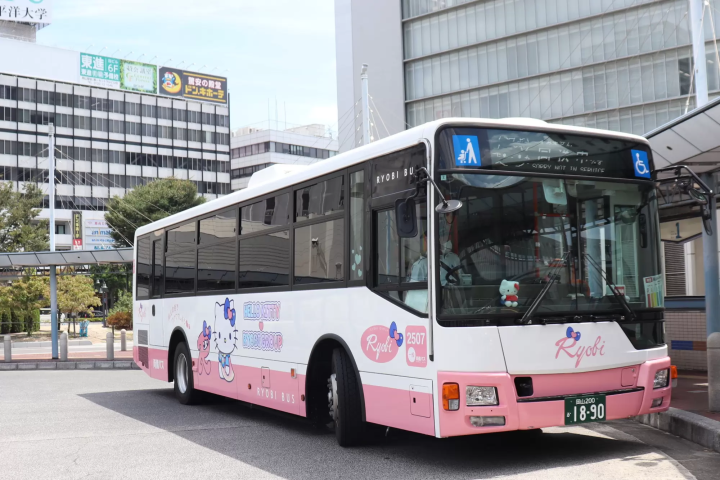
Public transportation is rarely celebrated as a primary tourist attraction. Globally, municipal transit networks are viewed through a utilitarian lens: a means to move commuters from point A to point B efficiently, quietly, and unremarkably. However, a bold collaborative venture in Western Japan is challenging this paradigm. The Ryobi Group, a major regional transit and corporate conglomerate in Okayama Prefecture, has partnered with Sanrio Co., Ltd. to introduce the official "Hello Kitty Bus." Operating through March 1, 2027, this heavily customized, immersive route bus connects JR Okayama Station with the coastal Tamano area, including Uno Port, Shibukawa, and Toy Kingdom.
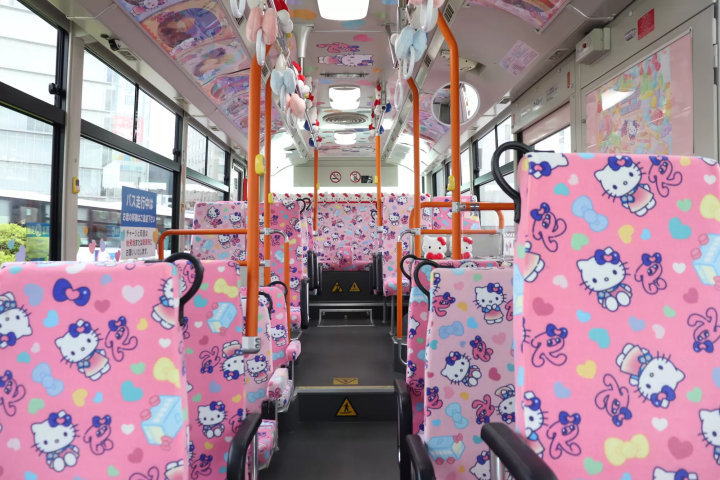
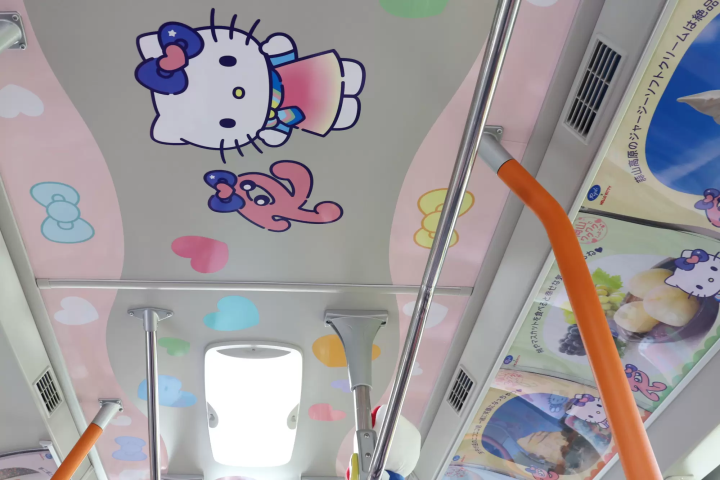
Far more than a simple marketing stunt with a decal slapped onto a vehicle’s exterior, the Hello Kitty Bus is an exercise in experiential spatial design. It transforms the often-monotonous commute or sightseeing transfer into an interactive narrative. Featuring soft pink interiors, custom-molded character seating, heart-shaped handrails, hidden design easter eggs, and localized storytelling featuring Hello Kitty alongside the Ryobi Group’s official mascot, R-chan, the bus has redefined regional mobility.
This comprehensive report examines the genesis, interior engineering, passenger experience, ticketing mechanics, and broader tourism implications of the Hello Kitty Bus project. By integrating localized cultural education through augmented engagement—such as QR-code-driven trivia and bilingual transit hubs—the Ryobi Group has effectively created a rolling ambassador for Okayama Prefecture, injecting a vital economic and emotional spark into regional travel.
Detailed Chronology: The Evolution of the Hello Kitty x Ryobi Group Partnership
The conceptualization and rollout of the Hello Kitty Bus did not happen in a vacuum; it represents the culmination of strategic branding initiatives designed to revitalize regional tourism in the wake of shifting travel demographics.
Summer 2026: Appointment of the Smile Co-creation Partner
The narrative foundation of the project was laid in the summer of 2026, when Sanrio’s iconic global phenomenon, Hello Kitty, was officially appointed as the "Smile Co-creation Partner" of the Ryobi Group. The partnership was forged under a unified corporate and civic charter: to infuse everyday life and regional transit in Okayama with micro-moments of joy, comfort, and unexpected delight.
In promotional lore developed for the campaign, Hello Kitty embarks on a journey to Okayama Prefecture, where she crosses paths with R-chan, the established mascot of the Ryobi Group. The two characters instantly bond over a shared philosophy of community enrichment. Rather than merely existing as static corporate mascots, Hello Kitty and R-chan were woven into an original storyline: two friends dedicated to decorating the city of Okayama with motifs of local sweets, regional toys, and world-class tourist landmarks.
By September 4, 2026, the collaboration materialized in sheet metal and upholstery with the official deployment of the Hello Kitty Bus. Operating primarily on direct routes managed by the Ryobi Bus Tamano Depot—connecting JR Okayama Station’s East Exit (Platform 2 outbound, Platform 8 inbound) with key destinations across Tamano, Uno Station, Shibukawa, and Toy Kingdom—the vehicle immediately drew regional and international attention.
The service schedule, anchored to run continuously through March 1, 2027, was intentionally structured to capture both the late-summer leisure market and the autumn foliage and winter coastal tourism waves. By anchoring the bus to vital transportation arteries, the Ryobi Group ensured that the vehicle would serve both local commuters seeking a brighter daily routine and international tourists navigating the Seto Inland Sea island-hopping gateway.
Inside the Cabin: Immersive Design and Spatial Engineering
Stepping inside the Hello Kitty Bus requires a suspension of disbelief. The interior design avoids the trap of tokenistic branding, opting instead for a comprehensive, floor-to-ceiling overhaul that engages all five senses of the passenger.
+-----------------------------------------------------------------+
|                    HELLO KITTY BUS INTERIOR                     |
+------------------------+----------------------------------------+
| Exterior & Boarding    | Full custom Sanrio wrapping, themed    |
|                        | ticket booth signage at entrance doors.|
+------------------------+----------------------------------------+
| Seating & Driver Area  | Soft pink upholstery, cheerful         |
|                        | dual-character illustrations (Kitty/R) |
+------------------------+----------------------------------------+
| Fixtures & Hardware    | Heart-shaped straps with fluffy pink/  |
|                        | blue trims; integrated plush toys.     |
+------------------------+----------------------------------------+
| Interactive Tech       | QR codes at seats offering 100+ random |
|                        | daily messages and regional quizzes.   |
+------------------------+----------------------------------------+
Aesthetic Overhaul and Color Theory
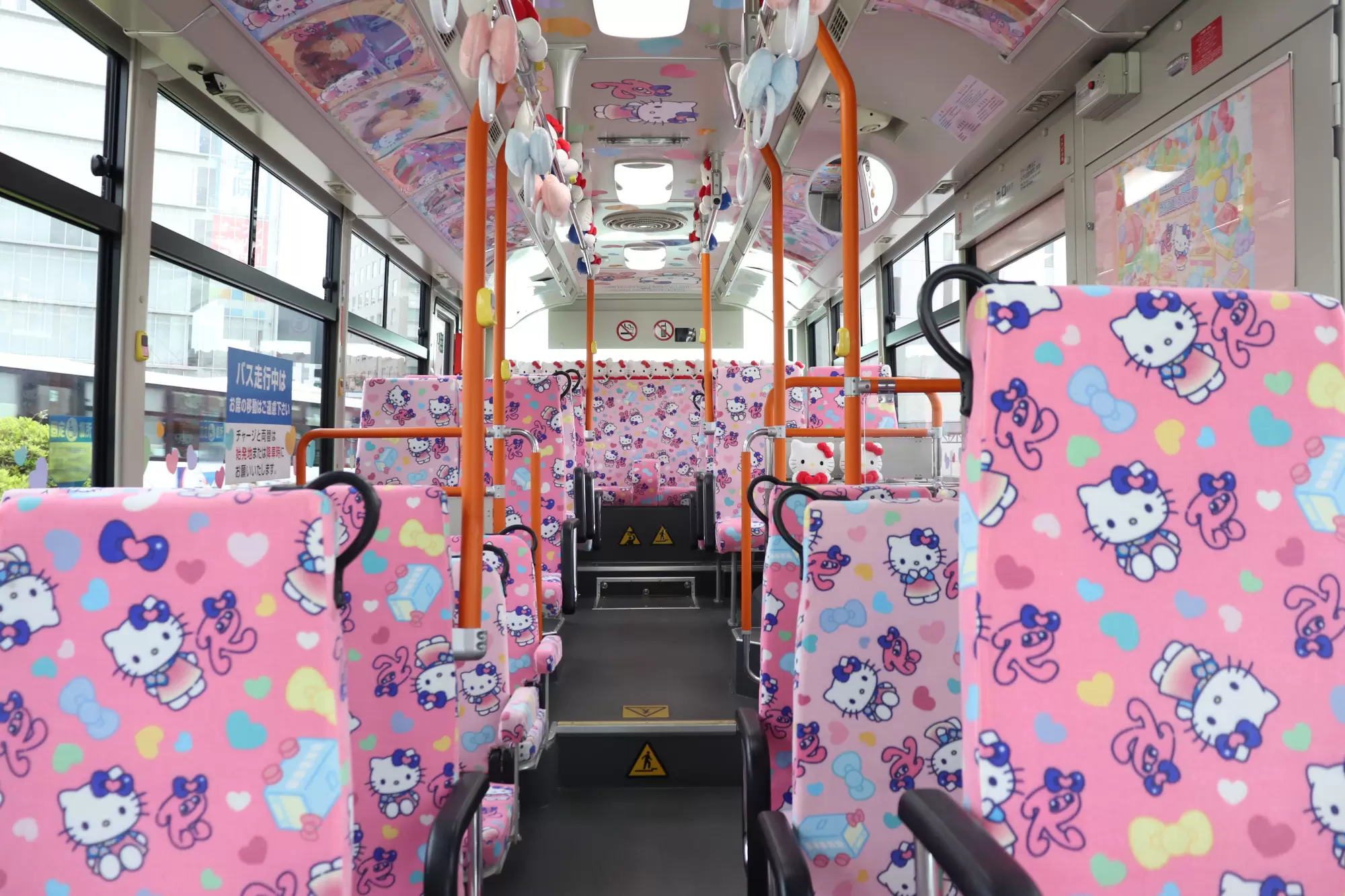
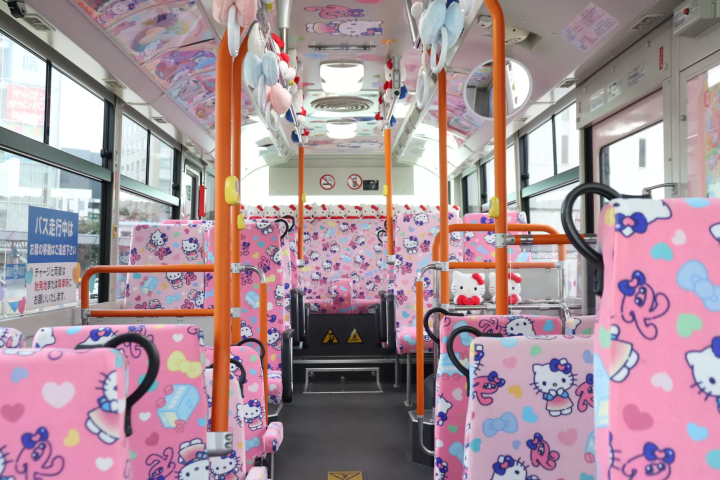
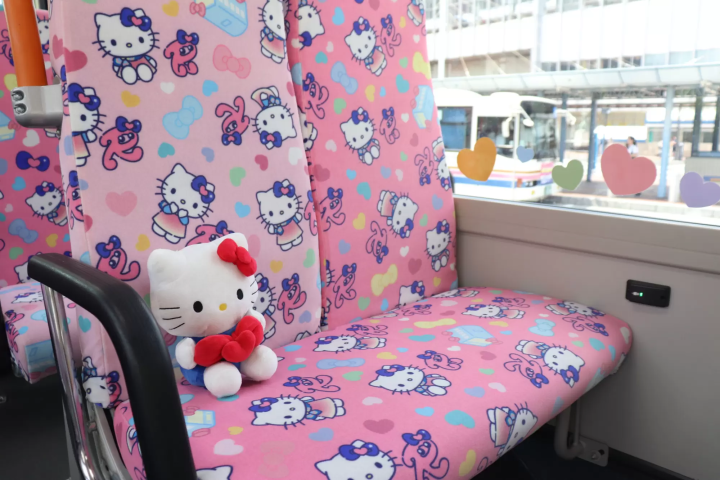
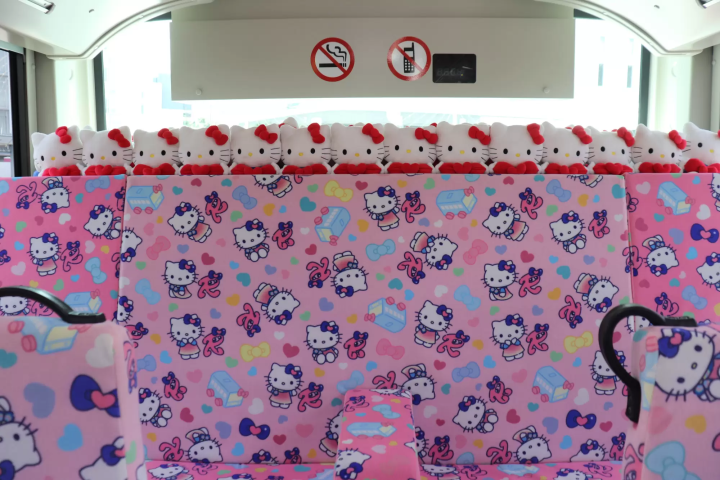
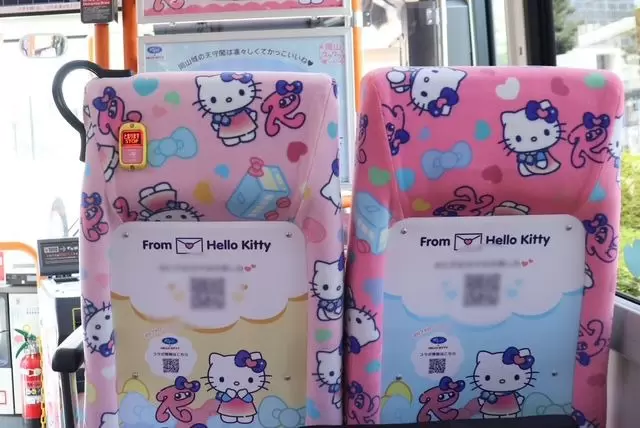
The physical cabin abandons standard industrial grey and blue transit textiles in favor of a soothing, monochromatic soft pink palette. The seats are upholstered in custom-woven fabrics featuring subtle, cheerful illustrations of Hello Kitty intertwined with R-chan. Even the immediate vicinity of the driver’s cockpit receives a meticulous decorative treatment, ensuring that the working environment of the transit operator harmonizes with the whimsical atmosphere of the passenger salon.
Tactile and Visual Easter Eggs
Passenger engagement is driven by physical details embedded throughout the vehicle:
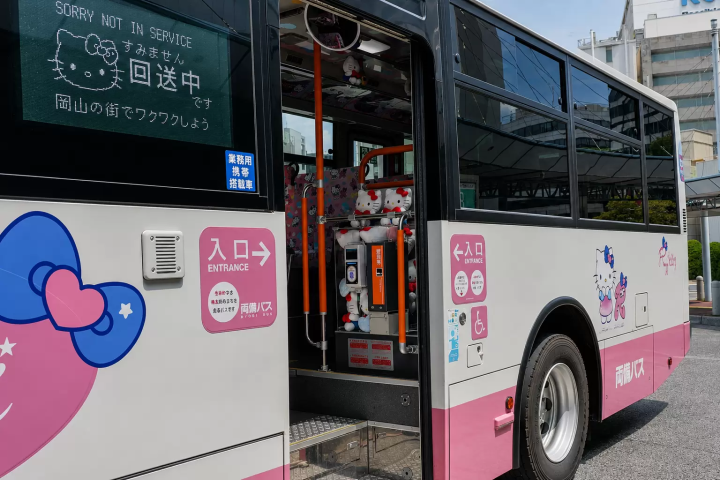
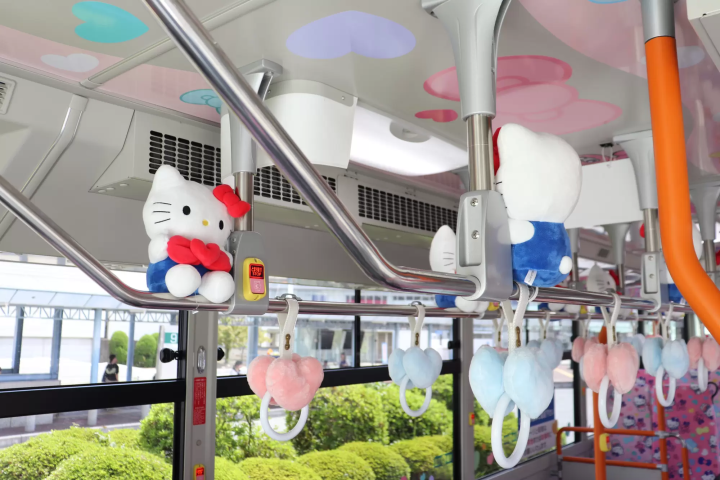
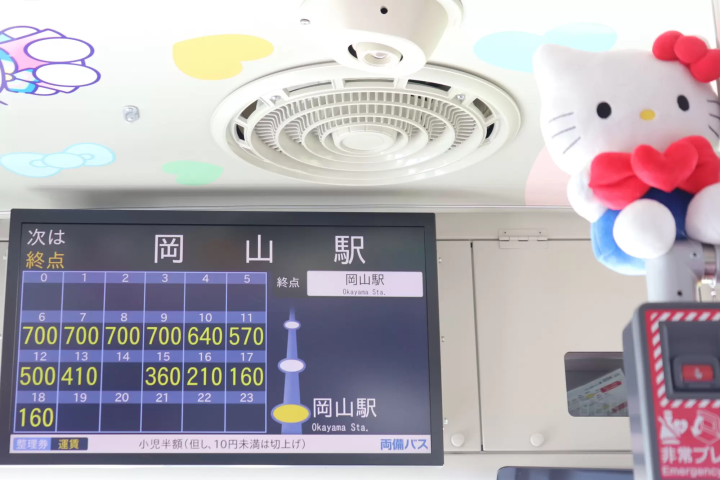
The Handrail Experience: Overhead support straps are transformed into striking heart-shaped configurations, framed by tactile, fluffy pink and blue decorative pom-poms. Perched directly beside select straps are miniature Hello Kitty plush figures, inviting tactile interaction.
Plush Menagerie: The rear interior cabin features structured shelving lined with rows of Hello Kitty plush toys, making the back of the bus feel less like a municipal transit compartment and more like a collector’s lounge.
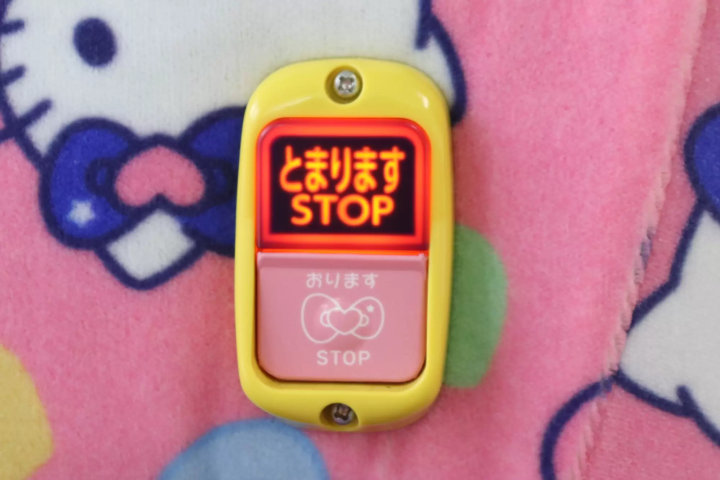
Tri-Design Stop Request Buttons: Traditional chime buttons have been replaced with three distinct variants distributed throughout the cabin: standard Hello Kitty silhouettes, signature Sanrio Ribbon motifs, and R-chan icons. Passengers frequently turn their journey into a scavenger hunt, tracking down the locations of each unique button.
Ceiling and Door Concealment: Hello Kitty graphics are strategically hidden on the ceiling panels and interior sliding door frames, rewarding observant riders who look upward and outward during transit.
Digital Integration: The 100-Message QR Code System
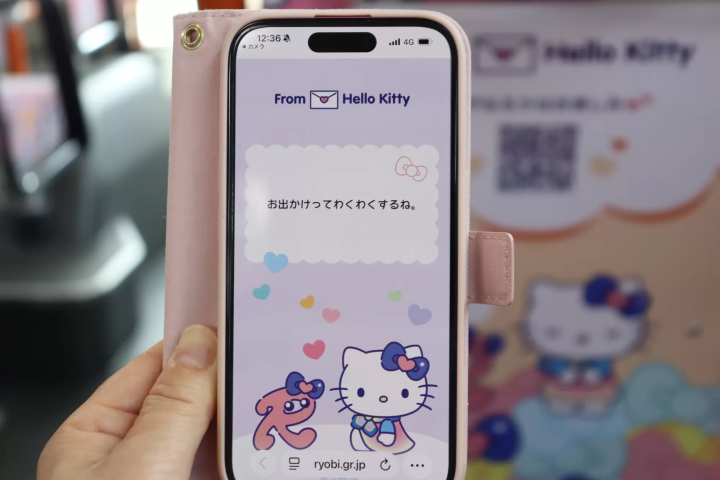
Recognizing that modern transit passengers are digitally native, the Ryobi Group integrated an interactive smartphone layer into the bus experience. Affixed near every seat are unique QR codes. When scanned by a passenger’s mobile device, the portal delivers a randomized digital asset: a daily motivational quote attributed to Hello Kitty, a micro-quiz regarding Okayama’s cultural history, or localized trivia.
According to development disclosures, the system boasts a library of over 100 distinct messages and prompts. This ensures that frequent flyers, local commuters, and returning tourists experience a dynamic, non-repetitive digital interaction with every single ride.
Passenger Logistics, Ticketing Mechanics, and Navigation
While the interior is designed for whimsy, the logistical operation of the Hello Kitty Bus adheres strictly to the highly organized, time-tested standards of the Japanese public transit network. Navigating the system requires an understanding of regional fare structures and payment methods.
Boarding and Distance-Based Fares
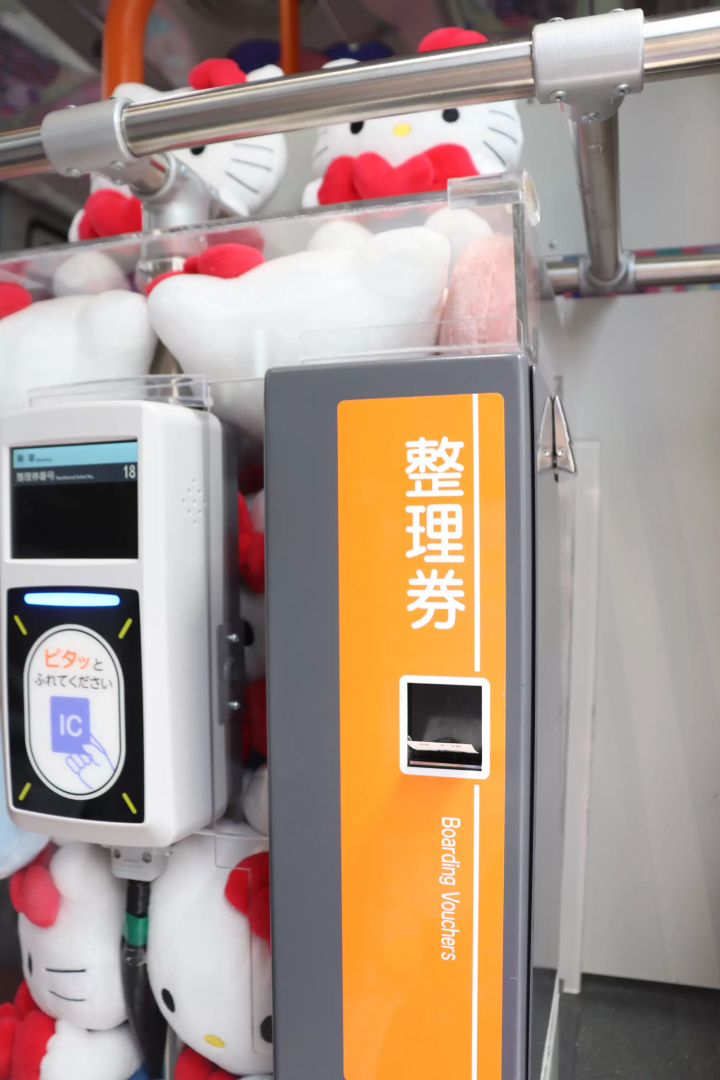
Passengers boarding the Hello Kitty Bus must enter through the central sliding doors of the vehicle. For cash-paying passengers, the protocol requires pulling a numbered paper ticket from the orange mechanical dispenser box located immediately at the entrance threshold.
This distance-based ticketing system correlates with an electronic LED fare display positioned at the front of the cabin. As the bus traverses its route toward the Tamano area, the monetary value associated with each ticket number escalates. When alighting through the front door adjacent to the driver’s seat, passengers cross-reference their physical ticket number with the electronic board and deposit the exact cash fare into the automated fare collection box.
Payment Ecosystems and Currency Constraints
Hareca IC Card Integration: The bus fully supports the region’s proprietary "Hareca IC Card," which functions across buses and trams throughout Okayama Prefecture. Notably, passengers can conveniently reload their Hareca cards directly on board while the vehicle is stationary.
Nationwide IC Card Limitations: International travelers and domestic tourists should note that while nationwide interoperable transport cards (such as Suica, Pasmo, and ICOCA) can be used to pay fares, they cannot be reloaded on board the bus.
Cash Exchange Protocols: The internal currency exchange machine is strictly limited to breaking 1,000-yen banknotes into smaller denominations or coins. Higher-denomination notes (5,000-yen or 10,000-yen bills) cannot be processed. Furthermore, per Japanese safety regulations, money exchange operations are strictly prohibited while the vehicle is in motion; passengers are strongly advised to settle currency exchanges immediately upon boarding.
The Gateway: Okayama Station East Exit Public Transportation Information Center
For first-time visitors navigating the complex transit grid of JR Okayama Station, locating the correct departure point can be intimidating. The Ryobi Group has mitigated this friction by directing travelers to the Okayama Station East Exit Public Transportation Information Center.
Architecturally striking, the information center building is modeled after the historic Enyo-tei House pavilion located within Okayama Korakuen Garden—widely celebrated as one of Japan’s Three Great Gardens. Inside this culturally rich terminal, travelers gain access to real-time service updates, departure timetables, and destination maps at a glance. To serve the surging volume of inbound international tourism, the facility features a dedicated English-speaking service counter, complemented by modern amenities including clean public restrooms and a complimentary public water dispenser.
Supporting Context & Metrics: Regional Tourism and the "Seagull Bus Skip"
The Hello Kitty Bus is not merely an isolated novelty line; it functions as a critical node in a larger regional tourism strategy aimed at bridging Okayama Prefecture with neighboring tourist hubs across the Seto Inland Sea.
The Seagull Bus Skip Collaboration
To maximize the utility of the Hello Kitty branding, the Ryobi Group has partnered with regional ferry operators to introduce a limited-edition integrated transit pass known as the "Kamome Bus Skip" (Seagull Bus Skip).
+-----------------------------------------------------------------+
|                KAMOME BUS SKIP (SEAGULL PASS)                   |
+---------------------+-------------------------------------------+
| Route Coverage      | Okayama Station -> Shin-Okayama Port      |
|                     | (Local Bus) + Ferry -> Tonosho Port       |
|                     | (Shodoshima, Kagawa Prefecture)           |
+---------------------+-------------------------------------------+
| Sales Period        | Now through March 1, 2027                 |
+---------------------+-------------------------------------------+
| Pricing             | 1,500 yen (Adults)                        |
|                     | *Price adjusts to 1,600 yen on Oct 1, 2026|
+---------------------+-------------------------------------------+
| Special Feature     | Physical ticket stock features exclusive  |
|                     | Hello Kitty commemorative design.         |
+---------------------+-------------------------------------------+
This special ticket bundle creates a seamless, multimodal travel corridor connecting Okayama Prefecture with Shodoshima Island in Kagawa Prefecture, famous for its Mediterranean-style olive groves, coastal scenery, and sweeping cinematic history.
Ticket Specifications and Economic Adjustments
Sales Channels: Passes are available for purchase at the Okayama Station East Exit Public Transportation Information Center, Shodoshima’s Tonosho Port, and the Okayama-bound ferry ticket counters.
Pricing Structure: Priced at an accessible 1,500 yen for adults, the ticket provides significant cost savings compared to purchasing individual bus and ferry fares separately. Due to regional economic adjustments, the adult fare undergoes a scheduled adjustment to 1,600 yen effective October 1, 2026. Note: Child tickets are available but do not feature the special Hello Kitty design.
Seamless Transfers: The ticket covers a one-way local bus journey from Okayama Station to Shin-Okayama Port, followed by a direct, synchronized ferry transfer across the Seto Inland Sea to Tonosho Port on Shodoshima.
Official Statements and Corporate Vision
The philosophical underpinnings of the Hello Kitty Bus project reflect a broader shift in how regional Japanese transit companies view their social responsibilities. Faced with declining rural populations and post-pandemic tourism recovery curves, traditional transit operators are moving beyond austere utility to embrace emotional infrastructure.
In corporate briefings accompanying the launch, representatives from the Ryobi Group emphasized that the partnership with Sanrio is rooted in the concept of Co-creation of Smiles.
"Public transit is often viewed as a sterile environment defined by schedules, congestion, and exhaustion," noted a Ryobi Group transit development executive. "By bringing Hello Kitty—a universal symbol of warmth, innocence, and friendship—into our Tamano route fleet, we are altering the emotional chemistry of the commute. When a child smiles at a pink seat, or an international traveler discovers an Okayama landmark via our QR trivia system, the bus stops being a machine and becomes a living part of the community’s shared memory."
Sanrio representatives echoed these sentiments, highlighting that Hello Kitty’s global diplomatic mission has always been centered on breaking down communication barriers and fostering human connection. Placing the character within Okayama’s regional bus network allows grassroots travelers to experience Japanese local culture through a lens of shared joy.
Future Outlook: Sustainability, Legacy, and Transit Innovation
As the Hello Kitty Bus continues its scheduled deployment through March 1, 2027, transit analysts and tourism boards are closely monitoring its performance metrics. Early indicators suggest that the initiative has successfully driven measurable increases in weekend leisure ridership along the JR Okayama-to-Tamano corridor, while simultaneously boosting foot traffic at coastal nodes like Uno Port—an increasingly vital hub for contemporary art pilgrims visiting the Setouchi Triennale islands.
Key Operational Data at a Glance
Project Designation: Hello Kitty x Ryobi Group Collaboration Project
Operating Entity: Ryobi Bus Tamano Depot
Primary Route: Direct service between JR Okayama Station (East Exit Platforms 2/8) and Tamano Area (Uno Station, Shibukawa, Toy Kingdom)
Active Operational Window: September 4, 2026 – March 1, 2027 (Tentative closing date)
Customer Inquiry Line: 0863-31-1616 (Tamano Sales Office; operating hours: Mon–Fri 9:30–17:30; Sat 10:00–12:00, 13:00–17:00; closed Sundays and public holidays)
The success of the Hello Kitty Bus serves as a blueprint for regional transit authorities across Japan and beyond. It proves that creative public-private partnerships can breathe new life into legacy infrastructure without requiring multi-billion-dollar capital investments in new rail lines or rapid transit systems. By leveraging globally recognized intellectual property, enhancing on-board digital engagement, and tying local transit directly to regional ferry networks like the Seagull Bus Skip, Okayama has transformed a standard municipal bus route into a destination in its own right.
For travelers planning an itinerary through Western Japan before March 2027, securing a ticket on the Hello Kitty Bus is much more than a quirky photo opportunity. It is an invitation to experience regional Japanese hospitality at its most imaginative, proving that sometimes, the most memorable part of a journey is the vehicle that gets you there.








Belum ada komentar. Jadilah yang pertama berkomentar!