

Executive Overview
For decades, international travelers and foreign tourists visiting Japan have marveled at the country’s pristine streets, immaculate public spaces, and legendary hospitality, only to be promptly confounded by a singular, persistent paradox: the near-complete absence of public trash cans. Born from security measures enacted in the wake of historical domestic incidents and deeply ingrained cultural habits of carrying one’s waste home, this public bin scarcity often transforms a simple day of sightseeing into an unintentional scavenger hunt for a proper disposal site.
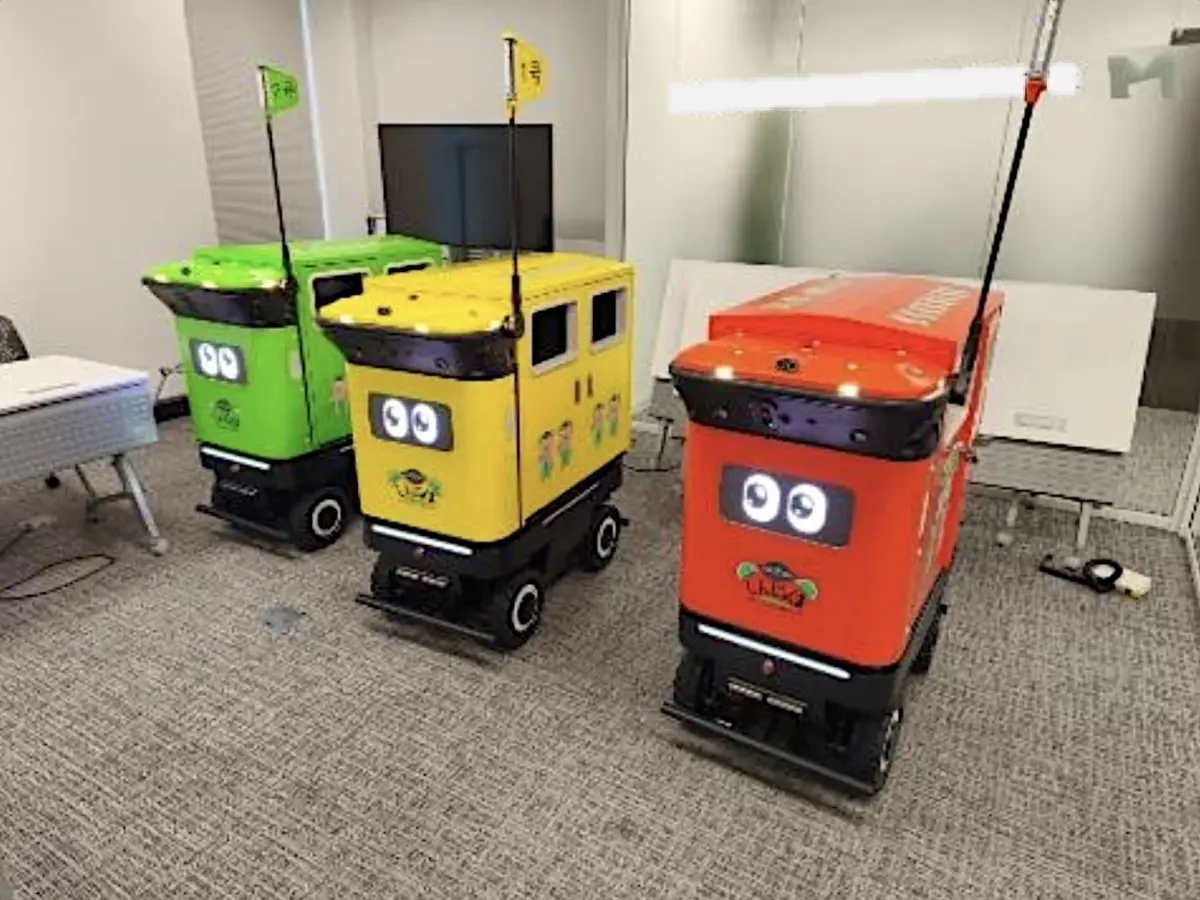
Now, East Japan Railway Company (JR East) is stepping forward with a remarkably inventive—and undeniably charming—countermeasure. In a bold pilot program launched this September, JR East is introducing a fleet of autonomous, mobile rubbish-bin robots directly into the bustling subterranean depths of Shinjuku Station. Designed to resemble miniature, wide-eyed trains adorned with motifs of Shinjukuma—the station’s beloved bear mascot—these roving receptacles are engineered to actively seek out and collect refuse from commuters and tourists alike.
Far more than a mere novelty or a whimsical photo opportunity for social media, this trial represents a sophisticated convergence of American robotics hardware, Japanese engineering, and municipal ingenuity. Operating in the notoriously complex ecosystem of the world’s busiest railway terminal, the trial is designed to test the limits of autonomous navigation, passenger traffic flow dynamics, and crowd psychology. If successful, this initiative could fundamentally redefine waste management across Japan’s massive transit networks, offering a high-tech solution to an old-world travel headache.
Detailed Chronology: The Road to the Shinjuku Robot Trial
The deployment of mobile waste-collection robots at Shinjuku Station did not happen overnight; it is the culmination of years of logistical planning, technological evolution, and shifting post-pandemic passenger demands.
The Genesis of the Concept
The conceptual groundwork for the project began as JR East sought innovative ways to address persistent station maintenance challenges. With labor shortages affecting the cleaning and hospitality sectors across Japan, railway operators have faced mounting pressure to streamline janitorial operations without compromising the spotless standards travelers expect. At the same time, the rapid return of international tourism following the lifting of pandemic border restrictions threw the lack of public trash cans into sharp relief.
Rail officials recognized that simply installing static, traditional bins was neither feasible nor desirable due to security protocols and the risk of localized overflow. Instead, engineers and planners began to investigate dynamic, responsive solutions that could meet commuters where they are.
Integration and Hardware Selection
To bring the concept to life, JR East partnered with a coalition of technological heavyweights. The underlying hardware chosen for the initiative is an advanced autonomous delivery robot developed by Cartken, a U.S.-based technology company specializing in indoor and outdoor autonomous navigation. To operate and oversee the deployment on the ground, Cartken teamed up with Melco Mobility Solutions and Mitsubishi Electric.
The robots underwent rigorous adaptation for the Japanese rail environment. Rather than looking like standard industrial delivery units, the chassis was completely overhauled to blend into Japanese railway culture. Engineers wrapped the machines in train-inspired aesthetics, complete with large, expressive eyes on the front fascia and subtle visual nods to Shinjukuma, JR Shinjuku Station’s official mascot character.

The Pilot Launch and Operational Parameters
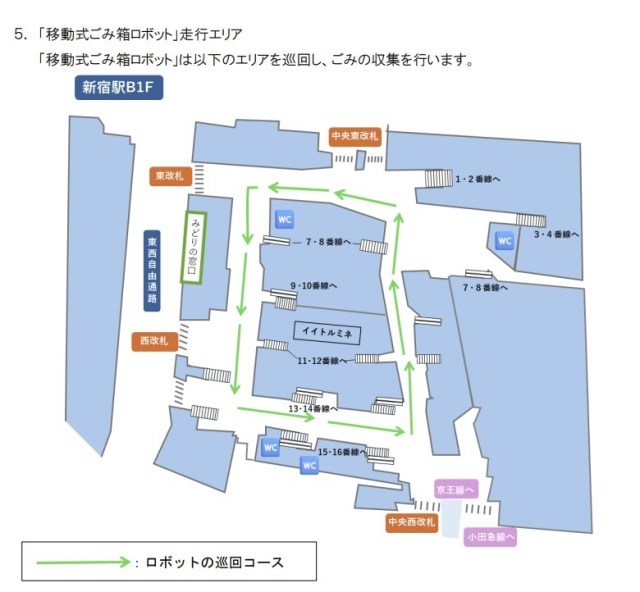
The live public trial officially commenced on September 8 and is scheduled to run through November 20. Operating exclusively on weekdays between the hours of 10:00 a.m. and 5:00 p.m., the robots are deployed within the first-floor basement (B1) concourse of Shinjuku Station.
Their operational zone is strictly defined, covering the heavily trafficked areas enclosed within the East, West, Central East, and Central West ticket gates. During these peak off-peak daylight hours, the robots execute pre-programmed circular routes, gently gliding through the underground concourse while inviting passing travelers to drop their wrappers, empty cups, and minor refuse into side-mounted collection ports.
Supporting Context & Metrics: Navigating the World’s Busiest Station
To truly understand the gravity of JR East’s experiment, one must appreciate the sheer scale and complexity of the testing ground. Shinjuku Station is not merely a transportation hub; it is an underground metropolis often compared by bewildered visitors to a sprawling video game dungeon.
The Labyrinth of Shinjuku
Holding the official Guinness World Record as the busiest railway station on the planet, Shinjuku Station handles an astronomical volume of human traffic. On an average day, the station accommodates upwards of 3.5 million passengers. It serves as a massive convergence point for multiple railway companies, including JR East, Odakyu Electric Railway, Keio Corporation, and several Tokyo Metro subway lines.
The station complex features dozens of exits, multi-layered underground shopping malls, endless corridors, and multi-level platforms. For human commuters, navigating this maze requires seasoned intuition; for an autonomous robot, it presents a staggering gauntlet of dynamic obstacles, fluctuating crowd densities, shifting lighting conditions, and unpredictable human behavior.
Decoding the Technology
The robots rely on a sophisticated suite of onboard sensors, cameras, and lidar technology developed by Cartken. This sensor array allows the machines to map their surroundings in real-time, detecting stationary pillars, sudden surges of rushing commuters, and unexpected floor debris.
Unlike delivery bots designed for quiet suburban sidewalks, the Shinjuku units must contend with the chaotic, multidirectional flow of a major Japanese commuter hub. The trial’s primary engineering metrics focus on:
- Obstacle Avoidance Response Time: How quickly the robot reacts when a passenger abruptly steps into its path.
- Path-Planning Efficiency: The robot’s ability to recalculate its circular route dynamically when blocked by congestion or temporary maintenance barriers.
- Sensor Reliability: Performance under variable indoor lighting conditions characteristic of underground railway concourses.
The Cultural Context of Waste Management
The absence of public rubbish bins in Japan is a legacy of the 1995 Tokyo subway sarin gas attacks conducted by the Aum Shinrikyo cult. In the wake of this tragedy, authorities removed the vast majority of trash cans from public transport stations and streets to eliminate potential concealment sites for hazardous materials.
Over the decades, citizens adapted seamlessly to this norm, developing the habitual practice of carrying pocket-sized plastic bags to transport their personal trash back to their residences or hotel rooms. However, overseas tourists—accustomed to ubiquitous municipal waste receptacles in Western capitals and other Asian metropolises—frequently find this custom jarring. The accumulation of single-use drink bottles, snack wrappers, and promotional flyers during a day of touring often leaves visitors stranded with waste they cannot discard.
By introducing mobile, monitored collection units, JR East is delicately bridging this cultural divide, offering a controlled relief valve for tourist waste without compromising the strict security postures that have kept Japanese stations safe for thirty years.
Official Statements and Industry Insights
In official press releases and briefings surrounding the Shinjuku Station trial, executives from JR East and their technology partners have emphasized both the practical objectives and the forward-looking vision of the project.
JR East’s Strategic Vision
According to representatives from East Japan Railway Company, the primary motivation behind the pilot is twofold: enhancing the overall station service quality for an increasingly international customer base, and optimizing the operational efficiency of station janitorial staff.
"As passenger numbers rebound and international tourism reaches unprecedented heights, we are constantly evaluating new methodologies to maintain our high standards of cleanliness and hospitality," a JR East spokesperson noted. "Shinjuku Station represents our most demanding environment. If we can successfully integrate autonomous service robotics here, it opens up profound possibilities for station management across our entire network."
The Engineering Perspective from Mitsubishi Electric and Melco Mobility
Partners from Mitsubishi Electric and Melco Mobility Solutions highlighted the collaborative nature of adapting foreign robotics hardware to the hyper-specific demands of Japanese rail infrastructure.
"Cartken’s core autonomous navigation platform provides exceptional reliability in indoor-outdoor transitions," a project engineer explained during a technical briefing. "However, tailoring the physical interaction points—such as the height and accessibility of the waste disposal slots—to match the swift pace of Japanese commuters required meticulous iterative design. We had to ensure the robot feels approachable rather than intrusive."
Public Reception and Commuter Psychology
Beyond pure engineering metrics, JR East is closely monitoring social acceptance. Early qualitative feedback gathered from social media and on-site observations indicates an overwhelmingly positive public response. Commuters and tourists alike have captured video footage of the smiling, train-shaped robots navigating the concourse, frequently pausing to take photographs or watch the machine complete its rounds.
Behavioral analysts observing the trial note that the robot’s endearing aesthetic—featuring wide, cartoonish eyes and familiar mascots—plays a crucial role in mitigating the natural hesitation people feel toward unfamiliar automated machinery operating in tight public spaces. Instead of viewing the robot as an obstruction, passengers tend to treat it with a mixture of curiosity and affection, intuitively clearing a path or stepping close to deposit their empty plastic bottles.
Future Outlook: What’s Next for Station Robotics in Japan?
As the autumn pilot program at Shinjuku Station progresses toward its November 20 conclusion, industry watchers and transit authorities across the globe are turning their attention to Tokyo to see what lessons will be learned.
Data Analysis and Network-Wide Scalability
Following the conclusion of the trial, JR East will conduct a comprehensive data audit. Engineers and operational planners will analyze route logs, sensor error reports, battery efficiency data, and total waste volume collected. Furthermore, qualitative surveys and staff debriefings will determine how effectively the robots reduced the workload of human cleaning crews.
Should the trial receive a passing grade, industry experts anticipate that JR East will look toward expanding the program. Potential next steps include:
- Deployment in Other Major Hubs: Scaling the robots to similarly massive, high-traffic stations within the Tokyo metropolitan area, such as Tokyo Station, Ikebukuro, Shibuya, and Ueno.
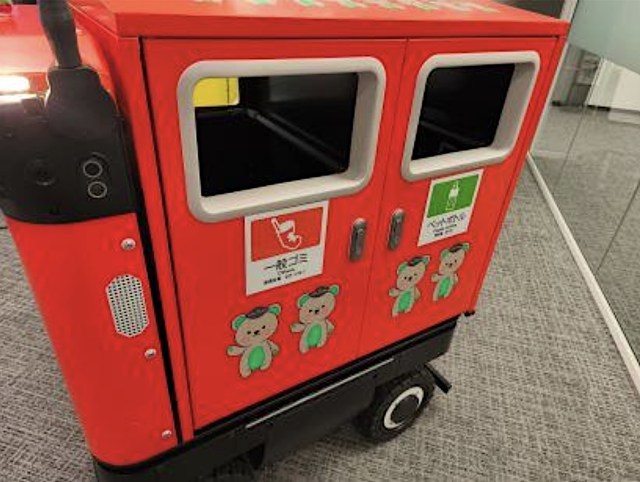
- Expanded Functional Capabilities: Upgrading future generations of the robots to handle segregated waste sorting (combining trash and recyclables) or integrating real-time multilingual customer service displays to assist lost travelers.
- Nighttime Utility: Exploring whether autonomous chassis could be repurposed during non-operational overnight hours to assist with floor scrubbing, sanitation, or automated station security patrols.
A New Paradigm for Global Transit Hubs
Japan has long been a global laboratory for demographic and infrastructural innovation, perpetually forced to invent technological answers to labor shortages, high-density urbanization, and shifting cultural norms. The Shinjuku Station trash robot project is a microcosm of this broader national ethos.
By transforming a mundane, frustrating chore into an engaging, high-tech interaction, JR East is proving that the future of public service does not have to feel cold or sterile. As autonomous systems become increasingly integrated into daily public life, the charming, train-shaped rubbish bins of Shinjuku may well become the global benchmark for how major transit hubs manage cleanliness, delight passengers, and harmoniously blend cutting-edge robotics with timeless hospitality.







Belum ada komentar. Jadilah yang pertama berkomentar!